 Friday, October 23, 2026
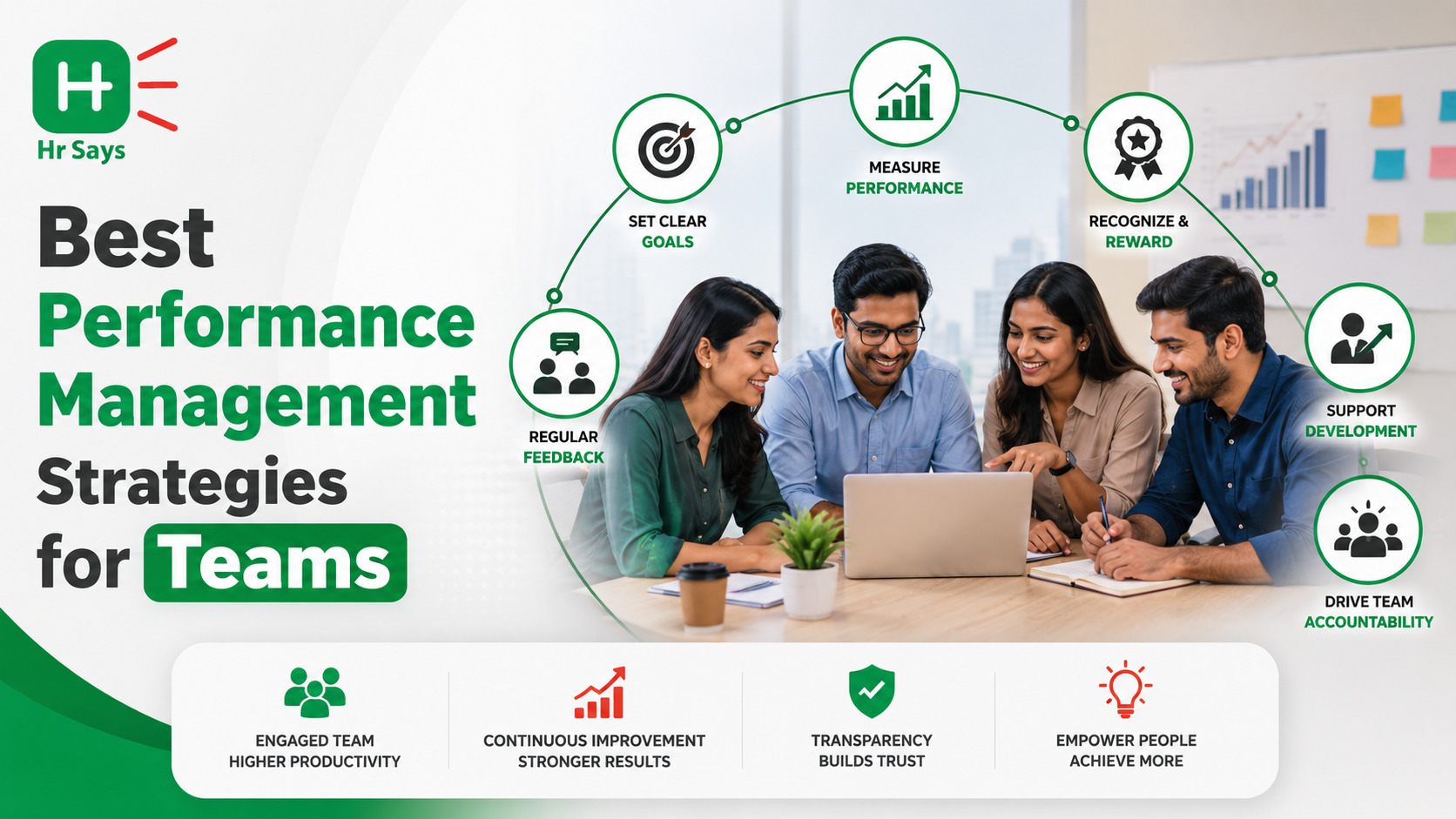
 Modern performance management strategies help organizations improve collaboration, accountability, and long-term team development through adaptive evaluation systems and continuous feedback practices. Using effective methods and techniques of performance appraisal supports stronger workplace culture, sustainable productivity, and better organizational alignment.





Modern teams no longer succeed through supervision alone. Businesses today operate in fast-changing environments where collaboration, adaptability, and continuous improvement matter more than rigid structures. This is where a strategic performance management system becomes important. Teams that perform consistently well are usually guided by clear goals, transparent feedback, and practical evaluation systems rather than occasional reviews.
Many organizations still rely on outdated review models that fail to reflect real team behavior or modern work patterns. Understanding effective performance management strategies helps businesses, students, managers, and entrepreneurs recognize how high-performing teams actually function and why structured evaluation methods influence long-term growth.
Why Performance Management Has Changed in Modern Work Culture
Performance management has evolved because the way people work has changed dramatically over the last decade. Earlier systems focused heavily on yearly reviews and productivity numbers. While these methods worked in highly structured environments, they often ignored collaboration, adaptability, creativity, and emotional engagement within teams.
Today, hybrid work environments, remote collaboration, and cross-functional teams have changed expectations. Employees now expect continuous feedback instead of annual criticism. Managers also need systems that help identify strengths, gaps, communication issues, and team alignment in real time.
This shift explains why organizations are investing more in a strategic performance management system rather than traditional ranking structures. Modern systems are designed not just to measure output but to understand behavior patterns, team interaction, decision-making ability, and adaptability under pressure.
In real-world scenarios, poor performance is rarely caused by lack of effort alone. It is often linked to unclear expectations, inconsistent communication, or systems that reward short-term results over sustainable growth. Effective strategy and performance management therefore focuses on creating environments where employees understand both their responsibilities and their contribution to larger organizational goals.
Organizations that adapt to these changes tend to retain talent longer and improve operational consistency. Teams also become more resilient because employees receive regular guidance instead of sudden evaluation pressure.
How Strategic Performance Systems Influence Team Behavior
A performance management system affects more than appraisals. It quietly shapes how teams communicate, collaborate, solve problems, and respond to pressure. This is why many organizations now treat performance systems as part of company culture rather than HR administration.
An effective strategic performance management system creates clarity. Employees understand what success looks like, how progress is measured, and how individual goals connect with team objectives. Without this clarity, even talented teams become inconsistent because priorities shift too frequently.
One major advantage of structured systems is behavioral alignment. When teams receive regular feedback, employees adjust habits gradually instead of reacting defensively during annual reviews. This improves accountability and reduces misunderstandings between managers and team members.
Practical ways performance systems improve team effectiveness- Continuous feedback improves confidence and decision-making
Employees who receive regular guidance usually perform more consistently because they understand expectations clearly. Instead of guessing whether their work meets standards, they can adjust early and improve gradually. This reduces workplace anxiety and improves collaboration across departments. - Transparent evaluation reduces internal conflict within teams
Teams often struggle when employees feel evaluation systems are biased or unclear. Structured review systems create fairness by defining measurable expectations. This improves trust between leadership and employees while reducing unnecessary competition. - Goal-based systems strengthen organizational alignment
Teams become more efficient when individual goals support larger company objectives. Strong systems connect daily responsibilities with long-term business direction, helping employees understand why their work matters beyond immediate tasks.
These practical effects explain why businesses increasingly prioritize organizational appraisal in strategic management rather than isolated employee reviews.
Understanding Appraisal Performance Methods in Real Work Environments
Many organizations misunderstand appraisals because they treat them as administrative formalities instead of development tools. Effective appraisal performance methods are designed to identify growth opportunities while improving team performance collectively.
Traditional appraisal systems often focused only on weaknesses. Modern systems balance performance measurement with employee development, communication quality, and future potential. This creates healthier workplace environments because employees feel guided rather than judged.
Different organizations use different approaches depending on work culture, industry demands, and team structure. For example, creative teams may require collaborative evaluation models, while technical departments may focus more on measurable output and process efficiency.
Different methods and techniques used in performance appraisal- 360-degree feedback creates broader performance understanding
This method gathers input from managers, peers, and sometimes clients. It provides a more balanced view of employee performance because it reflects communication, teamwork, and professional behavior across multiple interactions. - Self-assessment encourages accountability and reflection
Employees evaluate their own performance before formal reviews. This improves self-awareness and helps managers identify gaps between self-perception and actual performance patterns. - Goal-based reviews improve measurable progress tracking
Teams work toward predefined objectives over a fixed period. This method supports transparency because employees understand evaluation criteria from the beginning.
These are among the most widely used methods and techniques of performance appraisal in modern organizations.
Why Different Teams Require Different Evaluation Approaches
One reason many performance systems fail is because organizations apply identical methods to completely different teams. However, team dynamics vary significantly depending on industry, work structure, and communication patterns.
For example, remote teams often require stronger communication-focused evaluation systems because collaboration challenges are more visible in virtual environments. Sales teams may prioritize target achievement, while product development teams may focus more on innovation and long-term problem solving.
This explains why businesses increasingly explore different methods of performance appraisal rather than depending on one universal system.
In practical scenarios, high-performing employees can still struggle if evaluation systems do not match actual job requirements. A creative strategist may appear less productive under rigid output-based systems even while contributing valuable long-term ideas.
Similarly, team performance can decline when employees feel that evaluation methods fail to recognize invisible contributions like mentorship, collaboration, or crisis management.
Modern different techniques of performance appraisal therefore focus on contextual evaluation. Instead of measuring only final output, organizations now consider communication quality, adaptability, teamwork, learning ability, and problem-solving patterns.
This broader approach helps businesses identify sustainable performers rather than employees who only deliver short-term results under pressure.
Challenges Businesses Face While Managing Team Performance
Even strong systems face challenges because human behavior is complex. Teams consist of individuals with different communication styles, emotional responses, motivations, and work patterns. This makes performance management an ongoing process rather than a fixed formula.
One common problem is feedback inconsistency. Some managers avoid difficult conversations until performance declines significantly. Others provide excessive criticism without offering actionable guidance. Both situations reduce employee confidence and engagement.
Another challenge is over-measurement. Organizations sometimes track too many performance indicators, creating pressure instead of clarity. Employees become more focused on metrics than meaningful work quality.
Remote and hybrid work models have introduced additional complications. Managers now need systems that evaluate productivity without creating unhealthy surveillance environments. Trust and autonomy have become increasingly important.
Effective performance appraisal methods in hrm therefore balance accountability with flexibility. Employees perform better when systems support improvement rather than constant pressure.
Organizations also struggle with emotional bias during reviews. Personal assumptions, communication preferences, and workplace relationships can influence evaluations unfairly. This is why structured systems and clear criteria remain important in maintaining fairness.
How High-Performing Teams Use Performance Strategies Differently
Strong teams rarely treat performance management as punishment. Instead, they use it as a communication framework that improves clarity and long-term growth.
In successful organizations, managers use feedback conversations regularly rather than limiting them to formal reviews. Employees understand where they stand, what needs improvement, and how their work contributes to company direction.
These teams also focus on adaptability. Modern workplaces change rapidly, and performance systems must evolve alongside business goals. Organizations that continuously improve their evaluation methods usually maintain stronger employee engagement.
Another important pattern is psychological safety. Teams perform better when employees feel comfortable discussing mistakes, asking questions, and sharing concerns openly. Rigid environments often suppress communication, which eventually reduces performance quality.
This is where strategy and performance management becomes deeply connected with leadership quality. Good systems alone are not enough. Managers must communicate expectations clearly while creating supportive environments for growth.
The Future of Organizational Appraisal and Team Development
Performance management is moving toward continuous development rather than periodic judgment. Organizations increasingly use digital tools, analytics, and behavior tracking to understand performance patterns more accurately.
However, technology alone cannot solve workplace challenges. Human understanding remains essential because performance is influenced by communication, emotional stability, motivation, and team culture.
Future-focused businesses are therefore combining data-driven evaluation with personalized development approaches. This balance improves both productivity and employee retention.
Modern organisational appraisal in strategic management is no longer limited to reviewing employees. It now influences recruitment, leadership development, collaboration systems, and long-term organizational planning.
As work environments continue evolving, businesses that invest in adaptive performance strategies will likely maintain stronger teams and healthier workplace cultures.
Conclusion
Effective team performance management is not about constant monitoring or rigid evaluation systems. It is about creating clarity, trust, accountability, and continuous improvement within teams. Businesses that implement a thoughtful strategic performance management system usually develop stronger communication, better collaboration, and more sustainable performance outcomes.
Modern appraisal performance methods and evaluation strategies work best when they adapt to real human behavior rather than relying on outdated structures. Organizations that understand this balance are more likely to build resilient, high-performing teams in changing work environments.
Frequently Asked Questions (FAQs)
1. What is a strategic performance management system and why is it important for teams?A strategic performance management system is a structured approach used to align employee goals with organizational objectives. It helps teams improve accountability, communication, and long-term productivity. Strong systems also support better organizational appraisal in strategic management by creating clarity around expectations and measurable growth.
2. How do performance management strategies improve team productivity?Effective performance management strategies improve productivity by helping employees understand priorities, strengths, and performance expectations clearly. Regular feedback and structured evaluation also support better collaboration and encourage healthier workplace behavior patterns through practical strategy and performance management practices.
3. What are the most commonly used appraisal performance methods today?Modern appraisal performance methods include 360-degree feedback, self-assessment, goal-based reviews, and continuous performance tracking. These approaches help organizations evaluate both productivity and behavioral contribution while supporting adaptive methods and techniques of performance appraisal.
4. Why do traditional performance appraisal systems fail in modern workplaces?Traditional systems often focus only on yearly reviews and measurable output, ignoring communication, adaptability, and collaboration. This creates disconnect between employees and leadership. Modern different methods of performance appraisal are more flexible because they consider real workplace behavior and evolving team structures.
5. How do different techniques of performance appraisal affect employee motivation?Effective different techniques of performance appraisal improve motivation by creating transparency and reducing uncertainty. Employees feel more confident when evaluation criteria are clear and feedback is constructive. This also strengthens workplace trust and supports long-term performance management strategies.
6. What challenges do organizations face while managing team performance?Organizations often struggle with inconsistent feedback, unclear goals, emotional bias, and over-measurement of employee activity. These issues reduce engagement and create stress. Strong performance appraisal methods in hrm help balance accountability with flexibility, improving both employee confidence and operational efficiency.
7. How does organizational appraisal in strategic management support business growth?Organisational appraisal in strategic management helps businesses identify performance gaps, leadership potential, and workflow inefficiencies. It improves decision-making by connecting employee development with larger organizational goals, creating stronger alignment across departments and teams.
8. What role does feedback play in strategy and performance management?Feedback is central to effective strategy and performance management because it allows employees to improve continuously rather than waiting for yearly reviews. Regular guidance helps teams adapt faster, solve problems earlier, and maintain better communication patterns across projects.
9. How do remote and hybrid teams change performance management systems?Remote work environments require more adaptive performance management strategies because managers cannot rely on physical supervision. Organizations now focus more on communication quality, accountability, collaboration, and outcome-based evaluation rather than monitoring activity alone.
10. Why are methods and techniques of performance appraisal evolving rapidly?Modern workplaces are changing due to technology, hybrid work, and evolving employee expectations. This is why methods and techniques of performance appraisal now focus more on adaptability, collaboration, and behavioral contribution instead of only measuring output. Businesses that update these systems usually build stronger and more resilient teams.