Thursday, October 01, 2026
 HR technology in 2026 is reshaping how Indian organizations manage talent, automate processes, ensure compliance, and build stronger employee experiences through AI, analytics, and integrated digital platforms.





Introduction
The workplace is changing faster than most organizations anticipated. Across India, from large enterprises in Mumbai and Bengaluru to mid-sized companies in Pune, Hyderabad, and Ahmedabad, HR leaders are under real pressure to do more with less, make faster decisions, and build stronger cultures in increasingly complex environments. Technology is no longer a support function for HR. It has become the engine of people strategy.
The global HR technology market was valued at approximately 40 billion US dollars in 2024 and is projected to cross 80 billion US dollars by 2032. In India, the momentum is equally significant. Digital transformation of HR is accelerating across sectors including IT services, manufacturing, BFSI, retail, and startups, driven by a young and mobile workforce, rising employee expectations, and a growing regulatory environment around labour compliance and data protection.
For HR heads, CHROs, founders, and business owners, understanding which HR technology trends will have the greatest practical impact in 2026 is not optional. It is a strategic necessity. This article covers the trends that matter most, why they matter in the Indian context, and how organizations can move from awareness to implementation.
Understanding the Foundations of HR Technology in 2026
Before examining individual trends, it is important to understand what has fundamentally shifted in how HR technology operates today.
For decades, HR software was built around record-keeping. Payroll systems, leave management tools, and attendance trackers were designed to store data and automate paperwork. Today, modern HR technology is built around intelligence. Platforms now connect data across the employee lifecycle, from recruitment to exit, and use that data to generate recommendations, flag risks, and support decisions in real time.
In India, several structural factors are accelerating this shift. The widespread adoption of cloud infrastructure, the availability of affordable SaaS (Software as a Service) solutions for small and mid-sized businesses, and the growing comfort of HR teams with digital tools have all created a strong foundation for adoption. According to industry research, 85 percent of organizations globally now use HR technology to manage people operations, and adoption continues to grow as businesses scale.
The question for 2026 is not whether to use HR technology. It is which technologies to prioritize, and how to implement them in a way that delivers measurable value for both the organization and its people.
The Rise of Agentic AI and Intelligent Automation in HR
If there is one technology trend that HR leaders must pay close attention to in 2026, it is agentic artificial intelligence. Unlike conventional AI tools that respond to prompts or analyze data when asked, agentic AI can initiate tasks, coordinate multi-step workflows, and adapt to changing conditions without constant human instruction.
Global research suggests that CHROs expect a 327 percent growth in AI agent adoption by 2027, with 80 percent of organizations projecting that human workers and AI agents will collaborate side by side within five years. In the HR context, this means AI agents that autonomously handle onboarding workflows, flag payroll anomalies, generate compliance alerts, and surface workforce insights proactively rather than reactively.
For Indian organizations, the practical applications are significant. Consider the challenge of managing onboarding for a large manufacturing company with hundreds of new joiners each quarter across multiple plant locations. Agentic AI can automate document collection, schedule orientation sessions, send reminders, track completion of mandatory training modules, and generate a readiness report for HR managers, all without manual intervention. This kind of automation frees HR teams to focus on human engagement, culture-building, and strategic planning.
However, the adoption of agentic AI must come with strong governance. Human oversight is not optional. AI systems can make errors, reflect biases present in historical data, or take actions outside intended boundaries if guardrails are not clearly defined. Indian organizations should build clear AI usage policies, establish approval checkpoints for AI-driven decisions, and ensure that HR and IT teams collaborate closely during implementation.
Predictive People Analytics and Data-Driven Decision Making
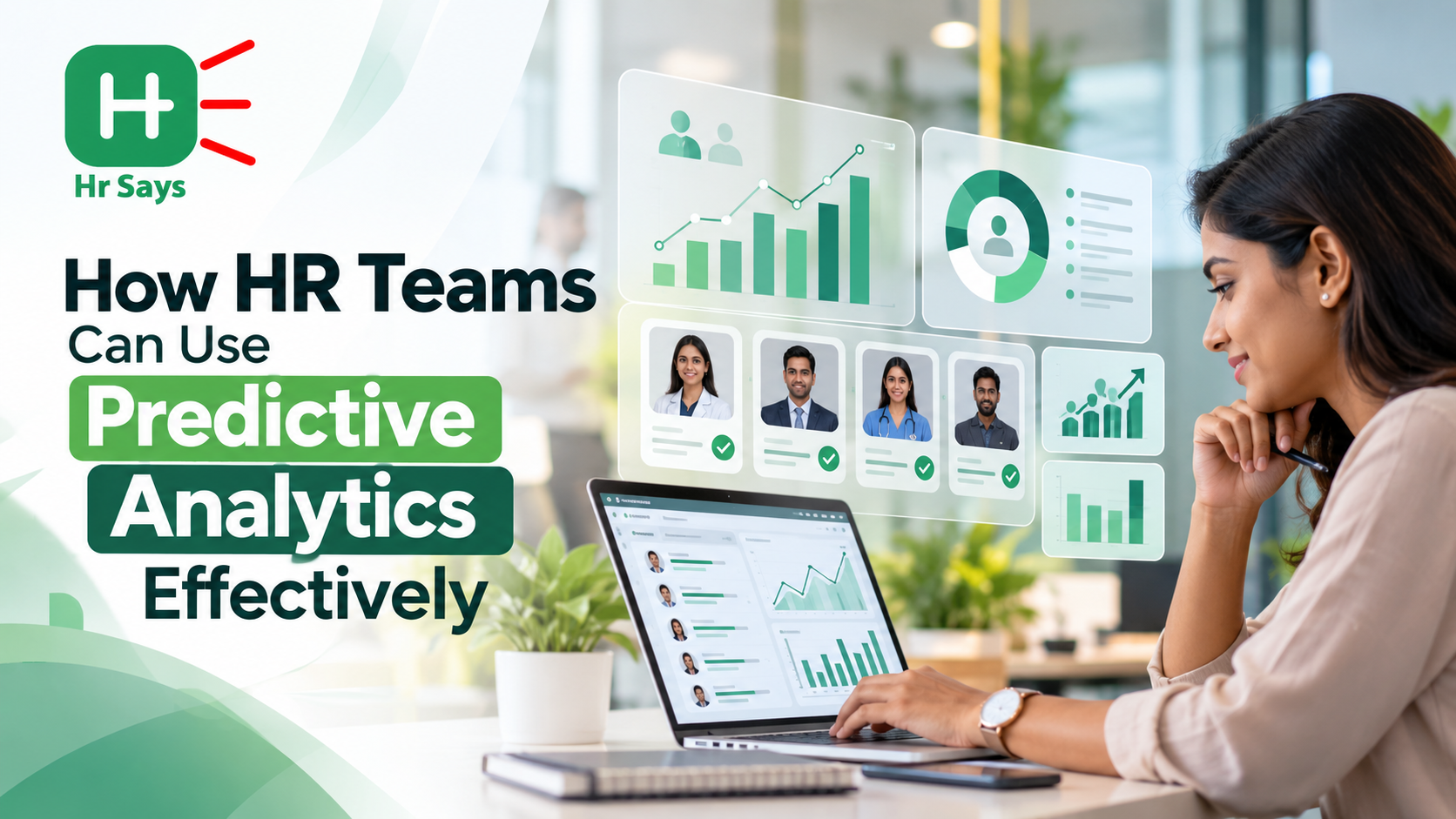
People analytics is moving from a luxury available only to large enterprises to a practical capability accessible to mid-sized and even smaller Indian companies. In 2026, the trend is shifting from descriptive analytics (what happened) to predictive analytics (what is likely to happen and why).
HR teams that invest in people analytics can identify employees who are at risk of leaving before they submit their resignation. They can forecast hiring needs based on business growth projections. They can pinpoint the factors that correlate with high performance in a given role. They can measure the ROI of training programmes. These are not speculative possibilities. Organizations using predictive people analytics are already making faster, more confident, and more equitable decisions across hiring, engagement, and talent development.
In the Indian context, people analytics has particular value in managing attrition, which remains one of the most expensive and disruptive challenges for companies across the IT, BPO, retail, and hospitality sectors. Understanding the drivers of attrition at the department, location, and demographic level allows HR leaders to intervene with targeted retention strategies rather than blanket initiatives that may not address the real issue.
The important caveat is data quality. Predictive analytics is only as reliable as the data that feeds it. Indian organizations investing in this area must prioritize data hygiene, ensuring that employee records are accurate, consistently maintained, and integrated across systems such as the HRMS, payroll, learning management, and performance management platforms.
Employee Experience Platforms and the Focus on the Full Lifecycle
Employee experience has become a board-level priority in India's most forward-thinking organizations. The expectation among employees, particularly in Tier 1 cities and among younger professionals, is that their employer will provide digital experiences that are as intuitive and personalized as the consumer apps they use in their daily lives.
Employee experience platforms (EXPs) bring together the tools, information, and interactions that employees need across their entire lifecycle in one connected environment. Rather than navigating separate systems for payroll queries, leave applications, performance feedback, and learning modules, employees access everything through a single, personalized interface.
Some of the most impactful applications of EXPs in 2026 include:
- Personalized onboarding journeys that adapt based on role, location, and prior experience
- AI-powered self-service tools that answer payroll and HR policy questions instantly, reducing the volume of routine queries to the HR team
- Real-time feedback mechanisms that allow employees to share sentiment and receive acknowledgment without waiting for annual review cycles
- Integrated learning and development pathways that recommend relevant courses based on the employee's career goals and skill gaps
For Indian companies managing large, geographically dispersed workforces, EXPs can also serve as a critical communication hub, ensuring that policy updates, company announcements, and compliance information reach every employee in a timely and consistent manner.
Skills-Based Talent Management and Continuous Learning
The nature of work is changing rapidly, and the skills required to perform well are evolving with it. In India, industries from manufacturing to financial services to technology are navigating a significant skills transition driven by automation, digital transformation, and global market shifts.
Skills-based talent management represents a shift in how organizations think about their workforce. Rather than managing people purely through the lens of their job title or tenure, HR leaders are beginning to map individual skills, identify gaps relative to current and future business needs, and design learning interventions accordingly.
In practical terms, this means:
- Deploying skills assessment tools that build a real-time picture of the organization's capability landscape
- Investing in upskilling programmes that are delivered through modern learning management systems (LMS), including microlearning modules, video-based content, and scenario-based practice
- Using AI to recommend specific learning pathways for individuals based on their role, aspirations, and identified skill gaps
India's National Skill Development Corporation (NSDC) and various industry bodies have been pushing for greater alignment between formal skilling initiatives and workplace learning. Forward-thinking HR teams are bridging this gap by integrating government-aligned skilling frameworks with their internal learning platforms, creating a more holistic approach to talent development.
Cybersecurity, Data Privacy, and the Importance of Responsible HR Tech
As HR systems become more data-rich and more connected, the responsibility to protect employee data has never been greater. In India, the Digital Personal Data Protection Act (DPDPA), 2023 has introduced a comprehensive legal framework governing how personal data is collected, processed, and stored. HR departments, which manage some of the most sensitive personal information in any organization, are directly in scope.
Key areas of focus for Indian organizations in 2026 include ensuring that HRMS and payroll platforms are compliant with DPDPA requirements, implementing role-based access controls so that employee data is accessible only to those who have a legitimate need, training HR teams and managers on data handling responsibilities, and conducting regular audits of third-party HR technology vendors to verify that their data practices meet legal and ethical standards.
Beyond legal compliance, responsible AI use is also a growing concern. HR technology that uses AI for hiring decisions, performance evaluations, or salary recommendations must be tested for bias and monitored on an ongoing basis. In a diverse country like India, where workforces span multiple languages, regions, educational backgrounds, and cultural contexts, the risk of algorithmic bias is real and significant.
Cloud-Based and SaaS HR Platforms: The Infrastructure of Modern HR
For many Indian small and mid-sized businesses, cloud-based SaaS HR platforms have been transformative. They eliminate the need for expensive on-premise infrastructure, offer flexible subscription models that align with business size and growth, and provide regular updates that keep the platform current without demanding significant internal IT resources.
The HR SaaS market in India has grown significantly over the past five years, with homegrown platforms serving the Indian compliance landscape, including Provident Fund, ESI, TDS, and labour law requirements, alongside global platforms that have adapted their offerings for Indian businesses. This competition has improved quality, reduced costs, and expanded access to sophisticated HR tools for companies of all sizes.
In 2026, the trend in SaaS HR platforms is toward deeper integration. Organizations increasingly want a single source of truth for all people data, one platform where payroll, attendance, performance, learning, and engagement data are connected and visible in one place. This reduces manual data entry, eliminates inconsistencies between systems, and enables the kind of cross-functional analytics that supports strategic workforce decisions.
HR Technology and the Future of Work in India
India's workforce is one of the youngest in the world. With a median age of approximately 28 years and a rapidly expanding professional class, the expectations of Indian employees are shaped by digital nativity, career mobility, and a growing awareness of global workplace standards. HR technology is not just a productivity tool in this context. It is a signal of organizational culture and employer brand.
Companies that invest in modern, employee-centred HR technology communicate something important to their people: that the organization values their time, respects their experience, and is committed to building a workplace that works for them. Platforms like HRSays play a meaningful role in this conversation, bringing together insights, trends, and best practices that help HR professionals across India stay informed, connected, and equipped to build better workplaces.
The organizations that will lead in talent attraction and retention through 2026 and beyond are those that treat HR technology not as a cost centre but as a strategic investment in their most valuable asset, their people.
Frequently Asked Questions
Q1: What is the most important HR technology trend for Indian companies in 2026?
Agentic AI and people analytics are the two trends with the most transformative potential for Indian organizations in 2026. Agentic AI enables multi-step workflow automation that reduces administrative burden on HR teams, while predictive people analytics supports more informed and proactive decisions on hiring, retention, and talent development. Together, they allow HR to function as a genuinely strategic function rather than an administrative one.
Q2: How can small and mid-sized Indian businesses benefit from HR technology?
Small and mid-sized businesses can benefit significantly from cloud-based SaaS HR platforms, which offer affordable, scalable, and compliance-ready solutions. These platforms automate payroll, leave management, attendance tracking, and onboarding without requiring large IT investments. As businesses grow, they can add modules for performance management, learning, and analytics, building a more comprehensive HR technology stack over time.
Q3: What should Indian organizations know about data privacy in HR technology?
Indian organizations must align their HR technology practices with the Digital Personal Data Protection Act (DPDPA), 2023. This means ensuring that employee data is collected with informed consent, stored securely, accessed only by authorized personnel, and not shared with third parties without a legitimate basis. HR leaders should review their technology vendors' data processing agreements and conduct regular internal audits to ensure ongoing compliance.
Q4: How does HR technology impact employee experience in India?
HR technology directly shapes how employees experience their organization, from their first day through their entire tenure. Modern employee experience platforms simplify self-service tasks, enable real-time feedback, personalize learning recommendations, and support well-being through integrated digital wellness tools. For India's geographically distributed and linguistically diverse workforce, these platforms also serve as a critical communication channel, ensuring that employees across locations feel equally informed and included.
Q5: What should HR leaders prioritize when evaluating new HR technology investments?
HR leaders evaluating new technology should assess four primary factors: whether the platform addresses the organization's most pressing HR pain points, how easily it integrates with existing payroll and business systems, whether it is compliant with Indian labour law and data privacy regulations, and how intuitive it is for the employees and managers who will use it daily. A phased implementation approach, beginning with a pilot group before a full rollout, reduces disruption and improves long-term adoption.