 Saturday, October 24, 2026
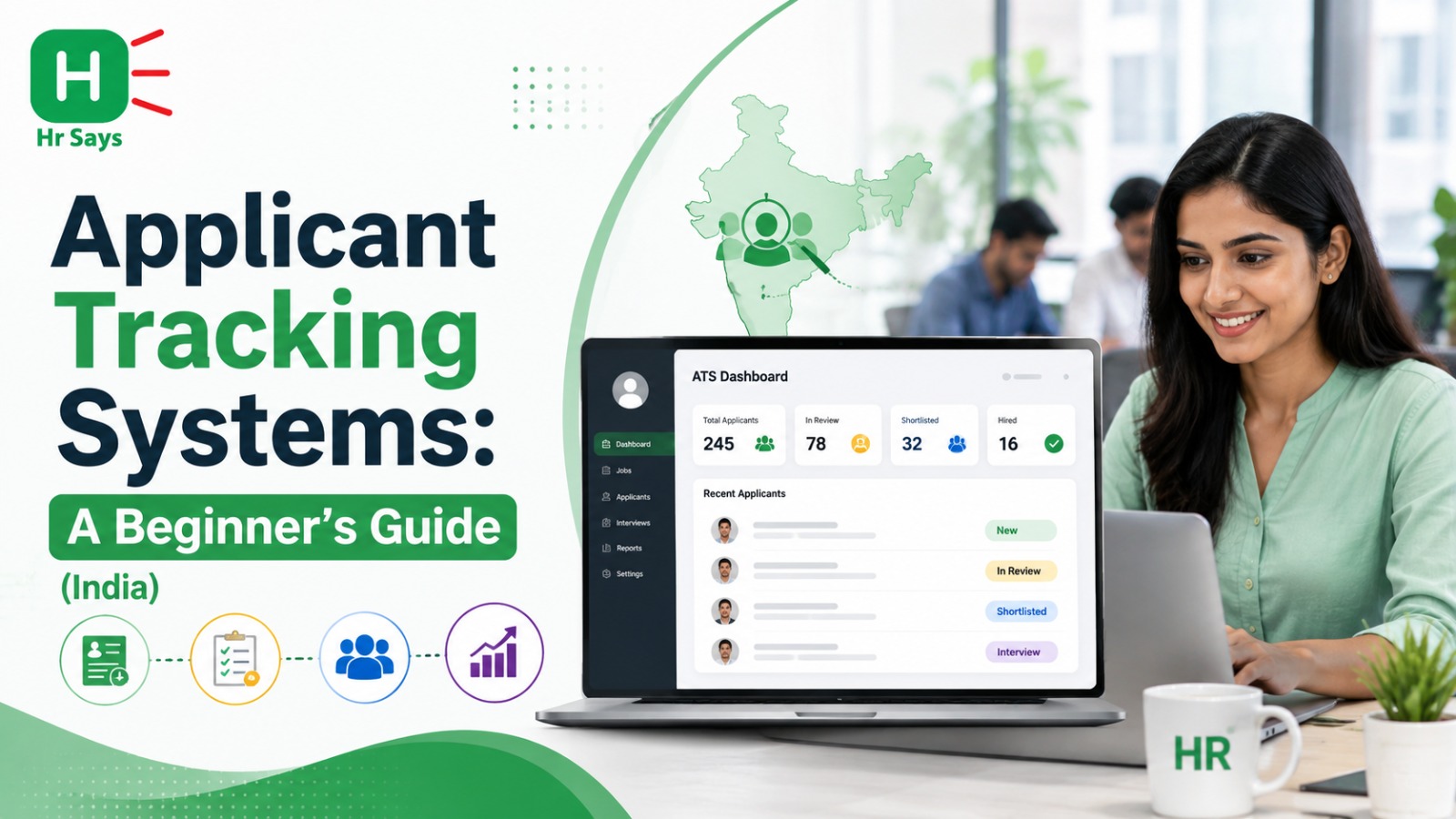
 This beginner's guide explains how Applicant Tracking Systems work, why Indian companies are adopting them rapidly, and how job seekers and HR teams can use them effectively to improve hiring outcomes.





Introduction
Every time a resume is submitted through a company career page or a job portal in India, it rarely lands directly in a recruiter's inbox anymore. It usually passes through an Applicant Tracking System first. For job seekers, this can feel like an invisible gatekeeper. For HR teams, it is the backbone that keeps a growing hiring pipeline organised. Either way, understanding how this software works has become essential knowledge for anyone participating in today's job market.
This guide explains what an Applicant Tracking System is, how it functions behind the scenes, and what both job seekers and HR professionals in India need to know to work with it rather than against it. The goal is practical clarity, not technical jargon, so that whether you are applying for your next role or evaluating recruitment software for your organisation, you walk away with a clear picture of how this technology shapes modern hiring.
What Is an Applicant Tracking System?
An Applicant Tracking System, commonly called an ATS, is software that helps organisations manage the recruitment process from job posting to final hiring decision. It acts as a centralised database that collects resumes, organises candidate information, and helps recruiters track where each applicant stands in the hiring journey.
Instead of managing spreadsheets, shared email inboxes, or scattered folders, an HR team can view every open role, every applicant, and every stage of the process in one place. For companies in India dealing with high application volumes, particularly in metro cities such as Bengaluru, Pune, Mumbai, and Delhi NCR, this centralisation has moved from being a convenience to becoming a genuine operational necessity.
Indian ATS adoption has grown steadily, though it still trails more mature markets. Adoption of Applicant Tracking Systems in India reached approximately 30 percent as of 2023, driven largely by the need for compliance with labour laws and more efficient recruitment processes. That number has continued to climb as more mid-sized and smaller Indian businesses adopt affordable, India-focused platforms.
How Does an Applicant Tracking System Work?
At a basic level, an ATS pulls in applications from multiple sources, including company career pages, job boards, employee referrals, and professional networking platforms. Once a resume enters the system, the software does not simply store it as a file. It parses the document, extracting structured details such as contact information, work history, educational qualifications, and skills, and converts this into an organised candidate profile.
From there, the system compares each candidate profile against the requirements listed in the job description. It looks for overlapping keywords, relevant experience levels, and skill matches, then ranks or filters candidates so that recruiters can focus their attention on the strongest fits first. This does not mean the software makes hiring decisions on its own. In most cases, particularly for mid-sized and growing organisations, a recruiter still reviews the shortlisted profiles and makes the final call.
Beyond parsing and ranking, a modern ATS typically supports interview scheduling, automated candidate communication, collaborative notes between hiring managers, and reporting on metrics such as time-to-fill and source effectiveness. Many platforms also include AI-assisted features, such as generating screening questions or drafting outreach messages, though the human recruiter remains responsible for the final judgement.
Why Indian Companies Are Adopting ATS Platforms Rapidly
Recruitment in India has become considerably more competitive over the past few years, with specialised roles in technology, healthcare, and manufacturing seeing intense demand for qualified talent. A 2024 LinkedIn Talent Solutions survey found that 72 percent of recruiters in India reported that using an ATS significantly reduced their hiring time. That kind of efficiency gain matters when teams are expected to hire faster without proportionally increasing headcount.
There is also a compliance dimension that is particularly relevant in the Indian context. Organisations here operate under multiple labour regulations, and maintaining proper documentation of hiring activity is not optional. A structured ATS creates an auditable record of every stage of the recruitment process, which helps HR teams demonstrate fair and consistent practices if questions arise later.
For growing Indian startups and small businesses, the barrier to entry has also dropped considerably. Free and low-cost ATS options built specifically for the Indian market now exist alongside enterprise-grade platforms, meaning even a five-person HR team at a Tier 2 city startup can implement structured hiring workflows without a large technology budget.
Understanding the Job Seeker's Side of the ATS
For someone applying to jobs, the ATS often feels like a black box. The resume goes in, and there is no visibility into what happens next. Understanding a few basics can reduce that uncertainty considerably.
The system reads the resume as text, which means visual presentation matters far less than most applicants assume. A resume filled with tables, graphics, unusual fonts, or text boxes may not parse correctly, even if it looks impressive to a human reader. Simpler formatting, using a standard font such as Calibri, Arial, or Times New Roman, with clearly labelled sections like Work Experience, Education, and Skills, tends to be read far more accurately by parsing software.
Keywords play a meaningful role as well. Recruiters and their ATS platforms typically search for terms pulled directly from the job description, including specific skills, tools, certifications, and job titles. Aligning the language in a resume with the language used in the posting, without resorting to keyword stuffing, genuinely improves how well a profile matches an open role. It also helps to write out both the acronym and the full form of technical terms, since either version might be used in a search. For instance, mentioning both "Search Engine Optimisation (SEO)" ensures the resume is discoverable regardless of which phrasing a recruiter searches for.
A few habits are worth avoiding altogether:
- Repeating the same keyword excessively in an attempt to game the ranking, which recruiters usually notice once they review the resume manually
- Relying heavily on headers, footers, or text boxes for contact details, since many parsing tools struggle to read that content correctly
- Using a functional or purely skills-based resume format when a chronological format would communicate experience level more clearly to the system
The HR Team's Side: Choosing and Using an ATS Effectively
For HR professionals and business owners evaluating an ATS for the first time, the decision involves more than picking the platform with the most features. It is worth starting with an honest assessment of current hiring volume, team size, and the specific pain points slowing down recruitment today.
A few practical considerations tend to matter most for Indian organisations:
- Integration with existing systems: An ATS that connects smoothly with payroll, HRMS, and communication tools reduces duplicate data entry and administrative friction.
- Compliance and reporting: Given India's labour law requirements, the ability to generate clean audit trails and maintain proper documentation is not a nice-to-have.
- Ease of adoption: A system that requires extensive training or feels clunkier than the spreadsheet it replaces will often be abandoned by recruiters within a few months.
- Scalability: A platform chosen for a ten-person team should ideally be able to grow with the organisation without forcing a painful migration later.
Implementation itself deserves real attention, since the software is only as useful as the discipline behind its use. Mapping the current hiring workflow before configuration, cleaning up existing candidate data before migration, and training recruiters in smaller groups rather than one large session tend to produce far better adoption outcomes. Reviewing usage in the first few months after go-live also helps catch early friction before it becomes a habit of working around the system.
The Growing Role of AI Within Applicant Tracking Systems
Artificial intelligence has become a defining feature of newer ATS platforms rather than an optional add-on. AI-assisted resume screening can compare candidate data against job requirements far faster than manual review, while predictive analytics help hiring teams anticipate which roles are likely to take longer to fill or which candidates are more likely to accept an offer.
This shift is particularly visible in the Indian market, where AI-driven screening, automated candidate engagement, and analytics dashboards are increasingly standard features even in mid-tier platforms built for small and growing businesses. The intent behind this technology is not to remove human judgement from hiring. It is to help a small recruitment team accomplish what would otherwise require several additional hires, while keeping the final decision with a person who understands the nuance of a candidate conversation that an algorithm cannot fully capture.
For HR professionals, this means the skill of writing a strong job description, one that clearly reflects the actual requirements of a role, has become more important, not less. The ATS can only match candidates as accurately as the criteria it has been given.
Conclusion
Applicant Tracking Systems have moved from being a convenience used by large enterprises to a standard part of hiring across Indian organisations of every size. For job seekers, understanding how the system reads and ranks a resume removes much of the uncertainty from the application process and allows genuine skills and experience to come through clearly. For HR teams, choosing and implementing the right ATS thoughtfully, with attention to compliance, integration, and adoption, can meaningfully improve hiring speed and candidate experience.
The technology itself is simply a tool. Used well, it frees recruiters to spend more time on the conversations and judgement calls that genuinely require a human perspective, while removing the administrative weight that used to slow good hiring down.
Frequently Asked Questions
Q1: Does an Applicant Tracking System automatically reject resumes?
Most Applicant Tracking Systems do not reject candidates automatically. They rank and filter applications so recruiters can review the strongest matches first, though a human generally makes the final shortlisting decision.
Q2: Can a well-formatted resume really improve ATS results?
Yes. Resumes with simple formatting, standard section headings, and relevant keywords are parsed more accurately, which improves how well a candidate profile matches an open role.
Q3: Is an Applicant Tracking System only useful for large companies in India?
No. Small and mid-sized Indian businesses increasingly use ATS platforms, since affordable and India-focused options are now widely available for growing teams.
Q4: What is the difference between an ATS and a recruitment CRM?
An ATS focuses on moving candidates through the hiring pipeline, while a recruitment CRM focuses on building and nurturing relationships with candidates and clients over a longer period.
Q5: How can HR teams choose the right ATS for their organisation?
HR teams should evaluate ease of use, integration with existing HR and payroll systems, compliance features for Indian labour regulations, and total cost of ownership rather than price alone.
Resources
- LinkedIn Talent Solutions: Research on recruiter usage and hiring time trends in India
- SHRM (Society for Human Resource Management): Guidance on recruiting technology and ATS best practices
- Ministry of Labour and Employment, Government of India: Information on labour law compliance relevant to recruitment record-keeping
- NASSCOM: Insights on technology adoption trends across Indian businesses
- Staffing Industry Analysts (SIA): Reports on AI adoption and workforce technology trends
Interlinking Keywords
resume parsing, recruitment automation, candidate experience, hiring workflow, HR technology trends, talent acquisition strategy, employee referral programs, recruitment compliance in India
Disclaimer:
This article is intended for general informational purposes only and does not constitute HR, legal, or recruitment consulting advice. Applicant Tracking System features, pricing, and compliance requirements vary by vendor and may change over time. Readers should verify current details directly with the relevant software provider and consult a qualified HR or legal professional for guidance specific to their organisation.