Wednesday, September 30, 2026
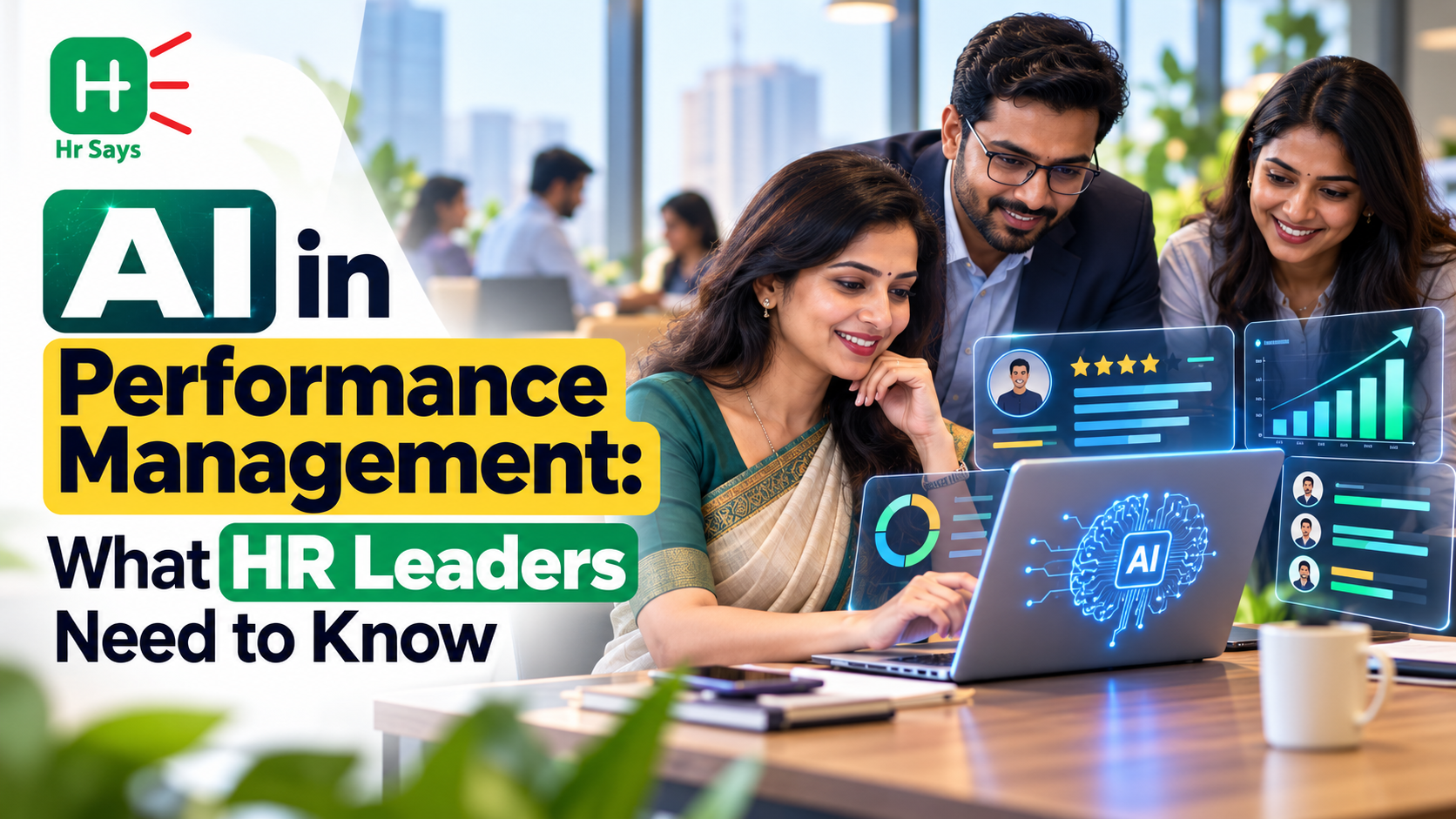
 AI is transforming performance management in Indian organisations by enabling continuous evaluation, reducing bias, and empowering HR leaders to make faster, more defensible talent decisions with human oversight.





Introduction
Performance management has long been one of the most debated and difficult responsibilities within any HR function. Annual appraisals, rating scales, and subjective manager feedback have shaped how organisations evaluate their people for decades. But in 2026, that model is under serious pressure. The workforce has changed. Expectations have shifted. And artificial intelligence has entered the room.
Across Indian organisations, from Bengaluru-based startups to large manufacturing conglomerates in Pune and Gurugram, HR leaders are actively exploring how AI can bring more accuracy, fairness, and efficiency to performance management. This is not simply a global trend that India is passively following. Indian companies are increasingly investing in homegrown and internationally sourced AI-powered HR tools to address very specific people challenges: high attrition, skills gaps, rapid workforce growth, and the need to make faster and more defensible decisions about talent.
This article explores what AI in performance management actually means in practice, the core technologies driving it, the genuine advantages it offers, the risks HR professionals must watch carefully, and how Indian organisations can approach implementation responsibly.
Understanding What AI in Performance Management Actually Means
Before exploring applications, it is important to define what the term actually covers. AI in performance management refers to the use of artificial intelligence technologies, including machine learning, natural language processing, and predictive analytics, to support the planning, execution, and evaluation of employee performance across an organisation.
This is not simply about replacing the annual appraisal with a digital form. The real value of AI lies in its ability to process large volumes of data continuously, identify patterns that would be invisible to a human reviewer, and surface insights that help managers and HR professionals make better decisions throughout the year.
The core technologies involved include:
- Machine learning: Identifies patterns in historical performance data and uses them to predict future outcomes, such as who is likely to miss targets or who is ready for a leadership role.
- Natural language processing (NLP): Analyses text-based feedback, performance reviews, and even internal communication for tone, specificity, and potential bias.
- Predictive analytics: Uses data from multiple sources to forecast employee flight risk, engagement decline, or development readiness before these issues become visible on the surface.
- Sentiment analysis: Evaluates how employees feel about their work, their teams, and the organisation, helping HR detect dissatisfaction early.
Together, these technologies allow organisations to move from a once-a-year review cycle to a continuous, data-informed approach to managing performance.
Why Traditional Performance Management Is Falling Short in India
The limitations of traditional performance management are particularly sharp in the Indian workplace context. India's corporate sector is among the fastest-growing in the world, and HR teams are under constant pressure to manage large workforces, reduce attrition, and identify high-potential talent in increasingly competitive talent markets.
The annual performance review, which still dominates many Indian organisations, carries several structural problems. It relies heavily on manager subjectivity. It suffers from recency bias, where a manager's assessment is disproportionately shaped by events from the last few weeks rather than the entire year. It creates anxiety among employees without always resulting in meaningful development and it consumes enormous administrative time that HR teams could spend on more strategic activities.
In tier 1 cities like Mumbai, Delhi, and Hyderabad, where the competition for skilled professionals in technology, finance, and healthcare is intense, these limitations translate into real business costs. Talented employees who feel their performance is being assessed unfairly are more likely to leave. And in a country where attrition rates in certain sectors routinely exceed 20 percent annually, that is a problem no organisation can afford to ignore.
AI-powered performance management systems directly address many of these gaps by replacing episodic, subjective evaluation with continuous, data-driven insight.
Key Applications of AI in Performance Management
The practical applications of AI in performance management are already well established and are expanding rapidly. Here is how forward-thinking Indian HR teams are using these tools today.
Continuous performance tracking is one of the most widely adopted applications. Instead of waiting for a quarterly or annual review, AI systems monitor ongoing work activity across platforms, including project management tools, communication channels, and goal-tracking software, to give HR and managers a real-time picture of how employees are performing against their objectives.
Automated and AI-assisted performance reviews reduce the burden on managers while improving the quality of written feedback. AI tools can analyse the language in a manager's review and flag feedback that is vague, overly negative, or potentially biased toward a particular gender or demographic group. This is particularly relevant in large Indian organisations where inconsistency in review quality across hundreds of managers is a persistent challenge.
Goal alignment and OKR tracking are areas where AI adds considerable value. AI systems can automatically link individual goals to team and organisational objectives, flag when goals are misaligned, and suggest adjustments in real time rather than waiting for mid-year check-ins.
Talent risk and succession planning use predictive models to identify which employees are at risk of leaving, which ones are ready for greater responsibility, and where the organisation's skill gaps are likely to emerge in the near future. For CHROs and HR business partners working in large Indian conglomerates, these insights can significantly improve workforce planning.
Personalised learning recommendations based on performance data allow organisations to offer employees targeted development resources rather than generic training programmes. An employee who consistently underperforms in cross-functional communication, for example, can be automatically directed to relevant learning content tied to that specific gap.
The Genuine Benefits for Indian Organisations
The adoption of AI in performance management offers several tangible advantages for organisations operating in the Indian business environment.
Reduced bias in evaluation is among the most significant. Algorithmic tools, when built and audited correctly, can reduce the influence of personal relationships, caste-based assumptions, and gender bias on performance ratings. While AI is not immune to bias, it creates a documented trail that can be reviewed and corrected in ways that a purely subjective manager assessment cannot.
Operational efficiency is another real benefit. HR teams in India, particularly in mid-sized companies, are often stretched thin. AI tools that automate the scheduling of review cycles, generate draft review templates, aggregate performance data across systems, and send alerts for at-risk employees free up HR professionals to focus on higher-value work such as talent development and culture building.
Employee experience improvements are also documented. When performance feedback is timely, specific, and tied to clear goals, employees tend to feel more engaged and more confident about their growth trajectory within the organisation. This is especially important for younger Indian professionals entering the workforce with high expectations of transparency and development.
Risks and Ethical Concerns That HR Must Not Ignore
The enthusiasm for AI in performance management must be balanced with a clear-eyed understanding of its risks. These are not hypothetical concerns. They are practical issues that have emerged as organisations around the world have implemented these tools, and India faces some specific challenges in this area.
Empirical studies caution that AI-based performance evaluations may inadvertently fail to account for individual circumstances such as health conditions, maternity and parental rights, disabilities, gender identities, and social identities, potentially leading to inaccurate performance assessments. This concern is particularly relevant in India, where protected categories under labour law include gender, caste, religion, and disability.
India is yet to legislate statutes on the lines of the European Union's AI Act, which classifies AI systems used in recruitment and employee management as high-risk and subjects them to strict conformity assessments, transparency obligations, and human oversight mechanisms to ensure fairness and prevent discrimination. This regulatory gap places a greater responsibility on Indian employers to self-regulate and build their own frameworks for ethical AI deployment in HR.
While the use of machine intelligence brings objectivity in decision-making, it is critical for employers to have sufficient checks and human interventions in place.
Surveillance culture is another risk that HR leaders in India must actively guard against. AI systems that monitor communication patterns, keyboard activity, or even facial expressions during virtual meetings can quickly erode employee trust. In a country where workplace relationships and psychological safety are deeply intertwined with organisational loyalty, the perception of constant surveillance can damage morale in ways that undermine the very productivity gains these tools are meant to deliver.
The "black box" problem refers to the fact that many AI systems produce recommendations without clearly explaining why. When an employee receives a low performance rating influenced by an algorithm they cannot understand or challenge, it creates a fundamental fairness problem. HR leaders must demand transparency from AI vendors and ensure that final performance decisions always involve human judgement.
How Indian HR Teams Can Implement AI in Performance Management Responsibly
The question for most Indian HR leaders is not whether to adopt AI in performance management but how to do so in a way that is ethical, practical, and genuinely beneficial for both the organisation and its people.
A phased and purposeful approach works better than wholesale adoption. Organisations should begin by identifying one or two specific pain points where AI can add clear value, such as reducing manager review inconsistency or identifying at-risk employees earlier. Piloting these tools in a controlled environment, measuring outcomes carefully, and gathering employee feedback before scaling is a far more sustainable path than deploying a comprehensive AI performance platform overnight.
Human oversight must be non-negotiable. AI should inform and support performance decisions, not make them unilaterally. HR policies should explicitly state that all final performance ratings, promotion decisions, and disciplinary actions are reviewed and confirmed by human managers before they are communicated to employees.
Vendor due diligence matters enormously. Indian HR teams evaluating AI performance management tools should ask vendors specific questions about how the underlying models were trained, what steps have been taken to test for bias, and how the system handles edge cases such as employees on extended leave or those with disabilities.
Employee communication and change management are equally critical. Rolling out AI tools without explaining their purpose, their limitations, and the protections in place for employees is a recipe for resistance and mistrust. Transparent communication builds the psychological safety that allows AI tools to actually work as intended.
Regular algorithmic audits, with frequent checks to ensure a performance AI system is not unduly penalising employees who take legally protected leave or accommodations, should be built into the organisation's HR governance calendar.
What the Future Holds for AI-Driven Performance Management in India
The trajectory of AI in performance management in India is clear. As more Indian companies scale rapidly, as hybrid and remote work becomes a permanent feature of the professional landscape, and as employee expectations for fairness and transparency continue to rise, AI-powered tools will become a standard part of the HR technology stack rather than a differentiator for early adopters.
The organisations that will benefit most are not necessarily those that deploy the most sophisticated AI tools first. They are the ones that approach this transformation thoughtfully, with a genuine commitment to using technology to serve their people rather than simply to monitor them. In a country where talent is one of the most critical competitive advantages an organisation can have, the difference between those two approaches matters enormously.
HRSays exists precisely to surface these kinds of conversations. Understanding where AI genuinely adds value, where it creates risk, and how to navigate that distinction is the kind of practical insight that HR leaders and workplace decision-makers in India need today.
Conclusion
AI in performance management is no longer an emerging concept. It is an active transformation that is reshaping how Indian organisations evaluate, develop, and retain their people. The technology offers genuine advantages: greater consistency, reduced bias, more timely feedback, and stronger talent planning. But it also carries real risks that must be managed with care, including algorithmic bias, loss of employee trust, and the absence of clear regulatory guardrails in the Indian context.
The path forward for HR professionals in India is not to resist this shift or to embrace it uncritically. It is to engage with it thoughtfully, with strong governance, clear human oversight, and a consistent focus on building workplaces where technology serves people rather than the other way around.
Frequently Asked Questions
Q1: What is AI in performance management and how does it work?
AI in performance management refers to the use of technologies such as machine learning, natural language processing, and predictive analytics to support the evaluation, tracking, and development of employee performance. These systems analyse data from multiple sources continuously and provide HR teams and managers with insights that help them make faster, more accurate, and more consistent performance decisions throughout the year.
Q2: What are the main benefits of using AI for performance reviews in Indian organisations?
The key benefits include reduced subjectivity and bias in evaluations, more consistent feedback quality across the organisation, earlier identification of employees who are at risk of leaving, personalised development recommendations tied to individual performance gaps, and significant reduction in administrative time spent by HR teams on managing review cycles.
Q3: What are the risks of AI in performance management that HR professionals should be aware of?
The major risks include the potential for AI systems to reflect and amplify existing biases if the training data is not representative, employee concerns about surveillance and privacy, lack of transparency in how AI-generated recommendations are produced, and the risk of automated systems making consequential decisions without adequate human oversight. Indian employers also face the challenge of operating in a regulatory environment that has not yet introduced comprehensive AI governance legislation for the workplace.
Q4: Is there any regulation governing the use of AI in performance management in India?
As of 2026, India does not have specific legislation governing AI use in employment or performance management, unlike the European Union, which classifies such systems as high-risk under its AI Act. Indian organisations are therefore expected to self-regulate and build their own ethical frameworks for responsible AI deployment, guided by existing labour law protections related to discrimination, privacy, and employee rights.
Q5: How should HR leaders approach the implementation of AI performance management tools?
A responsible implementation approach involves starting with a clearly defined pilot covering one or two specific use cases, ensuring strong human oversight at every decision point, conducting regular audits of the AI systems for bias and accuracy, communicating transparently with employees about how these tools work, and selecting vendors who can clearly explain how their models were built and tested. Building employee trust must be treated as a core implementation requirement, not an afterthought.
Resources
- Society for Human Resource Management (SHRM): Research and guidance on AI adoption in HR functions globally, including India-specific insights.
- International Bar Association (IBA): Analysis of legal and diversity implications of AI use in Indian workplaces across hiring and performance management.
- Ministry of Labour and Employment, Government of India: Official repository of Indian labour law, compliance requirements, and workforce policy frameworks.
- GreytHR Parichay Webinar Series: Practitioner-focused discussions on AI in performance management led by Indian HR leaders and strategic HR advisors.
- Capterra India 2025 HR Software Trends Survey: Primary survey data from 294 Indian HR professionals on the adoption and impact of AI in HR functions.
Interlinking Keywords
AI in performance management, artificial intelligence in HR, employee performance evaluation, performance management tools India, continuous performance feedback, HR technology India, predictive analytics HR, people analytics, performance appraisal software, OKR tracking AI, talent management AI, AI-powered HR systems, HR digital transformation India, employee engagement tools, workforce analytics India
Last Reviewed By
Dr. Manthan Tripathi and Hr Says Advisory Panel on 28 September, 2026.
Disclaimer
The information provided in this article is intended for general awareness and educational purposes only. It does not constitute legal, compliance, or HR consulting advice. Organisations are advised to consult qualified HR professionals, legal counsel, and technology vendors before implementing AI-based systems for employee performance management. The regulatory environment around AI in the workplace is evolving, and readers should refer to the latest applicable legislation and government guidance for their specific jurisdiction and sector.