Tuesday, September 29, 2026
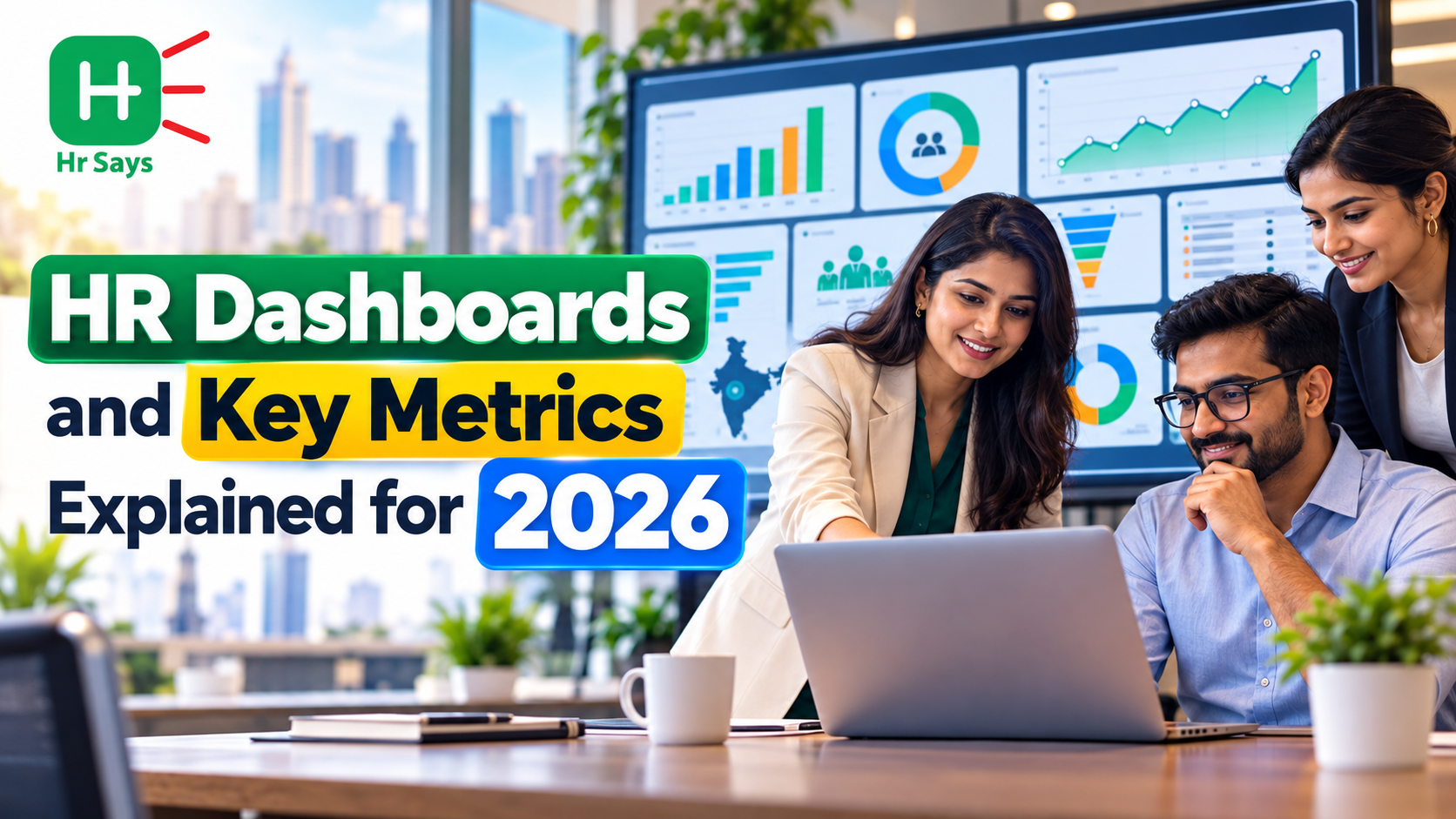
 HR dashboards consolidate real-time workforce data, enabling Indian HR leaders to track key metrics like attrition, engagement, and hiring efficiency for smarter, data-driven people decisions.





Introduction
Data is no longer optional in human resources. Across industries in India, from fast-growing startups in Bengaluru to large enterprises in Gurugram, HR leaders are under increasing pressure to justify every people decision with numbers. Yet many organizations still rely on scattered spreadsheets, outdated reports, and siloed systems that make it nearly impossible to get a clear picture of the workforce at any given moment.
This is where HR dashboards become essential. An HR dashboard is a centralized digital tool that pulls together critical workforce data and presents it visually, in real time, on a single screen. It transforms raw numbers into actionable intelligence. Whether an organization is tracking hiring performance, employee engagement, or compliance exposure, the right dashboard ensures that HR is no longer reactive but strategic.
The Indian HR technology market was valued at roughly USD 1,120 million in 2024 and is set for significant growth, largely fuelled by the rising adoption of workforce analytics and dashboards. This growth reflects a wider truth: Indian organizations that invest in data visibility are better positioned to retain talent, reduce costs, and build cultures that attract the right people.
What Is an HR Dashboard
An HR dashboard is a business intelligence tool that allows businesses and HR teams to record, evaluate, and report on various HR performance metrics. Business dashboards deliver high-level and interactive summaries of multiple types of information from multiple data sources that can be easily accessed and analyzed.
In practical terms, an HR dashboard acts as the central command panel for the HR function. Rather than flipping between multiple systems for payroll data, attendance records, and performance scores, HR teams can view all of this on one screen. Modern HR dashboard formats typically include customizable widgets that display metrics such as employee turnover rates, recruitment pipeline status, performance scores, attendance patterns, and compensation analytics.
The key distinction between an HR dashboard and a traditional HR report is worth noting. HR dashboards and HR reports both focus on data and metrics to inform decision-making, but they differ significantly in terms of format, purpose, and functionality. Dashboards offer speed and visual clarity for day-to-day decisions. Reports offer depth and narrative for long-term planning. Both are valuable, but it is the dashboard that gives HR leaders the agility modern workplaces demand.
Why HR Dashboards Matter for Indian Organizations
Indian companies today handle thousands of data points across attendance, payroll, performance, and employee behaviour, but most of this information stays scattered and underused. HR teams often know the symptoms but rarely get a complete view of why something is happening.
The scale of this challenge is significant in the Indian context. The overall employee attrition rate in knowledge-intensive sectors in India stands at 20 to 25 percent, according to the NASSCOM Industry Report 2024. High attrition is expensive, disruptive, and often preventable if leaders have visibility into the right signals early enough.
According to the Deloitte India Talent Outlook report, the use of HR analytics in Indian organizations is highest in variables such as attrition, workforce planning, and employee engagement. This confirms that Indian HR teams already recognize where analytics adds the most value. The dashboard is the interface that makes these analytics accessible to everyone, not just data specialists.
The Indian HR analytics market is growing at a CAGR of 14.3 percent up to 2030, which points to increased adoption across India, though mid-sized and larger companies currently lead in implementation. Smaller organizations that adopt dashboards early stand to gain a meaningful competitive advantage in talent management.
Types of HR Dashboards
Not every HR dashboard looks the same or serves the same purpose. Organizations typically deploy several types depending on the audience and the business question being answered.
Executive HR DashboardThis is designed for CHROs, CEOs, and senior leadership. It presents a high-level overview of the most business-critical workforce metrics, such as total headcount, cost per employee, overall attrition, and engagement scores. It is built for speed and clarity, not granular detail.
Recruitment DashboardA recruitment dashboard addresses a core function of HR: talent acquisition. Its features include applicant tracking metrics and conversion rates, source effectiveness analysis, time-to-fill and time-to-hire tracking, cost-per-hire calculations, candidate quality metrics, recruiter performance indicators, and offer acceptance rate tracking.
For Indian companies competing in a highly competitive talent market, this type of dashboard is particularly valuable. A recruitment and hiring analytics dashboard allows CHROs to understand the nuances of the local talent pool, optimize sourcing strategies for specific roles and regions, and benchmark performance against industry competitors within India.
Employee Performance DashboardAn employee performance dashboard helps managers track their team's and individual people's performance. This type of dashboard includes sales figures, customer satisfaction ratings, progress toward goals, and may also include figures like salary and tenure. It becomes especially important during appraisal cycles and when identifying high performers or flight risks.
Workforce Demographics DashboardWorkforce demographics dashboards combine data with information about hiring, compensation, engagement, and other HR initiatives. This is helpful for keeping biases in check and tracking diversity, equity, and inclusion metrics like pay equity, accessibility, and retention.
Employee Development DashboardAn employee development dashboard helps HR professionals track training, growth, and development data. These dashboards include training program metrics such as completion percentage, hours, and cost, which can be viewed through parameters such as employee demographic, department, team, and training module.
Key HR Metrics Every Leader Should Track
The value of a dashboard lies entirely in the quality of the metrics it displays. A dashboard is only as good as the numbers it shows. An HR leader needs the right metrics to navigate the complex world of workforce management. These key performance indicators turn raw data into a clear story about an organization's health, culture, and efficiency.
The following are the most important HR metrics for Indian organizations in 2026:
- Employee Turnover Rate: The percentage of employees who leave the organization over a defined period. High turnover signals deeper cultural or management issues and drives up recruitment and training costs.
- Time to Fill: The number of days between a job requisition being approved and a candidate accepting an offer. Companies that have adopted AI-driven recruitment technologies have seen a 30 percent reduction in time-to-hire, according to LinkedIn's 2024 Workforce Report for India.
- Cost Per Hire: The total investment required to fill one open position, including advertising, recruiter time, assessments, and onboarding costs. Tracking this metric helps organizations optimize hiring budgets.
- Employee Engagement Score: Derived from pulse surveys or annual engagement assessments, this metric reflects how emotionally invested employees are in their work and organization. Low engagement is a leading indicator of attrition.
- Absenteeism Rate: Measures unplanned leave patterns across teams or departments. Persistent absenteeism often points to burnout, low morale, or health concerns.
- Training Return on Investment (ROI): Measures the business impact of learning and development programs relative to their cost. It helps justify L&D budgets and identify which programs actually improve performance.
- HR-to-Employee Ratio: Indicates how many employees each HR professional supports. This metric guides decisions around HR team hiring and workload distribution.
- Revenue Per Employee: A strategic metric that connects workforce performance to business outcomes. It helps leadership understand how efficiently the organization is using its human capital.
Overtime rate, payroll exception volume, vacancy aging, time-to-fill, 90-day retention, and employee relations case cycle time are high-signal efficiency metrics that predict cost, risk, and staffing stability. These are especially useful for HR teams that report directly to finance or operations leadership.
How to Build and Use an HR Dashboard Effectively
Building an effective HR dashboard is not simply a technology exercise. It requires a clear understanding of what decisions the dashboard needs to support.
The first step is defining the audience. An executive dashboard for the CHRO looks very different from a recruiting dashboard used by a talent acquisition team. Each dashboard should answer a specific set of business questions.
The second step is selecting the right data sources. In Indian organizations, HR data often lives across multiple systems, including HRMS platforms, payroll software, attendance management tools, and performance management systems. Modern, interactive dashboards allow HR teams to gather and combine data from different HR and business systems and analyze this data without having to switch between tools.
The third step is maintaining data hygiene. A dashboard built on inaccurate or incomplete data will produce misleading insights. Regular audits of source data quality are essential.
The fourth step is ensuring accessibility. HR dashboards should present complex data in a visually appealing and accessible format, with customization options that allow businesses to display relevant data, and streamlined reporting that facilitates easy report creation and automated distribution.
Finally, a dashboard must drive action. HR dashboards only drive value when data is interpreted and acted upon, turning workforce trends into targeted decisions. Focusing on a small set of relevant, goal-driven metrics is more impactful than tracking everything, so meaningful insights surface without data overload.
HR Dashboards and the Future of Workforce Intelligence in India
The conversation around HR dashboards in India is rapidly evolving from basic reporting to predictive intelligence. The HR tech market in India is projected to reach USD 2,300 million by 2033, growing at a CAGR of 7.9 percent from 2023 to 2033, as the majority of HRMS technologies replace old-fashioned methods such as spreadsheets and manual data entry.
Platforms built for Indian organizations are now integrating payroll, attendance, performance, leave, and compliance into unified dashboard ecosystems that update in real time. As more Indian companies move toward hybrid work, distributed teams, and project-based employment, the need for real-time workforce visibility will only intensify.
For HR leaders, the opportunity is clear. Organizations that invest in the right dashboards and the right metrics will make faster decisions, build stronger teams, and create workplaces that retain talented people. For professionals and organizations looking to understand, benchmark, and improve their HR practices, platforms like HRSays provide the context and knowledge needed to navigate these conversations with confidence.
Conclusion
HR dashboards are no longer a luxury reserved for large enterprises. They are a practical necessity for any organization that wants to manage its workforce with clarity and confidence. From tracking attrition to measuring training ROI, the right metrics on the right dashboard give HR leaders the tools to move from gut-based decisions to data-backed strategy. In the Indian context, where workforce complexity and competitive talent markets create unique challenges, dashboards represent one of the most powerful investments an HR team can make.
Frequently Asked Questions
Q1: What is an HR dashboard?
An HR dashboard is a centralized digital business intelligence tool that consolidates and visually presents key human resources data, such as employee turnover, hiring pipeline status, attendance patterns, and performance scores, all on a single screen. It enables HR leaders to monitor workforce health in real time and take faster, more informed decisions.
Q2: What are the most important HR metrics to track in 2026?
The most impactful HR metrics for 2026 include employee turnover rate, time to fill, cost per hire, employee engagement score, absenteeism rate, training ROI, HR-to-employee ratio, and revenue per employee. These metrics together provide a comprehensive view of workforce efficiency, culture, and business alignment.
Q3: How is an HR dashboard different from an HR report?
An HR dashboard offers real-time, visual, high-level summaries of workforce data that support quick, day-to-day decisions. An HR report, by contrast, provides detailed, in-depth analysis that is better suited to long-term strategic planning. Both serve important but distinct purposes in an effective HR function.
Q4: What types of HR dashboards should Indian companies use?
Indian organizations typically benefit from a combination of dashboards depending on their size and priorities. The most commonly used types include the executive HR dashboard, recruitment dashboard, employee performance dashboard, workforce demographics dashboard, and employee development dashboard.
Q5: Why is workforce data particularly important for Indian HR leaders?
India's knowledge-intensive sectors face an attrition rate of 20 to 25 percent, and the workforce is growing across diverse geographies, industries, and employment models. Real-time workforce data through HR dashboards helps Indian HR leaders identify flight risks early, optimize hiring, ensure compliance, and make strategic people decisions that directly impact business outcomes.
Resources
- NASSCOM Industry Report 2024: Data on attrition rates in India's knowledge-intensive sectors and HR technology adoption trends.
- Deloitte India Talent Outlook 2024: Insights on HR analytics usage, AI adoption in human capital management, and workforce planning in Indian organizations.
- People Matters HR Technology Report 2024: Projections on the Indian HR technology market size and growth trajectory through 2033.
- LinkedIn Workforce Report India 2024: Findings on AI-driven recruitment technologies and their impact on time-to-hire for Indian companies.
- Gallup State of the Global Workplace 2026: Global and regional employee engagement benchmarks, with context on how Indian workplaces compare on engagement and productivity.
Interlinking Keywords
HR metrics for startups, workforce analytics tools India, employee turnover rate meaning, what is an HRMS dashboard, HR KPIs for CHROs, people analytics India, recruitment dashboard explained, employee engagement score, how to reduce attrition India, HR technology trends 2026
Last Reviewed By
Dr. Manthan Tripathi and Hr Says Advisory Panel on 26 September 2026.
Disclaimer
The information in this article is for general educational purposes only. Statistics and figures referenced are sourced from publicly available reports and may change over time. Readers are advised to verify current data directly from original sources before making any business or strategic decisions. This article does not constitute professional HR consulting or technology implementation advice. HRSays publishes content for awareness and knowledge-sharing purposes only.