Sunday, September 20, 2026

 HR automation simplifies repetitive tasks, improves accuracy, and enhances employee experience. By focusing on key processes and maintaining human connection, organizations can create efficient systems that support both operational needs and meaningful workplace relationships.




An expanding organization is usually submerged in the recurring HR routine. Recruitment, training, payroll, and personnel records begin eating up too much time as compared to strategy. This is where intelligent automation comes in not to perform the work of people, but to optimize it and make all procedures more comfortable, quicker and more consistent.
Why HR Automation Is No Longer Optional
The HR teams would no longer be required to simply manage people. They will be supposed to promote performance, culture and retention. However, too big part of their time is devoted to manual work which does not contribute much to strategic value.
In case of automated processes consistency is achieved and errors minimized. Information is processed with better precision, and the risks of compliance are mitigated. Data about employee performance is easier to follow, the attendance can be controlled, and the payroll is processed without delays.
A noticeable shift has been seen in companies adopting HR tech tools and cloud-based HR software. Tasks that once took hours are now completed in minutes. This allows HR professionals to focus on employee engagement, workplace culture, and long-term planning.
Another important benefit is transparency. Employees are given access to self-service portals where they can update information, apply for leave, or check payslips without constant HR intervention. This not only saves time but also builds trust.
Automation is not about removing the human side of HR. It is about removing friction so that human interactions can improve.
Key HR Processes That Can Be Automated Effectively
Not every process needs automation, but some areas benefit greatly when handled through smart systems. The goal is to identify repetitive and data-heavy tasks that slow down productivity.
Recruitment and Applicant TrackingHiring can become overwhelming when applications pile up. With automated applicant tracking systems:
- Resumes are screened based on keywords
- Interview schedules are coordinated automatically
- Candidate communication is streamlined
This ensures that no strong candidate is missed due to manual oversight.
Employee OnboardingFirst impressions matter. Automated onboarding ensures that new hires experience a smooth transition.
- Documents are collected and verified digitally
- Training schedules are pre-assigned
- Welcome emails and guidelines are shared automatically
This reduces confusion and helps employees settle in faster.
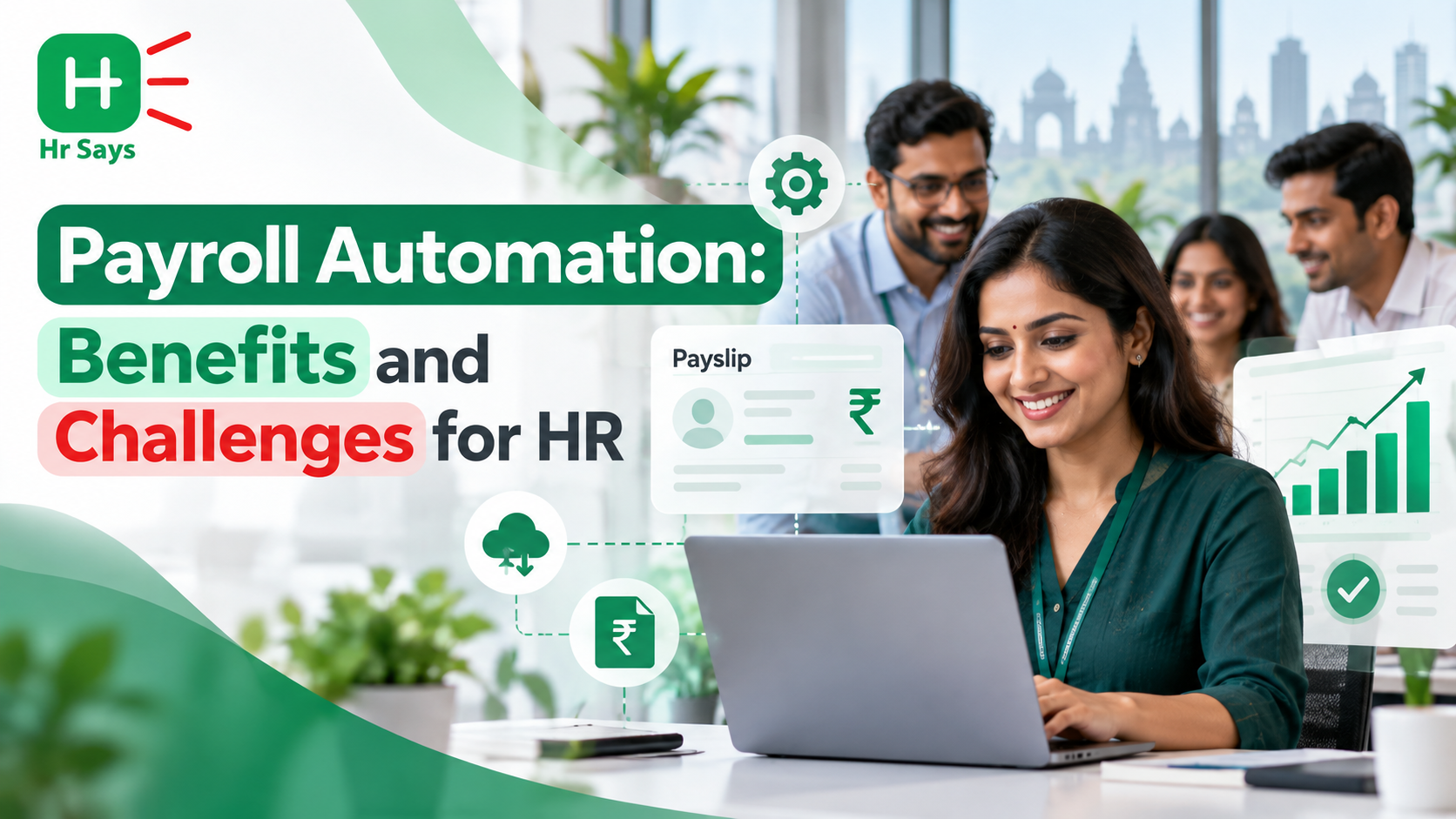
Payroll and Compliance ManagementPayroll errors can damage trust. With automation:
- Salary calculations are handled accurately
- Tax deductions are applied as per regulations
- Compliance reports are generated easily
This reduces dependency on manual calculations and lowers the risk of mistakes.
Performance ManagementTracking performance manually often leads to bias or inconsistency. Automated tools help by:
- Setting measurable goals
- Tracking progress continuously
- Generating performance reports
This allows fair and data-driven evaluations.
Choosing the Right Tools Without Overcomplicating
It is tempting to adopt multiple tools at once, but that often leads to confusion rather than efficiency. The smarter approach is to start small and scale gradually.
The following should be considered while selecting HR automation tools:
- Ease of use and user interface
- Integration with existing systems
- Data security and compliance standards
- Customization based on company needs
A tool should simplify processes, not add another layer of complexity.
It is also important to train teams properly. Even the best software fails if it is not understood or used correctly. Adoption should be gradual, with clear guidance provided at every step.
Balancing Automation With Human Connection
While automation handles structure, people still define culture. HR cannot become entirely system-driven. Conversations, empathy, and understanding remain essential.
Routine tasks can be automated, but conflict resolution, motivation, and leadership require a human touch. A balanced approach ensures that efficiency does not come at the cost of connection.
Automation should support HR professionals, not distance them from employees. When used correctly, it creates more space for meaningful interactions.
Conclusion
HR automation is not just a trend but a shift in how workplaces function. When implemented thoughtfully, it reduces workload, improves accuracy, and enhances employee experience. The focus should always remain on using technology to support people, not replace them.