 Saturday, October 31, 2026
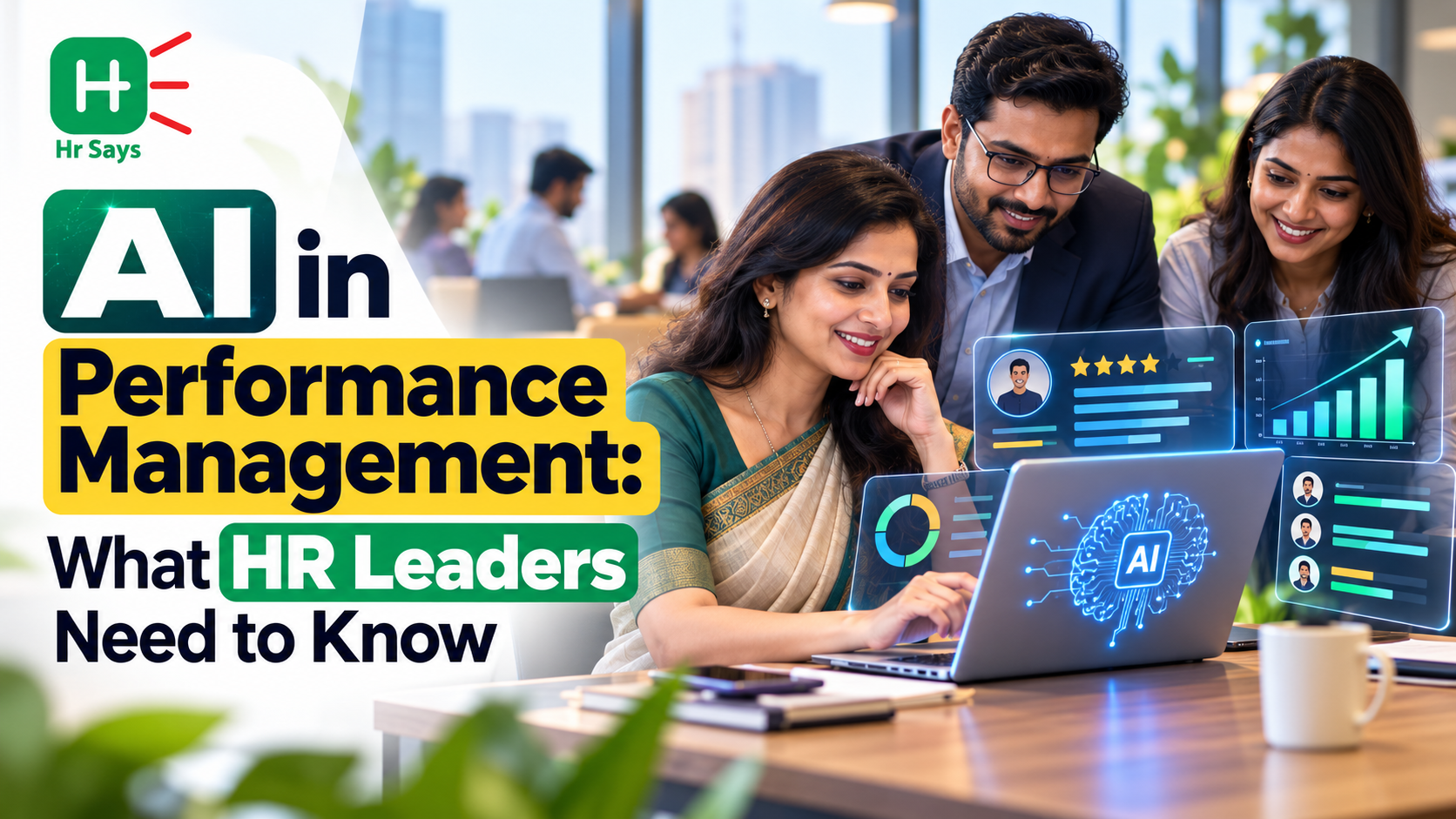
 Auditing AI tools in HR ensures fairness, compliance, and transparency. Indian HR leaders must review bias, data privacy, explainability, and vendor accountability to govern AI responsibly across people functions.





Introduction
Artificial intelligence has moved quickly from being a future-facing concept to a daily operational reality inside human resources departments across India and beyond. HR teams today are using AI-powered platforms to screen resumes, predict employee attrition, match candidates with roles, monitor workforce productivity, and even evaluate engagement levels through sentiment analysis tools. These technologies promise efficiency, speed, and data-driven decisions.
But efficiency without accountability is a risk that no organization can afford to carry silently.
When an AI tool recommends rejecting a candidate, flags an employee as a flight risk, or scores applicants based on historical patterns, there are layers of assumptions, training data choices, and algorithmic logic embedded in that decision. Those layers are not always visible. They are not always fair. And in many cases, they have not been reviewed in any structured way after deployment.
An AI audit in human resources is the process of systematically evaluating whether the AI tools an organization uses are performing as intended, operating without bias, complying with applicable laws, protecting employee and candidate data, and aligning with the organization's values. In India, where HR technology adoption is accelerating across both large enterprises and growing startups in cities like Bengaluru, Hyderabad, Pune, and Mumbai, understanding how to conduct this audit is becoming a core HR competency.
This guide walks HR leaders through the what, why, and how of auditing AI tools in the workplace.
Understanding What an AI Audit in HR Actually Means
Many HR professionals assume that AI auditing is purely a technical task owned by the IT department or an external data science team. That is a misconception that leaves critical gaps in accountability. A proper AI audit in human resources is a cross-functional exercise that brings together HR leaders, legal and compliance teams, technology stakeholders, and where possible, employee representatives.
At its core, an AI audit is a structured review process that examines several dimensions of an AI system:
- Whether the tool is performing the function it was procured for
- Whether it is producing fair and unbiased outputs across different employee and candidate groups
- Whether it complies with data protection regulations and organizational privacy policies
- Whether employees and candidates are aware of how AI is being used in decisions that affect them
- Whether the vendor supplying the tool can demonstrate transparency about how the system works
In India, the legal framework around AI in employment is still evolving, but organizations are increasingly expected to align with the Digital Personal Data Protection Act, 2023 and broader governance expectations set by bodies such as NITI Aayog through its national AI strategy. An AI audit helps organizations stay ahead of these expectations rather than react to them after a problem has already occurred.
Why Indian Organizations Need Structured AI Audits in HR
The adoption of AI in HR has been growing significantly across India's corporate landscape. According to NASSCOM research and industry trend reports, a large and increasing number of Indian enterprises are integrating AI into at least one HR function, whether that is talent acquisition, workforce planning, or employee experience. Startups in the HR technology space are also growing rapidly, bringing new tools to market faster than most HR teams can fully evaluate them.
This speed of adoption creates a real and specific risk. Organizations implement tools, integrate them into workflows, and begin making consequential decisions about people without always pausing to ask whether the tool is actually working correctly, fairly, or lawfully.
The risks of not auditing include:
- Algorithmic bias that disadvantages women, candidates from certain regions, or individuals from specific educational or socioeconomic backgrounds
- Data breaches involving sensitive employee information stored within third-party AI platforms
- Legal exposure under data protection and employment law if an AI-driven decision is challenged
- Loss of employee trust if workers discover they are being monitored or evaluated by opaque systems
- Vendor dependency on tools that cannot demonstrate their own performance or fairness metrics
Indian organizations operating across sectors such as information technology, banking, manufacturing, and healthcare are especially exposed to these risks given the scale and diversity of their workforces.
Key Areas to Cover When Auditing HR AI Tools
A comprehensive audit of AI tools in human resources should be structured around five core areas. Each of these areas requires specific questions, evidence collection, and review criteria.
Inventory and Purpose ReviewBefore evaluating any AI tool in depth, HR leaders need to build a complete inventory of every AI-powered system currently active within their HR function. This sounds straightforward but is often more complicated than expected. Many organizations are using AI features embedded within larger HR software platforms without fully recognizing them as AI-driven components.
The inventory should capture the name and vendor of the tool, the specific HR function it serves, how long it has been in use, who owns the vendor relationship, what data it processes, and what decisions or recommendations it influences. Once this inventory is complete, the team should evaluate whether each tool is still serving the purpose for which it was originally adopted.
Bias Detection and Fairness AssessmentThis is arguably the most consequential dimension of any HR AI audit. AI tools trained on historical hiring or performance data can inadvertently learn and reinforce existing patterns of discrimination. A recruitment AI trained on a company's past hiring decisions may systematically deprioritize candidates from certain colleges, regions, genders, or age groups, not because of an explicit rule, but because the historical data reflected those biases.
HR teams should request demographic breakdown reports from vendors showing how the tool's outputs differ across candidate or employee groups. Where such reports are not available, organizations should insist on contractual commitments to provide them. Internal HR teams should also run sample tests using anonymized candidate or employee profiles to identify whether measurable disparities exist in outputs.
In the Indian context, this review must be sensitive to dimensions including gender, regional background, language, educational institution tier, and disability status.
Data Privacy and Security ComplianceHR AI tools process some of the most sensitive personal data in any organization, including financial information, performance records, health-related data, behavioral patterns, and in some cases psychometric assessments. The Digital Personal Data Protection Act, 2023 in India places specific obligations on organizations regarding how personal data is collected, stored, processed, and shared.
The audit must confirm that the AI vendor has a published data processing agreement, that employees and candidates have been informed about how their data is used in AI systems, that data is not retained longer than necessary, that cross-border data transfers comply with applicable rules, and that the organization has a process for responding to data access or deletion requests.
Transparency and ExplainabilityA well-functioning AI tool in HR should be able to explain its outputs in terms that HR professionals and affected individuals can understand. If a recruitment AI scores a candidate poorly, HR should be able to access the factors that drove that score. If a performance analytics tool flags an employee as underperforming, the basis for that flag should be traceable and reviewable.
During the audit, HR leaders should test whether the vendor can provide meaningful explanations of how the tool arrives at its outputs. Completely black-box systems that cannot offer any explanation create both ethical and legal risks, particularly when individual employees or candidates challenge a decision.
Performance Benchmarking and Continuous MonitoringAI tools are not static. They evolve, and their accuracy or fairness can shift over time as data inputs, workforce demographics, or organizational conditions change. The audit should establish baseline performance metrics for each tool and set a schedule for ongoing monitoring.
Performance indicators worth tracking include prediction accuracy rates, false positive and false negative rates in screening tools, candidate conversion rates across demographic groups, and employee satisfaction with AI-assisted processes.
Building an AI Audit Framework for Your Organization
Rather than treating an AI audit as a one-time exercise, HR leaders should embed it into a repeatable governance framework. This involves three practical steps.
First, establish an internal AI review committee that includes HR, legal, IT, and ideally an independent employee voice. This committee should be responsible for approving new AI tool adoption, setting audit cycles, and reviewing audit findings.
Second, develop a standard audit questionnaire that vendors must complete before onboarding and at regular intervals thereafter. This questionnaire should cover data handling practices, bias testing methodology, explainability features, regulatory compliance certifications, and incident history.
Third, integrate audit findings into procurement and renewal decisions. If a vendor cannot demonstrate fairness, transparency, or compliance, the organization should have a clear policy on whether to remediate the relationship or discontinue the tool.
HRSays, as a platform committed to practical workplace knowledge and responsible HR leadership, recognizes that conversations around AI governance are no longer optional for modern HR teams. The organizations that will lead on people practices in the coming years are those that take a proactive, structured approach to understanding and governing the technology they use to make decisions about people.
Conclusion
Auditing AI tools used in human resources is not a technical formality. It is a leadership responsibility. As Indian organizations continue to integrate AI into hiring, performance management, engagement tracking, and workforce planning, the HR function must take ownership of ensuring that these tools are fair, transparent, lawful, and aligned with the organization's commitment to its people.
A structured AI audit covering inventory review, bias assessment, data privacy compliance, explainability standards, and continuous performance monitoring gives HR leaders the clarity and control they need to use AI responsibly. It protects employees and candidates from algorithmic harm, protects organizations from legal and reputational risk, and builds the kind of trust that modern workplaces depend on.
The question is not whether your organization needs an AI audit. If AI tools are already active in your HR processes, the audit is already overdue.
Frequently Asked Questions
Q1: What is an AI audit in human resources?
An AI audit in human resources is a structured review process that evaluates whether AI tools used in HR functions are performing accurately, producing fair and unbiased outputs, complying with data protection laws, and aligning with organizational ethics and values.
Q2: How often should an organization audit its HR AI tools?
Organizations should conduct a comprehensive audit annually at a minimum. However, any significant change in vendor infrastructure, a major update to the AI model, a change in applicable law, or an employee or candidate complaint involving an AI-driven decision should trigger an immediate review.
Q3: What is algorithmic bias and why does it matter in HR?
Algorithmic bias occurs when an AI system produces systematically unfair or discriminatory outputs, often because it was trained on historical data that reflected existing inequalities. In HR, this can result in qualified candidates being filtered out unfairly or certain employee groups being evaluated at a disadvantage.
Q4: Does Indian law require organizations to audit AI tools used in HR?
India's Digital Personal Data Protection Act, 2023 imposes obligations around data processing transparency, consent, and data subject rights that directly affect how HR AI tools must be governed. While a formal legal mandate for AI audits in employment is still developing, regulatory expectations and organizational risk management make audits a necessary practice.
Q5: Can small and mid-sized companies in India also implement AI audits?
Yes. While large enterprises may have dedicated teams for this work, small and mid-sized organizations can begin with a simplified audit checklist covering the tools they use, the data those tools process, vendor transparency, and basic fairness checks. The audit does not need to be complex to be meaningful.
Resources
- NITI Aayog: Responsible AI for All, India's national AI strategy and governance principles
- Ministry of Electronics and Information Technology (MeitY): Digital Personal Data Protection Act, 2023 guidance and compliance resources
- NASSCOM: Reports on AI adoption in Indian enterprises and HR technology trends
- SHRM (Society for Human Resource Management): Global frameworks for ethical AI use in human resources
- LinkedIn Talent Insights and World Economic Forum: Research on AI in hiring, workforce equity, and responsible automation
Interlinking Keywords
AI audit in HR, AI tools for recruitment India, algorithmic bias in hiring, HR AI governance, data privacy in HR, responsible AI in the workplace, Digital Personal Data Protection Act HR, AI compliance for HR teams, future of HR technology, HR technology India
Last Reviewed By
Dr. Manthan Tripathi and Hr Says Advisory Panel on 29 October 2026.
Disclaimer
The information provided in this article is intended for general educational and informational purposes only. It does not constitute legal advice. Organizations should consult qualified legal and compliance professionals before implementing AI governance frameworks or making decisions based on applicable regulations. HRSays does not endorse any specific AI tool, vendor, or audit methodology referenced in this content.