 Monday, November 02, 2026
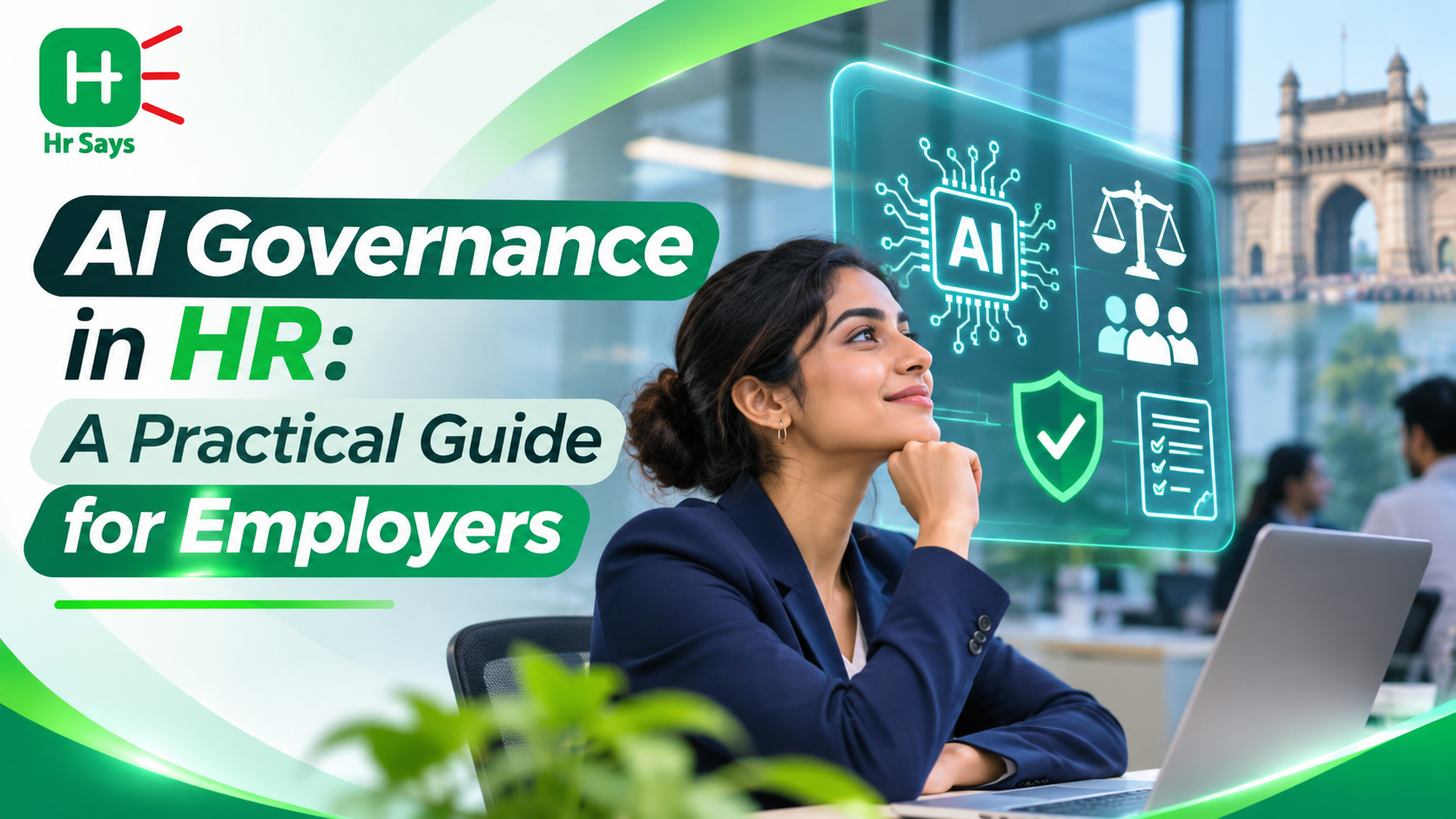
 AI governance in HR helps Indian employers deploy artificial intelligence ethically, fairly, and in compliance with data laws, building employee trust and organizational accountability across the people function.





Introduction
Artificial intelligence is no longer a distant concept for HR professionals in India. It is already embedded in how organizations source candidates, evaluate resumes, conduct psychometric assessments, manage attendance, predict attrition, and measure employee performance. As AI tools become standard features of HR technology stacks, a critical question is rising to the surface: who is responsible when these systems go wrong?
AI governance in HR is the answer to that question. It refers to the set of policies, structures, processes, and ethical frameworks that organizations put in place to ensure that AI is used responsibly, fairly, and in compliance with applicable laws and values. For Indian employers, this is not just a matter of good practice. It is quickly becoming a business necessity as regulatory scrutiny, employee awareness, and global compliance expectations increase.
This guide breaks down what AI governance in HR actually means, why it matters for Indian organizations, and how employers can take practical steps to build responsible AI systems into their people practices.
Understanding AI Governance in the HR Context
AI governance in HR is best understood as an organizational commitment to responsible oversight of every AI-powered tool that touches the employee lifecycle. This includes applicant tracking systems that filter resumes, video interview platforms that analyze candidate facial expressions, learning management systems that recommend training paths, and performance management tools that generate ratings or flag underperformers.
Governance does not mean slowing down innovation. It means ensuring that innovation does not happen at the cost of fairness, accuracy, legal compliance, or employee trust. A well-governed AI system in HR is one that is transparent about how it works, auditable when decisions are questioned, and correctable when errors occur.
For Indian employers, AI governance also means navigating a unique landscape. India's workforce is diverse across gender, caste, language, religion, and regional background. AI models trained on biased historical data can unknowingly reproduce discrimination at scale. Without governance structures in place, an HR team may not even realize that their AI hiring tool is disadvantaging qualified candidates from certain backgrounds.
Why AI Governance Is Now a Priority for Indian Employers
Several converging factors are making AI governance in HR an urgent priority for organizations across India.
The first is regulatory momentum. India's Digital Personal Data Protection Act, 2023, creates obligations around how organizations collect, process, and use personal data, including the data used to power AI systems. Employee data, candidate data, and behavioral data collected through HR tools all fall within its scope. Organizations that use AI without proper data governance frameworks expose themselves to compliance risk.
The second factor is the rise of employee awareness. Today's workforce, especially younger professionals in Tier 1 and Tier 2 cities, is increasingly aware of how algorithms shape career outcomes. When employees feel that AI-generated performance scores or AI-curated promotion recommendations are opaque or unfair, trust in the organization erodes. This directly affects engagement, retention, and employer brand.
The third factor is global accountability expectations. Indian companies with global operations, foreign investors, or multinational clients are increasingly expected to demonstrate responsible AI practices. ESG (Environmental, Social, and Governance) frameworks now include AI ethics as a component of organizational governance, and investors and partners are beginning to ask questions about it.
Key Pillars of an Effective HR AI Governance Framework
Building a governance framework for AI in HR does not require a separate department or a massive budget. It requires intention, structure, and accountability. The following pillars form the foundation of a practical framework.
Transparency and ExplainabilityEvery AI tool used in HR should be capable of explaining its outputs in human terms. If an AI system ranks a candidate lower, there should be a clear rationale available to HR leaders. If a performance algorithm flags an employee for a corrective action plan, the factors behind that flag must be explainable. Employers should require vendors to provide documentation on how their AI models work, what data they use, and how decisions are generated.
Bias Auditing and Fairness TestingAI systems can amplify existing biases if they are trained on historical data that reflects past discrimination. Indian employers should conduct regular bias audits of AI tools used in hiring, performance management, and promotion. These audits should specifically test for disparate impact across gender, age, disability status, and where legally permissible and relevant, other demographic dimensions. Third-party audits provide greater credibility than self-assessments.
Data Governance and Privacy ComplianceAI systems in HR are data-hungry by nature. Governance requires that organizations know exactly what data their AI tools collect, how it is stored, how long it is retained, and with whom it is shared. Under India's Digital Personal Data Protection Act, 2023, employees have rights over their personal data, including the right to access information about how it is processed. HR teams must be equipped to respond to data requests and to withdraw or correct data when needed.
Human Oversight and Intervention RightsA core principle of responsible AI is that humans remain in the loop for decisions that significantly affect individuals. Automated AI decisions in hiring, performance reviews, disciplinary actions, or salary adjustments should always be subject to human review before they are implemented. Employees should have a clear and accessible process to challenge AI-generated decisions and request a human review.
Vendor AccountabilityMost Indian organizations use third-party HR technology platforms rather than building their own AI tools. This does not transfer governance responsibility to the vendor. Employers must include AI governance requirements in their vendor contracts, conduct due diligence on vendor AI practices, and regularly review whether the tools they use meet their ethical and compliance standards.
Building an AI Governance Policy for HR: Where to Start
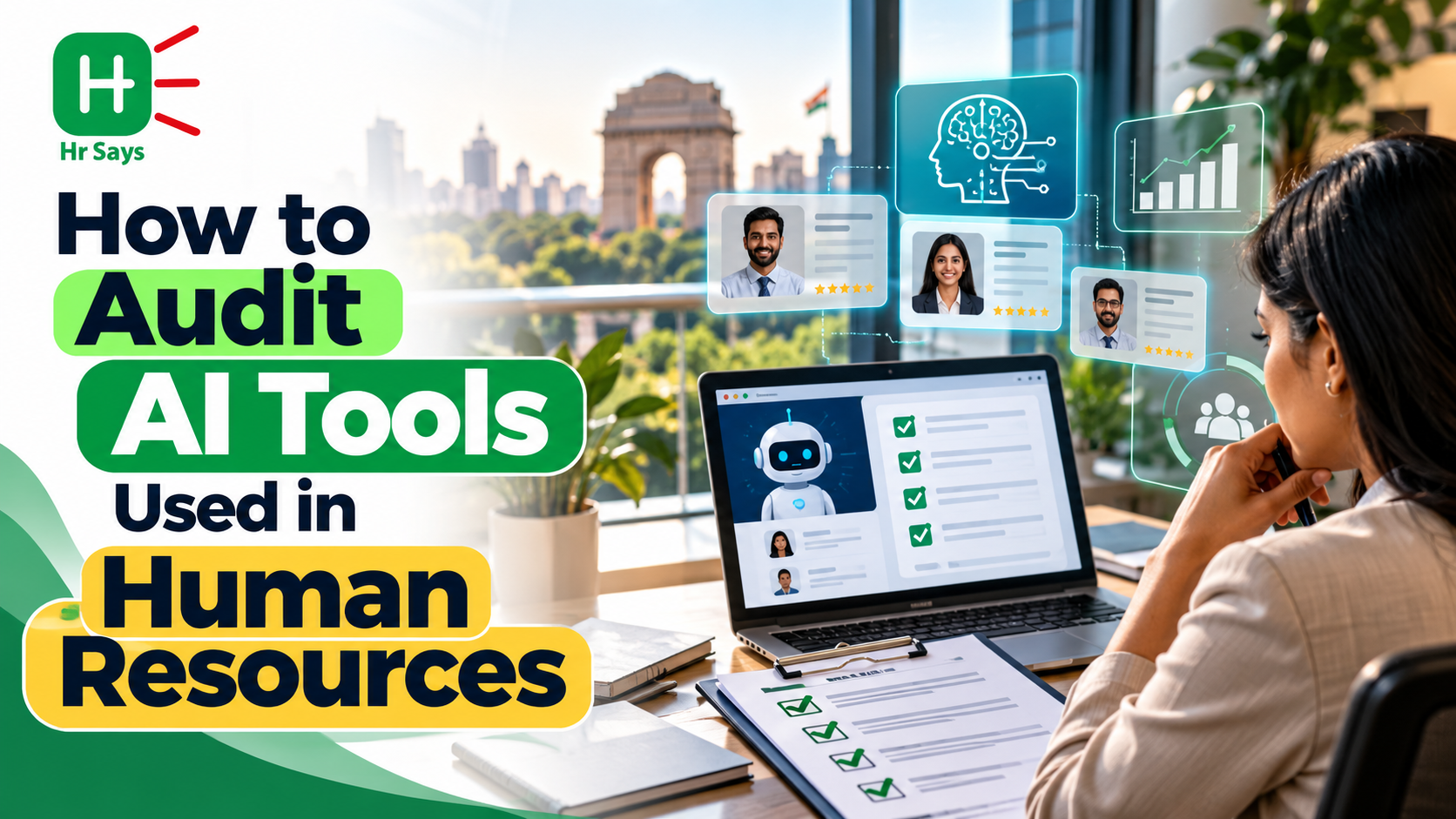
For many Indian HR leaders, the idea of writing an AI governance policy can feel abstract or premature. The practical starting point is an inventory. Organizations should begin by listing every AI-powered or algorithm-driven tool currently in use across the HR function, from resume screening platforms to chatbot-based candidate communication tools to predictive attrition models.
Once the inventory is complete, each tool should be assessed against a short set of governance questions:
- What decisions does this tool inform or make?
- What data does it use, and where does that data come from?
- Has the tool been audited for bias or accuracy?
- What happens when the tool makes a mistake?
- Who is accountable for this tool's outcomes within the organization?
This assessment creates a baseline. From this baseline, HR leaders can prioritize which tools carry the highest governance risk, typically those used in hiring and termination decisions, and address those first.
The Role of HR Leaders in Responsible AI Adoption
HR professionals in India are often among the first adopters of new workplace technologies, and they are also uniquely positioned to be its ethical gatekeepers. This dual role requires a new set of competencies.
HR leaders need to develop a working understanding of how AI systems function, not at a technical coding level, but at a conceptual level that allows them to ask the right questions, evaluate vendor claims critically, and recognize when an AI output deserves scrutiny rather than blind acceptance.
HR teams also need to serve as employee advocates within the AI governance conversation. They must ensure that the voice of the workforce is reflected in how AI is deployed, especially in performance and behavioral monitoring tools that have significant psychological impact on employees. In India, where hierarchical workplace cultures can make employees reluctant to question authority, HR has a responsibility to create safe channels for raising concerns about AI-related unfairness.
AI Governance and the Future of Work in India
India is projected to be one of the fastest-growing adopters of AI-powered HR technology in the Asia-Pacific region over the next five years. Organizations that build strong AI governance foundations now will be better positioned to scale their AI adoption confidently, attract global talent, meet investor expectations, and avoid regulatory penalties.
AI governance is not a constraint on innovation. It is the infrastructure that makes sustainable innovation possible. For Indian employers, it represents an opportunity to lead not just in productivity, but in trust.
Platforms like HRSays provide HR professionals with the knowledge, frameworks, and peer conversations needed to navigate this evolving space with clarity and confidence. Understanding AI governance is no longer optional for HR leaders. It is a defining competency for the modern HR function.
Frequently Asked Questions
Q1: What is AI governance in HR, and why does it matter for Indian employers?
AI governance in HR refers to the policies, oversight structures, and ethical frameworks that guide how AI tools are used across the employee lifecycle, from hiring to performance management to exit. It matters for Indian employers because AI systems can produce biased, inaccurate, or legally non-compliant outcomes if left unmonitored. With India's Digital Personal Data Protection Act, 2023, now in effect, responsible AI use is both an ethical obligation and a regulatory requirement.
Q2: How can HR teams identify bias in AI hiring tools?
HR teams can identify bias in AI hiring tools by conducting structured audits that compare the tool's outputs across different demographic groups. This includes testing whether the tool produces different shortlisting outcomes for candidates with similar qualifications but different genders, regional backgrounds, or educational institutions. Engaging a third-party auditor for an independent bias assessment provides stronger credibility than internal testing alone.
Q3: Are Indian companies legally required to disclose AI use in hiring decisions?
India does not yet have a specific law mandating disclosure of AI use in hiring. However, under the Digital Personal Data Protection Act, 2023, candidates and employees have rights related to how their personal data is processed, which includes data used to power AI systems. Additionally, global standards and ESG frameworks increasingly expect transparency in AI-assisted decision-making. Proactive disclosure is considered a best practice and a trust-building measure.
Q4: What should an organization include in an AI governance policy for HR?
An AI governance policy for HR should include an inventory of all AI tools in use, a framework for bias auditing, data governance and privacy compliance standards, rules for human oversight in high-stakes decisions, a process for employees to challenge AI-generated outcomes, and clear accountability assignments for each tool. The policy should also specify how vendors are assessed for their own AI governance practices.
Q5: How does AI governance support employee trust in the workplace?
When employees know that AI tools are governed by clear standards, subject to human review, and open to challenge, they are more likely to trust the outcomes those tools produce. Transparent AI governance signals that the organization values fairness over convenience and that no algorithm will determine an employee's career trajectory without accountability. This directly strengthens psychological safety, engagement, and long-term retention.
Resources
- Ministry of Electronics and Information Technology, Government of India: Official portal for India's Digital Personal Data Protection Act, 2023, and related data governance policy updates.
- National Institution for Transforming India (NITI Aayog): Published the Responsible AI for All framework and Principles for Responsible AI, which provide guidance on ethical AI adoption in India.
- Organisation for Economic Co-operation and Development (OECD): The OECD AI Principles offer internationally recognized standards for trustworthy AI, including transparency, accountability, and human oversight, widely referenced in corporate AI governance frameworks.
- World Economic Forum: Publishes research and toolkits on responsible AI in the workplace, including practical frameworks for governing HR technology in emerging markets.
- Ministry of Labour and Employment, Government of India: Provides policy context on workplace rights, labor protections, and emerging guidance on technology use in employment settings.
Interlinking Keywords
AI governance framework, ethical AI in hiring, HR technology compliance India, AI bias in recruitment, responsible AI workplace, digital personal data protection HR, employee data privacy India, AI performance management, human oversight in AI, future of work India, HR technology policy, AI attrition prediction
Last Reviewed By
Dr. Manthan Tripathi and Hr Says Advisory Panel on 31 October 2026.
Disclaimer
The information provided in this article is intended for general awareness and professional knowledge purposes only. It does not constitute legal advice. Organizations should consult qualified legal and compliance professionals for guidance specific to their jurisdiction, industry, and operational context. References to regulations, frameworks, and policies are accurate as of the date of publication and may be subject to change.