 Wednesday, October 21, 2026

 This article examines the future of HR technology in India, covering agentic AI, Labour Code payroll compliance, DPDP Act obligations, and strategic priorities for Indian HR leaders in 2026.





Introduction
India's HR function is undergoing one of its most significant transformations in decades. The forces driving this change are not abstract. They include the consolidation of AI capabilities into enterprise platforms, the rollout of new Labour Codes, the emergence of the Digital Personal Data Protection Act 2023, and a domestic HR software market that is now crossing the USD 1 billion threshold.
For HR professionals, founders, CHROs, and business leaders, the question is no longer whether technology will reshape people management in India. It already is. The real question is whether organisations are building their HR technology strategy around tools that actually get used, or around platforms that look impressive in a boardroom presentation but quietly collect dust within six months.
This article examines the key shifts defining HR technology in India in 2026, the compliance obligations that every HR leader must understand, and the practical steps that organisations of all sizes can take to stay relevant and legally protected.
Understanding the HR Technology Landscape in India Today
India's HR technology market is no longer a small or emerging segment. It is a serious, fast-scaling industry with significant investment flowing into both domestic platforms and international solutions adapted for Indian regulatory requirements.
The market is projected to exceed USD 1 billion in 2026, with strong growth expected through the end of the decade. This growth is being driven by several intersecting factors: the formalisation of India's workforce through EPFO and ESIC registration, the introduction of national Labour Codes that require payroll reconfiguration, increasing awareness around employee data rights, and the rising expectations of a younger Indian workforce that expects digital-first HR experiences.
What distinguishes 2026 from previous years is the shift in what Indian HR buyers are actually purchasing. The move is away from isolated point solutions, a payroll tool here, an attendance system there, a performance module sitting in a separate dashboard, and toward integrated systems that connect all of these functions into one coherent platform. This consolidation trend is not driven by convenience alone. It is driven by the hidden and very real cost of running five tools that cannot communicate with each other.
For organisations in Tier 1 cities such as Mumbai, Bengaluru, Delhi, and Hyderabad, where HR teams are larger and compliance exposure is higher, this shift has already begun. For companies in Tier 2 cities such as Indore, Coimbatore, Surat, and Lucknow, where HR teams are often lean and stretched, the pressure to adopt smarter, more integrated technology is arriving quickly.
The Rise of Agentic AI in Indian HR
The most significant technology shift in HR for 2026 is not the chatbot. Chatbots have existed in HR for several years and are now widely understood as tools that answer questions rather than solve problems. The more meaningful shift is the emergence of agentic AI, which refers to software that can autonomously complete multi-step tasks from start to finish without requiring a human to prompt every action.
In practical terms, this means an HR system that does not just tell a recruiter what the leave policy says, but actually files a leave request, routes it through the appropriate approval hierarchy, and updates attendance records automatically. It means a payroll engine that does not just process salaries but flags anomalies in real time before the payroll run is finalised. It means a hiring workflow where a job description is generated from a title and role brief, relevant resumes are ranked by fit, and interview schedules are sent without manual coordination.
Agentic AI matters for Indian HR teams because India's HR function has historically been under-resourced relative to the scale of workforce management it must handle. A manufacturing unit in Pune with 800 workers, a retail chain spread across 12 states, or a logistics company managing thousands of gig workers all face enormous administrative complexity. Agentic AI does not replace the HR professional managing these teams. It removes the transactional burden so that the professional can focus on decisions that genuinely require human judgment.
It is worth being clear about what agentic AI cannot do. It cannot build trust between an employee and a manager. It cannot design a performance culture that motivates people. It cannot navigate the nuances of a sensitive grievance. These remain firmly human responsibilities, and any organisation that treats AI as a replacement for thoughtful people management will discover the limits of that approach quickly.
Labour Code Compliance and the Payroll Reckoning
India's four Labour Codes represent the most significant restructuring of labour law in the country's post-independence history. The Code on Wages, the Industrial Relations Code, the Social Security Code, and the Occupational Safety Code consolidate over 40 older labour laws into a unified framework. As these codes move toward state-level notification and implementation, their impact on payroll structures and HR technology is already being felt.
The most immediate payroll consequence comes from the Code on Wages definition of wages. Under this definition, wages must constitute at least 50 percent of an employee's total pay. Many Indian organisations have historically structured CTC packages with a high proportion of allowances, allowances that are not subject to Provident Fund or Gratuity calculations. Under the new wage definition, if these allowances cross 50 percent of total pay, the excess is reclassified as wages, which raises the employer's PF and Gratuity liability and reduces the employee's take-home amount.
For organisations that have not yet modelled this impact, the first priority should be running a parallel payroll simulation using the new wage definition. This allows the finance and HR teams to understand the liability change before it becomes mandatory, and to communicate changes to employees with adequate preparation time.
HR technology platforms that serve Indian organisations must now have Labour Code compliance built into their core payroll logic, not added as an afterthought. The ability to configure wage definitions, run parallel pay scenarios, and generate compliant reports without requiring custom development each time the rules change is now a baseline expectation, not a premium feature.
Data Privacy and the DPDP Act 2023
The Digital Personal Data Protection Act 2023 is reshaping how Indian organisations handle employee data, and HR technology is directly in its scope. Under the Act, employee data is classified as personal data that requires specific, informed consent from the individual before it can be collected or processed.
Organisations now need to issue consent notices to employees that clearly define what data is being collected, why it is being collected, and how long it will be retained. The Act also requires that data subjects, including employees, have the ability to access their own data and request corrections. For HR teams, this means that the payslip portal, the leave management system, and the performance records database must all support employee self-service access as a matter of compliance, not merely convenience.
The most operationally demanding requirement is the 72-hour breach-reporting obligation. If employee data is compromised, the organisation must report the breach to the Data Protection Board of India within 72 hours. This requires a pre-designed incident response workflow, clear internal escalation protocols, and an HR technology platform that can identify and report the scope of a breach quickly.
Penalties under the Act can reach up to 250 crore rupees for significant violations. For HR leaders, this is not a theoretical compliance risk. It is a board-level conversation that must be had now, with concrete answers about how employee data is stored, who can access it, and what happens if it is compromised.
Key HR Technology Trends Shaping India in 2026
Several specific trends are defining how Indian organisations are investing in HR technology this year. These trends are not speculative. They are visible in purchasing patterns, in regulatory developments, and in the specific challenges that HR professionals across industries are asking for help with.
Skills-based hiring is gaining significant ground across Indian organisations. Research from SHRM in 2026 shows that recruiters are increasingly prioritising critical thinking, adaptability, and problem-solving over credential-based screening. This shift is pushing organisations to invest in tools that can assess candidate capability more holistically rather than filtering purely on educational qualifications.
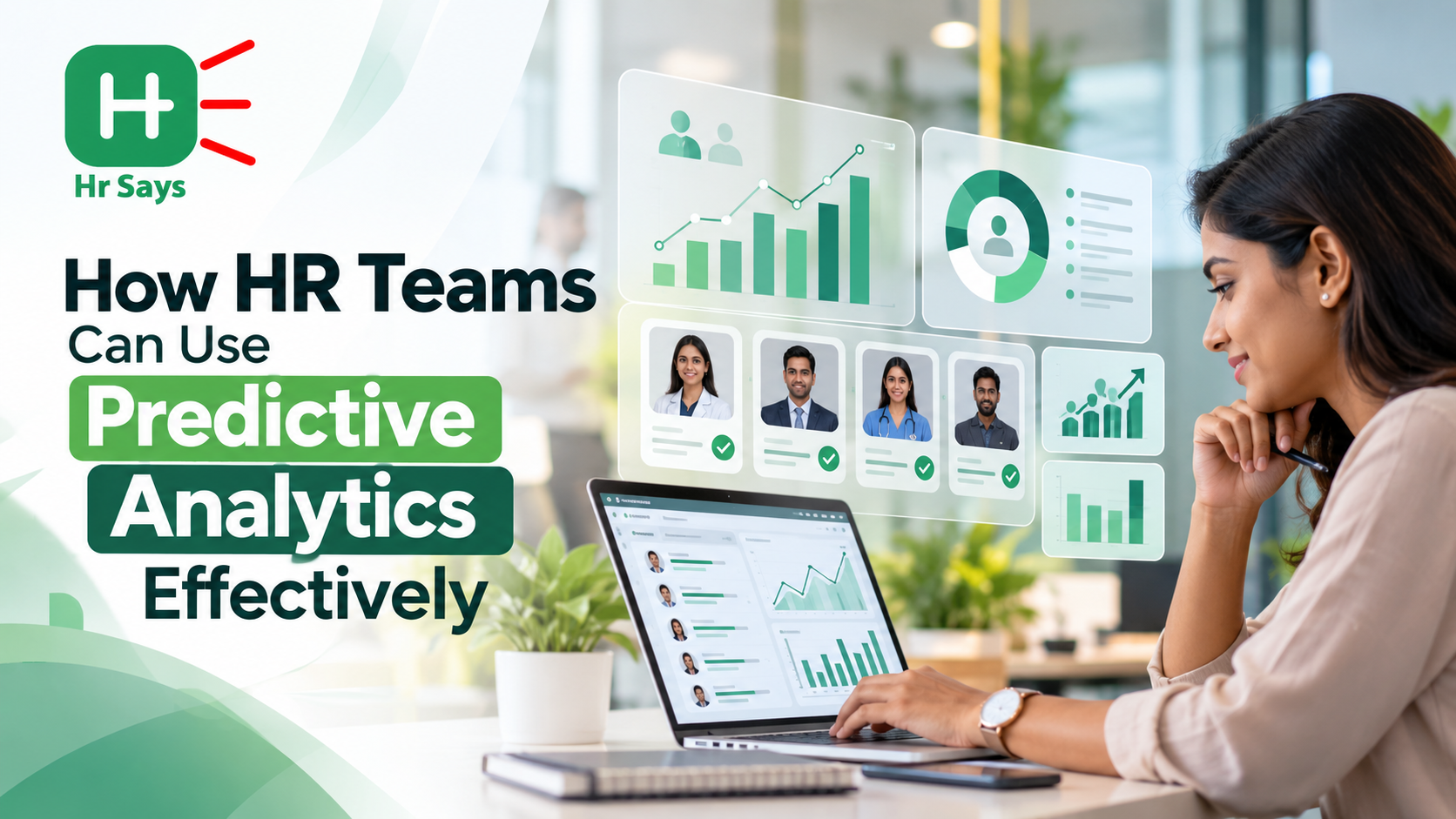
Predictive attrition analytics is moving from a niche enterprise capability to a mainstream expectation. Platforms that can identify employees at risk of resignation before they submit their notice, based on engagement signals, tenure patterns, and workload indicators, are giving HR teams the ability to intervene proactively rather than scrambling to manage an unexpected departure.
Mobile-first HR self-service is no longer optional for organisations with field-based, factory-floor, or distributed workforces. Workers in retail, logistics, manufacturing, and construction do not have access to desktop systems for attendance marking, leave requests, or payslip viewing. HR platforms that do not offer reliable, offline-capable mobile access are structurally unable to serve a significant portion of India's formal workforce.
Gig worker social security is an emerging compliance area that many HR teams are only beginning to address. New regulatory frameworks are placing obligations on platform aggregators to contribute to social security for gig and platform workers. Organisations that rely on gig talent, which is a growing proportion of workforces across e-commerce, food delivery, and professional services, need payroll and compliance systems that can accommodate these contributions.
What Indian HR Leaders Should Do Next
Preparing for the future of HR technology in India does not require a complete technology overhaul. It requires a clear-headed assessment of where the biggest gaps are and a disciplined approach to closing them in order of priority.
The following areas deserve immediate attention:
- Conduct a wage definition audit to model the payroll impact of the Code on Wages 50 percent rule before it is enforced in your state.
- Review data governance practices and issue DPDP-compliant consent notices to all employees, with a documented 72-hour breach response plan in place.
- Evaluate whether your current HR technology stack is integrated or fragmented, and calculate the real cost of manual reconciliation between disconnected systems.
- Identify one high-volume, repetitive HR process, such as attendance tracking or resume screening, and pilot an AI-assisted workflow to build internal comfort with automation before scaling it.
- When evaluating HR platforms, demand evidence of ROI tracking, transparent pricing without mandatory lock-in periods, and genuine integration capability with your existing payroll and biometric systems.
HRSays exists to help HR professionals, business leaders, and workplace decision-makers navigate exactly these kinds of transitions. The conversations happening on this platform reflect the real challenges that Indian organisations face as they try to build workplaces that are compliant, efficient, and genuinely good places to work.
Conclusion
The future of HR technology in India is not a distant horizon. It is already being built in the choices that HR leaders, founders, and CHROs are making right now about which platforms to invest in, which compliance frameworks to build around, and which parts of the HR function to automate versus protect.
What matters most is not which platform has the most impressive AI demonstration. What matters is whether the technology your organisation adopts actually gets used, connects to the systems your teams already rely on, and makes your HR function more capable of doing the human work that no system can replace. India's workplaces are at a genuine inflection point. The organisations that approach this moment with clarity, compliance readiness, and a genuine commitment to their people will be the ones that look back on 2026 as the year they got it right.
Frequently Asked Questions
Q1: What is the future of HR technology in India?
The future of HR technology in India is defined by integrated AI-powered platforms, Labour Code compliance automation, and data privacy frameworks under the DPDP Act 2023. Indian organisations are moving away from fragmented tools toward unified systems that reduce manual effort, improve compliance accuracy, and support strategic HR decision-making.
Q2: How is agentic AI different from a regular HR chatbot?
A chatbot answers questions by retrieving information. Agentic AI autonomously completes multi-step tasks such as screening candidates, routing approvals, flagging payroll anomalies, and updating records without requiring a human to prompt every step. The difference is the ability to execute end-to-end workflows rather than simply respond to queries.
Q3: Will AI replace HR professionals in India?
AI is not expected to replace HR professionals in India. It is designed to remove repetitive administrative tasks so that HR teams can invest more time in culture building, employee engagement, grievance management, and people strategy. Judgment, empathy, and relationship management remain fundamentally human capabilities that no technology can replicate.
Q4: What does the DPDP Act 2023 require from HR teams?
The Digital Personal Data Protection Act 2023 requires organisations to obtain informed consent from employees before collecting or processing their personal data, provide employees with self-service access to their own records, and maintain a breach-reporting workflow that can notify the Data Protection Board of India within 72 hours of a data incident. Non-compliance can attract penalties of up to 250 crore rupees.
Q5: What should Indian companies look for in an HR technology platform in 2026?
Indian companies should look for platforms that offer genuine integration with existing payroll, attendance, and recruitment systems, India-specific Labour Code compliance, DPDP data governance features, mobile-first access for field workers, transparent pricing without lock-in, and measurable ROI tracking. A platform that cannot connect to your existing stack on day one is not future-ready, regardless of its AI features.
Resources
- Ministry of Labour and Employment, Government of India: Official source for Labour Code notifications, wage definitions, and compliance timelines for Indian organisations.
- Ministry of Electronics and Information Technology (MeitY): Primary authority on the Digital Personal Data Protection Act 2023, including consent frameworks and Data Protection Board guidelines.
- Employees Provident Fund Organisation (EPFO): Authoritative source on PF contribution rules, employer obligations, and the impact of new wage definitions on provident fund calculations.
- Society for Human Resource Management (SHRM): Research and insights on global and India-specific HR trends, including skills-based hiring and AI adoption in HR functions.
- NITI Aayog: Reports on gig workforce formalisation, future of work in India, and policy frameworks for platform-based employment.
Interlinking Keywords:
HR technology India, Labour Code compliance, DPDP Act HR, agentic AI HR, future of work India, HR automation, skills-based hiring India, predictive attrition analytics, HRMS India, payroll compliance India
Last Reviewed By:
Hr Says Advisory Panel on 4 September, 2026
Disclaimer:
This article is intended for informational purposes only and does not constitute legal, financial, or compliance advice. HR leaders and organisations should consult qualified legal and HR compliance professionals before making decisions related to Labour Code implementation, DPDP Act obligations, or HR technology investments. Regulatory timelines and obligations may vary by state and industry. Readers are encouraged to verify all compliance requirements with official government sources.