 Thursday, November 05, 2026
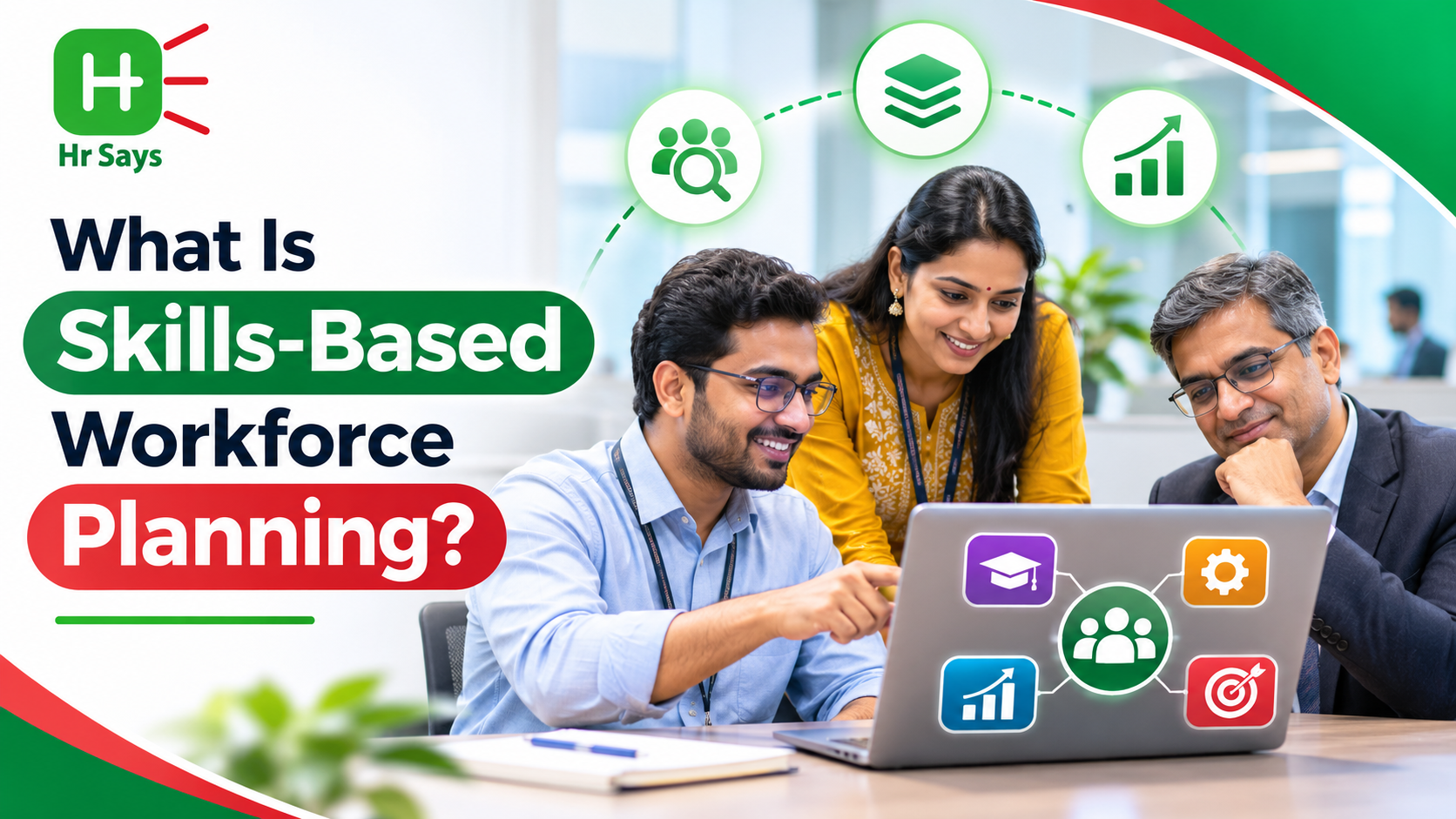
 Skills-based workforce planning shifts organisational talent strategy from job titles and degrees toward real human capability, helping Indian organisations close skill gaps, improve agility, and build future-ready teams effectively.





Introduction
The way organisations plan their workforce is changing in fundamental ways. For decades, HR leaders in India and across the world depended on a familiar system: hire for job titles, fill roles based on years of experience, and rely on educational qualifications as a proxy for capability. That system is now showing visible cracks.
India's overall employability rate improved to 56.35 percent in 2026 according to the India Skills Report, yet organisations continue to report persistent skill gaps across critical functions. Digital transformation, the rapid adoption of artificial intelligence, and shifting business models are creating demand for capabilities that do not always exist inside traditional job descriptions. The solution that forward-thinking HR leaders are turning to is skills-based workforce planning.
Skills-based workforce planning represents a meaningful shift in how organisations understand, plan for, and develop their talent. Rather than asking "how many people do we have in which roles," it asks a more precise question: "what capabilities do we have, where are the gaps, and how do we close them?" This guide explains what skills-based workforce planning is, why it matters for Indian organisations today, and how HR professionals can begin implementing it.
Understanding Skills-Based Workforce Planning
At its core, skills-based workforce planning is a talent strategy approach that treats skills as the primary unit of planning. Instead of mapping headcount across job titles and departments, organisations build a living inventory of the capabilities their people possess, identify the skills the business will need to execute its strategy, and then make deliberate decisions about how to hire, develop, redeploy, or acquire talent to close the gap.
The distinction from traditional workforce planning is both practical and strategic. Traditional headcount planning counts seats. It tells you how many software engineers, sales managers, or compliance officers are on the payroll. Skills-based planning tells you what those people can actually do. It identifies whether your software engineers have the cloud architecture skills your next product requires, or whether your sales managers understand the analytics tools your organisation is investing in.
This matters because roles themselves have become less stable. Rapid automation, AI integration, and evolving market demands mean that the tasks attached to a job title in 2024 may look entirely different by 2027. A workforce planning model built on static job descriptions cannot keep pace with that rate of change. A skills-based model is designed to do exactly that.
According to the World Economic Forum's 2025 data cited by SHRM India, approximately 30 percent of companies in India planned to shift to skills-based hiring, compared with 19 percent globally. That number has only accelerated through 2026, as companies in sectors ranging from technology to manufacturing to healthcare recognise the need for a more dynamic approach to talent management.
Why Indian Organisations Are Adopting This Approach in 2026
Several structural forces are converging in India to make skills-based workforce planning not just desirable but increasingly necessary.
The first is the pace of AI adoption. Across sectors from fintech to healthcare to logistics, AI tools are being embedded into day-to-day operations. This changes what tasks belong within a role, which capabilities are critical, and where new responsibilities are emerging. As SHRM India noted in its 2026 workplace trends analysis, AI adoption has become a workforce design issue, not only an implementation decision. HR teams that plan by headcount alone cannot adequately respond to this reality.
The second is India's Viksit Bharat ambition. As India moves toward its long-term national development goals, employers are increasingly moving beyond degree-based hiring toward skills-led workforce strategies, as Deloitte India's 2026 Campus Workforce Trends Study highlighted. This shift is influencing hiring practices at scale across industries, from large IT services firms to fast-growing startups.
The third is internal talent pressure. Organisations that historically hired externally to fill capability gaps are now recognising that external hiring is expensive, time-consuming, and increasingly competitive. Skills-based workforce planning makes internal mobility a realistic and cost-effective alternative. When an organisation knows precisely what skills its current employees hold, it can match internal talent to new needs rather than defaulting to external recruitment.
Companies like Infosys and HCLTech have already built platforms to enable role shifts based on skills, aligning talent with real-time business needs. These examples signal where large Indian organisations are heading, and smaller companies are following.
Key Components of a Skills-Based Workforce Planning Model
Implementing this approach requires more than a policy change. It involves rebuilding several core HR processes around skills as the foundation.
Skills Taxonomy and InventoryThe foundation of any skills-based system is a clearly defined taxonomy: a structured catalogue of the skills relevant to the organisation, broken into categories such as technical skills, functional skills, and behavioural competencies. Once the taxonomy is established, the organisation conducts a skills inventory, mapping what capabilities currently exist across its workforce.
Skills Gap AnalysisWith the inventory in place, organisations can perform a gap analysis by comparing the skills they have with the skills their strategic plan requires. This is where workforce planning becomes genuinely strategic. The gap analysis tells HR leaders where to invest in learning and development, where to recruit, and where to explore workforce restructuring.
Skills-Based Job ArchitectureTraditional job descriptions are built around tasks and reporting lines. Skills-based job architecture rebuilds this foundation around capability requirements. Job profiles specify the skills needed to perform a role effectively rather than simply listing responsibilities. This enables more accurate hiring, more meaningful performance assessment, and more targeted development planning.
Continuous Learning and Internal MobilitySkills-based planning only delivers sustained value if it is paired with a continuous learning ecosystem. When employees understand which skills the organisation values and which capabilities are growing in demand, they can take ownership of their own development. Internal mobility programmes that match employees to projects or roles based on skill adjacency make this development tangible and career-relevant.
Workforce Analytics and TechnologyEffective skills-based workforce planning depends on data. HR technology platforms that capture skills data, track learning progress, and surface insights about capability gaps are increasingly central to how organisations manage talent. In India, HR technology adoption has accelerated significantly in 2026, with AI-powered skills intelligence platforms enabling real-time workforce analysis that would have been impractical just a few years ago.
Benefits of Skills-Based Workforce Planning
The business case for this approach is well-supported by evidence from organisations that have made the transition.
Greater Organisational AgilityOrganisations that plan around skills can rapidly redeploy talent when business priorities shift. Rather than waiting to hire, they can identify internal employees whose skills closely match a new need and move them into the work quickly. This agility is particularly valuable in fast-moving sectors and in the kind of uncertain economic environment that Indian businesses navigated through the mid-2020s.
Stronger Hiring OutcomesLinkedIn's 2026 Talent Velocity Advantage Report found that skills-based hiring leaders outperformed others by 28 percentage points, with higher retention confidence at 76 percent versus 50 percent, and better workforce alignment at 85 percent versus comparable benchmarks. These numbers reflect a core reality: when organisations hire for actual capability rather than proxies like degrees or job titles, they make better hiring decisions.
Reduced Skill Gap RiskBy 2030, 39 percent of workers' core skills are expected to change, according to research cited by skills intelligence platforms. Organisations that build their workforce planning around skills are better positioned to anticipate and respond to that disruption rather than being caught unprepared.
Improved Employee Experience and RetentionWhen employees see that their development and career progression are tied to the skills they build, they are more likely to invest in growth and stay with the organisation. Skills-based organisations signal that growth is possible from within, which directly supports retention.
Better Use of Existing TalentOne of the most immediate benefits reported by organisations that implement this model is the discovery of underutilised talent. When skills are mapped systematically, organisations frequently find that employees hold capabilities that are not being used in their current roles. Redirecting this talent is both more efficient and more motivating for the employees involved.
How to Implement Skills-Based Workforce Planning: Practical Steps
Moving from a traditional to a skills-based model is a process, not a single event. The following steps offer a practical starting framework for HR leaders and business heads considering this transition.
The first step is to define the organisation's skills taxonomy. This means identifying the categories of skills that are strategically relevant and building a structured vocabulary that the entire organisation can use consistently. Without a shared language for skills, the data collected in subsequent steps becomes difficult to interpret or act on.
The second step is to conduct a skills inventory across the current workforce. This can be done through self-assessment surveys, manager assessments, learning platform data, or AI-powered skills inference tools. The goal is to build a reliable baseline of what capabilities exist today.
The third step is to align the skills inventory with the organisation's strategic roadmap. What business objectives are planned for the next one to three years? What capabilities will those objectives require? Answering these questions creates the skills demand picture that sits alongside the skills supply picture from the inventory.
The fourth step is to perform a gap analysis. This comparison between the skills the organisation has and the skills it will need reveals where the critical shortfalls are. Some gaps will be addressed through training and development, some through hiring, and some through restructuring or technology adoption.
The fifth step is to redesign talent processes around skills. Hiring criteria, performance frameworks, career pathing, and succession planning should all be updated to reflect skills as the primary currency of talent decisions.
The sixth and ongoing step is to measure and recalibrate. Skills-based workforce planning is a living system. Skills inventories need to be refreshed regularly, and the gap analysis should be revisited as business strategy evolves. Setting clear metrics around skills coverage, internal mobility rates, and time-to-fill for skill-critical roles helps the organisation track progress and make evidence-based adjustments.
The Indian HR Context: Tier 1 and Tier 2 Considerations
For HR leaders at Indian organisations, skills-based workforce planning carries specific contextual relevance that deserves attention.
Tier 1 cities like Bengaluru, Hyderabad, Mumbai, and Pune have already seen significant traction for skills-first talent strategies, particularly in the technology and financial services sectors. Senior management compensation in Mumbai averaged 40.04 lakh per annum in early 2026 signals, reflecting that specialist capability commands a premium. Skills-based planning helps organisations in these markets compete more strategically for high-demand talent.
In Tier 2 cities, the context is different but equally compelling. The talent pool in cities like Indore, Coimbatore, Nagpur, and Jaipur is growing, and organisations that can identify skills rather than simply evaluate degrees or city-based experience are accessing a far larger and often more cost-effective workforce. The Tier 2 talent boom that Indian HR leaders are witnessing in 2026 is partly being enabled by exactly this kind of skills-based thinking.
For HR professionals at organisations of all sizes, the National Skill Development Corporation's frameworks and the Ministry of Skill Development's competency standards offer a useful starting reference for building a skills taxonomy that maps to industry-recognised credentials.
Conclusion
Skills-based workforce planning is not a trend to be observed from a distance. It is a strategic shift that is already reshaping how Indian organisations hire, develop, deploy, and retain talent. As AI adoption accelerates, degree-based proxies lose their reliability, and the pace of business change intensifies, the organisations that build their workforce planning around real human capability will be the ones best positioned to execute strategy, retain talent, and compete effectively.
For HR leaders, CHROs, and business founders in India, the question is no longer whether to adopt skills-based workforce planning. The question is how to begin, and how to build the internal capability to do it well. Platforms, frameworks, and industry examples are available. The most important step is the decision to start.
Frequently Asked Questions
Q1: What is skills-based workforce planning?
Skills-based workforce planning is a talent strategy approach that focuses on identifying, mapping, and deploying employee skills as the foundation of all workforce decisions, rather than relying on job titles, educational qualifications, or years of experience.
Q2: How does skills-based workforce planning differ from traditional workforce planning?
Traditional workforce planning focuses on headcount and role-based structures. Skills-based workforce planning focuses on capability. It identifies what skills the organisation currently holds, what the business strategy requires, and how to close the gap through hiring, development, or internal mobility.
Q3: Why is skills-based planning important for Indian companies in 2026?
India faces persistent skill gaps despite improving employability rates, and the rapid pace of AI adoption is reshaping role requirements across industries. Skills-based planning helps organisations stay agile, deploy talent more efficiently, and respond to change without being dependent on slow and expensive external hiring.
Q4: What are the key steps to implement skills-based workforce planning?
The key steps include defining a skills taxonomy, conducting a skills inventory of the current workforce, aligning the inventory with business strategy, performing a gap analysis, redesigning talent processes around skills, and regularly measuring and recalibrating the plan.
Q5: What technology tools support skills-based workforce planning in India?
AI-powered skills intelligence platforms, integrated HR management systems with skills tracking capabilities, learning experience platforms, and workforce analytics tools all support skills-based workforce planning. Leading platforms used in India include HRMS solutions with built-in skills modules, and specialised skills intelligence tools that use AI to infer and map capabilities from employee data.
Resources
- World Economic Forum (WEF): Future of Jobs Report and skills transition research used as a reference for skills change projections and global workforce trends.
- SHRM India (shrm.org/in): Workplace Trends 2026 analysis covering AI adoption, skills-based planning, and workforce design for Indian organisations.
- Deloitte India (deloitte.com/in): Campus Workforce Trends Study 2026, which highlights the shift from degree-based to skills-led workforce strategies across Indian industries.
- National Skill Development Corporation, India (nsdcindia.org): Competency frameworks, sector skill councils, and occupational standards relevant to building skills taxonomies for Indian organisations.
- Ministry of Skill Development and Entrepreneurship, India (msde.gov.in): National policy frameworks on skill development that inform workforce planning approaches in the Indian regulatory and policy context.
Interlinking Keywords
skills-based hiring, workforce planning strategy, talent management, HR strategy India, internal mobility, skills gap analysis, employee development, future of work India, competency-based planning, strategic workforce planning, skills inventory, organisational agility, HR technology India, talent retention, skills-first organisation
Last Reviewed By
Dr. Manthan Tripathi and Hr Says Advisory Panel on 4 November 2026.
Disclaimer
The information presented in this article is intended for general informational and educational purposes only. It is directed toward HR professionals, business leaders, organisational decision-makers, and workplace practitioners. The content reflects publicly available research, industry reports, and workforce planning frameworks as understood at the time of writing. It does not constitute legal, compliance, or professional HR consulting advice. Organisations considering structural changes to their workforce planning processes should consult qualified HR professionals, legal advisors, or certified management consultants to ensure that any approach adopted is appropriate for their specific business context, size, sector, and applicable regulatory environment in India.