 Friday, October 09, 2026
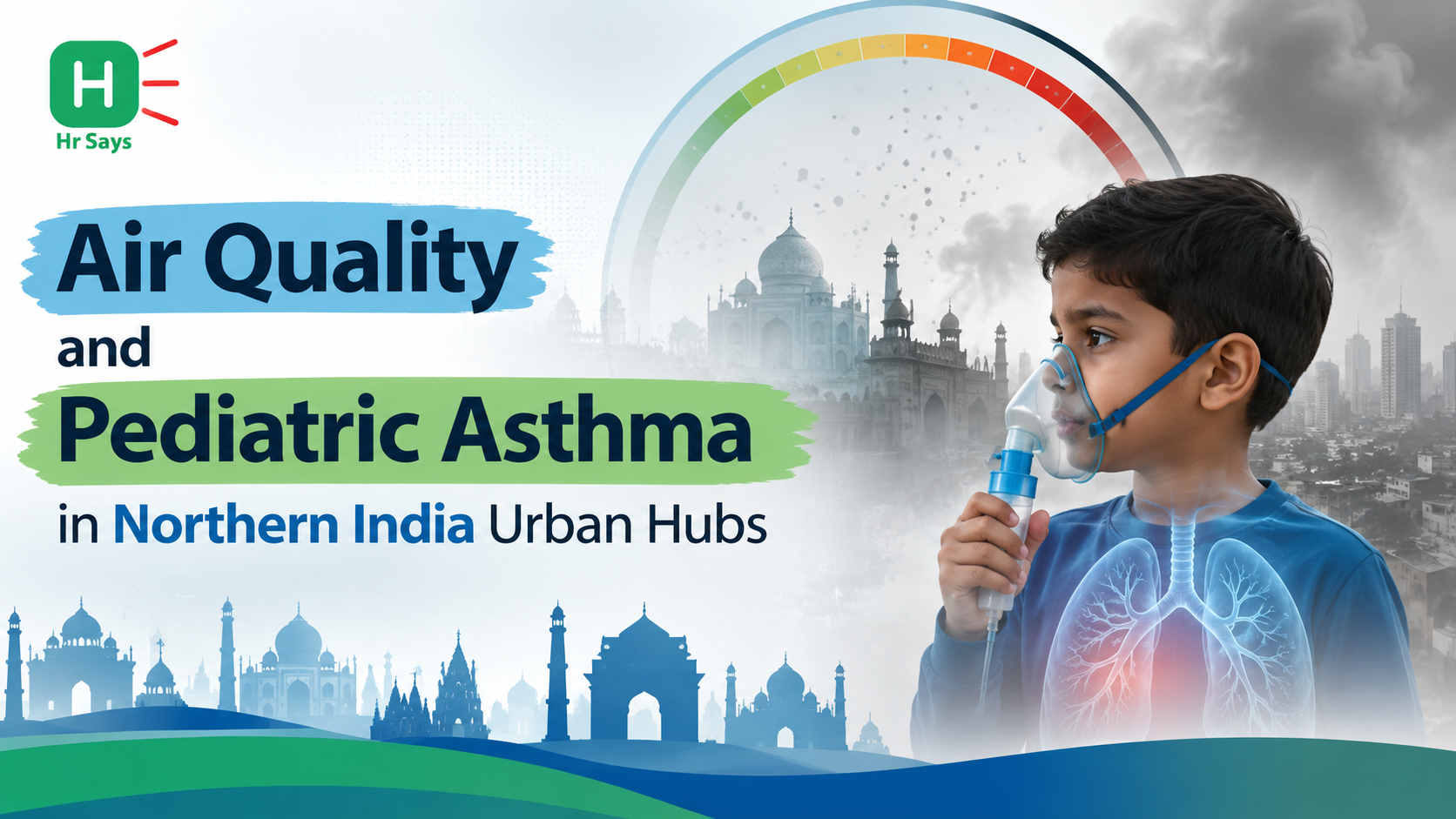
 Rapid urbanization across Northern India's Indo-Gangetic Plain has intensified air pollution, significantly increasing the burden of pediatric asthma and other respiratory illnesses. Addressing this growing public health challenge requires coordinated environmental policies, cleaner urban infrastructure, and stronger preventive healthcare initiatives to protect children's respiratory health.




The Indo-Gangetic Plain is currently confronting a critical environmental and public health crisis. While regional economic expansion and urban developmental metrics across Northern India’s major metropolitan hubs—including Delhi-NCR, Lucknow, Kanpur, and Patna—have progressed rapidly, they have introduced a devastating secondary effect: severe, chronic ambient air pollution. This environmental crisis has triggered a sharp rise in pediatric respiratory diseases, turning childhood asthma into a widespread public health emergency.
For years, seasonal air quality drops were treated as short-term, cyclical issues—spiking during post-monsoon crop residue burning and winter temperature inversions, and naturally clearing up by spring. However, multi-center longitudinal studies confirm a more alarming reality.
Instead of temporary irritations, children residing in these urban hubs endure a continuous baseline exposure to fine particulate matter (PM_{2.5}) that frequently spikes to 7 to 18 times above World Health Organization (WHO) safety standards. This chronic exposure changes the biological trajectory of young respiratory systems, causing a permanent rise in pediatric asthma incidence and structural lung function decline.
1. The Physiological Vulnerability Pipeline: Why Children Bear the Burden
The pediatric population does not experience air pollution the same way adults do. Children possess unique physiological and anatomical vulnerabilities that turn ambient smog into a high-velocity driver of respiratory tissue damage.
[ ARCHITECTURE OF PEDIATRIC RESPIRATORY DISRUPTION ]
│
┌─────────────────────────────┼─────────────────────────────┐
▼ ▼ ▼
[ ELEVATED INTAKE RATE ] [ DEEP TISSUE PENETRATION ] [ CRITICAL DEVELOPMENTAL VOID ]
• Higher breathing frequency • PM2.5 bypasses nasal cilia • Stunted alveolar growth
• More air inhaled per pound • Reaches deep alveolar zones • Irreversible airway narrowing
• Amplified toxic particle load• Localized tissue hypoxia • Early-onset "Pediatric COPD"
- Elevated Ventilation Metrics: Children have a significantly higher metabolic rate and breathing frequency than adults. An infant at rest takes roughly 40 breaths per minute compared to an adult's 12 to 16. This means children inhale a proportionally larger volume of air—and consequently, a far heavier dose of floating toxic particles—per pound of body weight.
- Deep Alveolar Penetration: The primary threat is driven by PM_{2.5}, fine particles less than 2.5 micrometers in diameter. While larger dust fractions are trapped by the upper respiratory tract's protective hair-like structures (cilia), PM_{2.5} bypasses these defenses entirely. It travels deep into the lungs, settling in the sensitive alveolar spaces where gas exchange occurs.
- Stunted Lung Development: Exposure during critical childhood growth windows can permanently stunt tissue maturation. Continuous exposure to trapped particulate matter triggers a state of persistent low-grade neuroinflammation and systemic oxidative stress within the lungs, slowing down the development of new alveoli and leading to chronic airway narrowing that mimics adult obstructive lung conditions.
2. Main Environmental Drivers of the Urban Smog Matrix
The toxic air profile across Northern India's urban hubs is not caused by a single industry. It is driven by a complex combination of overlapping industrial, agricultural, and meteorological factors:
[ THE URBAN POLLUTION SYSTEM ]
Vehicle & Construction Emissions ──► Primary year-round source of urban PM2.5 and NO2 gases.
Agricultural Stubble Burning ──► Post-monsoon biomass smoke waves that flood regional air grids.
Winter Temperature Inversion ──► Cold weather trapping dense, toxic pollution close to the ground.
- Vehicle Exhaust and Construction Dust: The rapid expansion of personal vehicles, heavy diesel trucks, and unshielded construction operations serves as the primary, year-round source of urban PM_{2.5} and nitrogen dioxide (NO_2) gases.
- Biomass and Stubble Burning: During the post-monsoon months, the massive burning of crop residue across neighboring agricultural plains releases dense, toxic plumes of biomass smoke that flood regional air currents.
- Meteorological Inversion Layers: As winter sets in, cold air becomes trapped beneath a layer of warm air close to the ground. This temperature inversion acts as a physical lid, sealing vehicle exhaust, industrial emissions, and agricultural smoke tightly within city boundaries for months.
Comparative Matrix: High-Exposure Urban Zones vs. Protected Environmental Grids
The matrix below contrasts the physical and mental health impacts endured by school children in high-traffic urban commercial zones against the baseline metrics of protected environments.
|
Health and Environmental Metric |
High-Traffic Urban Commercial Zone Profile |
Protected / Rural Baseline Control Grid |
Systemic Public Health Impact |
|---|---|---|---|
|
Average Ambient PM_{10} Concentration |
Frequently exceeds 500 to 800 \mu g/m^3 (10x safety limits). |
Typically tracks between 70 and 150 \mu g/m^3 in open areas. |
Induces severe, recurring tissue irritation and cellular lining damage. |
|
Spirometry Testing Outcomes |
15% to 20% of children exhibit measurable airway obstruction. |
Less than 5% demonstrate lung capacity deficits or limitations. |
Drives early-onset chronic asthma and treatment-resistant wheezing. |
|
Symptom Prevalence Index |
Over 60% of children report winter coughing and shortness of breath. |
Under 20% experience seasonal respiratory drops or complications. |
Leads to heavy school absenteeism and frequent hospital emergency visits. |
|
Mental and Emotional Toll |
Nearly 70% of children report anxiety and stress over air quality. |
Minimal baseline psychological distress linked to local environment. |
Triggers social withdrawal and emotional distress during peak smog weeks. |
|
Medical Care Dependence |
Over 44% of families require multiple urgent doctor visits per season. |
Sporadic, baseline primary healthcare utilization for colds. |
Strains lower-income household finances via high out-of-pocket costs. |
3. Actionable Strategic Protocol for Public Health and School Governance
To safely protect children navigating these severe urban air quality deficits, municipal health boards, school administrators, and pediatric networks must execute a coordinated, multi-phase operational protocol:
- Establish Standardized Indoor Clean Air Sanctuaries
Phase 1
Dismantle the assumption that indoor school spaces are inherently safe. Mandate the installation of high-efficiency HEPA air purification arrays inside all primary and secondary classrooms. Ensure window structures are properly sealed during peak winter pollution months to maintain indoor PM2.5 levels within safe parameters. - Deploy Dynamic, AQI-Linked Activity Frameworks
Phase 2
Move past rigid school calendars. Formulate explicit, automated operational guidelines that adjust school schedules based on the live Air Quality Index (AQI): mandate the relocation of all physical education inside when the AQI crosses 200, and automatically pivot to remote learning layouts if the AQI breaches the 300 mark. - Incorporate Universal Pediatric Respiratory Screening Sheets
Phase 3
Catch early lung function declines before irreversible damage occurs. Partner with regional pediatric clinics to run mandatory, bi-annual spirometry screenings and respiratory health checks for all school children, ensuring high-risk asthmatic individuals are identified and provided with customized medical action plans early.
Actionable Strategy: Your Clinical and Home Care Plan
- Link Patient Records with the Universal ABHA Framework Natively: Ensure your local pediatric clinic utilizes the Ayushman Bharat Digital Mission (ABDM) interface. Linking clinical charts natively using a child's digital health ID preserves their lifetime respiratory tracking logs, syncs past emergency room admissions, and prevents data fragmentation across separate hospitals.
- Enforce Strict Mask Compliance for Essential Outings: Do not rely on loose cloth masks or standard surgical coverings, which fail to stop microscopic particles. Ensure your child wears a well-fitted, smaller-faced N95 respirator mask during essential commutes on highly polluted days to filter out dangerous PM_{2.5} particles.
- Optimize Anti-Inflammatory Nutritional Foundations: Help your child's body fight off the systemic oxidative stress caused by inhaled pollutants. Enrich their daily diet with foods high in natural antioxidants and Omega-3 fatty acids—such as walnuts, citrus fruits, and green leafy vegetables—to support their baseline immune health.
Frequently Asked Questions (FAQs)
Q1. Why are children significantly more vulnerable to urban air pollution than adults?Children breathe faster than adults, inhaling a much larger volume of air—and consequently, a heavier dose of pollutants—per pound of body weight. Additionally, their narrower airways are easily blocked by inflammation, and their immune systems are still developing, making them highly vulnerable to tissue damage.
Q2. What exact role does PM_{2.5} play in triggering severe pediatric asthma attacks?PM_{2.5} consists of fine particles small enough to pass deep into the lungs' alveolar spaces. Once settled, these particles cause chemical irritation and systemic inflammation, making the airways hypersensitive and triggering smooth muscle spasms that lead to acute asthma attacks.
Q3. How does a temperature inversion layer affect a city's daily Air Quality Index?A temperature inversion occurs when a layer of warm air pins cooler air close to the ground like a physical lid. This blocks normal air circulation, trapping vehicle exhaust, construction dust, and industrial emissions at ground level and causing air pollution levels to skyrocket.
Q4. Can a high-quality HEPA air purifier safely clean an indoor classroom space?Yes, exceptionally well. High-efficiency particulate air (HEPA) purification systems are certified to capture 99.97% of floating microscopic particles, including PM_{2.5}, dust mites, and mold spores, making them highly effective tools for creating safe indoor environments.
Q5. What is the clinical significance of a spirometry lung function evaluation?Spirometry is a fundamental lung function test that measures exactly how much air a child can forcefully exhale and how quickly they can empty their lungs. It allows pediatricians to spot early signs of airway narrowing, track asthma progression, and customize medical care plans before major symptoms emerge.
Q6. How do high out-of-pocket medical costs impact lower-income families during pollution spikes?Because routine outpatient specialist care, repeat inhaler prescriptions, and diagnostic scans are rarely insulated by basic health insurance, the continuous financial drain of managing winter asthma flares is borne entirely by family cash savings, which can push vulnerable homes into economic crisis.
Q7. Why are standard cloth masks ineffective against fine particulate matter?Standard cloth masks have loose, porous fabric structures that cannot block fine particles. While they catch large dust grains, microscopic PM_{2.5} particles slide easily through the gaps, meaning well-fitted N95 masks are necessary for proper protection.
Q8. What parameters are evaluated on a 360-degree holistic pediatric progress card?A holistic progress card moves past raw medical charts to evaluate a child's entire well-being. It cross-references their weekly spirometry trends, daily inhaler utilization counts, school attendance patterns, sleep disturbance logs, and anxiety levels to map out a well-aligned care path.
Q9. How long does it typically take to see an improvement in a child's breathing comfort after optimizing indoor air?When a family or institution updates its environment—such as deploying active HEPA air purifiers, limiting early morning outdoor activities, and maintaining good hydration—the body responds quickly. You can observe a significant drop in nightly coughing fits and improved breathing patterns within 4 to 6 weeks of active execution.
Q10. What metrics should school administrators monitor to identify hidden environmental health risks?School leaders should track daily classroom PM_{2.5} levels using calibrated indoor sensors, alongside unexplained drops in student attendance patterns and the frequency of students requesting emergency inhaler support at the clinic desk, allowing teams to clear blocks early.