 Friday, October 09, 2026
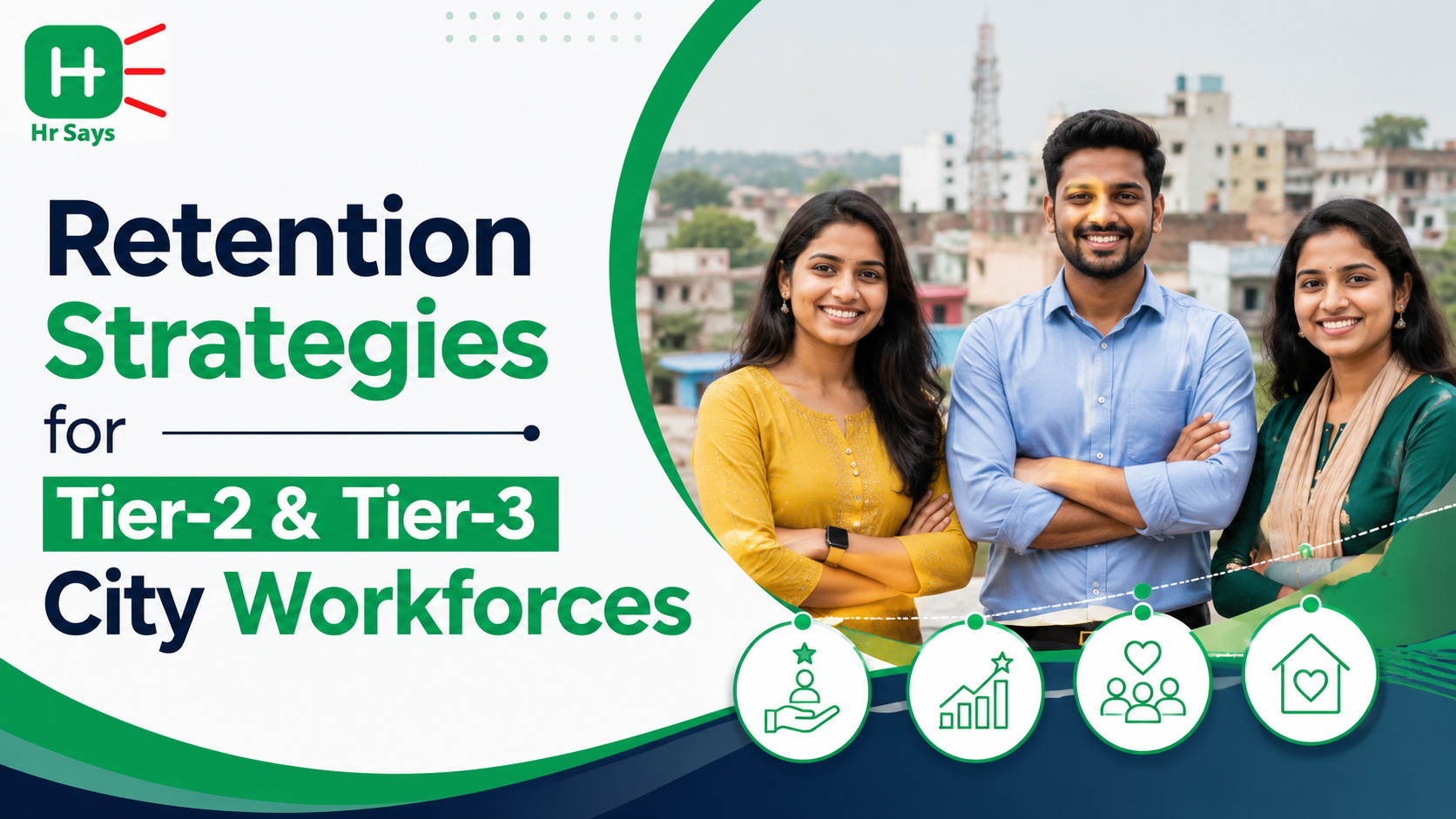
 Retaining talent in Tier-2 and Tier-3 cities requires HR strategies that go beyond conventional corporate benefits. By focusing on localized motivators such as career growth, community connections, work-life balance, and financial stability, organizations can build a loyal, engaged, and long-term workforce.




1. The Localized Employee Value Proposition (EVP) Matrix
To insulate your regional operations from talent raids by metropolitan entities, your HR framework must shift away from abstract corporate perks to track four localized motivational anchors.
[ THE REGIONAL TALENT RETENTION METRIC ]
│
┌─────────────────────────┼─────────────────────────┐
▼ ▼ ▼
[ METABOLIC STABILITY ] [ FAMILY ANCHORING ] [ PEDAGOGICAL GROWTH ]
• Predictable cash logs • Comprehensive healthcare• Structural clear paths
• Robust statutory match • Parental inclusion spans• Continuous local CPD
• Long-term job security • Community alignment loops• High-tech certification
2. Three Primary Retention Vulnerabilities in Expanding Hubs
A detailed diagnostic audit of regional corporate expansion highlights three primary operational bottlenecks where high-performing talent is frequently lost:
Channel A: The Metropolitan Career Leap (The "Lure of the Metro")The single most common exit pathway for elite talent in smaller cities occurs at the 2-to-4-year experience mark. Once a local graduate masters advanced technical skills, corporate tech firms or consultancies located in Tier-1 cities often approach them with aggressive, premium cash compensation models. If your local office fails to showcase a clear, high-velocity internal promotion path, ambitious performers will view your regional hub as a temporary stepping stone rather than a long-term home.
Channel B: Inadequate Structural Skill Development (CPD) PathwaysHigh-performing engineers and researchers in smaller cities hold a deep fear of becoming obsolete. They observe their peers in metropolitan tech hubs interacting with cutting-edge software stacks and global networks. If a regional employer leaves its workforce tied to legacy, maintenance-heavy software lines with absolute zero access to continuous professional development (CPD), your top tier of talent will voluntarily exit to preserve their career capital.
Channel C: The Friction of Rigid, Unaligned Shift SchedulesForcing a workforce in a smaller urban center to match exhausting night-shift rosters or rigid, long-distance commutes without clear transport shields can create friction. In cities where family dependencies and multi-generational co-habitation are standard, ignoring lifestyle boundaries or failing to offer basic flexibility can cause high family-driven turnover, especially among women professionals.
Comparative Blueprint: Tier-1 Generic Playbooks vs. Regional Retention Strategies
The matrix below contrasts the vulnerabilities of treating a smaller city workforce with generic metropolitan biases against the high-performance outcomes of a localized retention design.
|
Operational Performance Pillar |
Tier-1 Generic Corporate Playbook Bias |
Localized Tier-2/Tier-3 Retention Strategy |
Last-Mile Structural Advantage |
|---|---|---|---|
|
Compensation Architecture |
Heavy reliance on abstract stock allocations or variable bonuses. |
Highly predictable base salaries paired with performance metrics. |
Satisfies the household preference for stable cash flow over speculation. |
|
Career Development Grid |
Assuming employees will pick up digital skills independently online. |
Mandatory, structured certifications via integrated CPD platforms. |
Insures talent from feeling obsolete by guaranteeing cutting-edge skills. |
|
Healthcare & Benefits |
Basic individual coverage with minimal parental inclusion. |
Comprehensive family insurance extending to dependent parents. |
Protects the multi-generational household, building profound loyalty. |
|
Shift & Transport Logistics |
Casual reliance on public transit networks or unguided cabs. |
Dedicated company transport shields for night-shift safety. |
Lowers commuting friction and boosts female labor participation. |
|
Community Connection |
Completely detached corporate presence with zero local ties. |
Deep integration with regional tech universities and colleges. |
Seals the local recruitment pipeline early, driving down hiring costs. |
3. High-Performance Action Plan for Operations Leaders
To establish a highly stable corporate foothold across smaller city ecosystems, country managers and HR directors must execute a multi-phase operational protocol:
- Structure Clear Internal Career Velocity Maps
Phase 1
Dismantle any ambiguity regarding professional growth. Provide every regional hire with an explicit, competency-based career pathway that shows how an entry-level professional can rise into a team leader or regional director position within your firm. Tie promotions to transparent, objective milestone achievements rather than simple desk seniority logs. - Deploy Centralized, Funded CPD Certification Bridges
Phase 2
Combat the fear of skill stagnation directly. Partner with recognized global technical education portals and specialized platforms to offer funded, high-value professional certifications. Dedicate 4 hours of paid working time every week for your teams to engage in active continuous professional development (CPD), keeping your human capital sharp. - Incorporate a Holistic Family-First Insurance Ecosystem
Phase 3
Align your employee benefits with local cultural realities. Restructure your corporate health insurance policy to offer comprehensive family insurance plans that provide coverage for dependent parents and parents-in-law. Supporting a professional's family obligations creates a powerful psychological bond that a standard metro salary increase cannot easily break.
Actionable Strategy: Your Regional Governance Plan
- Establish Deep Academic Partnerships with Local Universities: Do not wait for graduation seasons to discover talent. Build structured, long-term relationships with regional engineering colleges and technical institutes near your office. Launch specialized, credit-earning final-year internship programs and sponsor technical university events to capture top-tier performers before they look toward larger metro centers.
- Implement Secure, Mandated Transport Shields for Late Shifts: If your operational model requires late evening or rotating night shifts, build a highly secure, verified corporate cab network. Implement automated geo-tracking systems and mandate phone call-back verifications for all drops after dark, driving up female workforce safety and retention.
- Conduct Semi-Annual Total Rewards Calibration Audits: Keep a continuous finger on the pulse of changing regional market rates. Conduct a semi-annual audit cross-verifying your baseline salary bands with live local market indicators, ensuring your compensation architecture remains highly competitive to prevent underground talent poaches.
Frequently Asked Questions (FAQs)
Q1. Why do generic Tier-1 retention strategies fail when deployed in smaller city operations?Metropolitan playbooks frequently focus on lifestyle perks or variable equity components that match transient, highly independent urban populations. Workforce demographics in smaller cities place a far higher premium on long-term employment safety, predictable cash flow stability, and inclusive family health benefits.
Q2. How does providing parental insurance coverage lower voluntary employee turnover?In Tier-2 and Tier-3 urban environments, professionals are deeply tied to multi-generational family units. When an enterprise steps forward to absorb the massive financial risk of elderly parental healthcare through institutional group policies, it relieves a profound psychological burden, creating deep organizational loyalty.
Q3. What exactly does a "funded CPD certification bridge" look like in practice?A funded CPD bridge is an institutional framework where the company fully finances advanced technical or professional certifications for its employees. The firm builds structured learning hours directly into the weekly calendar, allowing employees to acquire modern skills on the job and ensuring their capabilities remain globally competitive.
Q4. Can an enterprise operating in a smaller city comfortably manage the "lure of the metro"?Yes, highly successfully. While metropolitan firms can offer higher starting figures, they come tied to immense living expenses, long commutes, and volatile workspace safety. By showcasing an explicit internal career ladder paired with local stability, companies can routinely retain their elite performers.
Q5. Why is a predictable base salary model preferred over heavy variable bonuses in regional hubs?Smaller urban workforces are frequently the primary financial anchors for extended family groups. They prioritize highly consistent, predictable monthly cash inflows to clear long-term family assets, pay for local property investments, or fund sibling educations without the stress of fluctuating corporate bonus targets.
Q6. How do secure corporate transport shields expand your addressable recruitment pool?In many traditional regional hubs, family elders are hesitant to permit women professionals to accept evening or night shifts due to safety concerns with local transit. Providing monitored company transport removes this barrier, boosting your female labor retention rates significantly.
Q7. What role do local university partnerships play in long-term workforce retention?Partnering with local universities allows your organization to seed its corporate values, train students on your proprietary engines during their final year, and secure high-loyalty campus placements who view your office as the premier regional center for career advancement.
Q8. Should an enterprise track desk hours or milestone deliverables when managing regional teams?True workforce efficiency is driven entirely by objective, output-driven milestone tracking. Measuring performance based on specific project velocity indices and quality standards removes arbitrary micromanagement, lowers stress, and respects the balanced lifestyle boundaries highly valued by smaller-city workforces.
Q9. How long does it typically take to see a stabilizing trend in retention metrics after updating HR policies?When an organization shifts its strategy to deploy funded training paths, roll out comprehensive family healthcare shields, and establish clear career velocity maps, the positive return on culture is rapid. You can observe a significant drop in active exit notices and a clear rise in internal trust scores within 4 to 6 weeks of active execution.
Q10. How can operations managers identify early indicators of employee flight risk in smaller teams?Frontline managers should monitor for distinct behavioral drops away from an individual's baseline profile. Primary warning flags include a sudden drop in communication velocity during team syncs, unusual patterns of casual absenteeism, or a sudden lack of interest in signing up for funded advanced certification courses.