 Monday, September 21, 2026
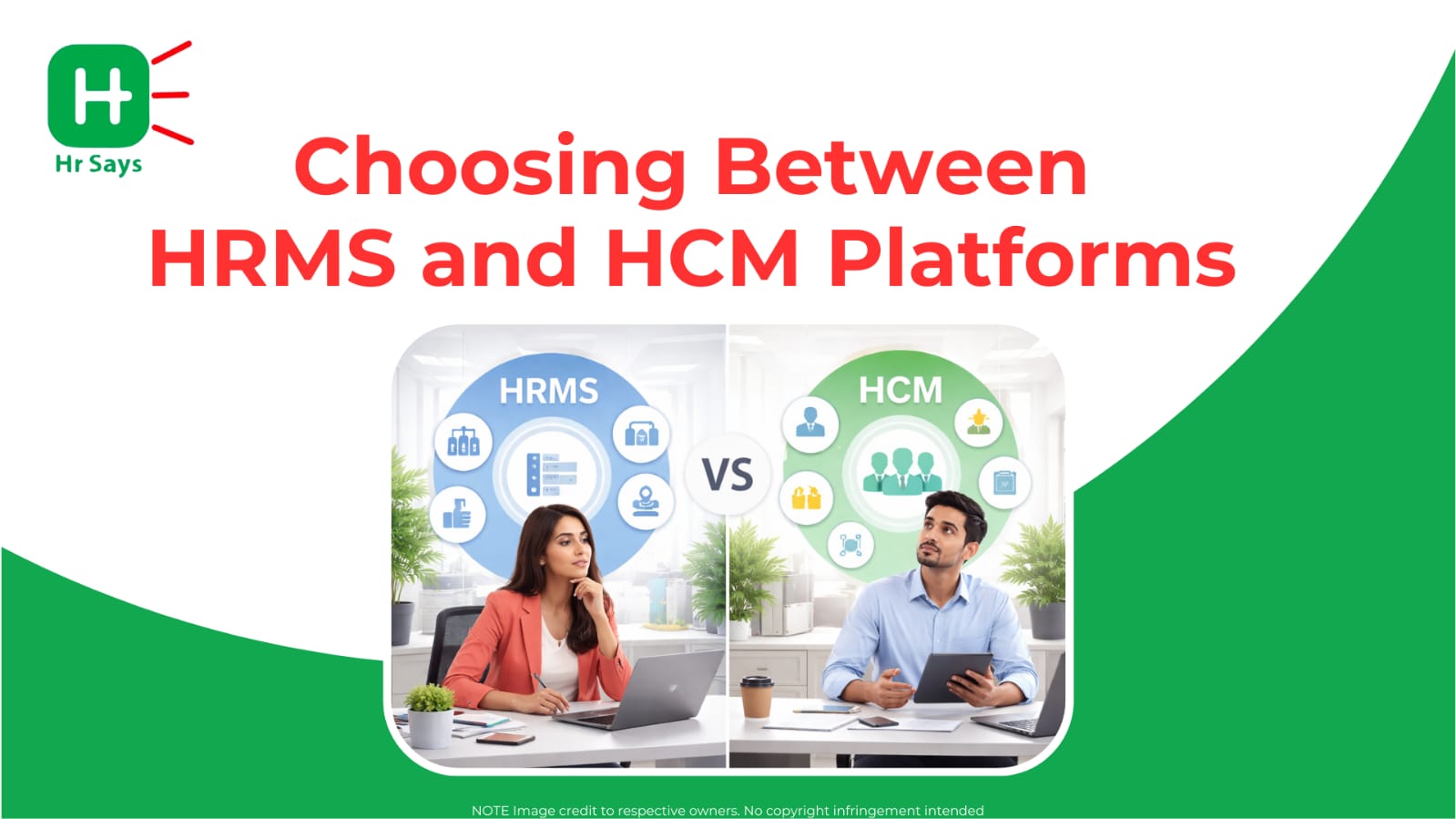
 HRMS and HCM platforms are often confused but serve different purposes. HRMS focuses on administrative HR functions such as payroll and records, while HCM supports talent development and workforce strategy. Understanding organizational needs helps determine which platform provides the best value.




A new HR system may hold the promise of efficiency and automation and management of workforce. However, confusion is soon to emerge in the use of two terms that will take centre stage in the discussion; HRMS and HCM. They both assist in the operation of human resources, however, their meaning and significance vary. Being educated on the difference can assist organizations to use technology that truly meets their objectives of the workforce.
Understanding HRMS Platforms
HRMS, which is also referred to as Human Resource Management Systems, was intended to make the main activities of HR easier. Administrative HR activities in most organizations take up too much time. Calculations related to payroll, records concerning employees, attendance control, and documentation of compliance should be done correctly. To simplify these daily operations, an HRMS system has been developed.
The majority of the HRMS software revolves on operational efficiency. Manual processes previously carried out manually using spreadsheets or even in paper files are automated. Employee information is kept in databases which are centrally located, thus making it easier to access by the HR personnel and the management. There are fewer mistakes, and reporting is improved.
Several essential HR processes are typically supported by HRMS platforms.
- Payroll management and salary processing
• Employee records and documentation
• Leave management and attendance tracking
• Benefits administration
• Compliance and regulatory reporting
In many small and medium sized businesses, HRMS tools become the backbone of daily HR operations. They are often valued because they reduce administrative burden. Once implemented, repetitive HR tasks are handled through automated workflows.
Cloud HRMS systems have also become increasingly popular. These systems allow remote access, secure data storage, and integration with other enterprise software. As hybrid work models grow, the ability to manage employees digitally becomes even more important.
However, HRMS platforms are usually centered on administrative control rather than long term workforce strategy. That difference becomes clearer when HCM platforms are examined.
Exploring HCM Platforms
Human Capital Management platforms take HR technology a step further. While HRMS systems manage employee data and HR processes, HCM platforms focus on developing people as strategic assets.
The idea behind HCM is simple but powerful. Employees are not only resources to be managed but contributors whose growth influences organizational success. Because of this perspective, HCM systems include advanced tools for talent development, workforce planning, and performance improvement.
A modern HCM platform often includes capabilities such as:
- Talent acquisition and recruitment management
• Performance evaluation and goal tracking
• Learning and development programs
• Succession planning
• Workforce analytics and predictive insights
Instead of focusing only on operational tasks, HCM systems help organizations understand workforce potential. For example, workforce analytics may be used to identify skill gaps or forecast hiring needs. Talent management tools can support leadership development and employee retention.
Large organizations, multinational companies, and businesses with complex workforce structures often prefer HCM platforms. Strategic HR planning becomes easier when employee data is connected with performance insights and growth opportunities.
Another noticeable feature is integration. Modern HCM platforms frequently combine multiple HR technologies such as recruitment software, performance systems, and employee engagement tools within a single digital ecosystem.
As a result, HR departments shift from administrative roles toward strategic decision making.
Key Factors to Consider Before Choosing
Selecting between HRMS and HCM should not be treated as a purely technical decision. The size, maturity, and priorities of an organization must be considered.
A few practical questions are usually asked before adopting HR software.
- Is the main challenge administrative efficiency or workforce development?
• Does the organization require advanced talent management tools?
• Is long term workforce planning important for business growth?
• What level of HR automation is currently required?
Smaller organizations often begin with HRMS platforms because operational tasks must first be stabilized. As the workforce expands, the transition to HCM technology may later be considered.
Budget, scalability, and integration with existing enterprise systems should also be reviewed carefully. Cloud based HR platforms often provide flexibility, but implementation planning remains essential.
Conclusion
Both HRMS and HCM platforms serve valuable roles in modern HR technology. HRMS simplifies operational HR management, while HCM focuses on talent growth and strategic workforce development. The right choice is usually determined by organizational priorities, workforce complexity, and long term human resource strategy.