 Thursday, October 01, 2026
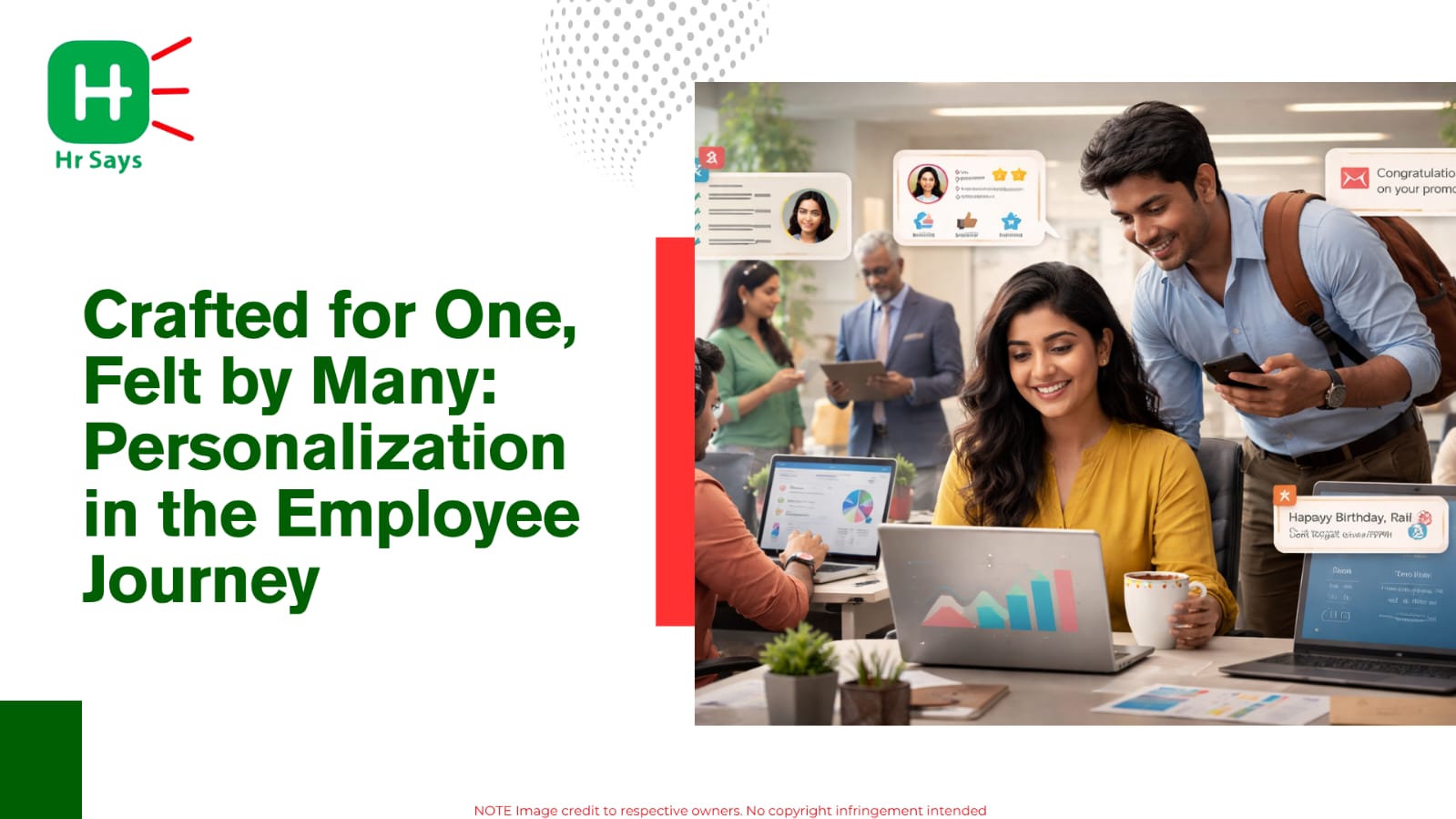
 Personalization shapes how employees experience work across hiring, onboarding, and growth. When done thoughtfully, it improves engagement and clarity. When ignored, disconnect builds over time. The focus should remain on meaningful customization, not surface-level changes.




Has job ever seemed like one that is meant to suit another person? Those silent withdrawal symptoms are usually observed at an early age. Standards are anticipated but personality is lost. This blog talks about the power of personalization to make the work life less allocated and more tuned.
Why Personalization Matters
Work has changed, and people? Even faster. The one-size systems are no longer valid. In the case when roles are considered the same, the engagement decreases silently. It is not loud. It shows up in small ways. Motivation feels forced. Feedback is ignored. Growth becomes unclear.
Space is provided by personalization. It is an indicator that the differences are perceived, not addressed. Employees get connected to work when they have a sense of being heard. It is not about doing more. It is all about doing what matters, but in a way which suits.
The Journey Touchpoints
Every stage in the employee journey is influenced by how well it is shaped for the individual.
Hiring ExperienceFirst impressions are formed here. A generic hiring process often feels distant. Communication gets automated. Responses feel delayed. Candidates begin to disengage even before they join. When communication is tailored, trust is built early. It feels more human. Less transactional.
Onboarding PhaseThe first few weeks carry weight. If onboarding is rushed or rigid, confusion settles in. Employees try to adjust, but hesitation stays. A personalized onboarding approach creates clarity. It allows space to learn at a comfortable pace. Expectations become easier to follow. Confidence builds slowly but steadily.
Growth and DevelopmentGrowth is not the same for everyone. Some move fast. Others take time to explore. When development plans are standardized, learning feels forced. When they are customized, it becomes intentional. Skills are not just taught. They are understood. Employees begin to see direction instead of pressure.
Where It Often Falls Short
Even well-meaning systems can miss the mark.
Personalization is sometimes mistaken for surface-level changes. Adding names to emails or sending automated messages does not create real connection. The deeper work lies in listening. And that step is often overlooked.
Data is collected but not used. Feedback is taken but not applied. Processes remain unchanged despite repeated inputs. Over time, this creates distance again. Quietly, but consistently.
Making It Work Without Overcomplicating
A balanced approach is needed. Personalization does not mean constant change. It means relevant change.
It can begin with small adjustments. Flexible work preferences can be allowed where possible. Individual goals can be encouraged instead of fixed targets. Managers can be trained to adapt their approach based on people, not just roles.
Consistency should remain. But rigidity should not. The aim is not to redesign everything. It is to refine what already exists.
Conclusion
Personalization in the employee journey is not an added feature anymore. It is slowly becoming the foundation. When people feel understood, effort follows naturally. When they do not, it fades quietly. The shift is subtle. But its impact is not.