Friday, October 23, 2026
.jpeg)
 Employee feedback systems help Indian organisations build trust, reduce attrition, and improve workplace culture by creating structured, continuous, and actionable employee listening processes.





Introduction
In most Indian workplaces today, the annual appraisal cycle still drives the rhythm of feedback. Managers sit across from employees once a year, run through a checklist, assign a rating, and close the chapter. For the remaining eleven months, performance conversations often happen informally, inconsistently, or not at all.
This approach is no longer sufficient. With workforce expectations shifting rapidly, especially among younger professionals in Tier 1 and Tier 2 cities, employees are increasingly seeking continuous dialogue, recognition, and a genuine sense of being heard. Organisations that fail to provide this are discovering a direct connection between the absence of structured feedback and rising attrition, disengagement, and cultural drift.
An employee feedback system addresses this gap in a structured, measurable, and sustainable way. Whether you are an HR head at a growing startup in Bengaluru, a CHRO at a mid-size manufacturing company in Pune, or a business owner managing a distributed team across India, understanding how feedback systems work and how to implement them effectively is now a foundational HR competency.
What Is an Employee Feedback System?
An employee feedback system is a structured process or set of tools through which an organisation collects, analyses, and acts on the views, experiences, and sentiments of its employees. It goes well beyond the traditional suggestion box or the annual appraisal form. At its core, a feedback system creates a two-way communication channel between employees and the leadership, allowing insights to flow upward, downward, and across teams.
In the Indian context, where hierarchical work cultures have historically discouraged employees from openly voicing concerns, a well-designed feedback system serves an especially important role. It signals to employees that their voices matter, which in turn builds psychological safety, a concept increasingly recognized as foundational to high-performing teams.
A well-functioning feedback system typically covers multiple dimensions of the employee experience, including job satisfaction, managerial effectiveness, team dynamics, workload balance, career growth expectations, and organisational culture. When these inputs are gathered consistently and acted upon, they give organisations a real-time understanding of the health of their workplace.
Understanding the Different Types of Employee Feedback Systems
Not all feedback mechanisms serve the same purpose or suit every organisational context. It is important to understand the distinct types before choosing the right approach.
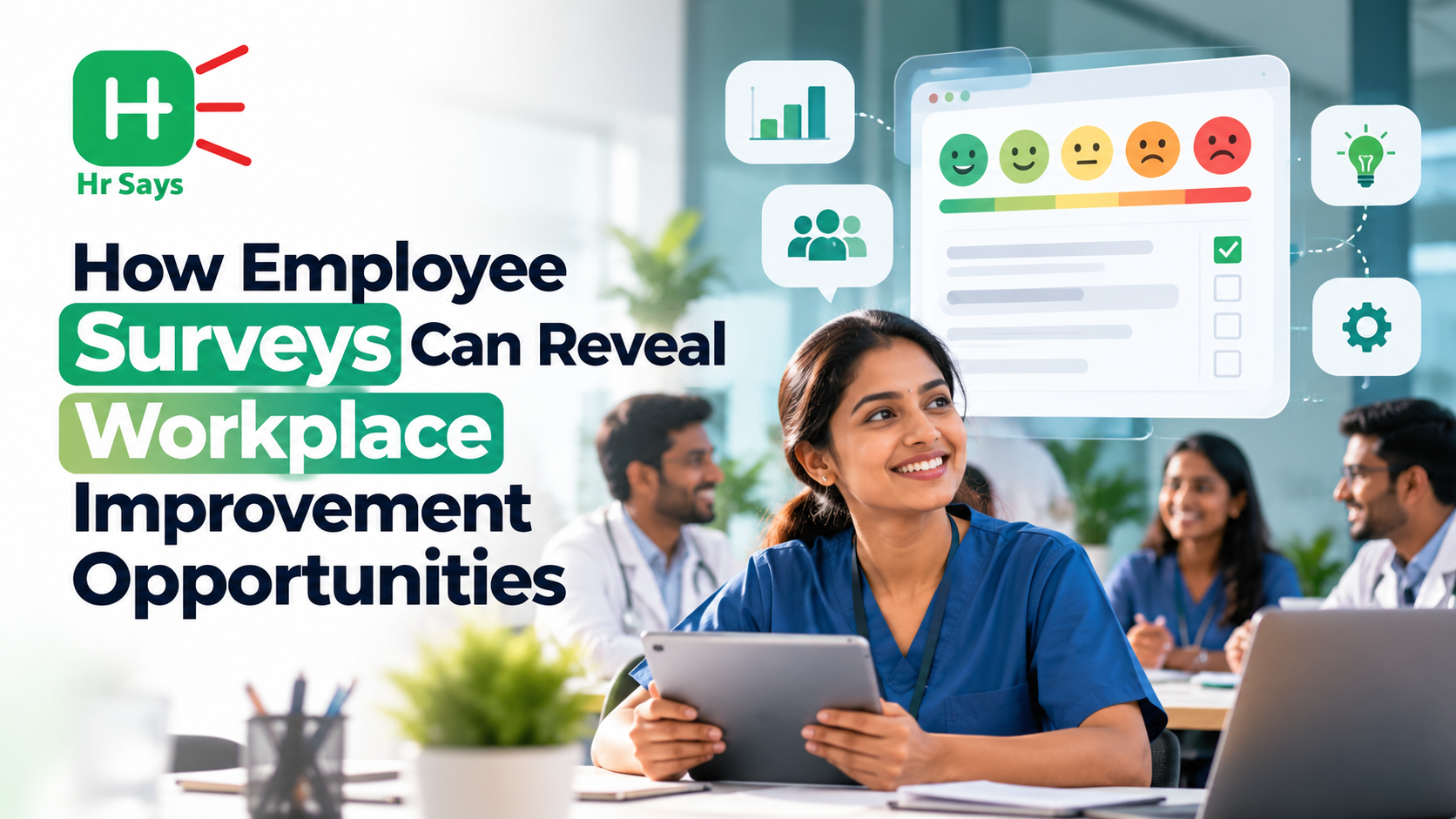
Pulse Surveys are short, frequent surveys sent to employees at regular intervals, often weekly or fortnightly. They typically contain three to five targeted questions designed to track specific metrics such as engagement levels, workload satisfaction, or manager relationship quality. Pulse surveys are highly effective for capturing real-time sentiment, which is especially valuable during periods of change such as restructuring, leadership transitions, or large-scale policy changes.
Annual and Bi-Annual Engagement Surveys offer a broader view of organisational health. These are longer, more comprehensive questionnaires that cover a wide range of topics. While they provide depth, their limitation lies in the time gap between the issue occurring and the feedback being captured. However, when used alongside more frequent mechanisms, they offer valuable longitudinal insights.
360-Degree Feedback is a multi-source feedback approach where an employee receives input from peers, direct reports, managers, and sometimes even clients. This method provides a well-rounded view of individual performance and behaviour. In Indian companies, where cross-functional teamwork is growing in importance, 360-degree feedback is gaining traction, particularly for leadership development programmes.
One-on-One Feedback Conversations are structured or semi-structured meetings between a manager and a team member focused on discussing progress, challenges, and development. When conducted regularly and with genuine intent, these conversations are among the most impactful feedback mechanisms available.
Exit Interviews and Stay Interviews are often overlooked but carry significant strategic value. Exit interviews capture why employees leave, while stay interviews reveal what keeps employees engaged. Both, when conducted honestly and analysed rigorously, surface patterns that leaders can act upon proactively.
Why Employee Feedback Systems Matter for Indian Organisations
India's workforce is undergoing a profound transformation. According to data from leading HR research firms, employee attrition rates across sectors such as IT, BFSI, retail, and manufacturing have been at multi-year highs. One of the most consistently cited reasons for this attrition is employees feeling unheard, undervalued, or disconnected from organisational purpose.
Several India-specific factors make the case for robust feedback systems even stronger.
The generational shift in the workforce is significant. Millennials and Gen Z employees now constitute a substantial proportion of the working population across urban India. These cohorts place far greater value on transparent communication, recognition, and meaningful work than previous generations. A feedback system directly addresses these expectations.
The rise of remote and hybrid work, accelerated by the events of the pandemic years, has also created new challenges for managers trying to stay connected with dispersed teams. Without structured feedback mechanisms, managers lose visibility into how employees are really doing, which makes early identification of disengagement or burnout difficult.
Additionally, the Indian regulatory and compliance environment, including requirements under the Factories Act, the Industrial Disputes Act, and the Sexual Harassment of Women at Workplace (Prevention, Prohibition and Redressal) Act, places responsibility on organisations to create transparent grievance and communication mechanisms. A feedback system, when designed thoughtfully, can also complement these compliance obligations by creating accessible channels for employees to raise concerns.
How to Implement an Employee Feedback System That Works
Implementation is where many organisations fall short. Deploying a survey tool is easy. Building a feedback culture that employees trust and that leaders consistently act upon is the real challenge.
The following approach helps organisations get this right.
Define the purpose and outcomes clearly. Before selecting any tool or designing any survey, HR leaders need to be clear about what they want to learn and what they are prepared to do with the information. Conducting surveys without intent to act on the findings is far worse than not surveying at all. It erodes trust and signals to employees that the process is performative.
Choose the right mix of feedback mechanisms. No single feedback tool is sufficient on its own. A combination of pulse surveys for real-time sentiment, periodic comprehensive surveys for depth, and regular one-on-one conversations for personal connection creates a robust feedback ecosystem. The right mix depends on the size of the organisation, the nature of work, and the maturity of the HR function.
Ensure anonymity where needed. In many Indian workplaces, employees hesitate to share honest feedback because they fear direct or indirect repercussions. Anonymous feedback options are not a workaround for trust deficits. They are a practical acknowledgment that psychological safety takes time to build, and anonymity allows honest data to flow while that safety is being established.
Close the feedback loop visibly. One of the most powerful things an organisation can do is communicate back to employees what was heard and what is being done about it. This practice, often called "you said, we did" communication, is a direct driver of participation rates in future surveys and is a visible demonstration of leadership integrity.
Train managers to receive and act on feedback. Feedback systems do not operate in isolation. They depend on managers who are equipped to have difficult conversations, acknowledge gaps, and treat employee input as valuable data rather than criticism. Investing in manager capability is as important as investing in the technology platform.
Common Mistakes Organisations Make With Employee Feedback
Understanding what not to do is just as important as knowing what works.
One of the most common mistakes is conducting surveys infrequently and expecting them to substitute for ongoing dialogue. Annual surveys are useful but insufficient. They capture a snapshot of employee sentiment at a single point in time, missing the texture and dynamism of everyday workplace experience.
Another frequent error is treating feedback as an HR function alone. When only the HR team sees and acts on feedback data, line managers remain disconnected from the insights and are unable to make the localised changes that matter most to their teams. Feedback should be shared across leadership levels in appropriate, contextualised ways.
Overloading employees with surveys is also counterproductive. Survey fatigue is real. When employees receive questionnaires too frequently or feel the surveys are too long, response rates drop and data quality suffers. Keeping surveys brief, relevant, and timely is essential.
Finally, ignoring qualitative feedback in favour of quantitative scores misses important nuance. Numbers tell you that there is a problem. Open-ended responses tell you what the problem actually is. Both forms of data are necessary for informed decision-making.
The Role of Technology in Modern Feedback Systems
The emergence of dedicated HR technology platforms has made it significantly easier to build and sustain employee feedback systems at scale. Modern tools offer features such as automated survey scheduling, real-time dashboards, natural language processing for open-ended responses, manager-level reporting, and benchmarking against industry data.
For Indian organisations, especially those managing large workforces across multiple locations and languages, technology-enabled feedback systems offer practical advantages. Mobile-first platforms, regional language support, and integration with existing HRMS platforms are features that significantly improve accessibility and participation.
However, technology is an enabler, not a substitute for the cultural and leadership work required to make feedback systems effective. Organisations that invest in platforms without addressing the underlying culture of how feedback is received and used will find limited returns on their investment.
Frequently Asked Questions
Q1: What is the difference between a feedback system and a performance management system?
A performance management system focuses on evaluating and managing an employee's output, goals, and career progression. An employee feedback system is broader and captures ongoing employee sentiment, experience, and engagement across multiple dimensions. Both are complementary and work best when integrated.
Q2: How often should Indian companies run employee feedback surveys?
There is no universal answer, but a commonly recommended approach is to run short pulse surveys monthly or bi-monthly and a comprehensive engagement survey once or twice a year. The key is consistency and the visible commitment to acting on what is heard.
Q3: How can small businesses in India implement a feedback system without large budgets?
Small organisations can start with simple approaches such as structured one-on-one meetings, informal team check-ins, and basic digital survey tools that offer free or low-cost tiers. The investment in culture and intent matters more than the sophistication of the tool.
Q4: Is anonymous feedback always better than attributed feedback?
Anonymous feedback increases honesty, especially in hierarchical workplace cultures. However, attributed feedback allows for more personalised follow-up and accountability. A well-designed system often uses both, depending on the nature of the question and the level of trust within the team.
Q5: What should HR leaders do if feedback reveals serious cultural or leadership problems?
Serious findings must be escalated to senior leadership with clear data and recommended actions. HR leaders should present insights objectively, prioritise the most critical issues, and develop action plans with defined accountability and timelines. Avoiding or minimising serious feedback findings has long-term consequences for retention and culture.
Resources
- Society for Human Resource Management (SHRM): Research and frameworks on employee feedback and engagement best practices
- National HRD Network (NHRD Network): India-focused HR research, practitioner insights, and workplace learning resources
- NITI Aayog: Reports on workforce trends, employment data, and future of work in India
- Ministry of Labour and Employment, Government of India: Official guidelines, labour law updates, and workforce policy documentation
INTERLINKING KEYWORDS
employee engagement, performance management, continuous feedback, workplace culture, HR technology, employee experience, 360-degree feedback, attrition and retention
Last Reviewed By:
Hr Says Advisory Panel on 24 August, 2026
Disclaimer:
The information provided in this article is intended for general informational and educational purposes for HR professionals, business leaders, and workplace decision-makers. It does not constitute legal, regulatory, or professional HR advisory guidance. Readers are encouraged to consult qualified HR professionals or legal advisors before implementing specific policies or systems within their organisations.