Sunday, September 20, 2026
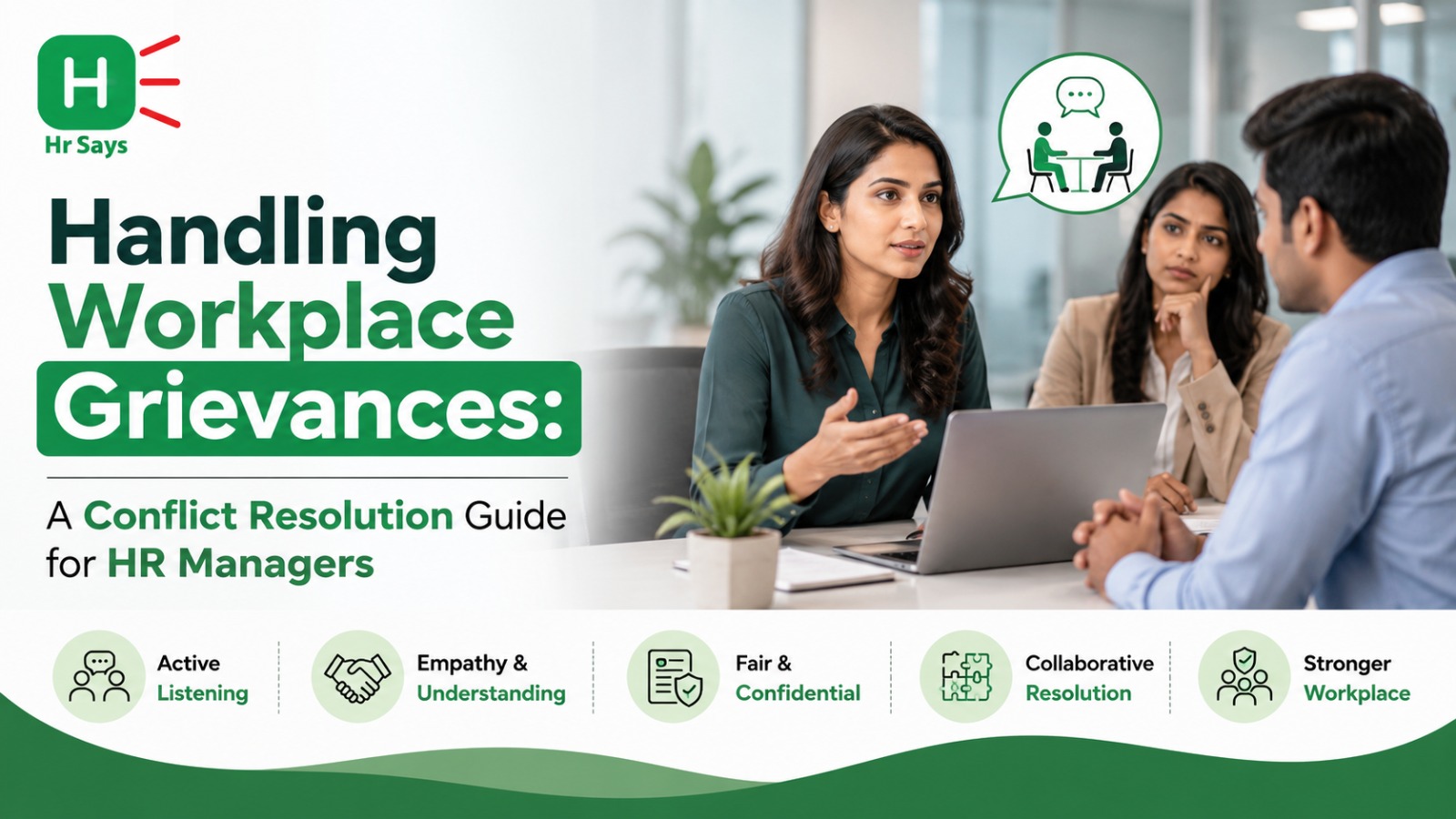
 Workplace friction is inevitable whenever diverse teams collaborate under tight deadlines. However, there is a profound difference between healthy professional disagreement and an unaddressed grievance that metastasizes into toxic team dynamics, legal liability, and costly turnover.





Workplace friction is inevitable whenever diverse teams collaborate under tight deadlines. However, there is a profound difference between healthy professional disagreement and an unaddressed grievance that metastasizes into toxic team dynamics, legal liability, and costly turnover.
For HR managers, handling employee grievances is one of the most delicate balancing acts in corporate governance. You must simultaneously act as an empathetic listener, an impartial investigator, a legal compliance officer, and a strategic mediator. When handled poorly—with defensive deflection, delayed investigations, or breached confidentiality—minor interpersonal disputes can escalate into formal litigation, constructive dismissal claims, and widespread erosion of institutional trust.
1. Differentiating Between Complaints and Formal Grievances
Not every workplace frustration requires a full-scale formal investigation. HR professionals must triage issues effectively upon receipt:
- Informal Complaints: Minor interpersonal clashes, communication misunderstandings, or low-level friction regarding desk allocations or shift preferences. These are best resolved through informal coaching, direct manager-led conversations, or light facilitation.
- Formal Grievances: Serious, documented allegations of policy breaches, statutory non-compliance, discrimination, systemic harassment, unsafe working conditions, or wage disputes. These trigger mandatory procedural steps, strict timelines, and documented investigation logs.
2. The 5-Step Grievance Resolution Workflow
To maintain psychological safety, procedural fairness, and legal compliance, HR teams must execute a standardized, objective workflow for every formal grievance filed.
- Intake, Acknowledgement & Immediate Triage
Step 1
Acknowledge receipt of the grievance in writing within 24 to 48 hours. Assess whether immediate interim measures are required—such as temporarily reassigning reporting lines or adjusting physical shift seating—to protect the complainant without implying guilt. - Objective Fact-Finding & Investigation
Step 2
Conduct separate, confidential interviews with the complainant, the respondent, and relevant witnesses. Gather objective evidence, including emails, Slack/Teams message logs, timecards, and project deliverables. Maintain verbatim meeting notes signed by attendees. - Structured Neutral Mediation
Step 3
Where appropriate (excluding cases involving severe harassment, assault, or illegal activity), facilitate a structured mediation session. Focus the conversation on behaviors and business impacts rather than personal attributes, guiding parties toward mutually agreed-upon behavioral contracts. - Determination, Findings Report & Action Plan
Step 4
Review findings against company policy and labor laws. Issue a formal written determination detailing whether the grievance was substantiated, partially substantiated, or unsubstantiated, along with corrective actions (e.g., retraining, formal warnings, role transfers, or termination). - Post-Resolution Monitoring & Retaliation Checks
Step 5
Re-evaluate the department dynamics at 30, 60, and 90 days. Explicitly monitor for subtle signs of retaliation—such as exclusionary meeting invitations, unfair task allocations, or hostile peer behavior—and enforce strict zero-tolerance policies against retaliatory actions.
3. Key Pitfalls HR Managers Must Avoid
- Breaching Confidentiality: Sharing grievance details beyond those with a strict "need-to-know" destroys employee trust and exposes the organization to defamation claims.
- Pre-Judging the Outcome: Approaching interviews with confirmation bias undermines procedural fairness. Treat all parties as neutral actors until fact-finding is complete.
- Ignoring Documentation Requirements: Inadequate or vague meeting notes weaken disciplinary decisions if challenged in labor tribunals or court settings.
- Failing to Protect Against Retaliation: The most damaging organizational fallout often stems not from the initial grievance, but from subsequent retaliation against the employee who raised the concern.
Actionable Strategy: Digital Governance and Compliance Tracking
- Centralize Grievance Records in a Secure HRIS Pipeline: Ensure all grievance files, witness statements, and determination letters are stored in restricted-access digital vaults with role-based permissions, protecting employee privacy and ensuring audit readiness.
- Integrate Employee Health & Wellness Resources: Offer immediate access to Employee Assistance Programs (EAPs) or mental health counseling for all parties involved in high-stress investigations to maintain psychological well-being.
- Track Systemic Grievance Trends: Conduct bi-annual audits of grievance categories across departments. Recurring complaints in specific teams often signal leadership deficits or toxic management practices that require targeted leadership coaching.
Frequently Asked Questions (FAQs)
Q1. How quickly should HR respond to a formal employee grievance?HR should acknowledge receipt of the grievance in writing within 24 to 48 hours. The full investigation and resolution process should ideally be completed within 10 to 14 business days, depending on witness availability and evidence complexity.
Q2. Can an employee bring a support person to a grievance interview?Yes. Allowing a union representative, legal counsel, or workplace colleague to accompany the employee as a silent support person or note-taker is a standard principle of procedural fairness and due process.
Q3. What should HR do if an employee files a grievance anonymously?Investigate the claim to the fullest extent possible using objective records (e.g., system logs, financial audits, camera footage). However, inform the organization that anonymous claims may limit the ability to take direct disciplinary action if corroborating evidence cannot be independently verified.
Q4. How do you handle a situation where a grievance is filed against a senior executive?To avoid conflicts of interest, engage an independent third-party external investigator or external legal counsel to conduct the fact-finding process, reporting findings directly to the Board of Directors or Audit Committee.
Q5. What is the difference between a grievance and a dispute?A complaint or dispute is a general expression of dissatisfaction or disagreement. A formal grievance is a specific, documented claim that an employee's rights, contract terms, or company policies have been violated.
Q6. Can an employee withdraw a formal grievance after filing it?An employee can request to withdraw their grievance. However, if the allegation involves severe misconduct (e.g., physical assault, sexual harassment, or financial fraud), HR has a legal duty of care to complete the investigation regardless of the withdrawal.
Q7. How do you maintain neutrality when you have a personal relationship with one of the parties?Recuse yourself immediately. Assign the investigation to an unbiased HR colleague or an external consultant to ensure complete objectivity and protect the integrity of the findings.
Q8. What constitutes workplace retaliation after a grievance is resolved?Retaliation includes any adverse employment action taken because an employee filed a grievance, such as sudden demotions, undeserved negative performance reviews, reduction in work hours, exclusion from team communications, or social isolation.
Q9. What should HR do if a grievance investigation is inconclusive?If evidence neither proves nor disproves the allegation, issue a finding of "unsubstantiated." Reiterate company policies to all parties, offer voluntary mediation, adjust working arrangements if necessary, and monitor the team environment closely.
Q10. How can companies prevent recurring workplace grievances?Build a culture of psychological safety through regular leadership communication training, transparent feedback channels, clear anti-harassment policies, and proactive pulse surveys that identify team friction before it escalates into formal disputes.