Saturday, October 24, 2026
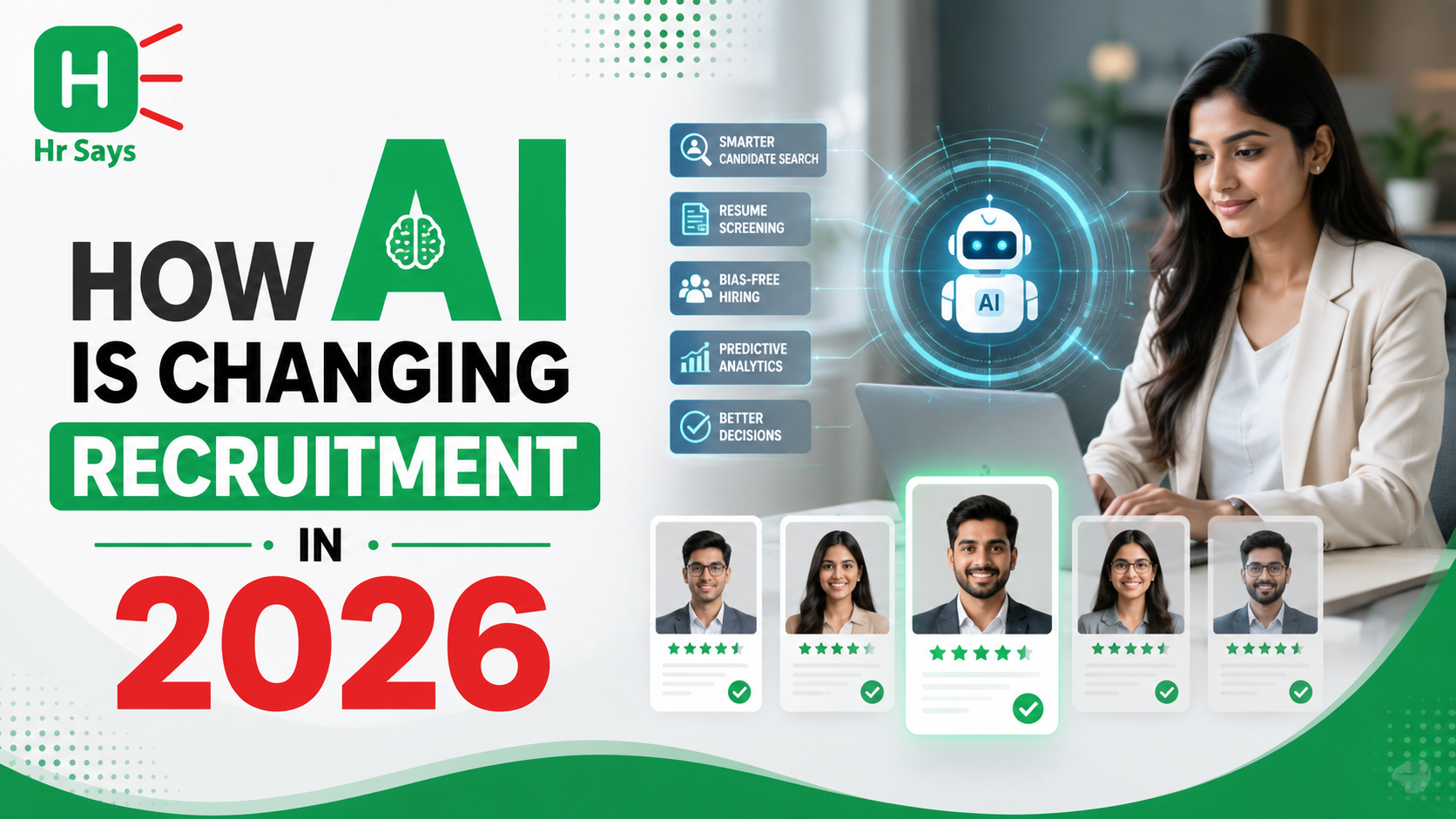
 AI is reshaping Indian recruitment by automating screening, matching, and scheduling while enabling fairer, faster, and more data-driven talent acquisition for HR professionals across organizations.





Introduction
Recruitment has always been one of the most people-intensive functions in any organization. For decades, HR teams have managed towering stacks of resumes, endless rounds of screening calls, and the constant pressure to close positions before business suffers. That reality is shifting, and it is shifting faster than most HR leaders anticipated.
Artificial intelligence is no longer a distant concept confined to technology companies or large multinational corporations. It is actively reshaping how organizations across India find, evaluate, and hire talent. From early-stage startups in Bengaluru to large manufacturing conglomerates in Pune and traditional enterprises in Mumbai, the adoption of AI-driven recruitment tools is growing at a rapid pace.
According to global industry data, between 35 and 45 percent of companies have now incorporated AI into their hiring processes in some form, and the AI recruitment sector is projected to grow at a compound annual rate of over six percent through 2030. In the Indian context, where recruitment teams routinely manage thousands of applicants for a single role, the case for AI is particularly strong.
This article explores exactly how AI is transforming recruitment, what it means for HR professionals and business leaders in India, and how organizations can adopt AI responsibly to build better, fairer, and faster hiring processes.
Understanding AI in Recruitment: What It Actually Means
Before discussing impact, it is important to establish clarity on what AI in recruitment actually involves. AI recruiting refers to the use of machine learning algorithms, natural language processing, and data analytics to automate and optimize various stages of the talent acquisition process. It is not a single tool. It is an ecosystem of technologies working across the recruitment lifecycle.
At its core, AI in recruitment does three things. First, it processes large volumes of structured and unstructured data, such as resumes, job descriptions, assessment responses, and candidate profiles, far faster than any human team could. Second, it identifies patterns within that data to surface the most relevant candidates. Third, it automates routine communication and coordination tasks, freeing HR professionals to focus on higher-value work.
The technologies that power AI recruitment tools include:
- Natural language processing (NLP): Analyzes both job descriptions and candidate materials to identify qualifications, behavioral signals, and skill alignment.
- Machine learning: Continuously improves screening and matching accuracy based on historical hiring outcomes.
- Predictive analytics: Uses past data to forecast which candidates are most likely to succeed and stay in a role.
- Conversational AI and chatbots: Handles candidate queries, guides applicants through the process, and schedules interviews automatically.
- Video interview analysis: Evaluates verbal communication patterns, response quality, and in some platforms, emotional indicators during recorded interviews.
These tools do not operate in isolation. Modern recruitment platforms integrate them into applicant tracking systems (ATS), making the entire workflow more connected and data-driven.
Where AI Is Making the Biggest Difference in Hiring
Resume Screening and Candidate MatchingThe most immediate and visible impact of AI in recruitment is in resume screening. Indian HR teams often receive hundreds to thousands of applications for a single open position, particularly in the technology, banking, and manufacturing sectors. Manual screening of this volume is not only time-consuming but also inconsistent, as human fatigue and unconscious preferences influence decisions.
AI-powered screening tools grade applications based on keyword relevance, skill alignment, experience match, and qualification criteria defined by the recruiter. What once took a team several days can now be completed in minutes. Research suggests that AI can reduce resume screening time by as much as 75 percent, allowing talent acquisition teams to focus their attention on a qualified shortlist rather than an unmanageable flood of applications.
Beyond screening, AI improves candidate matching by going beyond surface-level keyword matching. Advanced systems evaluate transferable skills, career trajectory, and contextual fit, giving recruiters a more nuanced view of candidate suitability.
Candidate Sourcing and Talent Pool ExpansionTraditional sourcing relied heavily on a fixed set of channels: job boards, campus placement drives, referrals, and the same professional networks. This narrowed the talent pool and reinforced existing hiring patterns. AI changes this by scanning multiple online platforms simultaneously, including job boards, professional communities, and social media, to identify both active and passive candidates.
This is particularly significant for Indian organizations that are increasingly looking beyond metro cities to hire talent from Tier 2 and Tier 3 towns. AI removes geographic and channel limitations from sourcing, making it possible to discover qualified candidates who would never have appeared through conventional methods.
Interview Scheduling and Administrative EfficiencyOne of the most universally cited frustrations in recruitment, both from the recruiter and candidate side, is the back-and-forth involved in scheduling interviews. AI scheduling tools integrated with calendar systems can coordinate interview slots, send confirmations, manage reschedules, and send reminders automatically. This alone reduces coordination time significantly and creates a smoother experience for all parties.
More broadly, AI handles a range of administrative tasks that previously consumed a disproportionate share of recruiter time, including sending status updates, managing follow-up communication, and tracking application stages in real time.
Onboarding SupportAI's role in recruitment does not end at the offer letter. Intelligent onboarding platforms use automation to coordinate paperwork, assign training schedules, and personalize the early experience for new joiners based on their role, learning preferences, and career goals. For organizations hiring in volume, this ensures consistency and speed in getting new employees productive.
The Business Case for AI Recruitment in India
Indian businesses face a specific set of recruitment challenges that make the AI case particularly compelling. Rapid business growth, high attrition in certain sectors such as IT services and retail, a vast candidate pool with varying quality signals, and the need to hire at scale across geographically dispersed locations all create pressure on HR teams.
AI addresses these challenges in measurable ways. Industry data indicates that AI can cut overall recruitment time by as much as 50 percent and reduce cost-per-hire meaningfully by eliminating manual tasks that require large HR teams to execute. For organizations managing high-volume hiring cycles, these efficiency gains translate directly into business value.
Beyond efficiency, there is a strategic dimension. AI-powered analytics provide HR leaders with data-driven insights into sourcing channel performance, candidate quality trends, hiring funnel drop-off points, and even early indicators of new hire retention risk. This allows CHROs and talent heads to make decisions based on evidence rather than intuition.
A BCG survey of chief human resources officers found that among companies experimenting with AI or generative AI, 70 percent are doing so within HR, and the top use case within HR is talent acquisition. More than 90 percent of these firms report already seeing measurable benefits.
Risks and Challenges That HR Teams Must Not Ignore
Algorithmic BiasAI systems learn from historical data. If that data reflects past hiring biases, such as a preference for candidates from certain educational institutions or demographic backgrounds, the AI will reproduce and potentially amplify those biases. This is a serious concern for organizations committed to inclusive hiring.
Mitigating algorithmic bias requires diverse data science teams, careful selection of training data, regular audits of AI model outputs, and monitoring of recruitment outcomes across different candidate groups. Responsible AI deployment in HR is not a one-time setup but an ongoing governance responsibility.
Candidate Experience and the Human TouchA significant risk of over-relying on AI in recruitment is the erosion of candidate experience. More than half of candidates globally say they would decline an otherwise attractive offer if they experienced a poor recruitment process. Automated rejections without feedback, chatbot interactions that feel mechanical, and a lack of human connection at critical moments can damage an employer's brand.
Indian candidates, particularly at senior and specialized levels, expect substantive engagement during hiring. Organizations must ensure that AI enhances the experience rather than replacing the human relationships that make recruitment meaningful.
Data Privacy and Regulatory ConsiderationsAI recruitment tools collect and process significant volumes of personal data, including resumes, video recordings, assessment responses, and behavioral signals. Organizations operating in India must align their AI recruitment practices with applicable data protection frameworks. The Digital Personal Data Protection Act, 2023 creates clear obligations around the collection, storage, and use of personal data, and HR teams must ensure their AI vendors meet these standards.
How Indian Organizations Can Adopt AI Recruitment Responsibly
The opportunity presented by AI in recruitment is real, but realizing it requires deliberate action rather than reactive adoption.
Start with clarity of purpose. Before deploying any AI tool, HR leaders must define what problem they are solving. Whether it is reducing time-to-fill, improving quality-of-hire, expanding diversity, or managing application volumes, the goal shapes which tools are appropriate and how success will be measured.
Invest in recruiter readiness. AI changes the recruiter's role, not eliminates it. Recruiters need to develop new skills, including the ability to interpret AI-generated insights, manage AI tools effectively, and add value in the areas where AI cannot, such as relationship building, cultural assessment, and negotiation. Upskilling HR teams is not optional in an AI-first recruitment environment.
Maintain human oversight at key decision points. Final hiring decisions must involve human judgment. AI can shortlist, score, and rank, but a person must evaluate, engage, and decide. This is both an ethical requirement and, in many jurisdictions, a regulatory one.
Be transparent with candidates. Candidates have a right to know when AI is being used in their evaluation. Clear communication about how AI tools are applied, what data is collected, and how decisions are made builds trust and protects the organization from reputational risk.
Audit continuously. AI tools must be reviewed regularly for bias, accuracy, and alignment with organizational values. A tool that performs well at deployment can drift over time as data patterns change or organizational hiring needs evolve.
The Future of AI in Recruitment
The trajectory of AI in recruitment points toward deeper integration and greater sophistication. Generative AI is already being used to create personalized job descriptions, custom outreach messages, and tailored candidate communications at scale. Predictive workforce planning tools are helping organizations anticipate future skill needs and build pipelines proactively rather than reactively.
For Indian HR professionals, the next three to five years will likely see AI become a standard component of most enterprise recruitment stacks, much as email and applicant tracking systems are today. The competitive advantage will not lie in whether an organization uses AI, but in how intelligently and responsibly it does so.
Platforms like HRSays are helping HR communities navigate this shift by bringing together practitioner insights, tool assessments, and peer conversations around the responsible adoption of HR technology. For CHROs, talent leaders, and HR professionals building their knowledge base, staying connected with credible, practitioner-focused resources will be as important as the technology itself.
Conclusion
Artificial intelligence is not a threat to the recruitment profession. It is a powerful tool that, when used thoughtfully, makes recruiters more effective, hiring processes more equitable, and organizations more capable of attracting the right talent at the right time. The Indian HR community is at an important inflection point, and the choices made now around how AI is adopted, governed, and integrated into recruitment practice will shape workplace outcomes for years to come.
The organizations that will lead are those that balance the efficiency of automation with the irreplaceable value of human judgment, empathy, and relationship. AI handles the volume. People make the difference.
Frequently Asked Questions
Q1: How is AI changing recruitment in India?
AI is automating resume screening, candidate matching, interview scheduling, and candidate communication in Indian organizations. It allows HR teams to manage high application volumes efficiently, reduce hiring timelines, and make more skills-based hiring decisions. Indian companies across sectors, from IT and manufacturing to BFSI and retail, are increasingly integrating AI tools into their talent acquisition workflows.
Q2: Can AI replace human recruiters?
No. AI is built to assist recruiters, not replace them. It handles high-volume, time-intensive tasks so that human recruiters can invest more energy in relationship building, cultural fit evaluation, and strategic hiring conversations. The most effective recruitment outcomes come from combining AI efficiency with human insight.
Q3: What are the risks of using AI in recruitment?
The primary risks include algorithmic bias that can replicate past hiring inequities, erosion of candidate experience through excessive automation, data privacy concerns under India's Digital Personal Data Protection Act, and the challenge of maintaining regulatory compliance as AI rules continue to evolve. These risks are manageable with proper governance, regular audits, and clear human oversight protocols.
Q4: Which Indian companies are using AI in recruitment?
Large Indian organizations including TCS, Infosys, Wipro, HDFC Bank, and Reliance, as well as a growing number of technology startups and mid-sized enterprises, have adopted AI-powered recruitment tools. These range from AI-enabled ATS platforms and chatbots for candidate engagement to video interview analysis and predictive analytics for workforce planning.
Q5: What AI tools are most commonly used in recruitment today?
The most widely used AI recruitment tools include machine learning-powered applicant tracking systems, AI-driven chatbots for candidate communication, video interview analysis platforms, automated sourcing tools that scan job boards and professional networks, and predictive analytics platforms that assess candidate quality and retention potential based on historical data.
Resources
- Society for Human Resource Management (SHRM): Research and practitioner insights on AI adoption in HR and talent acquisition workflows.
- Boston Consulting Group (BCG): Global surveys and analysis on AI use in HR functions, including talent acquisition trends and CHRO perspectives.
- Tata Consultancy Services (TCS): Industry white papers on AI transformation in the staffing and recruitment sector, including SWOT analysis and adoption roadmaps.
- Ministry of Electronics and Information Technology, Government of India (MeitY): Resources on the Digital Personal Data Protection Act, 2023, and its implications for HR technology and data handling.
- LinkedIn Talent Insights: Data and research on AI in global and Indian talent acquisition, recruiter productivity, and emerging hiring trends.
Interlinking Keywords
AI in recruitment, talent acquisition strategy, HR technology trends, applicant tracking system, employee onboarding, diversity and inclusion hiring, HR automation India, candidate experience, predictive analytics HR, future of work India
Disclaimer:
The information provided in this article is intended for general informational and educational purposes only. It does not constitute legal, compliance, or professional HR advisory guidance. Organizations should consult qualified legal and HR professionals before implementing AI-driven recruitment tools, particularly in the context of applicable data protection regulations and employment laws in India. HRSays does not endorse any specific AI vendor or recruitment platform mentioned or referenced in this article.