 Thursday, September 17, 2026
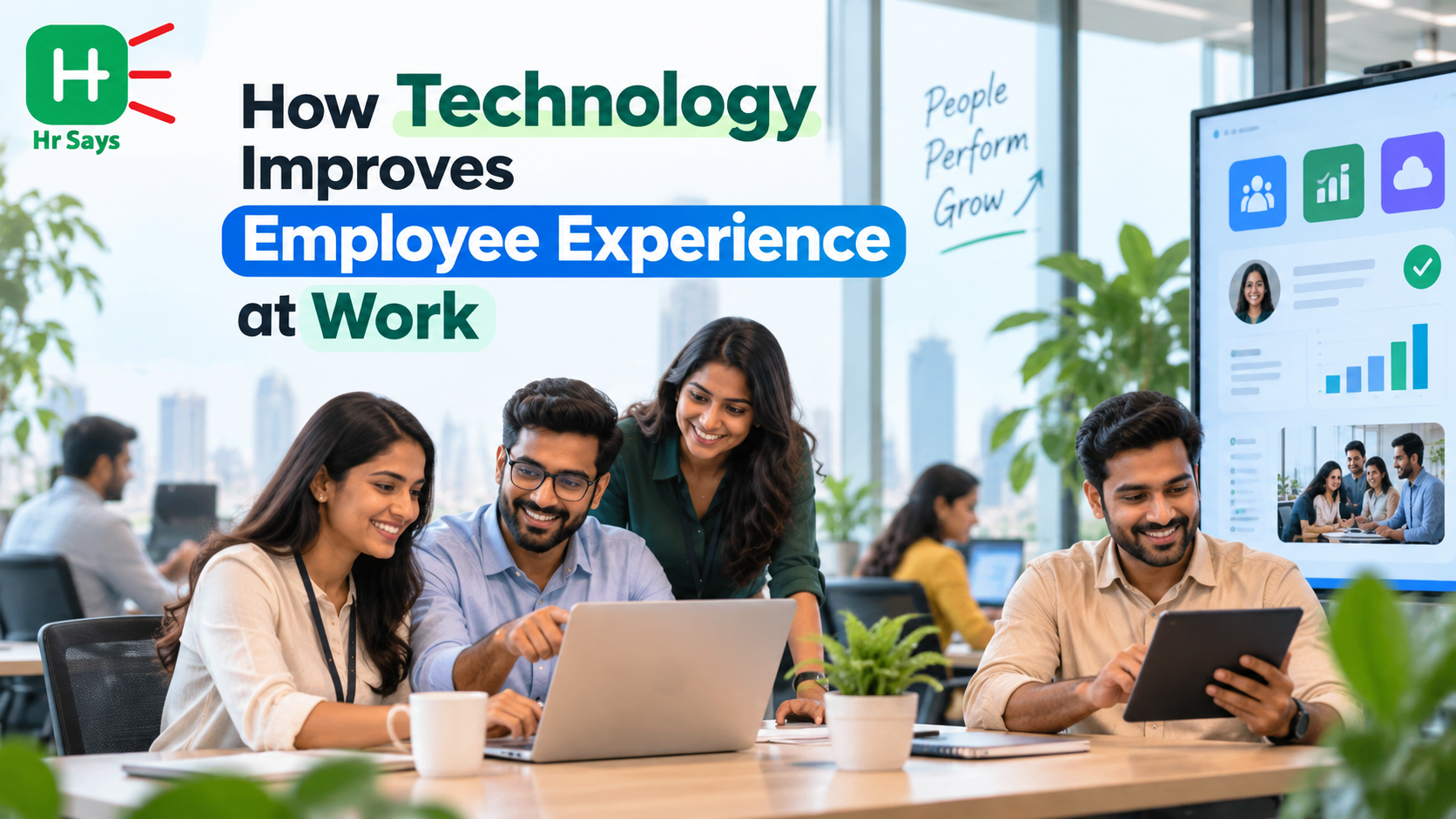
 Technology transforms employee experience by enabling digital onboarding, AI-driven engagement, continuous learning, seamless communication, and data-informed HR decisions across Indian workplaces of all sizes.





Introduction
The relationship between an organization and its employees has undergone a profound transformation over the past decade. Today, employee experience is no longer just about a comfortable desk or a competitive salary. It is about how employees feel throughout every interaction they have with their organization, from the moment they receive an offer letter to the day they complete their tenure. And at the center of this transformation is technology.
Across India, organizations ranging from large enterprises in Mumbai and Bengaluru to mid-sized companies in Pune, Hyderabad, and Ahmedabad are rethinking how they design the employee journey. The shift toward digital workplaces is no longer a future possibility. It is already happening, and the organizations that are investing in HR technology today are seeing measurable improvements in retention, productivity, engagement, and workplace satisfaction.
This article explores how technology is reshaping the employee experience landscape in India, what tools and platforms are driving this change, and why HR leaders, founders, and business owners need to pay close attention to this evolution.
Understanding Employee Experience in the Digital Age
Employee experience refers to the sum of every interaction an employee has with their organization across three core environments: the cultural environment, the physical environment, and the technological environment. Of these three, technology has become the most rapidly evolving and impactful factor.
When employees have access to the right digital tools, they spend less time on administrative friction and more time on meaningful, productive work. They feel heard through digital feedback systems. They learn and grow through accessible online platforms. They communicate seamlessly through collaborative technology. And they access HR support without bureaucratic delays through self-service portals.
According to reports from global HR advisory bodies, organizations that invest deliberately in employee experience technology consistently outperform competitors on employee engagement scores, retention rates, and overall business performance. In India, where talent competition is intensifying across sectors such as IT, BFSI, healthcare, and manufacturing, creating a technology-enabled employee experience is increasingly becoming a strategic priority rather than a nice-to-have.
Key Ways Technology Improves Employee Experience
Digital Onboarding and First ImpressionsThe onboarding experience sets the tone for an employee's entire journey with an organization. Traditional onboarding processes involved paperwork, in-person sessions, and long waiting periods before a new hire could actually begin contributing. Technology has fundamentally changed this.
Digital onboarding platforms allow new employees to complete documentation, sign contracts, access company policies, and meet their team members virtually even before their first day. AI-powered onboarding tools can personalize the experience by guiding employees through role-specific content, compliance modules, and introductory tasks tailored to their department.
For Indian companies that often hire at scale, especially during campus placement seasons or expansion phases, digital onboarding tools significantly reduce HR workload, improve consistency, and create a positive first impression that builds early engagement.
HRMS and Self-Service PortalsHuman Resource Management Systems (HRMS) are among the most foundational HR technology investments an organization can make. Platforms such as Zoho People, Darwinbox, greytHR, and Keka have become widely adopted across Indian businesses of all sizes.
These platforms allow employees to access payslips, apply for leave, update personal information, check attendance records, and raise HR queries without depending on a dedicated HR executive for every small task. This autonomy reduces frustration, speeds up resolution times, and gives employees a sense of control over their own work-related information.
For HR teams, HRMS platforms centralize data, reduce errors in payroll processing, and generate actionable workforce analytics. The result is a more efficient HR function that can focus on strategic initiatives rather than administrative repetition.
AI-Powered Engagement and Feedback ToolsOne of the most significant gaps in traditional employee management has been the delay between when employees feel disengaged and when leadership becomes aware of it. Annual performance reviews and sporadic surveys rarely provide a real-time picture of how employees are feeling.
Artificial intelligence is now making it possible to track employee sentiment continuously. AI-powered engagement platforms analyze data from employee surveys, communication patterns, collaboration tools, and performance metrics to generate real-time engagement scores and flag early warning signs of disengagement or burnout.
Tools such as Leapsome, Lattice, and locally developed Indian platforms are enabling HR teams to have more meaningful, timely conversations with employees based on data rather than intuition. This approach shifts employee experience management from being reactive to genuinely proactive.
Learning and Development PlatformsCareer growth remains one of the top reasons employees stay with or leave an organization. Technology has democratized access to learning in ways that were impossible even a decade ago. Today, Learning Management Systems (LMS) and digital learning platforms such as Coursera for Business, LinkedIn Learning, and India-developed platforms like Disprz and Learnyst are enabling employees to upskill at their own pace, in their own language, and on their own schedule.
In India, where the workforce spans multiple languages and educational backgrounds, vernacular learning capabilities and mobile-first learning platforms are particularly important. Employees in Tier 2 cities or on manufacturing floors who may not have access to traditional classroom training can now access high-quality courses on a smartphone.
Organizations that invest in digital learning experience measurably higher employee satisfaction because employees feel that their employer genuinely cares about their professional future.
Communication and Collaboration TechnologyThe post-pandemic workplace in India has normalized hybrid and remote work in ways that have made digital communication tools indispensable. Platforms such as Microsoft Teams, Slack, Google Workspace, and Zoom have become the primary environments where collaboration happens.
Beyond formal communication, technology also enables informal connection. Virtual town halls, digital recognition platforms, team engagement apps, and internal social intranets help employees feel connected to the larger organizational culture even when they are working remotely.
For a country as geographically diverse as India, where teams often span multiple cities and time zones, technology is what holds organizational culture together. It allows a team in Chennai to collaborate seamlessly with a team in Delhi, and it ensures that employees in smaller offices do not feel isolated from the larger company conversation.
Well-Being Technology and Mental Health SupportThe conversation around employee well-being has gained significant momentum in India, particularly after the challenges of the pandemic years. Organizations are now recognizing that physical and mental well-being directly impact productivity, absenteeism, and retention.
Technology is playing a crucial role here as well. Corporate wellness platforms such as Vantage Fit and YourDOST are enabling organizations to offer structured wellness programs, mental health counseling access, fitness tracking, and mindfulness resources to employees at scale.
These platforms allow HR teams to measure well-being metrics, identify teams or individuals who may need additional support, and create a culture where well-being is embedded into the daily work experience rather than addressed only during a crisis.
Technology and the Indian HR Landscape: Unique Considerations
India presents a unique context for HR technology adoption. The country has one of the world's largest and youngest workforces, with millions of professionals entering the job market every year. At the same time, Indian organizations operate across an enormous range of sizes, sectors, and digital maturity levels.
Large enterprises in sectors such as IT services, BFSI, and pharmaceuticals have been early adopters of sophisticated HR technology stacks. However, the more significant growth opportunity lies in India's vast small and mid-sized enterprise (SME) ecosystem. Platforms designed specifically for Indian SMEs are now making it possible for companies with 50 to 500 employees to access affordable, scalable HR technology without requiring large IT infrastructure investments.
Government initiatives such as the Digital India programme have also played an important role in expanding digital infrastructure, particularly in Tier 2 and Tier 3 cities. As internet penetration and smartphone adoption continue to grow, technology-driven employee experience improvements will reach an increasingly broader segment of India's workforce.
Overcoming Barriers to HR Technology Adoption
Despite the clear benefits, many Indian organizations still face challenges in adopting HR technology effectively. Common barriers include resistance to change among leadership and employees, lack of digital literacy among certain workforce segments, concerns about data privacy and security, and budget constraints in smaller organizations.
HR leaders who have successfully navigated these challenges tend to share a few common approaches. They invest in change management alongside technology deployment, ensuring that employees understand why new tools are being introduced and how those tools will make their own work lives better. They choose platforms that offer local language support and intuitive interfaces. And they start with high-impact, visible use cases, such as digital payroll or mobile leave management, before expanding to more complex applications.
Platforms and knowledge resources such as HRSays play an important role in this ecosystem by keeping HR professionals informed about the latest tools, trends, and best practices in workplace technology, helping practitioners make more confident and better-informed decisions.
Conclusion
Technology is not a replacement for strong HR leadership or genuine organizational culture. But it is an extraordinarily powerful enabler of both. When organizations deploy the right HR technology thoughtfully and strategically, they create an employee experience that feels personalized, efficient, fair, and growth-oriented.
In India's competitive talent landscape, where employees have more choices than ever before and where the expectations of a young, digitally native workforce continue to rise, the organizations that prioritize technology-driven employee experience will consistently attract better talent, retain their people longer, and build stronger, more resilient workplace cultures.
The question is no longer whether HR technology matters. The question is how quickly organizations are willing to commit to building a workplace where technology and human leadership work together to create something genuinely excellent.
Frequently Asked Questions
Q1: How does technology improve employee experience?
Technology improves employee experience by streamlining communication, automating repetitive administrative tasks, enabling flexible work arrangements, and providing HR teams with data-driven insights to address employee needs more effectively and proactively.
Q2: What HR technology tools are most effective for employee engagement in India?
HRMS platforms such as Darwinbox, Zoho People, and greytHR, along with employee engagement apps, learning management systems, AI-powered feedback tools, and digital onboarding platforms, are among the most effective solutions for improving employee engagement in Indian workplaces.
Q3: What is the role of AI in improving employee experience?
AI helps personalize employee experiences by analyzing engagement data, predicting attrition risks, automating HR workflows, delivering personalized learning recommendations, and enabling faster query resolution through intelligent HR chatbots and virtual assistants.
Q4: How is HR technology adoption growing in India?
India's HR technology market is growing rapidly, driven by the rise of hybrid work models, increasing startup and SME ecosystems, digital infrastructure expansion under the Digital India initiative, and the growing recognition among business leaders that employee experience is a direct driver of business performance.
Q5: Can small and mid-sized Indian companies also benefit from HR technology?
Yes. Many scalable and affordable HR technology platforms are now designed specifically for small and mid-sized businesses in India, enabling them to digitize onboarding, payroll, attendance tracking, and employee engagement without requiring large IT budgets or complex infrastructure.
Resources
- Ministry of Labour and Employment, Government of India: Official source for workforce data, labor policy updates, and employer compliance guidelines relevant to Indian HR professionals.
- NASSCOM HR Technology Reports: Industry research and data on HR technology adoption trends across India's technology and business services sectors.
- Society for Human Resource Management (SHRM India): Global and India-specific insights on HR best practices, employee experience frameworks, and people management strategies.
- LinkedIn Workforce Insights: Data-driven reports on hiring trends, employee engagement patterns, and skills demand across Indian industries.
- People Matters Research: India-focused HR research covering workplace transformation, HR technology adoption, and employee experience benchmarks.
Interlinking Keywords
employee experience technology, HR technology India, digital onboarding platforms, HRMS India, employee engagement tools, learning management systems India, AI in HR, hybrid work culture India, workplace well-being technology, HR digital transformation
Last Reviewed By
Dr. Manthan Tripathi and Hr Says Advisory Panel on 16 September, 2026
Disclaimer
The information provided in this article is intended for general informational and educational purposes only. It reflects the author's perspective based on publicly available research, workplace trends, and industry observations. Readers are encouraged to assess the relevance of any guidance in relation to their specific organizational context, applicable Indian labour laws, and the advice of qualified HR or legal professionals. HRSays does not endorse any specific tool, platform, product, or service referenced or implied in this article.