 Wednesday, November 11, 2026
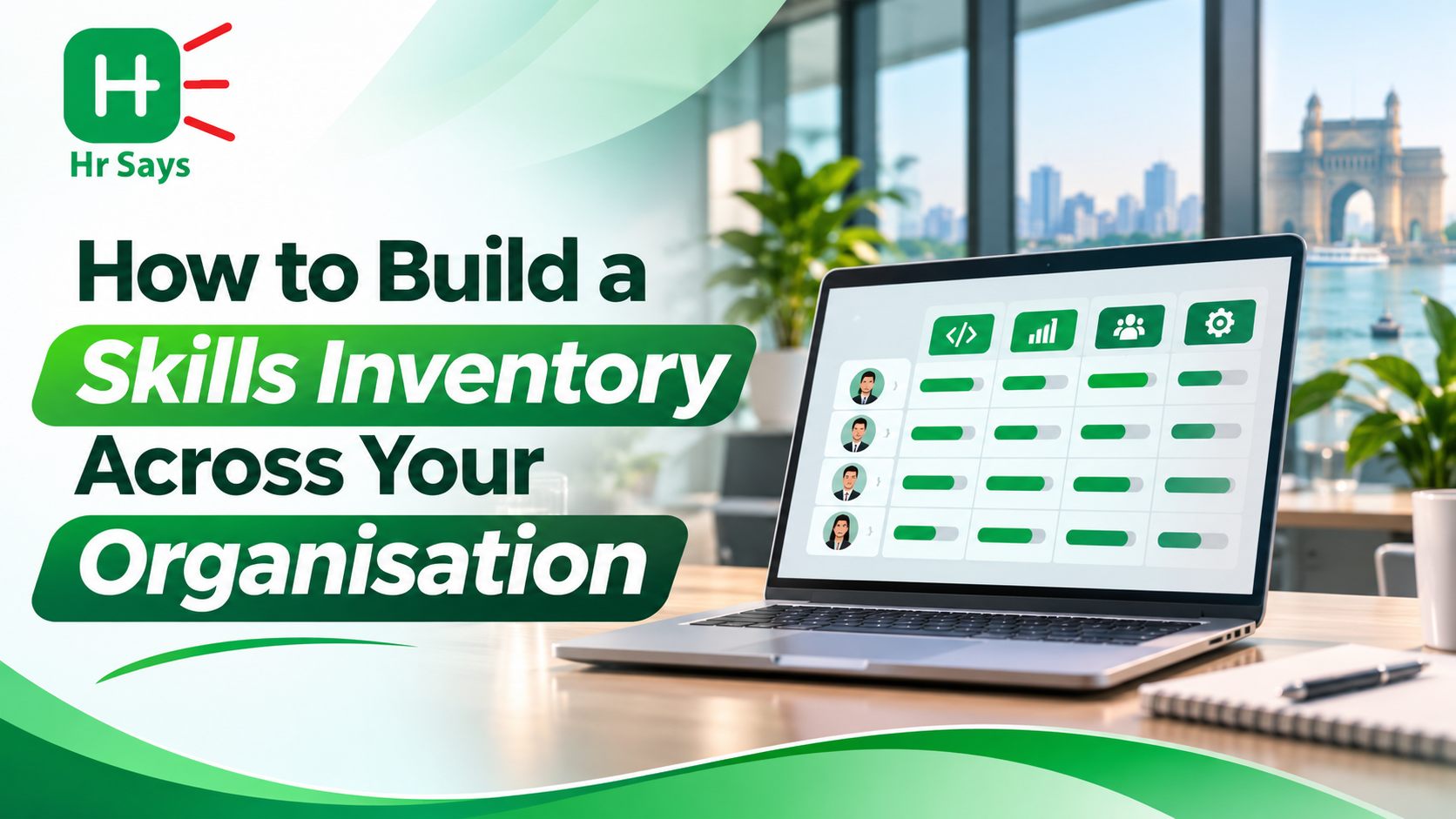
 A skills inventory maps workforce capabilities to support smarter planning, targeted learning, and informed hiring across growing Indian organisations.





Introduction
For any organisation trying to grow in a competitive environment, knowing what its people are capable of is not optional. It is foundational. Yet a large number of HR leaders in India operate without a clear, structured picture of the skills their workforce actually holds. Projects get delayed because the right person with the right expertise was never identified in time. Hiring decisions become reactive instead of strategic. Training budgets get spent without measurable outcomes.
A skills inventory changes all of that. It is a living, structured record of the skills, competencies, and capabilities present across an organisation. When built well and maintained consistently, it becomes one of the most powerful tools available to HR leaders, CHROs, and business heads for workforce planning, succession planning, learning and development, and talent deployment.
This guide walks through exactly how to build a skills inventory across your organisation, with practical steps, relevant considerations for Indian workplaces, and insights on making the process sustainable for the long term.
What Is a Skills Inventory and Why Does It Matter
A skills inventory is a centralised repository that captures the skills and competencies of every employee in an organisation. It goes beyond the information available in a resume or job description. It reflects what each person can actually do, what they are learning, and where gaps exist relative to what the organisation needs.
The value of this inventory is not limited to HR teams. Business leaders use it to make smarter staffing decisions. L&D teams use it to design targeted training programs. Hiring managers use it to understand whether a gap can be filled from within before opening an external role.
In the Indian workplace context, the need for skills inventories has grown significantly. With rapid digital transformation across sectors including banking, manufacturing, healthcare, retail, and IT services, organisations are navigating a widening skills gap. The National Skill Development Corporation (NSDC) has repeatedly highlighted that India needs not only more trained workers but also better internal tracking of existing workforce capabilities to meet industry demands.
A well-built skills inventory helps organisations stop guessing and start planning with confidence.
Defining the Purpose and Scope Before You Begin
One of the most common mistakes organisations make is diving into data collection without clarity on what they are trying to achieve. Before building the inventory, HR leaders need to answer a few foundational questions:
- What decisions will this inventory support? Workforce planning, succession planning, learning prioritisation, internal mobility, or all of the above?
- Which employee groups will be included in the first phase? A large organisation may need a phased rollout starting with critical functions.
- What level of detail is needed? Entry-level competency mapping looks very different from an executive-level capability framework.
- Who will own and maintain the inventory once it is built?
Defining the scope upfront prevents scope creep and ensures that the inventory remains practical rather than becoming an overwhelming internal project that never reaches completion. For mid-sized Indian organisations where HR teams are often lean, starting with a focused scope and expanding gradually is a more realistic and sustainable approach.
Identifying and Categorising the Skills You Need to Map
Once the scope is defined, the next step is building the skills taxonomy, which is the structured list of skills and competencies that the inventory will track. This taxonomy needs to reflect the actual needs of the business, not just generic industry frameworks.
Skills in a typical organisational inventory fall into several broad categories:
- Technical or functional skills: These are role-specific abilities such as financial modelling, Python programming, supply chain management, clinical documentation, or machine operation.
- Core behavioural and soft skills: These include communication, problem-solving, collaboration, adaptability, leadership, and customer orientation.
- Digital and technology skills: Given the pace of digital adoption in Indian organisations, this has become a standalone category covering tools, platforms, data literacy, and digital communication.
- Compliance and regulatory knowledge: Particularly relevant in sectors like BFSI, pharmaceuticals, healthcare, and manufacturing where regulatory awareness is a business-critical skill.
HR leaders should involve department heads and functional managers in building this taxonomy. The people closest to the work understand what skills are genuinely needed. A skills list built only at the HR level often misses nuances that matter during actual deployment.
Collecting Skills Data from Employees
This is the most resource-intensive step and also the most important one. The accuracy of the inventory depends entirely on the quality of data collected. There are several approaches organisations use, often in combination:
Employee self-assessment is the most common starting point. Employees rate their own proficiency on a defined scale, typically ranging from beginner to expert or novice to advanced. The key is to provide clear descriptions of what each proficiency level means so that ratings are consistent across the organisation. Without these anchors, one employee's "advanced" may be another's "intermediate."
Manager validation adds an important layer of objectivity. Managers who work closely with their teams are well-positioned to verify or adjust self-reported skill levels, particularly for critical or high-stakes competencies. Combining self-assessment with manager input improves data reliability significantly.
Performance review integration is another effective method. Rather than running a separate skills exercise, organisations can embed skills assessment into existing performance review cycles. This reduces duplication of effort and increases participation since employees are already engaged in the review process.
HR system and certification data can supplement self-reported information. If an employee has completed a certified course through an internal LMS or an external platform, that credential provides verifiable evidence of skill acquisition.
For Indian organisations where employee trust in internal processes can vary, communication matters as much as the process itself. HR leaders need to be transparent about why the data is being collected, how it will be used, and what protections are in place to ensure the inventory does not become a tool for negative performance judgements.
Building and Structuring the Inventory
Once data collection is underway, the inventory needs to be organised in a way that makes it searchable, comparable, and useful for decision-making. The right structure depends on the organisation's size and technology maturity.
Smaller organisations may start with a well-structured spreadsheet that maps employees to skill categories and proficiency levels. This is a practical starting point and allows HR teams to validate the approach before investing in a more complex system.
Mid-sized and larger organisations will benefit from dedicated HR technology platforms that offer skills management modules. Several HR tech platforms available in the Indian market, including those used by companies across Bengaluru, Mumbai, Pune, and Hyderabad, now offer built-in skills inventory features that integrate with learning management systems and talent management workflows.
Regardless of the tool, the inventory structure should allow HR leaders to filter by skill, by department, by proficiency level, and by team. The ability to quickly identify who holds a particular expertise across the organisation is what makes the inventory operationally valuable.
Applying the Inventory to Real Business Decisions
A skills inventory that sits in a file and is never referenced has no value. The real return on investment comes from using it actively across HR and business processes.
Workforce and succession planning becomes significantly more informed when HR leaders can visualise which critical roles have identified successors with the required skills and which roles carry coverage risk. This is particularly relevant for Indian organisations in growth stages where losing a key person can disrupt entire business units.
Learning and development prioritisation shifts from assumption-based to evidence-based. When the inventory reveals that a significant portion of the sales team lacks negotiation skills or that the operations team is under-skilled in a new enterprise software, L&D teams can direct training budgets with confidence.
Internal mobility and project staffing improve when managers can search for expertise across teams. Many organisations in India are beginning to embrace internal talent marketplaces where employees with identified skills are matched to cross-functional projects, giving the organisation better resource utilisation and giving employees valuable exposure.
Hiring decisions become more targeted. When HR knows precisely which skills are absent or under-represented internally, external hiring is focused and justified. It also avoids the expensive mistake of hiring externally for skills that already exist within the organisation.
Keeping the Inventory Current and Relevant
One of the biggest challenges with skills inventories is that they go stale quickly. Skills acquired through new projects, certifications, or on-the-job learning may not be reflected in the inventory if there is no process to update it. Within six to twelve months of an initial build, an inventory without a maintenance process can become unreliable.
Organisations should build a regular review cadence into the inventory management process. Annual or biannual full reviews work well for most organisations. These should be supplemented by event-driven updates such as when an employee completes a certification, changes roles, or finishes a major project.
HR technology platforms that integrate skills data with the LMS can automate some of this updating. When an employee completes a course and passes an assessment, the relevant skill entry is updated without requiring a separate data entry process.
Leadership commitment also matters. When CHROs and senior HR leaders position the skills inventory as a living business tool rather than a one-time HR exercise, employees and managers are more likely to maintain their contributions to keeping it accurate.
Conclusion
Building a skills inventory across an organisation is an investment that pays consistent dividends over time. It moves HR leadership from reactive to strategic, gives business leaders visibility into their most important asset, and gives employees a framework for understanding where they stand and where they can grow.
For Indian organisations navigating rapid change, evolving workforce expectations, and growing competition for talent, a well-maintained skills inventory is no longer a nice-to-have. It is a practical foundation for every meaningful people decision the organisation makes.
The process does not need to be perfect from day one. Starting with a defined scope, building a sound taxonomy, collecting data with transparency, and committing to regular maintenance will produce a skills inventory that genuinely serves the organisation across its planning, development, and talent management work.
Frequently Asked Questions
Q1: What is the difference between a skills inventory and a competency framework?
A skills inventory is a data record of the skills and proficiency levels that currently exist across an organisation's workforce. A competency framework defines the skills, behaviours, and knowledge that employees are expected to demonstrate in specific roles. The competency framework describes what is required; the skills inventory shows what is actually present. Both tools work well together and are most effective when used in combination.
Q2: How long does it take to build a skills inventory for the first time?
The timeline varies based on the organisation's size, the scope of the exercise, and the tools available. For a mid-sized Indian organisation of 200 to 500 employees, a focused first-phase inventory covering core roles can typically be completed in six to ten weeks if data collection, manager validation, and taxonomy design are run in parallel. Larger organisations with multiple business units may plan for a phased rollout over three to six months.
Q3: Can small businesses benefit from a skills inventory?
Yes, and in some ways small businesses benefit even more directly because the stakes of a skills gap are higher when teams are lean. A startup or small business with 20 to 50 employees can build a simple but highly effective skills inventory using a well-structured spreadsheet. The key is to focus on the skills that matter most for the business goals and to review the inventory at least twice a year.
Q4: How should organisations handle employees who underrate or overrate themselves in self-assessments?
This is a known challenge with self-assessment approaches. The best mitigation is a combination of clear proficiency level descriptors, manager review and validation, and evidence-based verification through certifications or demonstrated work outputs. Organisations should also communicate clearly that the purpose of the inventory is development-focused, not evaluative, which tends to reduce both over-inflation and defensiveness in self-reporting.
Q5: What role does HR technology play in managing a skills inventory?
HR technology platforms simplify skills inventory management significantly, especially for larger organisations. They enable structured data entry, role-based proficiency benchmarking, automated updates from learning systems, and reporting dashboards that HR leaders and business heads can use in real time. For Indian organisations evaluating platforms, it is worth selecting tools that support multi-language inputs and integrate with the payroll or HRMS systems already in use.
Resources
- National Skill Development Corporation (NSDC): India's central body for skill development policy, research, and workforce capability frameworks.
- Ministry of Labour and Employment, Government of India: Policy guidelines on workforce planning, employment standards, and skill development initiatives.
- Society for Human Resource Management (SHRM): Global HR research and practical frameworks on talent management, competency mapping, and workforce analytics.
- World Economic Forum Future of Jobs Report: Annual research on global skills trends, emerging job profiles, and workforce readiness across industries, including India.
- LinkedIn Workplace Learning Report: Annual insights on workplace learning trends, skills investment, and L&D priorities across organisations in Asia-Pacific and India.
Interlinking Keywords
Skills inventory, workforce planning, competency framework, talent management, skills gap analysis, internal mobility, learning and development, HR technology, succession planning, employee skills assessment, organisational capability, HR strategy India
Last Reviewed By
Dr. Manthan Tripathi and Hr Says Advisory Panel on 10 November 2026.
Disclaimer
The information provided in this article is intended for general informational and educational purposes only. It represents general guidance on HR practices and workforce planning strategies. Organisations should consult qualified HR professionals or legal advisors before implementing any formal HR processes, tools, or policies. HRSays does not guarantee specific outcomes from the application of any strategies discussed in this article.