 Friday, November 06, 2026
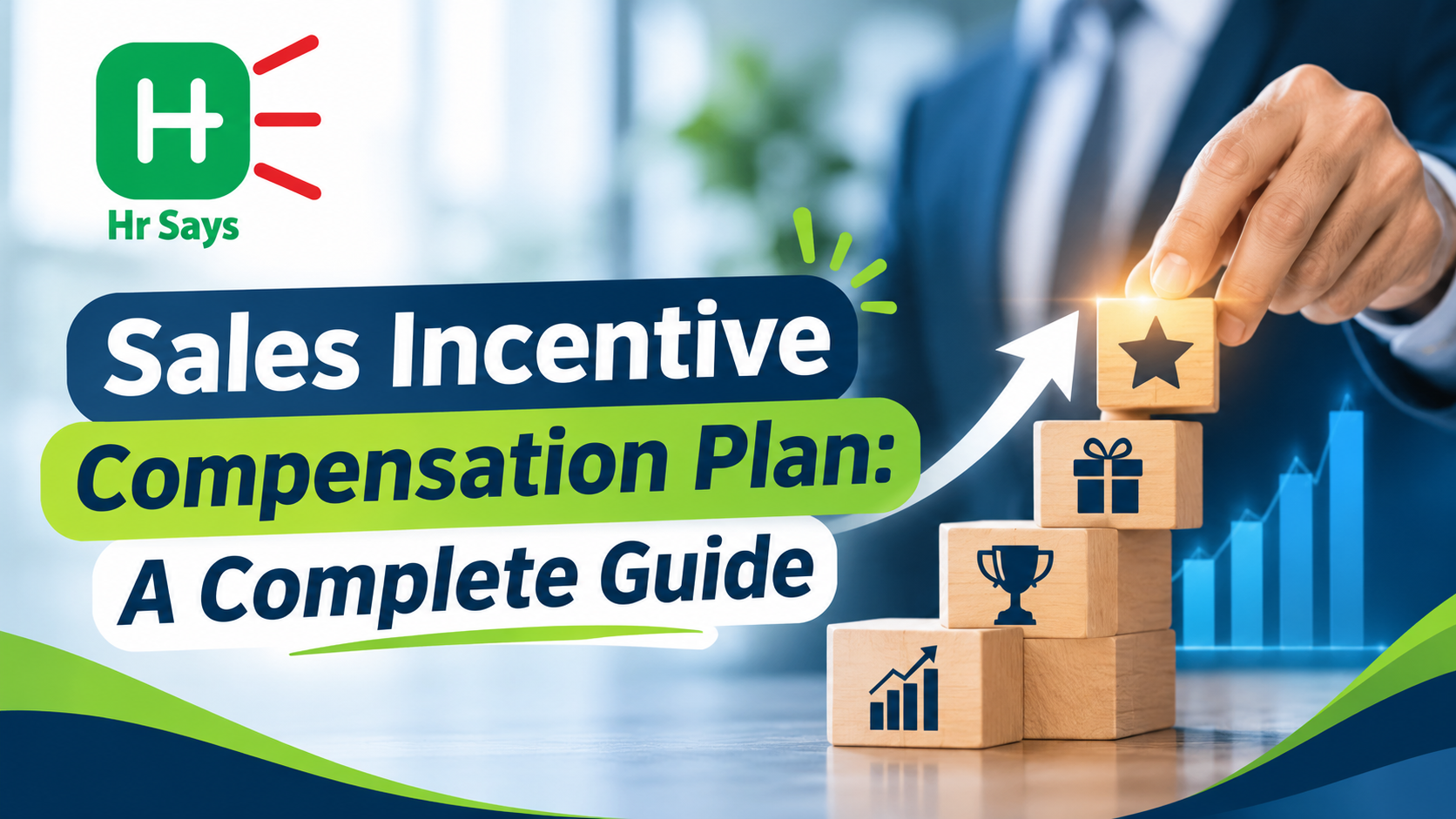
 A well-designed sales incentive compensation plan aligns business goals with individual motivation, drives revenue performance, and builds a high-trust, high-accountability sales culture.





Introduction
Sales teams are the revenue engine of any organization. Yet many companies in India and globally continue to struggle with one persistent challenge: keeping their sales professionals motivated, focused, and committed for the long term. A well-structured sales incentive compensation plan is one of the most powerful tools an organization can use to solve this problem.
A sales incentive compensation plan is a formal framework that defines how sales professionals are paid beyond their base salary. It includes commissions, performance bonuses, accelerators, and other variable pay components tied directly to achieving defined revenue or business outcomes. When designed correctly, such a plan does more than reward performance. It communicates organizational priorities, shapes behavior, attracts high performers, and builds a culture of accountability.
For HR professionals, compensation consultants, CHROs, and business owners in India, designing this plan requires balancing financial sustainability, market competitiveness, and employee motivation. This guide walks through each critical step of that process.
Understanding Sales Incentive Compensation: The Core Concepts
Before designing any plan, it is essential to understand what a sales incentive compensation plan actually covers and why it matters.
A typical sales compensation plan has two primary components. The first is the fixed component, which is the base salary. The second is the variable component, which is the incentive pay tied to performance. The ratio between these two components is often referred to as the pay mix. A common pay mix for field sales roles is 60:40 or 70:30, meaning sixty to seventy percent is fixed and thirty to forty percent is variable. For inside sales roles, the split may differ.
The On-Target Earnings (OTE) is another critical concept. OTE represents the total compensation a salesperson can expect when they hit one hundred percent of their target. This number is what gets shared in job descriptions and offer letters, and it sets expectations from day one of employment.
In the Indian context, sales compensation structures vary significantly across industries. Technology and SaaS companies tend to offer aggressive variable pay, while manufacturing and distribution companies may lean more heavily on fixed pay with modest performance bonuses. Understanding where your industry sits on this spectrum is an important starting point.
Key Elements Every Sales Incentive Compensation Plan Must Include
A strong plan is built on clearly defined elements. Missing even one of these can create ambiguity, reduce motivation, or lead to disputes between sales teams and management.
Quota Setting: Quotas represent the performance target that triggers incentive payouts. They must be realistic, data-driven, and achievable. Quotas that are set too high demotivate even high performers. Quotas that are too low lead to overspending on incentives without meaningful revenue growth. The best quotas are built from historical sales data, territory potential analysis, and forward-looking business goals.
Commission Rates and Accelerators: The commission rate is the percentage of revenue or deal value that a salesperson earns as incentive pay. Accelerators are higher commission rates that activate once a salesperson surpasses their quota. For example, a salesperson might earn two percent commission on deals up to quota and four percent on every deal closed beyond quota. Accelerators are powerful motivators that reward overperformance and encourage top performers to push harder.
Performance Thresholds: Most plans include a minimum performance threshold below which no variable pay is earned. This threshold, sometimes called the floor, protects the company from paying incentives on very low performance levels. A common threshold is fifty to sixty percent of quota.
Payout Frequency: Plans must specify how often incentives are paid. Monthly payouts keep motivation high and are common in high-velocity sales environments. Quarterly payouts work well for enterprise sales cycles. Annual payouts are rare and generally not recommended for sales roles, as the delay between effort and reward weakens motivation.
Clawback Provisions: A clawback clause allows the company to recover incentive pay if a sale is cancelled, the customer churns within a defined period, or the deal is found to have been closed incorrectly. Including a fair and transparent clawback policy protects the business without creating unnecessary fear among the sales team.
Aligning the Compensation Plan with Business Goals
The most critical test of any sales incentive plan is whether it drives the specific outcomes the business needs. A plan that rewards total revenue, for instance, may inadvertently push sales teams to sell low-margin products or close short-term deals that damage long-term relationships.
HR professionals and sales leaders must work together to identify what the business truly needs:
- If the priority is new customer acquisition, the plan should reward new logo wins more heavily.
- If the priority is revenue retention and expansion, then renewal rates and upsell metrics should carry more weight.
- If the company is entering a new market or launching a new product, temporary accelerators or SPIFs (Sales Performance Incentive Funds) can be used to focus attention on these priorities without overhauling the entire plan.
This alignment exercise must be revisited at least annually, and preferably at the start of every financial year. As the business evolves, the compensation plan must evolve with it.
Designing for Fairness and Transparency
One of the most common reasons sales compensation plans fail is a lack of trust in the system. If salespeople cannot clearly calculate their own earnings, if territories are perceived as unfair, or if leadership seems to change the rules mid-year, motivation collapses.
Transparency means every salesperson should be able to open a simple document or tool and calculate exactly what they will earn at fifty percent, one hundred percent, and one hundred fifty percent of quota. There should be no hidden calculations, no ambiguous language, and no room for discretionary adjustments that feel arbitrary.
Fairness in territory design is equally important. In India, where market potential varies dramatically between Mumbai, Delhi, and a Tier 2 city like Indore or Coimbatore, territory assignment must be backed by data. Sales leaders and HR should use market size estimates, historical pipeline data, and account potential models to ensure that no territory is structurally impossible to achieve quota in.
Common Mistakes to Avoid When Designing Sales Compensation Plans
Even experienced HR professionals and sales leaders fall into predictable traps when designing incentive compensation plans. Being aware of these mistakes can save significant time and cost.
One common mistake is measuring too many metrics. When a salesperson is tracked on ten different KPIs simultaneously, they lose focus. The best plans track two to four primary metrics at most. Simplicity drives focus.
Another frequent error is failing to test the financial model before launch. Organizations should model the full cost of the plan under various performance scenarios: if thirty percent of the team underperforms, if seventy percent hits quota, and if the top ten percent significantly overperforms. This financial stress-testing ensures the plan is sustainable and does not create unpleasant surprises at payout time.
Changing the plan too frequently is also a problem. Frequent changes signal instability and erode trust. A plan should run for at least one full performance year before significant changes are introduced. Minor adjustments, such as updating quota levels for a new fiscal year, are expected. But structural changes mid-year are rarely justified.
Finally, neglecting to communicate the plan clearly and regularly is a serious mistake. Even a well-designed plan will fail to motivate if salespeople do not understand it. HR and sales managers should conduct formal plan briefings at the beginning of each cycle, provide written documentation, and offer a channel for questions and clarifications.
Integrating Technology into Sales Compensation Management
As Indian organizations scale, managing sales incentive plans through spreadsheets becomes increasingly unreliable and time-consuming. Sales Compensation Management (SCM) software platforms allow HR and finance teams to automate commission calculations, generate payout reports, and give each salesperson real-time visibility into their earnings.
Platforms such as CaptivateIQ, Xactly, Varicent, and several India-specific HRMS tools now offer compensation automation modules. For startups and small businesses, even a well-structured spreadsheet template with locked formulas can serve as a starting point. The key is accuracy, consistency, and accessibility.
Technology also enables better analytics. HR leaders can track quota attainment distribution, identify whether the plan is driving the intended behaviors, and spot early signs of team disengagement before it becomes a retention problem.
Building a Sales Compensation Plan for the Indian Workforce
The Indian professional landscape presents unique considerations. High attrition in sales roles remains a persistent challenge across sectors, particularly in FMCG, insurance, real estate, and technology. A well-calibrated incentive plan is one of the most effective retention tools available.
Indian sales professionals, particularly those in metros and Tier 1 cities, are increasingly sophisticated about compensation benchmarking. They compare offers across companies and are attuned to whether a plan is competitive with the market. HR teams must track compensation benchmarks from credible sources such as Naukri Insights, LinkedIn Salary Insights, and industry-specific compensation surveys.
Additionally, many Indian organizations operate through channel partners, distributors, and resellers. Incentive compensation plans for indirect sales channels follow different principles and require careful design to avoid channel conflict while still motivating partner performance.
Platforms like HRSays serve as a valuable resource for HR professionals navigating these complexities, offering insights, frameworks, and workplace perspectives that are grounded in the realities of the Indian business environment.
Conclusion
A sales incentive compensation plan is not simply a financial document. It is a strategic communication of what an organization values, what behaviors it wants to encourage, and how it chooses to invest in its people. When designed with care, the right data, and a genuine understanding of what motivates salespeople, it becomes one of the most powerful tools in the HR and business leadership toolkit.
For Indian organizations building or rebuilding their sales compensation frameworks, the principles are clear: align incentives with business goals, keep the structure simple and transparent, test the financial model thoroughly, and revisit the plan regularly. A motivated sales team that trusts its compensation system is a team that will consistently deliver.
Frequently Asked Questions
Q1: What is the difference between a sales commission plan and a sales incentive compensation plan?
A sales commission plan typically refers only to the commission structure, meaning the percentage of revenue a salesperson earns per deal. A sales incentive compensation plan is broader and includes commissions, performance bonuses, accelerators, non-cash incentives, and all other variable pay elements tied to sales performance.
Q2: How do you set realistic sales quotas for a new territory or a new product?
For new territories or products where historical data is limited, organizations typically use a combination of market sizing estimates, comparable territory benchmarks, and conservative ramp assumptions for the first two to three quarters. As data becomes available, quotas are recalibrated to reflect actual potential and performance.
Q3: What is an OTE, and how should it be communicated to candidates?
OTE stands for On-Target Earnings. It represents the total compensation a salesperson will earn if they achieve one hundred percent of their assigned quota. OTE should be clearly communicated in offer letters along with the base salary, the quota amount, and the commission structure so that candidates can make fully informed decisions.
Q4: How often should a sales incentive compensation plan be reviewed or updated?
A sales incentive plan should be formally reviewed at least once a year, typically before the start of a new financial year. Minor adjustments such as quota updates are expected annually. Structural changes should be introduced only when there is a clear strategic rationale and should always be communicated with adequate advance notice.
Q5: What are SPIFs and when should they be used?
SPIF stands for Sales Performance Incentive Fund. SPIFs are short-term, targeted incentives designed to accelerate specific behaviors, such as selling a new product, closing deals in a new geography, or hitting a revenue milestone by a specific date. They are most effective when used sparingly and with clear timelines, as overuse reduces their motivational impact.
Resources
- Society for Human Resource Management (SHRM): Research and guidelines on compensation planning and variable pay design for HR professionals.
- WorldatWork: Industry frameworks and survey data on sales compensation benchmarks and total rewards strategy.
- Ministry of Labour and Employment, Government of India: Policy reference on wage structures, compliance, and employment regulations relevant to compensation design.
- LinkedIn Talent Insights: Real-time compensation benchmarking data for sales roles across Indian industries and cities.
- National HRD Network (NHRDN): India-specific HR thought leadership, compensation research, and professional development resources.
Interlinking Keywords
Sales compensation structure, variable pay for sales teams, incentive pay design, quota setting for sales, commission plan for employees, employee performance bonuses, HR compensation strategy, sales team retention, pay mix for sales roles, on-target earnings
Last Reviewed By
Dr. Manthan Tripathi and Hr Says Advisory Panel on 5 November 2026.
Disclaimer
The information provided in this article is intended for general informational and educational purposes only. It does not constitute legal, financial, or professional compensation advice. Organizations should consult qualified HR professionals, legal advisors, and compensation specialists before implementing or modifying any sales incentive compensation plan. HRSays does not assume liability for decisions made based on the content of this article.