 Saturday, October 24, 2026
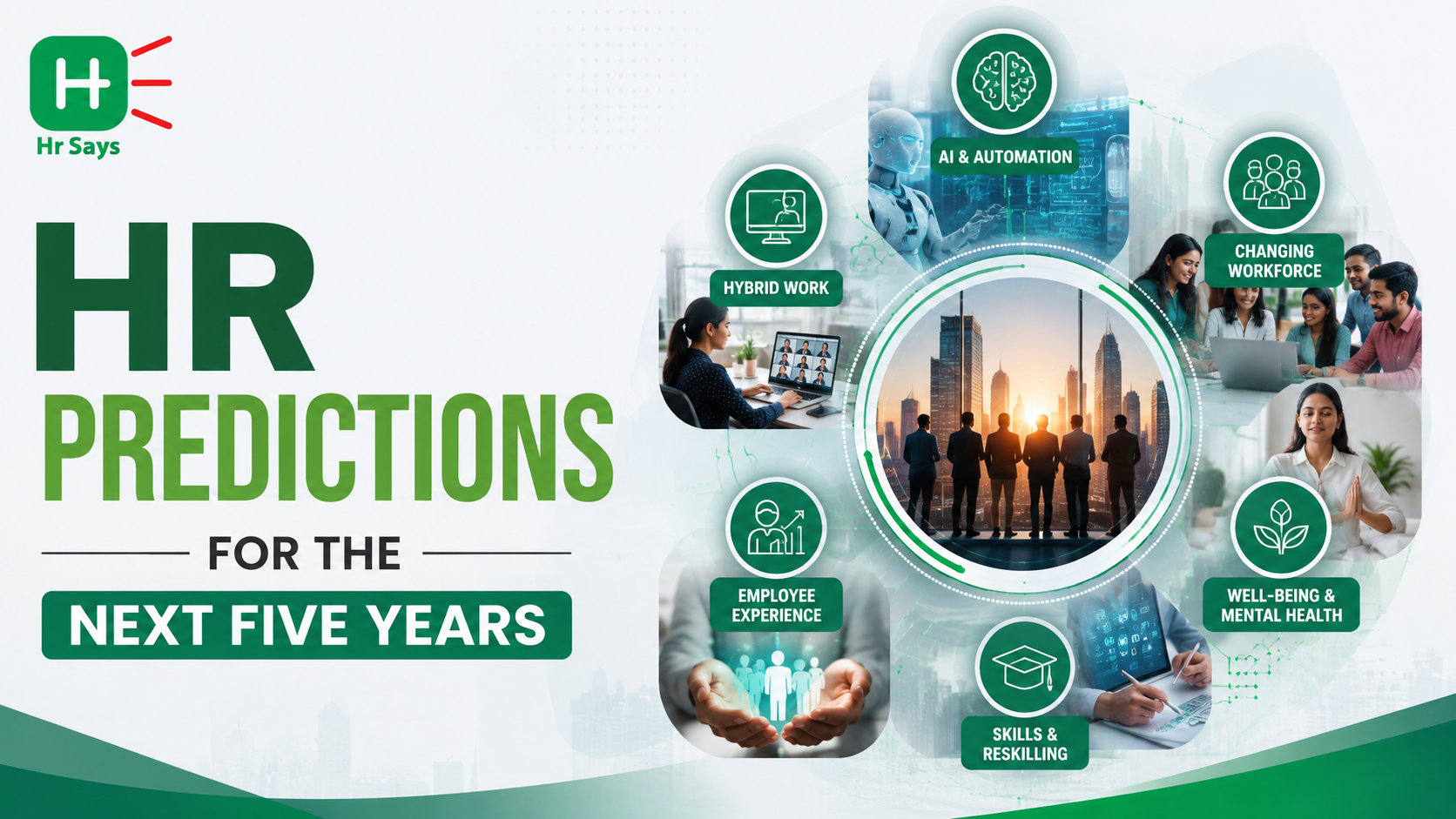
 This article explores seven key HR predictions for the next five years, covering AI adoption, skills-based hiring, employee wellbeing, hybrid work, continuous learning, people analytics, and purpose-driven culture in Indian workplaces.





Introduction: The Road Ahead Is Already Being Built
The world of work is not waiting for anyone. Across boardrooms in Mumbai, HR conferences in Bengaluru, and startup corridors in Hyderabad, one question keeps surfacing: what will the workplace look like five years from now?
This is not simply a question about technology or policies. It is a question about people, leadership, culture, and the kind of organizations that employees will actually want to belong to. For HR professionals in India, the next five years represent both a significant challenge and a generational opportunity.
India's workforce is one of the youngest in the world. With over 600 million people under the age of 25, the country is at a unique intersection of demographic advantage, digital transformation, and evolving employee expectations. The organizations that understand this moment and build their HR strategies around it will emerge as genuine leaders in the decade ahead.
This article breaks down the most important HR predictions for the next five years, grounded in current research, Indian workplace realities, and the direction that global HR thinking is moving.
Understanding the Forces Reshaping HR Today
Before predicting where HR is heading, it is important to understand the forces currently shaping the profession. Three major forces stand out clearly.
The first is the acceleration of technology. Artificial intelligence, automation, and people analytics are no longer optional additions to HR. They are becoming foundational tools that influence hiring decisions, employee development plans, performance evaluations, and workforce planning.
The second force is the changing expectations of employees. The post-pandemic workforce has fundamentally recalibrated what it expects from an employer. Employees today expect flexibility, psychological safety, meaningful work, and career development opportunities. This shift is visible across Indian cities and sectors, from IT firms in Pune to manufacturing units in Chennai.
The third force is the growing complexity of the business environment. Supply chain disruptions, geopolitical shifts, economic uncertainty, and rapid industry changes mean that organizations need HR functions that can respond with both speed and strategic depth.
These three forces are not isolated. They interact and reinforce each other, creating a new HR landscape that requires new thinking, new skills, and new approaches.
Prediction One: AI Will Become a Trusted Partner in People Decisions
Artificial intelligence in HR is no longer a future concept. It is already reshaping how organizations attract, hire, develop, and retain talent. Over the next five years, this transformation will deepen considerably.
In India, the adoption of AI-powered HR tools has been accelerating. From automated resume screening platforms used by large IT companies to AI-driven engagement tools deployed by new-age startups, the technology is becoming accessible at multiple organizational sizes and budget levels.
The more significant shift, however, will be in how HR professionals relate to AI. The organizations that will benefit most are not those that simply automate tasks but those that use AI to make better human decisions. This means using people data to identify flight risks before they leave, recognizing patterns in employee engagement that a manager might miss, and predicting workforce skill gaps before they become business problems.
One important caution is worth stating clearly. AI must be used with ethical intent and human oversight. In Indian workplaces, where diversity of language, culture, and socioeconomic background is immense, AI systems that are not thoughtfully designed can reinforce biases rather than reduce them. HR leaders must ensure that AI tools are transparent, auditable, and aligned with inclusive hiring practices.
Prediction Two: Skills-Based Hiring Will Replace Degree-First Thinking
India has long operated within a degree-centric hiring culture. The prestige attached to institutions such as the IITs, IIMs, and central universities has shaped hiring decisions for decades. Over the next five years, this paradigm is expected to shift meaningfully.
Skills-based hiring focuses on what a candidate can actually do rather than where they studied or what credential they hold. Global organizations such as IBM, Accenture, and Google have already moved in this direction. Indian organizations, particularly in sectors such as technology, e-commerce, fintech, and healthcare, are beginning to follow.
This prediction has important implications for HR teams in India:
- Job descriptions will need to be rewritten around capabilities rather than qualifications
- Interview processes will shift toward skill demonstrations, case studies, and practical assessments
- Internal talent marketplaces will gain importance, allowing existing employees to move into new roles based on skills they have developed
- Learning and development budgets will grow as organizations take responsibility for building skills they cannot find in the market
The National Skill Development Corporation (NSDC) and the Ministry of Skill Development and Entrepreneurship have been pushing in this direction for several years. HR teams in India that align their hiring strategies with this broader national trend will be better positioned to access a wider and more diverse talent pool.
Prediction Three: Employee Wellbeing Will Become a Board-Level Priority
Mental health, physical wellness, financial security, and social connection are no longer peripheral concerns in Indian workplaces. They are moving toward the center of organizational strategy.
The data on this is difficult to ignore. Studies conducted across Indian metros consistently show that stress, burnout, and anxiety are significant issues affecting workforce productivity and retention. The IT sector, BFSI, and healthcare verticals report particularly high levels of employee stress. For Gen Z employees entering the workforce in large numbers, an organization's approach to wellbeing is now a key factor in whether they accept a job offer.
Over the next five years, employee wellbeing in Indian organizations will evolve in the following ways. First, Employee Assistance Programs (EAPs) will move from optional add-ons to standard offerings. Second, managers will be trained to recognize and respond to mental health challenges in their teams. Third, HR policies will increasingly account for financial wellness, including structured access to salary advances, financial planning support, and insurance literacy.
The organizations that approach wellbeing strategically rather than cosmetically will see measurable improvements in retention, productivity, and employer brand reputation.
Prediction Four: Hybrid Work Will Mature Into a Structured Policy Reality
The hybrid work debate in India has been ongoing since 2021. By 2030, it will have largely settled into a structured reality rather than remaining a contested negotiation between employers and employees.
The current picture in India is mixed. Large IT companies such as Infosys, Wipro, and TCS have issued return-to-office mandates to varying degrees. Startups and new-age companies have tended to retain more flexibility. Manufacturing, retail, healthcare, and logistics sectors remain largely in-person by necessity.
What will change over the next five years is not whether hybrid work exists but how it is designed and governed. HR teams will need to build policies that clearly define hybrid eligibility, output expectations, communication norms, and career development pathways for remote and hybrid employees.
There is also a meaningful India-specific dimension here. Infrastructure quality for remote work varies significantly between Tier 1 cities such as Delhi, Mumbai, and Bengaluru and Tier 2 and Tier 3 cities such as Coimbatore, Indore, and Nashik. As broadband connectivity and co-working infrastructure improve across these smaller cities, a new geography of talent will open up for Indian organizations willing to hire beyond their metro boundaries.
Prediction Five: Learning and Development Will Shift to Continuous, Personalized Upskilling
The idea that an employee receives training at onboarding and then once a year at an annual workshop is already outdated. Over the next five years, learning and development in Indian organizations will become continuous, personalized, and deeply integrated into daily work.
This shift is being driven by several realities. Technology is changing job requirements faster than traditional training cycles can keep up with. Employees, particularly younger ones, expect to grow consistently and will leave organizations where they feel stagnant. And the half-life of professional skills is shortening across almost every sector.
What this means practically for Indian HR teams includes the following. Learning Management Systems (LMS) will evolve into intelligent learning experience platforms that recommend relevant content based on an employee's role, goals, and skill gaps. Microlearning formats, which deliver content in short, focused sessions, will gain significant ground over long classroom-style programs. Mentoring programs, peer learning circles, and cross-functional project experiences will be recognized as formal development tools rather than informal benefits.
Platforms such as LinkedIn Learning, Coursera for Business, and Indian EdTech providers are already serving this space. HR professionals at HRSays-aware organizations will increasingly be expected to curate and champion a learning culture rather than simply administer training programs.
Prediction Six: HR Analytics Will Drive Strategic Business Conversations
For too long, HR data in India has lived in spreadsheets and annual reports that few outside the HR function actually read. This is changing rapidly, and the change will accelerate significantly over the next five years.
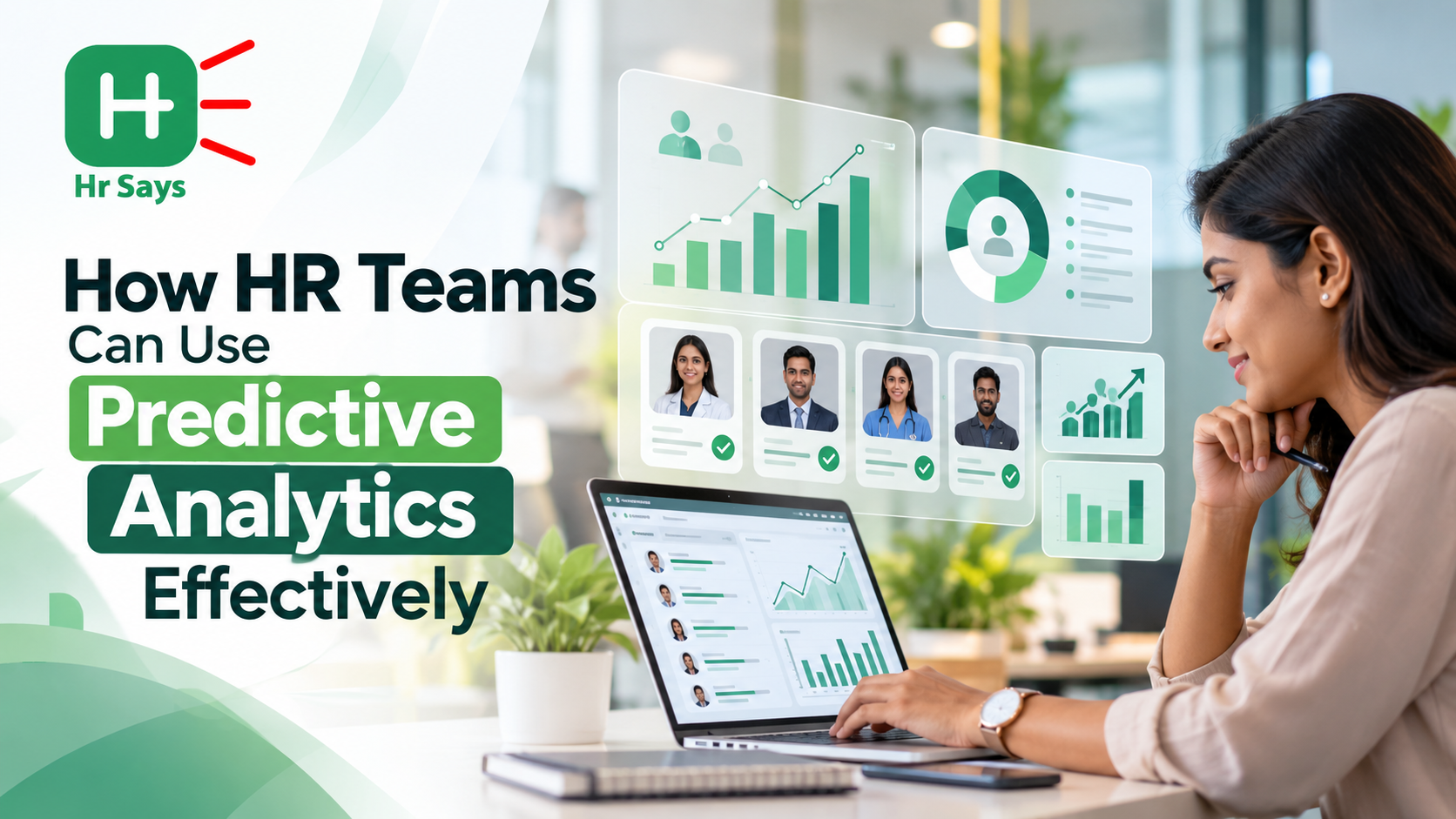
People analytics, which involves using workforce data to generate insights that drive business decisions, is becoming a core HR competency. Organizations that invest in this capability will be able to answer questions such as: which teams have the highest attrition risk in the next six months? Which hiring sources produce the highest-performing employees? What is the relationship between manager behavior and team productivity?
Indian organizations are at varying stages of analytics maturity. Large companies in BFSI and IT have often built sophisticated people analytics teams. Mid-sized organizations are beginning to invest in tools that make data more accessible. Small businesses are starting to track basic metrics beyond headcount and attrition.
The prediction for the next five years is that people analytics will move from being an HR specialty to being a standard capability expected of all senior HR professionals. HR leaders who can translate data into strategic narratives and present them convincingly to leadership teams will be the ones who shape business decisions.
Prediction Seven: Purpose-Driven Culture Will Separate Employers of Choice from the Rest
Compensation and job title will remain important. But over the next five years, organizational purpose and culture will become increasingly decisive factors in talent attraction and retention, particularly among younger Indian professionals.
Research consistently shows that employees who feel their work has meaning are more productive, more loyal, and more willing to go beyond their defined roles. This is especially true for the millennial and Gen Z segments now dominating the Indian workforce.
For Indian HR leaders, building a purpose-driven culture requires more than publishing a values statement on the company website. It requires aligning leadership behavior with stated values, building diversity and inclusion practices that go beyond compliance, creating transparent communication cultures where employees trust what they hear from leadership, and recognizing and rewarding employees whose actions reflect organizational values.
Employer branding, which includes how an organization is perceived as a place to work, will become a critical function that HR and marketing teams must build together. Platforms focused on HR insights and workplace culture, such as HRSays, will play an increasing role in helping organizations share authentic workplace stories that attract the right talent.
Conclusion: Five Years Is Not That Far Away
The next five years in HR will be defined by the intersection of technology and humanity. AI will handle more of the transactional work. Data will inform more of the strategic decisions. And the role of HR professionals will evolve toward being architects of culture, champions of people, and strategic advisors to business leadership.
For Indian organizations, the opportunity is enormous. A young workforce, a growing economy, and a rapidly digitizing business environment create conditions where smart HR decisions can generate extraordinary outcomes.
The predictions outlined here are not distant possibilities. Many of them are already in motion. The organizations that act on them thoughtfully, build their HR capabilities deliberately, and never lose sight of the human being at the center of every workplace decision will be the ones that shape the future of work in India.
Frequently Asked Questions
Q1: What are the biggest HR trends expected in the next five years?
The most significant HR trends expected in the next five years include AI-driven talent management, skills-based hiring, employee wellbeing as a strategic priority, the maturation of hybrid work policies, continuous personalized learning, advanced people analytics, and purpose-driven workplace cultures. Indian organizations will experience all of these trends shaped by their unique workforce demographics and business contexts.
Q2: How will AI change the role of HR professionals by 2030?
AI will take over a significant portion of repetitive and transactional HR tasks, including resume screening, scheduling, payroll processing, and routine employee queries. This will allow HR professionals to focus more on strategic areas such as culture building, leadership development, workforce planning, and employee experience design. However, human judgment, empathy, and ethical oversight will remain irreplaceable.
Q3: What is skills-based hiring and why is it growing in India?
Skills-based hiring is an approach that evaluates candidates based on their demonstrated capabilities and practical competencies rather than primarily on their educational credentials or job titles. It is growing in India because organizations are recognizing that formal degrees do not always predict job performance, and because a skills-based approach opens access to a broader and more diverse talent pool across Tier 2 and Tier 3 cities.
Q4: Will hybrid work become permanent in Indian organizations?
Hybrid work is expected to remain a significant and growing feature of Indian workplaces, particularly in knowledge-intensive sectors such as IT, consulting, BFSI, and media. However, the model will be governed by clearer policies and output-based accountability frameworks rather than remaining an informal arrangement. Sectors such as manufacturing, healthcare, and retail will largely remain in-person by the nature of their work.
Q5: How should Indian HR leaders prepare for the future of work?
Indian HR leaders should invest in building digital and data literacy within their teams, adopt people analytics to inform strategic decisions, redesign learning and development programs for continuous upskilling, build comprehensive employee wellbeing programs, and champion purpose-driven workplace cultures. Staying connected with credible HR knowledge platforms and peer communities will also be essential for staying ahead of emerging trends.
Resources
- Society for Human Resource Management (SHRM): Global research and insights on HR trends, workforce predictions, and people management practices
- National Skill Development Corporation (NSDC), India: Data and frameworks on India's skill development priorities and future workforce readiness
- Ministry of Labour and Employment, Government of India: Policy updates, labor law developments, and workforce statistics relevant to Indian HR professionals
- LinkedIn Workforce Insights: Research reports on hiring trends, skills demand, and workforce shifts in India and globally
- NASSCOM: Industry data and research on the Indian technology workforce, digital skills, and future of work trends in India's largest employment sector
Interlinking Keywords
future of work in India, HR technology trends, skills-based hiring India, employee wellbeing strategy, hybrid work policy, people analytics, HR leadership development, talent management India, workplace culture 2030, continuous learning and development
Last Reviewed By:
Hr Says Advisory Panel on 18 August, 2026
Disclaimer:
The predictions and insights presented in this article are based on current research, published industry reports, and observable workplace trends. They are intended for informational and strategic planning purposes only. Actual outcomes may vary depending on industry, organizational size, economic conditions, and regional factors. Readers are encouraged to consult qualified HR professionals and business advisors before making significant workforce or organizational decisions.