 Friday, September 25, 2026
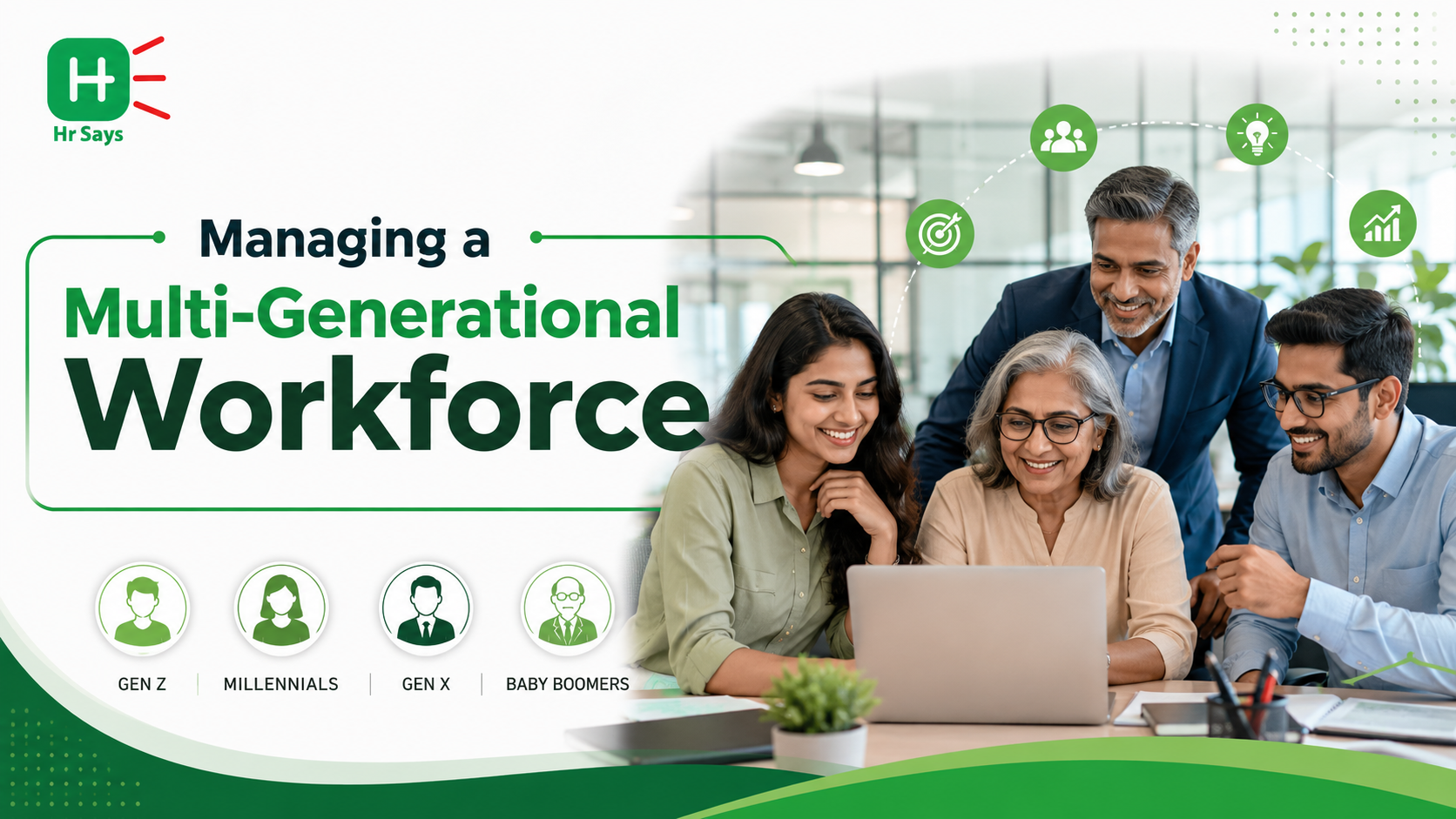
 Managing multi-generational workforces in India requires bridging generational differences through mentoring, inclusive policies, communication frameworks, and leadership cultures that value every career stage equally.





Introduction
Indian workplaces today are quietly witnessing one of the most complex workforce shifts in recent memory. Across boardrooms in Mumbai, technology parks in Bengaluru, manufacturing floors in Pune, and startup offices in Hyderabad, four distinct generations are working side by side. Baby Boomers who built their careers in pre-liberalization India share office space with Generation X professionals who navigated economic reform, Millennials who grew up with the internet, and Generation Z employees who have never known a world without smartphones.
This is not a temporary phenomenon. It is the new permanent reality of Indian workplaces. According to data from the Ministry of Statistics and Programme Implementation, India's working-age population is expected to grow significantly through 2036, and with longer career lifespans becoming the norm, organizations are increasingly managing employees across a span of 30 to 40 years in age. That is a remarkable breadth of lived experience, professional expectation, and communication preference all concentrated within the same team, the same reporting structure, and the same performance review cycle.
For HR professionals and business leaders, the question is no longer whether they are managing a multi-generational workforce. The question is whether they are managing it well.
Understanding the Generational Landscape in Indian Organizations
Before designing strategies, HR leaders must first understand who is actually in the workforce. The five generations currently active in Indian workplaces can be broadly described as follows.
Baby Boomers, born between 1946 and 1964, are now in senior leadership roles or approaching retirement. Many of them built their careers during India's post-independence economic transformation and bring deep institutional knowledge, strong process orientation, and a loyalty-first approach to work. Generation X professionals, born between 1965 and 1980, tend to occupy mid-to-senior management roles. They are pragmatic, self-reliant, and comfortable bridging traditional hierarchy with modern management thinking.
Millennials, born between 1981 and 1996, now form the largest share of the active Indian workforce. They are purpose-driven, digitally fluent, and expect transparency and professional development from their employers. Generation Z, born from 1997 onwards, is rapidly entering the workforce through campuses, internships, and entry-level roles. They are digital natives, values-led, and far more likely to prioritize flexibility and mental wellness than any generation before them.
Each of these groups carries different expectations about feedback, recognition, career progression, communication, and workplace culture. When those differences go unacknowledged, friction follows. When they are recognized and channelled deliberately, the result is an extraordinarily capable and resilient organization.
The Real Benefits of Generational Diversity at Work
It is tempting to view generational diversity primarily as a challenge to be managed. That framing, however, misses the more significant opportunity. Organizations that deliberately harness the strengths of multiple generations consistently demonstrate stronger problem-solving capability, greater innovation output, and better institutional resilience.
Generational diversity brings a breadth of perspective that homogenous teams simply cannot replicate. A team where a senior professional with 25 years of client relationship experience collaborates with a Gen Z analyst who is fluent in social media analytics and AI tools will consistently outperform a team drawn from either group alone. The senior professional knows the pattern; the junior professional knows the platform. Together, they produce something neither could independently.
Knowledge transfer is another underappreciated benefit. India's large and growing technology and manufacturing sectors lose significant institutional knowledge every time a long-tenured employee retires without structured offboarding. Multi-generational teams with strong mentoring frameworks reduce this knowledge drain considerably. They create internal talent pipelines that reduce dependence on external hiring and shorten onboarding timelines.
There is also a compelling talent attraction dimension. Research consistently shows that inclusive workplaces, including those that value age diversity, attract and retain a broader talent pool. For Indian companies competing for skilled professionals in a tight labor market, an age-inclusive culture is no longer a soft benefit. It is a strategic differentiator.
The Challenges That HR Leaders Must Honestly Address
Managing generational diversity well requires honestly confronting the challenges that arise when different cohorts work together under shared expectations.
Communication preferences are perhaps the most visible source of friction. Baby Boomers and Generation X professionals typically value structured communication, formal channels, and relationship-based conversations. Millennials and Generation Z tend to prefer rapid, informal, and digital-first communication. When these preferences collide without clear organizational norms, miscommunication and exclusion follow. A junior employee who sends a casual voice note on WhatsApp and a senior manager who expects a formal email briefing are both right by their own generational norms. Organizations that fail to establish shared communication standards will routinely face this gap.
Performance expectations also differ significantly. Older professionals, having grown up in hierarchical workplaces, are often comfortable with annual review cycles and clearly defined authority structures. Younger employees expect continuous feedback, real-time recognition, and participative goal-setting. A performance management system designed entirely around one generation's preferences will frustrate the other and inflate attrition.
Generational stereotyping is a subtler but equally damaging challenge. The assumptions that older employees resist technology, that Millennials are disloyal, or that Gen Z cannot handle pressure are not only inaccurate but actively harmful. These stereotypes shape hiring decisions, promotion patterns, and team assignments in ways that limit organizational capability. HR leaders must treat generational bias with the same seriousness they bring to gender or caste bias.
Proven Strategies for Managing Multi-Generational Teams
The most effective approaches to multi-generational workforce management share a common foundation: they treat employees as individuals first and generational cohorts second, while still being thoughtful about the patterns that generational experience creates.
Build structured mentoring and reverse mentoring programs. Traditional mentoring, where senior professionals guide junior employees on career development, leadership, and industry knowledge, remains invaluable. However, Indian organizations are increasingly recognizing the value of reverse mentoring, where younger employees guide senior colleagues on digital tools, social media, evolving consumer behavior, and emerging technologies. Organizations like Infosys and Tata Consultancy Services have incorporated structured knowledge-sharing programs that facilitate exactly this kind of bidirectional learning. The outcome is not just skills transfer; it is the gradual dismantling of generational stereotypes through direct, purposeful collaboration.
Diversify communication channels without creating chaos. Organizations do not need to choose between formal email cultures and informal messaging apps. They need clear norms about which channel is appropriate for what type of communication. Company-wide announcements and policy updates may warrant formal documentation. Team coordination and quick updates might live on a shared workspace platform. Personal mentoring check-ins might be best handled face to face. When these norms are explicit, employees across generations can participate equally rather than defaulting to their generational comfort zone.
Redesign performance management for multiple cohorts. A quarterly review cadence with space for ongoing feedback conversations serves multiple generations better than either an annual review model or a purely continuous informal check-in approach. Indian HR leaders should consider blending structured review milestones with regular one-on-ones, peer feedback mechanisms, and project-based recognition. This approach respects the structure that older professionals value while meeting the feedback frequency that younger employees expect.
Offer flexible work arrangements that serve every life stage. The COVID-19 pandemic permanently expanded Indian workforce expectations around flexibility. However, flexibility means different things across generations. A Gen Z employee may want flexibility in working hours to accommodate personal projects. A Gen X professional may want it to manage elderly parent care. A Baby Boomer approaching retirement may value a phased reduction in workload. Policies designed only for one definition of flexibility will alienate others. HR leaders should design flexibility frameworks that are genuinely life-stage agnostic.
Actively combat age-based bias in talent processes. From job descriptions that inadvertently signal age preferences through language like "young and dynamic" to promotion panels that unconsciously favor youth or seniority, age bias is embedded in many Indian talent processes. HR leaders should audit hiring materials, promotion criteria, and leadership development programs through a generational diversity lens. Removing age from screening criteria where it is not role-relevant, using structured interview frameworks, and ensuring representation across age groups in hiring panels are all practical starting points.
Building a Culture Where Every Generation Belongs
Strategy and process are necessary but not sufficient. The organizations that manage multi-generational workforces most effectively are those that build cultures of genuine inclusion where age is neither a liability nor a credential, but simply one dimension of a rich and varied workforce.
This requires visible leadership commitment. When senior leaders actively participate in reverse mentoring programs, publicly acknowledge the value of different generational perspectives, and call out age-based stereotypes when they see them, it sends a powerful signal to the rest of the organization. Culture follows leadership behavior far more than it follows policy documents.
Employee Resource Groups focused on generational inclusion are gaining traction in larger Indian organizations. These groups create structured spaces for cross-generational dialogue, challenge assumptions, and surface the practical needs of different age cohorts in a non-confrontational setting.
It is also worth noting that Indian workplace culture carries specific contextual nuances. Respect for seniority and hierarchical deference remain meaningful values in many Indian professional contexts, particularly in family-owned businesses, public sector organizations, and traditional industries. HR leaders navigating multi-generational dynamics in these contexts must balance the push for inclusive collaboration with sensitivity to deeply held cultural norms. The goal is not to dismantle respectful hierarchy but to ensure that it does not function as a barrier to younger employees contributing their full potential.
Platforms like HRSays provide HR professionals with the frameworks, peer insights, and expert perspectives needed to navigate these nuances with clarity and confidence. As workplaces grow more complex, access to credible, practical HR knowledge becomes a genuine strategic resource.
Conclusion
The multi-generational workforce is not a challenge Indian organizations can opt out of. It is the present reality of every organization of meaningful scale, and it will only deepen as career lifespans extend and India's demographic dividend continues to unfold. The organizations that thrive will be those that stop treating generational difference as a source of friction and start treating it as a source of competitive advantage.
The path forward is neither to homogenize the workforce into a single cultural norm nor to over-engineer policies around generational labels. It is to build workplaces where individuals at every career stage feel valued, heard, and equipped to contribute their best. That requires honest acknowledgment of generational patterns, deliberate investment in cross-generational collaboration, and leadership cultures that model inclusion in practice, not just in policy.
For Indian HR professionals, building the knowledge and capability to lead multi-generational teams is one of the most consequential investments they can make in their own careers and in the organizations they serve.
Frequently Asked Questions
Q1: What is a multi-generational workforce and why does it matter in India?
A multi-generational workforce is one in which employees from four or more distinct generational cohorts work together within the same organization. In India, this typically includes Baby Boomers, Generation X, Millennials, and Generation Z. It matters because each cohort brings different skills, expectations, and working styles, and organizations that learn to leverage these differences gain a measurable advantage in innovation, knowledge retention, and talent resilience.
Q2: What are the most common challenges of managing multiple generations in Indian workplaces?
The most common challenges include differences in communication preferences, varying expectations around feedback and performance management, technology adoption gaps between older and younger employees, and generational stereotyping that can limit collaboration and promotion equity. These challenges are manageable with the right HR frameworks and leadership commitment.
Q3: How can Indian companies implement reverse mentoring effectively?
Effective reverse mentoring begins with creating a psychologically safe environment where senior employees feel comfortable learning from junior colleagues. Organizations should define clear learning objectives, match mentoring pairs thoughtfully, provide structured time for sessions, and recognize participation publicly. The program works best when senior leadership visibly endorses and participates in it.
Q4: How should HR leaders approach flexible work policies in a multi-generational context?
HR leaders should design flexibility frameworks that address multiple life-stage needs simultaneously rather than defaulting to a single model. This means offering options that serve caregiving responsibilities, phased retirement, personal development, and location independence, rather than assuming that flexibility means the same thing to all employees. Regular employee surveys can help organizations understand the specific flexibility needs of their workforce.
Q5: What role does generational diversity play in employee retention in Indian organizations?
Generational diversity contributes to retention when it is managed well because it enriches the learning environment, creates mentoring relationships that increase engagement, and signals to employees that the organization values experience and fresh thinking equally. Conversely, poorly managed generational diversity with visible age-based bias or exclusion can accelerate attrition, particularly among younger employees who have more options and lower tolerance for inequitable cultures.
Resources
- Ministry of Labour and Employment, Government of India: Workforce statistics, employment data, and labor policy updates relevant to Indian HR professionals.
- Society for Human Resource Management (SHRM India): Research reports, best practice guides, and certification resources on workforce diversity and HR leadership.
- Confederation of Indian Industry (CII): Industry insights on workplace transformation, talent strategy, and organizational development in the Indian context.
- Harvard Business Review: Evidence-based research and leadership perspectives on managing generational diversity and building inclusive organizational cultures.
- People Matters: India-focused HR media platform covering talent management, employee engagement, and workplace trends with an Indian organizational lens.
Interlinking Keywords
employee engagement strategies, workplace culture India, HR leadership development, talent retention best practices, performance management frameworks, generational diversity inclusion, reverse mentoring programs, HR trends India 2025, leadership and management skills, workforce planning India
Last Reviewed By:
Hr Says Advisory Panel on 8 August, 2026
Disclaimer:
The content published in this article is intended for general informational and educational purposes only. It does not constitute legal, compliance, or professional HR advisory services. Organizations should consult qualified HR professionals, legal advisors, or consultants before implementing any workforce policy or management practice referenced in this article. HRSays does not accept liability for decisions made on the basis of the information provided herein.