 Monday, September 14, 2026
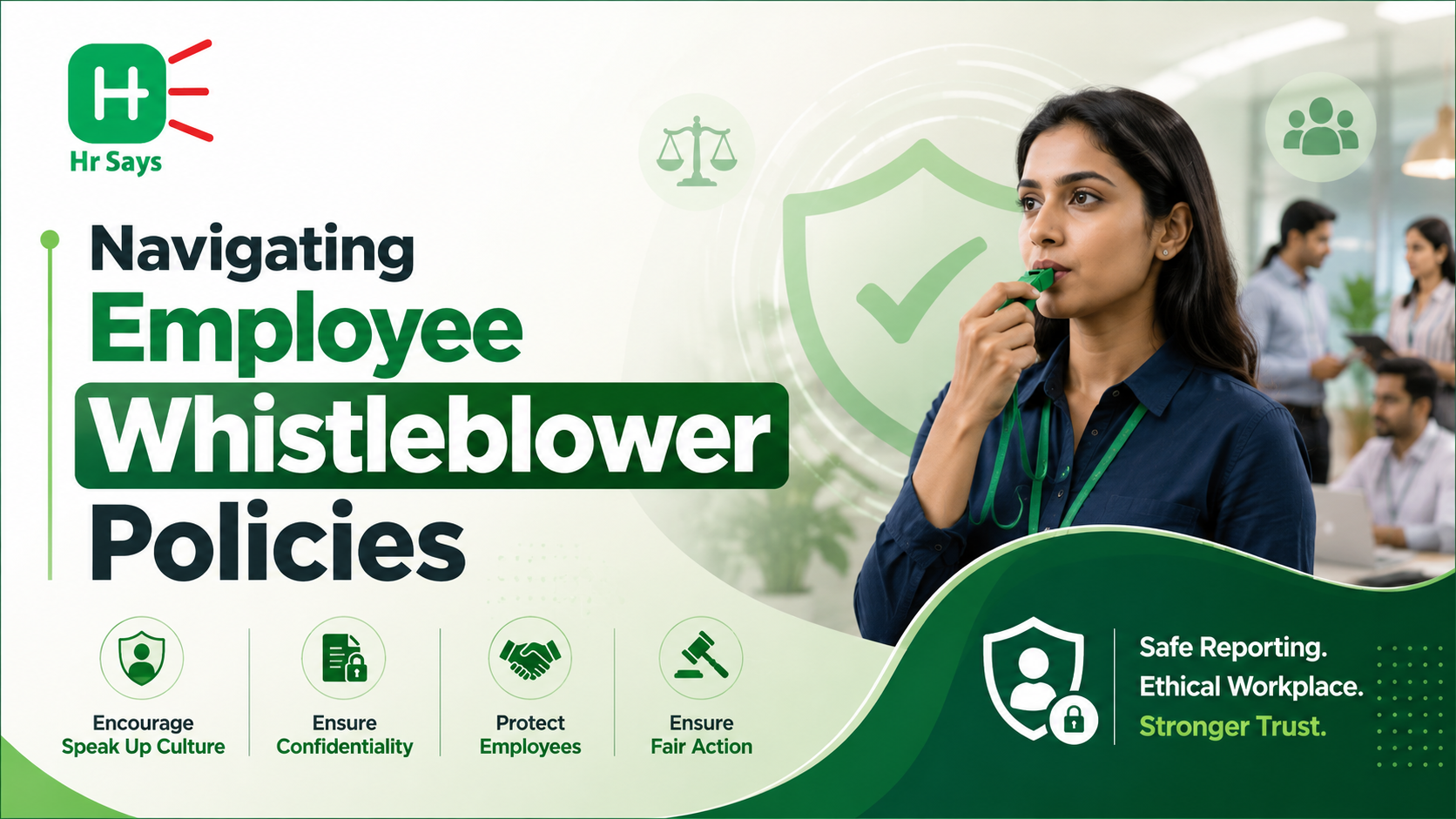
 In modern corporate governance, an effective whistleblower policy is one of the most critical risk-management tools an organization can deploy. Whether addressing financial fraud, regulatory non-compliance, workplace harassment, or safety violations, employees are almost always the first to spot wrongdoing within an enterprise.





In modern corporate governance, an effective whistleblower policy is one of the most critical risk-management tools an organization can deploy. Whether addressing financial fraud, regulatory non-compliance, workplace harassment, or safety violations, employees are almost always the first to spot wrongdoing within an enterprise.
However, when reporting mechanisms are unclear, unmonitored, or lack guaranteed confidentiality, employees hesitate to speak up due to fear of career reprisal, social isolation, or inaction.
Building a transparent, accessible, and protected reporting ecosystem protects corporate integrity, satisfies statutory compliance mandates, and fosters a culture of psychological safety.
1. Core Pillars of an Effective Whistleblower Framework
A robust whistleblower mechanism goes beyond publishing a compliance document on an internal intranet portal. To earn employee trust and withstand regulatory scrutiny, the framework must rely on four foundational pillars:
Guaranteed Anonymity and ConfidentialityEmployees must be given explicit options to report concerns anonymously. Dedicated third-party web portals, 24/7 hotline numbers, or encrypted intake mailboxes ensure that IP addresses, phone numbers, and identity telemetry are stripped before the report reaches internal investigators.
Independent Triage and Escalation PathwaysReports should never route directly to an employee's immediate supervisor or unit head, as they may be implicated in the disclosure. Intake channels should bypass mid-level management, routing directly to an independent Ombudsperson, an external compliance administrator, or a designated Audit Committee / Ethics Panel.
Comprehensive Anti-Retaliation ProtectionsA whistleblower policy is only as strong as its enforcement against retaliation. The policy must clearly define retaliation—including termination, demotion, subtle career discrimination, reassignment to undesirable tasks, or hostile behavior—and mandate severe disciplinary action against anyone attempting retaliatory acts.
Clear Investigative Workflows and Closure LoopsWhistleblowers need confidence that their reports will not be ignored. Establishing defined SLA timelines for acknowledgment, preliminary assessment, investigation execution, and outcome communication (while maintaining necessary privacy standards) validates the reporting mechanism.
2. Structural Evaluation: Unstructured Feedback vs. Dedicated Whistleblower Mechanism
Comparing informal grievance handling against an integrated whistleblower mechanism highlights how structured compliance infrastructure addresses corporate risk across five key operational areas:
- Reporting Channel Security: Informal feedback relies on open management doors or direct emails, creating a high fear of identity exposure. Dedicated mechanisms utilize encrypted web portals, hotline numbers, or third-party intake channels that guarantee complete anonymity.
- Conflict of Interest Management: Unstructured reports often get routed to local managers, who may be involved in the issue. Formal frameworks route reports directly to an independent Ombudsperson, Audit Committee, or external compliance panel.
- Anti-Retaliation Protections: Informal reporting offers minimal protection against subtle career discrimination or reassignment. Integrated policies mandate explicit anti-retaliation rules backed by disciplinary consequences for offenders.
- Investigative Governance & SLAs: Ad-hoc complaints lack tracked timelines and often stall without resolution. Structured mechanisms use predefined triage protocols, investigation SLAs, and formal audit logs.
- Regulatory Compliance & Board Oversight: Informal reporting fails statutory governance standards under corporate laws. Integrated mechanisms meet global compliance regulations (e.g., Sarbanes-Oxley, EU Whistleblower Directive, Companies Act) with direct reporting to the Board of Directors.
3. High-Performance Action Plan for HR & Legal Leadership
To establish or modernize an enterprise whistleblower program, corporate leaders can execute a structured three-phase operational roadmap:
- Draft Policy, Define Scope, and Select Intake Systems
Phase 1
Draft a comprehensive whistleblower policy outlining reportable conduct, non-retaliation protections, and investigation scopes. Partner with secure third-party intake vendors to set up encrypted 24/7 web portals and hotline channels. - Establish Triage Protocols & Train Investigation Panels
Phase 2
Form an independent Ethics & Audit Committee to manage report intake. Train designated internal investigators on unbiased evidence collection, interviewee confidentiality, and chain-of-custody protocols. - Roll Out Enterprise Training and Establish Board Metrics
Phase 3
Conduct mandatory anti-retaliation and speak-up training for all employees and managers. Establish quarterly reporting dashboards for executive leadership and the Board of Directors to track report volume, resolution rates, and systemic risk trends.
Actionable Strategy: Digital Governance and Credential Integration
- Unify Whistleblower Management via Verified Digital Registries: Ensure internal compliance officers, ethics leads, and corporate investigators maintain verified credentials and specialized training certifications. Log professional development credits through recognized digital academic frameworks like the APAAR ID system within the Academic Bank of Credits (ABC) network.
- Maintain Confidential Health & Wellness Protections: For whistleblowers experiencing acute workplace stress or psychological impact during sensitive investigations, provide confidential counseling resources. Sync health and wellness benefits through secure channels like the ABHA ID (Ayushman Bharat Health Account) pipeline to ensure privacy.
- Establish Quarterly Whistleblower System Audits: Conduct regular audits of intake channels, hotline uptime, resolution SLA adherence, and anonymous user feedback to identify friction points and continually strengthen employee trust in the system.
Frequently Asked Questions (FAQs)
Q1. What types of issues should be covered under a whistleblower policy?Whistleblower policies typically cover severe corporate wrongdoing, including financial fraud, accounting irregularities, bribery, insider trading, environmental violations, safety breaches, data privacy failures, sexual harassment, and systemic discrimination.
Q2. How can an organization guarantee true anonymity for online reports?True anonymity is achieved by using specialized third-party reporting portals that automatically strip metadata, IP addresses, and user telemetry from incoming submissions before relaying the report text to the organization's compliance panel.
Q3. How does a whistleblower policy differ from a standard HR grievance policy?Standard HR grievance policies handle personal employment disputes, performance reviews, and interpersonal team conflicts. Whistleblower policies specifically address severe illegal acts, regulatory non-compliance, financial fraud, or unethical corporate practices that threaten the organization or public interest.
Q4. Can an employee be disciplined if a whistleblower report turns out to be inaccurate?If an employee submits a report in good faith based on reasonable belief, they are protected from discipline even if an investigation shows no wrongdoing occurred. However, if evidence proves a report was intentionally false or malicious, the employee may face disciplinary action.
Q5. What is the role of an independent Ombudsperson in whistleblower management?An Ombudsperson serves as a neutral, confidential official who receives employee concerns, provides impartial guidance on reporting options, conducts preliminary reviews, and ensures the disclosure reaches the appropriate investigation panel without management interference.
Q6. How does an APAAR ID support compliance and ethics credentials for corporate investigators?An APAAR ID acts as a lifetime digital academic registry that verifies professional certifications, corporate governance credentials, and ethics compliance training across national databases for HR and legal personnel.
Q7. What steps should be taken if a manager retaliates against a whistleblower?The whistleblower should immediately report the retaliation through the confidential intake channel. The Ethics Committee must launch an immediate, separate investigation into the retaliation claim, and if substantiated, enforce swift disciplinary measures against the offending manager up to and including termination.
Q8. Should an organization outsource its whistleblower hotline to a third party?Yes. Outsourcing hotline intake to a specialized third-party provider increases employee trust, guarantees round-the-clock availability, provides multi-language support, and ensures strict metadata stripping for complete anonymity.
Q9. How long should an investigation into a whistleblower disclosure take?Preliminary assessments should occur within 3 to 5 business days of intake. Full investigations typically aim for resolution within 30 to 60 days, depending on the complexity of the evidence and external regulatory requirements.
Q10. What immediate step should a company take to launch an effective whistleblower program?Appoint an independent compliance task force to audit current reporting mechanisms, select a secure third-party anonymous intake software, and draft a clear anti-retaliation policy for board approval.