 Wednesday, October 21, 2026
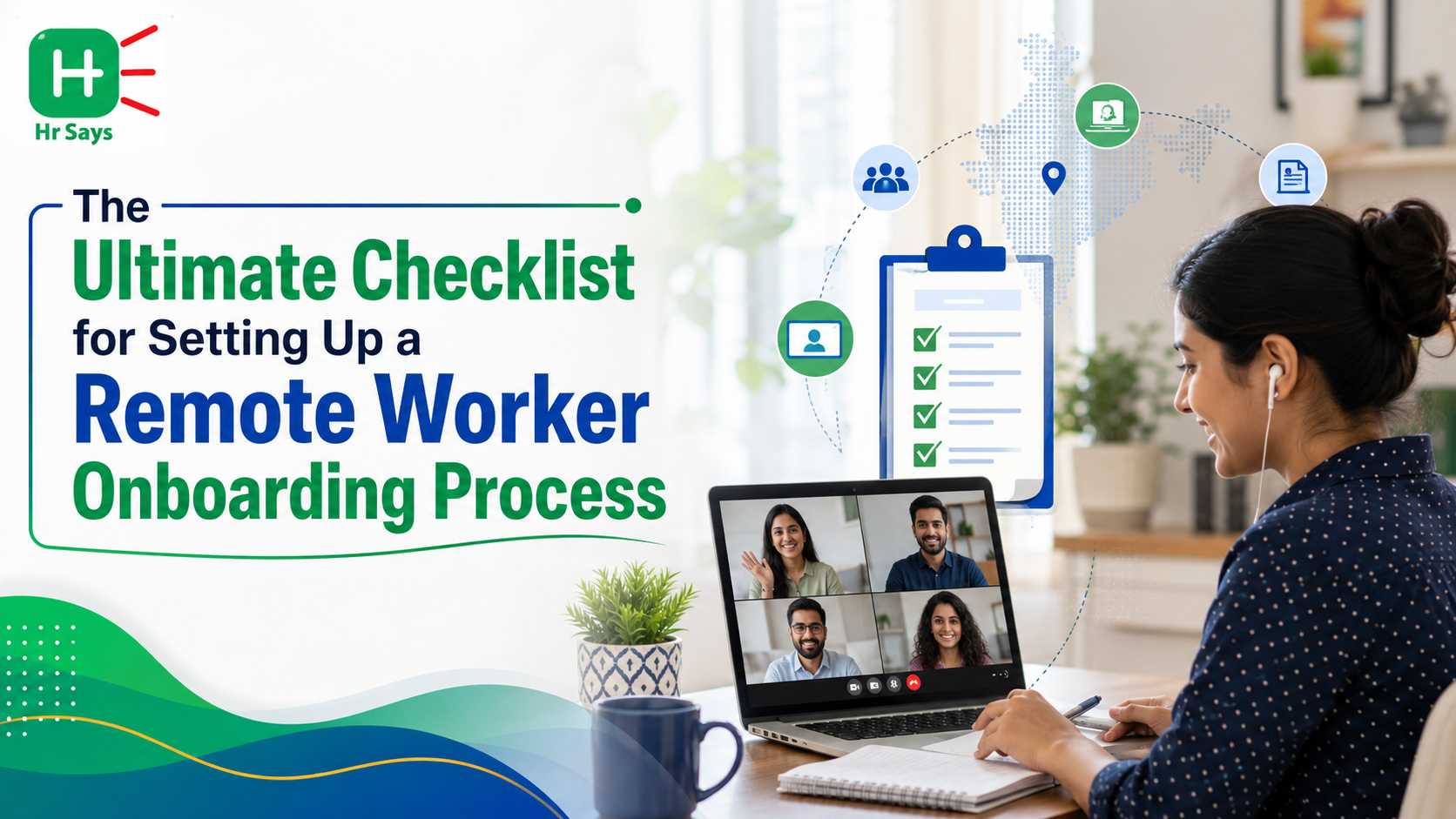
 Effective remote onboarding transforms distributed hires into productive, connected employees through pre-arrival preparation, secure access, structured orientation, buddy support, clear 30-60-90 day goals, regular feedback, and centralized digital resources systems.




The transition toward asynchronous, borderless workspaces has permanently altered corporate talent distribution. Hiring global human capital unlocks an immense competitive advantage, but it simultaneously introduces a critical organizational hurdle: remote worker onboarding.
When a new hire joins a traditional office, their initial acclimation happens organically through physical proximity. They sit next to their team, shadow line managers, and pick up cultural nuances during casual breaks. In a distributed workspace, none of this happens by accident. Without a structured digital framework, a remote worker’s first week can quickly devolve into an isolating experience marked by technical lockouts, vague deliverables, and zero cultural connection.
In high-velocity business environments, a broken onboarding process is the primary driver of early voluntary turnover. Industry research indicates that a structured onboarding experience improves new hire retention by up to 82% and boosts long-term productivity by over 70%.
To achieve these operational metrics, human resource executives and operations leaders must move past chaotic email chains and passive document reading. Establishing a systematic remote worker onboarding process checklist transforms a distant new hire into an engaged, high-performing contributor from day one.
1. The Distributed Employee Lifecycle
Building an effective onboarding experience requires tracking and executing milestones across three distinct chronological phases:
- Phase 1: Pre-Onboarding (Pre-Day 1): Technical provisioning, hardware logistics, identity management, and digital legal compliance.
- Phase 2: Orientation & Cultural Immersion (Week 1): Team introductions, peer-buddy assignment, asynchronous learning hubs, and system access verification.
- Phase 3: Integration & Autonomy (Day 30 to Day 90): Objective 30-60-90 day performance roadmaps, weekly one-on-one feedback loops, and standalone project ownership.
2. The Comprehensive Remote Onboarding Checklist
Phase 1: Pre-Onboarding & IT Provisioning (2 Weeks Prior to Day 1)The most common operational bottleneck is a new hire sitting idle on Day 1 because their work laptop is delayed in transit or software credentials fail to authenticate.
- Automate Hardware Logistics: Coordinate with an IT asset management partner to ensure the pre-configured work laptop, monitor, and peripheral security keys arrive at the employee’s residential address at least 48 hours before their official start date.
- Implement Single Sign-On (SSO) Provisioning: Pre-configure a unified corporate security profile. The new hire should access primary workspace tools—such as Slack, Notion, Jira, and GitHub—via a single secure identity provider, eliminating fragmented password setups.
- Execute Digital Legal Compliance: Streamline document signing using an encrypted e-signature platform. Collect signed employment contracts, non-disclosure agreements (NDAs), tax declarations, and direct deposit details in advance, routing them directly into the central HR repository.
The primary objective during the first five days is to make the new hire feel welcomed, informed, and securely anchored to the team.
- Design an Asynchronous "Welcome Hub": Build a dedicated onboarding dashboard inside the team’s knowledge management repository (e.g., Notion or Confluence) that centralizes company history, core values, org charts, communication norms, and system training videos.
- Deploy the Remote Buddy System: Pair the incoming hire with an experienced peer from outside their immediate reporting line. This onboarding buddy provides a low-pressure space for casual questions regarding internal workflows, communication etiquette, and unwritten cultural norms.
- Schedule Managed, High-Touch Video Syncs: Conduct a concise 30-minute face-to-face video welcome call on Monday morning to introduce the new hire to their immediate team. Space out subsequent departmental overviews across the week to prevent screen fatigue.
Onboarding extends beyond initial orientation into continuous milestone tracking and structured feedback loops.
- Establish a Clear 30-60-90 Day Goal Blueprint: Define explicit, output-driven performance milestones for the first three months, focusing on objective deliverables rather than desk hours.
- Mandate Weekly 1-on-1 Feedback Loops: Block out a dedicated 30-minute weekly window for the line manager and new hire to sync privately, celebrating early wins, clearing project roadblocks, and assessing workload balance.
- Launch an End-of-Onboarding Evaluation Survey: Distribute an anonymous onboarding experience survey at the 45-day mark to gather data on documentation clarity, tooling setup, and manager support to optimize future hiring cycles.
3. Structural Comparison: Fragmented vs. High-Performance Digital Onboarding
Evaluating ad-hoc remote communication practices against structured digital onboarding systems highlights key operational advantages:
- Hardware Management: Fragmented setups involve rushing to ship laptops via standard parcel services on Day 1, leading to costly idle time. High-performance onboarding automates global hardware provisioning to guarantee arrival 48 hours prior to start.
- Knowledge Sharing: Fragmented models circulate unorganized PDF manuals and email attachments that quickly become obsolete. High-performance systems use centralized, searchable cloud repositories that encourage self-paced learning.
- Security & Access: Ad-hoc workflows share unencrypted passwords over chat channels. Modern onboarding deploys enterprise Single Sign-On (SSO) and mandatory multi-factor authentication (MFA) to safeguard company data from breaches.
- Performance Tracking: Fragmented setups rely on vague assumptions about candidate capability without written milestones. Structured onboarding establishes transparent 30-60-90 day performance roadmaps with clear deliverables.
- Cultural Alignment: Unstructured onboarding leaves remote hires operating in social isolation, driving early turnover. High-performance models integrate structured peer matching and cross-departmental buddy systems to build organizational trust.
4. High-Performance Action Plan: 4-Phase Implementation Roadmap
To systematically modernize remote worker onboarding, talent operations teams can execute a structured four-phase roadmap:
- Build a Centralized Asynchronous Welcome Portal
Phase 1: Knowledge Hub Standardization
Create a standardized onboarding workspace template containing company policies, communication guidelines, role-specific checklists, and recorded software tutorials to provide a single source of truth for new hires. - Configure Automated SSO and Device Management Profiles
Phase 2: Identity & Security Automation
Integrate HR software with Mobile Device Management (MDM) and Single Sign-On (SSO) identity providers to automate account creation, security key distribution, and role-based permissions upon contract signing. - Roll Out the Remote Buddy Program and 1-on-1 Schedules
Phase 3: Structured Social & Manager Syncs
Pair incoming hires with cross-functional onboarding buddies and pre-schedule recurring weekly one-on-one video check-ins between line managers and new hires for the first 90 days. - Deploy Milestone Tracking and 45-Day Feedback Surveys
Phase 4: Output Auditing & Continuous Feedback
Establish concrete 30-60-90 day performance goals tied to verifiable deliverables, and deploy automated survey workflows to collect candidate feedback on the onboarding experience.
Actionable Strategy: Digital Governance & Educational Verification
- Verify Professional & Academic Credentials via Digital Repositories: When onboarding distributed professionals across diverse regions, streamline background validation by verifying certifications, degrees, and academic transcripts through national digital registries like the APAAR ID system within the Academic Bank of Credits (ABC) network.
- Maintain Health Benefit Continuity: Ensure remote employees receive verified guidance to link corporate health insurance provisions to their personal digital health accounts—such as the ABHA ID (Ayushman Bharat Health Account) network—maintaining uninterrupted access to telemedicine and local diagnostic networks.
- Enforce Endpoint Data Loss Prevention (DLP): Deploy enterprise endpoint security across all distributed hardware to prevent unauthorized local downloads of proprietary data, restrict unapproved USB storage devices, and enforce full-disk encryption (FileVault/BitLocker).
Frequently Asked Questions (FAQs)
Q1. Why is a structured onboarding process critical for remote employees?Remote employees cannot observe company workflows or cultural norms organically. Without a structured, step-by-step onboarding framework, distributed hires face higher risks of isolation, technical roadblocks, and role ambiguity, which directly increase early turnover.
Q2. What is the role of a Remote Onboarding Buddy?An onboarding buddy is an experienced peer from outside the new hire's immediate reporting structure who provides informal guidance, answers questions about team communication norms, and helps the new employee integrate culturally without performance pressure.
Q3. How far in advance should company hardware be shipped to a remote worker?To ensure a smooth Day 1 start, pre-configured laptops and peripherals should arrive at the employee’s residential address at least 48 hours prior to their official start date, leaving ample buffer to resolve shipping delays or configuration issues.
Q4. What are the security advantages of using Single Sign-On (SSO) in remote onboarding?SSO enables IT administrators to manage software permissions through a centralized identity provider. This eliminates insecure password sharing across chat channels, minimizes access errors, and allows instantaneous credential revocation if an employment contract ends.
Q5. What metrics should be tracked in a 30-60-90 day remote performance roadmap?The roadmap should measure objective deliverables rather than logged hours. Typical metrics include completion of baseline technical modules by Day 30, execution of collaborative team tasks by Day 60, and independent ownership of a standalone project or feature sprint by Day 90.
Q6. How can organizations prevent video fatigue during a new hire's first week?Structure the orientation schedule to balance short, focused 30-minute video introductions with dedicated blocks of self-paced, asynchronous reading and independent exploration inside the company knowledge base.
Q7. Why are static PDF employee handbooks ineffective for remote teams?Static PDF documents become outdated quickly, clutter email threads, and lack searchability. A centralized, cloud-hosted knowledge hub ensures policies, organization charts, and technical guides remain continuously updated and easily accessible.
Q8. What is the ideal cadence for manager one-on-ones during the first 90 days?Managers should conduct a dedicated, uninterrupted 30-minute one-on-one video meeting once per week throughout the initial 90-day period to review project milestones, clear blockers, and support professional acclimation.
Q9. How do Data Loss Prevention (DLP) tools safeguard corporate assets on remote endpoints?DLP software monitors distributed laptops to prevent data exfiltration by restricting unauthorized copying of source code to external drives, blocking unapproved cloud storage uploads, and enforcing secure, encrypted data transfers.
Q10. How quickly does a remote employee achieve full productivity with a structured onboarding process?With pre-configured hardware, automated access provisioning, and clear milestone roadmaps, distributed hires typically achieve independent velocity and cultural integration within 4 to 6 weeks of their start date.