 Friday, October 23, 2026
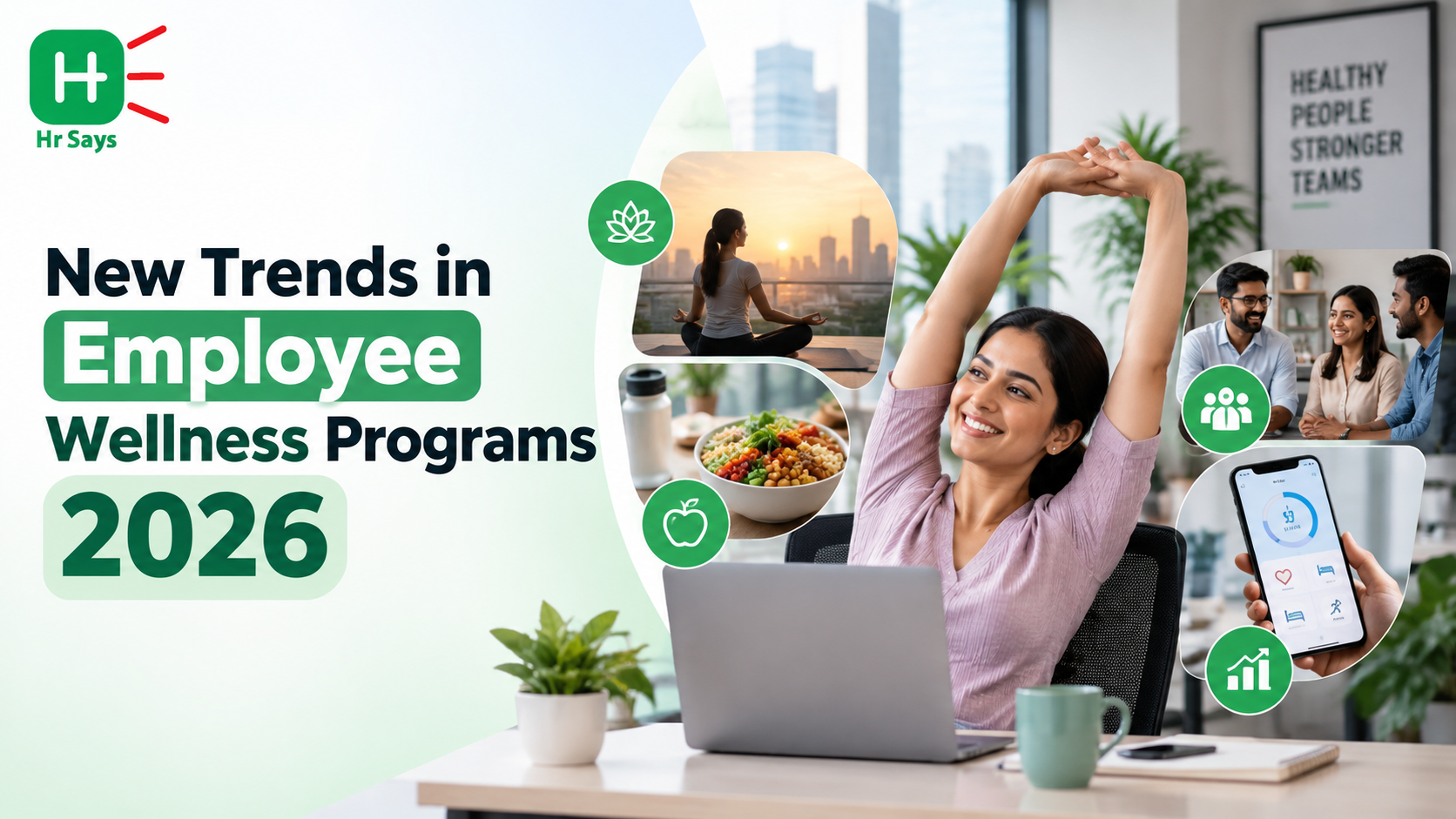
 Employee wellness programs in India are evolving beyond perks into strategic people investments, driven by mental health demands, financial stress, hybrid work realities, and personalised digital tools in 2026.





Introduction
The conversation around employee wellness in India has undergone a fundamental transformation. What once occupied a small corner of the HR agenda, typically a subsidised gym membership or an annual health check-up camp, has evolved into one of the most strategically important investments an organisation can make. In 2026, the Indian workforce is more vocal, more informed, and more selective about where it works, and the quality of a company's wellness offering plays a decisive role in those decisions.
Organizations across India are increasingly investing in employee wellness programs to support workforce health, improve employee experience, and create more productive workplaces. As healthcare costs continue to rise and employee expectations evolve, workplace wellness has become an important part of long-term business strategy.
For HR professionals and business leaders navigating this landscape, understanding where these programs are heading is not optional. It is a leadership responsibility. This article examines the defining trends that are reshaping employee wellness programs across Indian companies right now, and what thoughtful HR teams are doing differently to stay ahead.
Understanding the Shift: From Perks to People Strategy
The most significant conceptual shift in employee wellness over the past two years is the move away from a benefits-as-perk model toward a genuine people-first strategy. Organisations that still view wellness as a checkbox activity are finding it increasingly difficult to retain talent, especially among younger professionals.
In 2026, effective employee wellness and health promotion programs focus on four core pillars: mental wellbeing, including stress management, emotional safety, and burnout prevention; physical wellbeing covering preventive care, ergonomics, and movement; financial wellbeing; and social wellbeing.
Younger employees often prioritize mental health support and purpose-driven workplaces, while more experienced professionals may value financial security and stability. For HR leaders, this creates both a challenge and an opportunity. Moving beyond a one-size-fits-all model allows organizations to design benefit programs that are flexible, inclusive, and forward-looking.
This multi-dimensional understanding of wellness is now the baseline expectation, not an advanced offering. HR teams that have made this conceptual shift are designing programs with far greater participation rates and measurable business outcomes.
The Rise of Mental Health as a Core Organizational Priority
Mental health support has moved from the margins to the center of the workplace wellness conversation in India. The data behind this shift is hard to ignore.
According to the Employee Health Report 2025, one out of five Indian workers reached out for mental health assistance, while 20 percent of them thought of leaving their jobs due to burnout. These are not abstract numbers. They represent productivity losses, talent attrition, and real human cost that organisations ultimately absorb.
What is changing in 2026 is not just the acknowledgment that mental health matters. It is the approach. Companies are replacing one-off webinars and EAP helplines that nobody calls with daily touchpoints such as mood tracking built into wellness apps, guided meditations employees can use on their commute, and community features that reduce isolation. The shift is from reactive to proactive, and that distinction matters enormously for how organisations design their corporate wellness programs.
Progressive Indian companies, particularly those operating across metro cities like Bengaluru, Hyderabad, Mumbai, and Pune, are now building therapy hours into standard medical packages and offering a structured stepped care model. In 2026, Indian companies offer stepped care: starting with self-help resources, providing confidential 24x7 helplines, escalating to professional counselors and psychiatrists, and including crisis support. This approach increases adoption because employees know what to expect and how to access help.
Critically, access and confidentiality remain the two biggest barriers to uptake in Indian workplaces. Multilingual platforms, regional language support, and genuine privacy assurances are now considered non-negotiable design features for any credible mental health offering.
Financial Wellbeing: The Hidden Productivity Lever
Financial stress has emerged as one of the most underestimated challenges facing the Indian workforce, cutting across seniority levels and income brackets.
According to PwC's 2026 Employee Financial Wellness Survey, 59 percent of employees say they are stressed about their finances. That stress does not stay at home: 85 percent of Gen Z employees say financial stress affects their mental health, and 71 percent report reduced productivity as a result.
According to Deloitte's 2025 Gen Z and Millennial survey in India, financial insecurity is increasing compared to the previous year, with almost half of Gen Z respondents and a significant proportion of millennials saying they did not feel financially secure. This highlights why employers are increasingly treating financial wellness as a core part of employee wellbeing rather than an optional benefit.
In practical terms, Indian HR teams are now partnering with certified financial planners to run monthly workshops on topics like budgeting, EPF planning, tax-saving instruments, and debt management. These sessions are specifically designed to reflect Indian financial realities, including home loan pressures, family obligations, and the layered complexities of the Indian tax system. Tier 2 city workforces, particularly those in manufacturing belts and IT hubs like Coimbatore, Indore, and Nagpur, are showing particularly high demand for accessible, jargon-free financial guidance.
Hybrid Work Wellness and the Inclusion Imperative
The normalisation of hybrid work has created a new set of wellness challenges that many organisations are still working to resolve. The hybrid model is now the default for a large chunk of the Indian workforce. While employees have welcomed the flexibility, HR teams are dealing with a side effect: the erosion of organic social connection at work. A corporate wellness program that lives only in the office simply does not reach the people who need it most.
This has pushed organisations to rethink the physical boundaries of wellness delivery. Shared challenges, community feeds, and leaderboards that remote and in-office employees can participate in are no longer a nice-to-have. They are the baseline.
Inclusion in wellness programs goes beyond platform access. Inclusion is the default for 2026 wellness programs. This means designing programs that work equally well for factory floor workers, field sales teams, customer-facing staff, and remote software engineers, not just for those sitting in a corporate office with fast internet and flexible calendars.
Leading HR teams are taking a practical approach to hybrid wellness hygiene:
- Capping internal meetings at 45 minutes and protecting focus time blocks during the workweek
- Building movement and posture break reminders into digital work schedules
- Setting clear team norms around after-hours communication to protect personal recovery time
- Rotating on-site wellness events to make in-person participation genuinely accessible
Digital Health Tools and Technology-Enabled Wellness
Technology has become a powerful enabler of scale and personalisation in employee wellness. India's wearable market has grown substantially over the past two years. As a result, this shift is highly relevant for HR teams because most employees now already have access to personal health data on their wrists. The corporate wellness programs that are gaining traction are the ones that connect seamlessly with the devices employees already use.
Digital tools allow employees to track mood, stress levels, sleep, and screen fatigue. These insights help employees recognize patterns and take corrective action early. HR benefits from anonymized trends that inform future wellness strategies.
India's Ayushman Bharat Digital Mission (ABDM) is quietly but meaningfully reshaping how health data is managed in corporate settings. Organisations are beginning to work with wellness vendors that are interoperable with ABDM's Unified Health Interface, allowing employees to maintain continuity of care across providers without the friction of fragmented health records.
Gamified wellness platforms are also gaining significant traction, particularly in high-attrition sectors like IT, BPO, and retail. Firms are using game mechanics such as leaderboards, points, badges, and rewards to motivate employees to participate in fitness, nutrition, and mental health activities. When wellness participation is tied to visible, meaningful recognition rather than just internal credits, engagement rates tend to climb considerably.
Preventive Health and Personalised Screening
The shift from reactive healthcare to preventive care is one of the most commercially significant trends in Indian corporate wellness. Lifestyle diseases such as diabetes, hypertension, thyroid disorders, and heart disease are increasingly common among working professionals. As part of modern employee health and wellness programs, health check-ups should be personalized based on age, role, and lifestyle instead of offering a single generic test for everyone.
HR teams are now working with diagnostic partners to offer role-specific, age-segmented screening panels, along with digital health reports and follow-up teleconsultation access. Anonymised aggregate health data from these programs is being used to identify workforce-level risk patterns, helping HR leaders make smarter decisions about where wellness investments will have the greatest impact.
This approach aligns well with the National Health Policy's emphasis on preventive and primary care, and with the broader goals of India's health infrastructure to reduce the burden of non-communicable diseases across the working-age population.
Personalisation and Flexible Benefits Architecture
Personalization is becoming one of the most defining trends in employee benefits across India. By 2026, many organizations are offering flexible benefits programs where employees can tailor their benefits package based on their personal needs. Companies that adopt people-first benefits strategies tend to see stronger employee engagement, higher retention, and a more attractive employer brand.
This trend reflects a broader reality: the Indian workforce is no longer demographically uniform. A 24-year-old engineer joining a Bengaluru startup has fundamentally different wellness priorities from a 42-year-old senior manager in a Mumbai BFSI firm. A one-size program leaves both underserved.
Flexible wellness accounts, where employees receive a fixed allocation they can direct toward mental health sessions, fitness subscriptions, nutrition consultations, or childcare support, are growing in adoption among mid-to-large Indian companies. These structures also generate superior data on employee preferences, helping HR teams continuously refine their wellness architecture rather than redesigning it from scratch every year.
AI, Uncertainty, and the Emotional Dimension of Wellness
One trend that deserves particular attention in 2026 is the psychological impact of AI adoption on employee wellbeing. Fear around AI-driven job disruption increased sharply from 28 percent in 2024 to 40 percent in 2026, showing growing anxiety across the workforce. At the same time, 65 percent of employees in AI-enabled companies say AI tools help them work more efficiently.
This duality creates a specific wellness challenge: employees who are simultaneously experiencing the productivity benefits of AI and the existential anxiety of wondering whether their role will exist in three years. HR leaders who ignore this tension are missing a significant emotional undercurrent in their workforce.
Forward-thinking organisations are addressing this through transparent communication, upskilling pathways, and creating structured spaces for employees to voice their concerns without fear of judgment. These are wellness interventions as much as they are change management tools.
Conclusion
Employee wellness in India has crossed a threshold. It is no longer a support function operating at the edge of organisational strategy. It is a core driver of productivity, retention, and employer brand. The organisations getting this right in 2026 are not necessarily those with the largest wellness budgets. They are the ones making deliberate, data-informed choices: investing in mental health with a structured stepped care approach, addressing financial stress with practical education, designing programs that work for hybrid and frontline employees alike, and using technology to personalise rather than merely digitise.
For HR leaders, CHROs, and founders building workplaces for the years ahead, the message is clear. Wellness is not a benefit. It is a business decision. And the Indian workforce is paying close attention to who is making it seriously.
Platforms like HRSays offer HR professionals a space to engage with these evolving workplace conversations, access peer insights, and stay current with the practices that are genuinely shaping better workplaces across India.
Frequently Asked Questions
Q1: What are the most important employee wellness trends in India in 2026?
The most significant trends include structured mental health support through stepped care models, financial wellness programs tailored to Indian realities, technology-enabled personalised wellness through apps and wearables, hybrid work wellness design, and preventive health screening programs that go beyond generic annual check-ups.
Q2: Why is mental health support becoming central to Indian corporate wellness programs?
Research consistently shows that burnout and mental health challenges are directly linked to attrition and productivity loss. With one in five Indian workers having sought mental health assistance in 2025, organisations recognise that reactive approaches are insufficient. The trend is toward proactive, daily-touchpoint mental health support built into the normal employee experience.
Q3: How does financial stress affect workplace productivity in India?
Financial stress is one of the strongest predictors of poor workplace performance. PwC's 2026 data shows that 71 percent of Gen Z employees report reduced productivity due to financial stress. For Indian workers managing EMIs, family financial responsibilities, and economic uncertainty, financial literacy and planning support from employers can meaningfully reduce cognitive burden and improve focus at work.
Q4: What role does technology play in modern employee wellness programs?
Technology enables scale, personalisation, and continuity. Wearable integrations, mood tracking tools, digital health records aligned with ABDM, and gamified wellness platforms are now standard features of effective programs. They also generate anonymised data that helps HR leaders identify workforce health trends and allocate wellness resources more intelligently.
Q5: How can HR teams design wellness programs that work for both office and remote employees?
Effective hybrid wellness programs are built on digital-first platforms accessible from any location, include shared social challenges that remote and in-office employees can participate in equally, and establish clear team norms around meeting length, focus time, and after-hours communication. The goal is to remove location as a variable in wellness access.
Resources
- Society for Human Resource Management (SHRM) India: Research and frameworks on workplace wellbeing and employee wellness program design
- Confederation of Indian Industry (CII): Reports and policy guidance on corporate health practices and workforce wellbeing in India
- Ministry of Health and Family Welfare, Government of India (mohfw.gov.in): National health policy direction and data relevant to workplace preventive health programs
- Ayushman Bharat Digital Mission (abdm.gov.in): Guidance on digital health infrastructure and interoperable health records for corporate wellness integration
- Deloitte India: Annual Gen Z and Millennial Survey with India-specific data on financial wellness, mental health, and workplace expectations
Interlinking Keywords:
employee wellness programs India, mental health at workplace, hybrid work wellness, financial wellbeing for employees, HR trends 2026, employee engagement strategies, preventive healthcare corporate, flexible employee benefits, burnout prevention at work, workplace wellbeing
Last Reviewed By:
Hr Says Advisory Panel on 5 September, 2026
Disclaimer:
This article is intended for informational and professional awareness purposes only. The content reflects industry trends and research findings and does not constitute professional medical, legal, or financial advice. HR professionals and business leaders are encouraged to consult qualified specialists when designing or implementing employee wellness programs within their organisations.