 Sunday, November 29, 2026
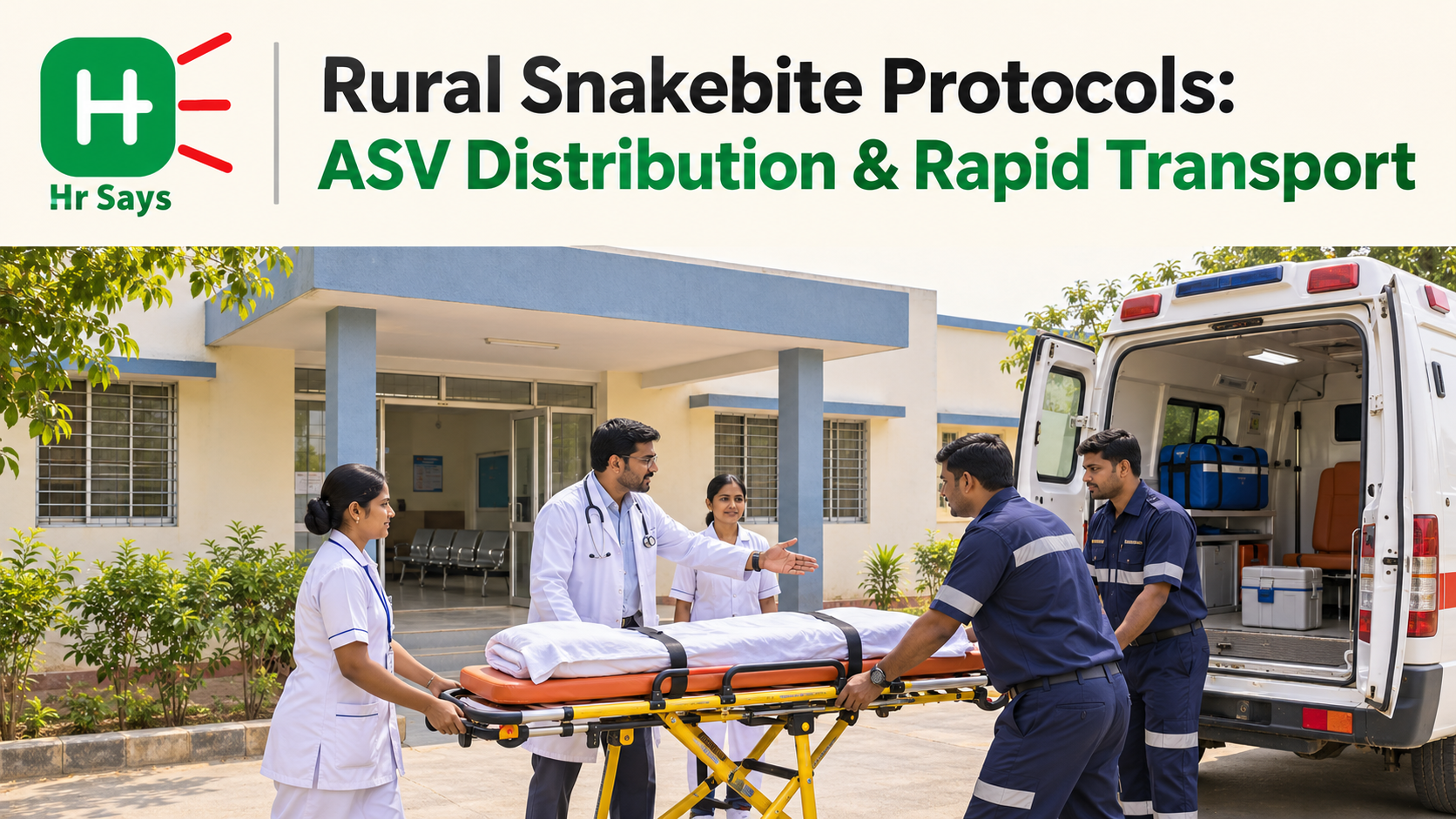
 This article explores how rural health facilities can coordinate the distribution of anti-snake venom (ASV) and arrange rapid transport for patients with suspected snakebite. It focuses on how stock tracking, referral communication, and ambulance handovers fit into the emergency response.





Snakebite envenomation is a critical, acute, time-sensitive medical emergency and one of the world's most devastating neglected tropical diseases (NTDs). In agricultural, rural, and forested terrains across tropical and subtropical regions, venomous snakebites disproportionately strike agricultural laborers, pastoralists, and indigenous populations.
Every year, millions of envenomations result in catastrophic clinical outcomes: permanent physical disability, lower-limb amputations from soft-tissue necrosis, end-stage chronic renal failure, and tens of thousands of preventable deaths.
The fatal window in snakebite management is exceptionally narrow:
- Neurotoxic venoms containing potent presynaptic and postsynaptic neurotoxins induce descending motor paralysis, ptosis, bulbar palsy, and fatal asphyxiation via diaphragmatic respiratory arrest within two to six hours.
- Hemotoxic venoms containing zinc metalloproteinases, disintegrins, and procoagulant enzymes trigger venom-induced consumption coagulopathy (VICC), spontaneous systemic hemorrhaging, diffuse alveolar bleeding, and acute tubular necrosis.
Historically, primary healthcare facilities in rural peripheries have been poorly equipped to manage acute envenomations. Primary Health Centers (PHCs) and Community Health Centers (CHCs) frequently suffer from chronic stockouts of quality-assured polyvalent Anti-Snake Venom (ASV), complete absence of emergency mechanical ventilators or bag-valve-mask resuscitators, and medical personnel who harbor deep anxieties regarding life-threatening ASV-induced anaphylaxis.
Compounding this provider-side failure is the reliance of rural families on informal traditional faith healers, the misapplication of dangerous first-aid practices (such as arterial tourniquets, local incisions, suction, and herbal paste cauterization), and fragmented rural emergency transport corridors that force patients to travel hours across rough roads to reach tertiary facilities.
Eliminating snakebite mortality requires shifting from uncoordinated, delayed hospital-based care to an integrated, hub-and-spoke rapid response ecosystem.
Saving lives demands standardizing syndromic clinical envenomation protocols, establishing a secure cold chain for lyophilized and liquid ASV, deploying emergency rapid transport corridors paired with basic life support, demystifying the management of anaphylactoid reactions, and implementing digital tracking systems through comprehensive strengthening snakebite envenomation protocols anti snake venom distribution rapid transport networks frameworks.
1. Pathophysiological Framework: Venom Dynamics and Syndromic Classification
To structure clinical envenomation management, emergency medical officers and rural primary care physicians must deconstruct the biochemical taxonomy of venoms and the syndromic presentations associated with medically significant species:
1. Neurotoxic Envenomation Pathways (Elapidae Family)In South and Southeast Asia, elapid envenomation is driven predominantly by the Common Krait (Bungarus caeruleus) and the Spectacled Cobra (Naja naja):
- Postsynaptic Neurotoxins (\alpha-Neurotoxins): Characteristically secreted by cobra species, these small basic polypeptides bind with high stereochemical affinity directly to nicotinic acetylcholine receptors (nAChR) located on the motor end-plate of the neuromuscular junction. This competitive antagonism blocks acetylcholine binding, halting muscle depolarization. Because this blockade is competitive, it can be clinically reversed by anticholinesterase agents like neostigmine.
- Presynaptic Neurotoxins (\beta-Neurotoxins): Characteristically delivered by krait species, these complex heterodimeric proteins possess potent phospholipase A_2 (\text{PLA}_2) enzymatic activity. The enzyme binds irreversibly to the terminal axon membrane, hydrolyzing membrane phospholipids, depleting synaptic vesicle stores, and destroying the motor nerve terminal architecture.
- The Irreversible Neuromuscular Deficit: Once presynaptic structural damage occurs, neither excessive acetylcholine nor anti-snake venom can displace the toxin or restore junctional transmission. The resulting flaccid paralysis can be managed only by supportive mechanical ventilation until the nerve terminal regenerates endogenous vesicular machinery over three to seven days.
- The Krait Sleeping Paradox: Kraits are nocturnal biters that enter rural homes at night, biting sleeping victims on thin floor mats. The bite is virtually painless, leaves microscopic, invisible fang punctures without local swelling, and occurs without waking the patient. The victim awakens hours later with unexplained abdominal colic, aphonia, ptosis, and severe respiratory muscle paralysis, which is frequently misdiagnosed as an acute surgical abdomen or early-morning stroke.
Viperid envenomation is driven predominantly by the Russell’s Viper (Daboia russelii) and the Saw-scaled Viper (Echis carinatus):
- Venom-Induced Consumption Coagulopathy (VICC): Hemotoxic venoms are rich in procoagulant enzymes—such as factor V and factor X activators—that cause widespread, uncontrolled activation of the clotting cascade. This drives rapid, massive intravascular consumption of fibrinogen, platelets, and factors VIII and V. Fibrinogen is converted into fragile, unstable fibrin micro-clots that are rapidly broken down by secondary hyperfibrinolysis.
- The Bleeding Diathesis: Within thirty to sixty minutes of envenomation, the patient's circulating fibrinogen reserves are exhausted. The blood becomes completely incoagulable, predisposing the patient to spontaneous systemic hemorrhage: gingival bleeding, epistaxis, hematuria, hemoptysis, retroperitoneal hemorrhage, and fatal intracranial bleeding.
- Direct Endothelial Injury and Capillary Leak: Snake venom metalloproteinases (SVMPs) cleave basement membrane components (laminin, type IV collagen, entactin) of capillary blood vessels, breaking capillary structural integrity and triggering profound, diffuse microvascular leakage. This drives massive local edema, blister formation, hypovolemic shock, and severe compartment syndrome in the bitten extremity.
- Acute Kidney Injury (AKI): Up to forty percent of severe Russell's viper envenomations trigger rapidly progressive acute renal failure through multiple compounding pathways: acute tubular necrosis driven by prolonged systemic hypotension and renal microvascular ischemia, direct nephrotoxicity of venom toxins on renal proximal tubular cells, and hemoglobinuric/myoglobinuric acute tubular blockage from microangiopathic hemolysis and localized rhabdomyolysis.
Because rural clinicians and emergency teams rarely have access to the offending snake—which is often escaped, destroyed, or misidentified—clinical management must follow a syndromic approach:
- Syndrome 1 (Pure Neuroparalytic): Ptosis, diplopia, ophthalmoplegia, dysarthria, dysphagia, progressive descending flaccid motor paralysis, minimal-to-absent local swelling, and severe late-stage paradoxical respiratory movement (indicating krait envenomation).
- Syndrome 2 (Neuroparalytic with Severe Local Tissue Damage): Early neuroparalytic signs accompanied by intense, rapidly expanding localized swelling, blistering, tissue necrosis, and severe burning pain at the bite site (indicating cobra envenomation).
- Syndrome 3 (Systemic Coagulopathy with Extensive Local Swelling): Persistent oozing of non-clotting blood from fang marks, spontaneous mucosal bleeding, massive swelling spreading across the entire bitten limb, sub-fascial tense edema, and progressive acute oliguria (indicating Russell's viper envenomation).
- Syndrome 4 (Systemic Coagulopathy with Minimal Local Swelling): Incoagulable blood, persistent bleeding from gums and minor scratches, but with minimal local edema confined to the immediate bite area, often accompanied by severe localized pain (indicating Saw-scaled viper envenomation).
2. Anti-Snake Venom (ASV): Pharmacokinetics, Titration, and Storage
Anti-Snake Venom (ASV) is the single specific, definitive, life-saving immunological antidote for systemic snakebite envenomation:
1. Immunological Architecture: Whole IgG vs. \text{F(ab')}_2 Fragments- Production Methodology: ASV is manufactured by hyperimmunizing equine hosts (horses or equines) with sublethal, escalating doses of purified venoms. In the Indian subcontinent, commercial formulations are polyvalent, manufactured against the "Big Four" medically significant species: Naja naja, Bungarus caeruleus, Daboia russelii, and Echis carinatus.
- Purification and Enzymatic Cleavage: Crude equine serum contains whole immunoglobulin G (IgG) molecules. The Fc fragment of whole IgG is the primary driver of complement activation and human adverse allergic reactions. Modern, quality-assured ASV uses pepsin digestion to cleave off the immunogenic Fc portion, leaving purified, divalent \text{F(ab')}_2 antibody fragments.
- Pharmacokinetic Clearance: \text{F(ab')}_2 fragments possess an average molecular weight of approximately 100 to 110 kDa. They diffuse rapidly into tissue compartments to bind, neutralize, and clear target venom proteins, followed by renal and reticuloendothelial excretion.
- Standard Neutralization Potency: Standard regulatory mandates require that 1 mL of reconstituted polyvalent ASV must neutralize at least:
- 0.60 mg of standard Naja naja (Cobra) venom;
- 0.45 mg of standard Bungarus caeruleus (Krait) venom;
- 0.60 mg of standard Daboia russelii (Russell's Viper) venom; and
- 0.45 mg of standard Echis carinatus (Saw-scaled Viper) venom.
A major clinical error in rural primary health centers is administering ASV to every patient who presents with a suspected snakebite, including non-venomous bites and dry bites (where a venomous snake strikes defensively without injecting venom, occurring in 20% to 50% of bites). ASV is an equine biological foreign protein carrying inherent risks; it is strictly indicated only when objective clinical signs of systemic or severe local envenomation are documented:
- Systemic Envenomation Indicators:
- Hemostatic abnormalities: spontaneous systemic bleeding (gingival bleeding, epistaxis, hematemesis, hematuria);
- Coagulation failure: an abnormal 20-Minute Whole Blood Clotting Test (20WBCT);
- Neuroparalytic signs: objective ptosis, external ophthalmoplegia, pooling of secretions, dysarthria, or respiratory muscle weakness;
- Cardiovascular collapse: severe hypotension, shock, cardiac arrhythmias, or persistent tachycardia;
- Renal compromise: acute oliguria or sudden elevation of serum creatinine.
- Severe Local Envenomation Indicators:
- Local swelling involving more than half of the bitten limb within a few hours of the bite;
- Rapidly progressive swelling extending past a major joint (e.g., swelling moving from the ankle past the knee within two hours);
- Development of enlarged, tender regional lymph nodes draining the bitten extremity;
- Blistering, local tissue necrosis, or signs of impending compartment syndrome.
- The Loading Dose (The Standard 10-Vial Rule):
- When systemic or severe local envenomation is confirmed, the non-negotiable standard initial loading dose is ten vials (100 mL) of polyvalent ASV.
- Dosing does NOT vary by age: children receive the exact same dose of ASV as adults. A venomous snake injects the same absolute physical quantity of venom into a child as it does into an adult; therefore, a pediatric patient requires the same absolute antibody mass to neutralize that circulating antigen, despite having a lower body weight.
- Reconstitution Mechanics: For lyophilized powder formulations, reconstitute each 10 mL vial with 10 mL of sterile Water for Injection (WFI). Swirl the vial gently until the cake dissolves into a clear solution; do not shake violently, as rapid agitation creates foam and denatures the fragile \text{F(ab')}_2 protein structure.
- Intravenous Infusion Protocol: Dilute the ten reconstituted vials in 200 to 500 mL of isotonic normal saline (0.9% NaCl) or 5% Dextrose (reducing dilution volume to 5 to 10 mL/kg in pediatric patients to avoid fluid overload).
- Infuse slowly at a rate of 1 to 2 mL per minute for the first fifteen minutes while closely monitoring the patient’s vitals for early signs of anaphylactoid reactions.
- If zero adverse reactions occur within fifteen minutes, accelerate the infusion to deliver the complete remaining volume over one hour.
- The Total Prohibition of Local Injection: ASV must never be injected locally into the bite site, into toes, or subcutaneously. Injecting foreign equine protein into an already swollen, closed fascial compartment increases tissue pressure, worsening ischemic tissue necrosis without delivering systemic neutralization.
- Titration and Repeat Dosing Windows:
- For Neurotoxic Envenomation: If neuroparalytic signs progress after one to two hours, administer a second dose of ten vials. If respiratory paralysis occurs, the priority is immediate mechanical airway support (intubation or bag-valve-mask). Administering dozens of vials to a paralyzed patient whose presynaptic terminals are already destroyed is useless and wastes critical regional ASV supplies. The absolute ceiling dose rarely exceeds twenty vials.
- For Hemotoxic Envenomation: Repeat the 20-Minute Whole Blood Clotting Test six hours after the completion of the first ASV dose. It requires approximately six hours for the liver to synthesize new, unconsumed fibrinogen once circulating venom is neutralized. If the 20WBCT remains non-clotting at six hours, administer a second dose of five to ten vials, repeating this six-hour assessment cycle until blood coagulability is restored.
- Lyophilized (Freeze-Dried) ASV: The preferred formulation for rural distribution. Lyophilized powder maintains high biological stability when stored at standard ambient temperatures below 25°C to 30°C, and retains full neutralization potency for up to five years, making it suitable for remote health sub-centers without continuous electricity.
- Liquid ASV: Requires an unbroken +2°C to +8°C cold chain. If liquid ASV is exposed to freezing temperatures (<0^\circ\text{C}), the antibody fragments denature, while exposure to tropical heat accelerates protein degradation. Liquid ASV should be restricted to urban tertiary centers possessing validated refrigeration and backup generators.
3. The Bedside 20-Minute Whole Blood Clotting Test (20WBCT)
In low-resource rural settings without an on-site coagulation laboratory, the 20-Minute Whole Blood Clotting Test (20WBCT) serves as the primary, validated diagnostic bedside assay to detect venom-induced consumption coagulopathy:
1. The Strict Technical Execution ProtocolA technical error in executing the 20WBCT can lead to false readings:
- The Glass Requirement: Collect two to three milliliters of fresh venous blood via a clean venipuncture. Dispense the blood immediately into a new, clean, completely dry, untreated glass test tube or glass vial.
- The Fatal Plastic Error: The test cannot be performed in plastic tubes or syringes. Plastic does not possess the negative surface charge required to activate Factor XII (Hageman factor) of the intrinsic clotting cascade. Testing blood in plastic produces a false non-clotting result.
- The Undisturbed Latency: Place the glass tube in an upright, undisturbed rack at ambient room temperature. Leave the tube completely still for exactly twenty minutes. Do not agitate, rotate, tilt, or handle the tube during this window, as mechanical movement breaks early fibrin strand formation.
- The Readout: At the conclusion of exactly twenty minutes, gently tip the glass tube past ninety degrees:
- Normal (Clotted): The blood has formed a firm, solid clot that adheres to the bottom of the tube and does not spill or flow. Coagulation function is intact.
- Abnormal / Incoagulable (Unclotted): The blood remains entirely liquid, flowing out or along the glass wall. This confirms severe consumptive coagulopathy (fibrinogen depletion below 0.5 g/L), establishing a definitive indication for immediate polyvalent ASV administration.
4. Anaphylaxis Prophylaxis and Emergency Management
Fear of adverse reactions is the leading reason rural medical officers hesitate or delay administering anti-snake venom. Equine protein solutions can trigger two distinct immunological reactions: early anaphylactoid reactions and delayed serum sickness:
1. Mechanisms of Adverse Equine Protein Reactions- Early Anaphylactoid Reactions (Within 10 to 180 Minutes): In up to twenty to forty percent of recipients, ASV infusion triggers an early, severe reaction. This reaction is predominantly anaphylactoid (non-IgE-mediated): aggregate equine antibody proteins bind to human complement, generating anaphylatoxins (C3a, C5a) that directly degranulate tissue mast cells and circulating basophils, releasing histamine, leukotrienes, and prostaglandins without prior sensitization.
- Symptoms: Urticaria, intense pruritus, dry cough, periorbital edema, bronchospasm, abdominal colic, and profound vasodilatory hypotension.
- Pyrogenic Reactions: Induced by bacterial endotoxin contamination during manufacturing; characterized by severe rigors, chills, high fever, and peripheral vasodilation within one to two hours.
- Late Serum Sickness (1 to 12 Days Post-Infusion): A Type III hypersensitivity immune-complex reaction. The human immune system develops antibodies against foreign equine proteins, forming circulating immune complexes that deposit in small vessels, presenting with fever, polyarthralgia, urticaria, lymphadenopathy, and transient proteinuria, managed with a short course of oral antihistamines and corticosteroids.
- The Historical Error: Historically, clinicians injected a tiny skin-prick test dose of diluted ASV into the forearm, waiting fifteen minutes to check for a wheal-and-flare reaction before infusing the full dose.
- The Scientific Consensus: Extensive international clinical trials and World Health Organization guidelines have definitively demonstrated that intradermal test dosing is completely useless and dangerous:
- Skin testing tests only for classical, pre-existing IgE antibodies; it has zero predictive value for non-IgE complement-mediated anaphylactoid reactions.
- A patient with a negative skin test can still develop fatal anaphylaxis during full infusion.
- Performing the skin test wastes twenty to thirty minutes of time while systemic venom is actively destroying motor end-plates and kidney tubules. Routine skin testing must be completely abandoned.
Before the first drop of ASV enters the patient's vein, the emergency resuscitation tray must be physically present at the bedside:
- The Gold Standard Antidote (Epinephrine / Adrenaline):
- The primary, life-saving intervention for acute anaphylaxis is Adrenaline (Epinephrine, 1:1,000 formulation).
- Dosing: Administer 0.5 mg intramuscularly (IM) in adults (0.01 mg/kg in children) into the anterolateral mid-thigh.
- Adrenaline stimulates \beta_2-adrenergic receptors to halt mast cell degranulation and reverse bronchospasm, while stimulating \alpha_1-adrenergic receptors to reverse systemic vasodilation and restore blood pressure.
- The Management Sequence:
- The moment urticaria, stridor, or hypotension appears: immediately stop the ASV infusion;
- Inject Adrenaline 1:1,000 IM immediately into the mid-thigh;
- Administer supplemental high-flow oxygen and initiate a rapid intravenous infusion of 1 to 2 liters of isotonic normal saline to support vascular volume;
- Administer secondary adjunctive medications: intravenous Hydrocortisone (100 to 200 mg) and intravenous Chlorpheniramine or Promethazine (antihistamines act slowly and must never replace first-line adrenaline);
- Once the reaction subsides, blood pressure normalizes, and bronchospasm clears (typically within ten to fifteen minutes), resume the ASV infusion at a slow rate, as the patient still carries life-threatening venom in their bloodstream.
5. Supportive Pharmacotherapy: The Neostigmine-Atropine Challenge for Neurotoxic Bites
In cobralike neurotoxic envenomation where competitive postsynaptic blockade of neuromuscular nicotinic receptors dominates, anticholinesterase therapy serves as a valuable clinical adjunct that can restore respiratory function:
1. The Biochemical Rationale- Acetylcholinesterase is the native enzyme that breaks down acetylcholine in the synaptic cleft.
- Administering an anticholinesterase drug like Neostigmine methylsulfate inhibits this breakdown, allowing endogenous acetylcholine to accumulate to high concentrations, outcompeting post-synaptic \alpha-neurotoxins for the nicotinic receptors.
- Step 1 (Pre-Medication with Atropine): Neostigmine stimulates both nicotinic and muscarinic receptors. Muscarinic stimulation triggers severe bradycardia, excessive salivation, bronchoconstriction, and defecation. To prevent muscarinic toxicity:
- Administer intravenous Atropine (0.6 mg in adults, 0.05 mg/kg in children) immediately prior to neostigmine.
- Step 2 (The Neostigmine Challenge Dose):
- Administer intramuscular or intravenous Neostigmine (1.5 to 2.0 mg in adults, 0.04 mg/kg in children).
- Step 3 (Objective Assessment): Closely observe the patient at ten-minute intervals over thirty minutes:
- Measure objective motor parameters: clearing of ptosis (measuring interpalpebral fissure height), improvement in forward head-raise endurance (ability to lift the head off the bed for 30 seconds), and expansion of single-breath counting capacity.
- Step 4 (Maintenance vs. Discontinuation):
- Positive Response: If objective motor improvement occurs, continue maintenance therapy: administer Neostigmine 0.5 mg combined with Atropine 0.6 mg every thirty minutes to two hours as clinically required until full neurological recovery is established.
- Negative Response: If zero improvement occurs after thirty minutes, the envenomation is driven by presynaptic krait toxins that cannot be overcome by anticholinesterases. Discontinue neostigmine immediately and transition the patient to mechanical ventilation.
6. Structural Comparison: Uncoordinated Rural Management vs. Standardized Hub-and-Spoke Ecosystems
Evaluating legacy rural snakebite approaches alongside an organized public health response network illustrates critical operational, clinical, and logistical contrasts:
First-Aid and Pre-Hospital Interventions- Uncoordinated Rural Management: Harmful and delayed; families apply arterial rope tourniquets (inducing limb ischemia and gangrene), make razor-blade incisions, apply suction devices, or visit traditional faith healers, delaying antivenom delivery by four to eight hours.
- Standardized Hub-and-Spoke Ecosystem: Rapid and safe; enforces the Right First-Aid Rule (Do No Harm): immediate limb immobilization using a comfortable splint, rapid calming of the patient, removal of constrictive jewelry, and immediate dispatch via motorcycle or ambulance without local tampering.
- Clinical Consequence: Preserves limb perfusion, prevents catastrophic secondary infections, and minimizes pre-hospital delays.
- Uncoordinated Rural Management: Speculative or absent; doctors wait for visible systemic bleeding or respiratory collapse; or administer ASV based on subjective patient panic; tests run in plastic tubes yield false readings.
- Standardized Hub-and-Spoke Ecosystem: Objective and standardized; serial bedside 20-Minute Whole Blood Clotting Tests (20WBCT) executed in untreated clean glass tubes at admission and six-hour intervals; syndromic neuroparalytic scoring tracks objective cranial nerve deficits.
- Clinical Consequence: Eliminates wasted ASV on dry bites, identifies venom-induced consumption coagulopathy early, and guides precise repeat dosing.
- Uncoordinated Rural Management: Hesitant and fragmented; primary health center doctors refuse to stock or administer ASV due to fear of anaphylaxis, referring unstable patients without an initial loading dose; or administer arbitrary single-vial doses.
- Standardized Hub-and-Spoke Ecosystem: Confident and protocolized; full ten-vial loading dose administered immediately at the rural primary health center level; bedside adrenaline pre-positioned; anaphylactoid reactions managed aggressively.
- Clinical Consequence: Neutralizes circulating venom before irreversible presynaptic nerve destruction or renal cortical necrosis occurs.
- Uncoordinated Rural Management: Passive and unassisted; family arranges private transport (autorickshaws, farm tractors) to cross rough roads; patient suffocates in transit due to unmonitored airway collapse.
- Standardized Hub-and-Spoke Ecosystem: Coordinated and life-supported; emergency ambulances equipped with bag-valve-mask (BVM) resuscitators, supraglottic airway devices, and telemetry uplinks connect rural centers with regional ICUs.
- Clinical Consequence: Maintains continuous respiratory ventilation and hemodynamic perfusion, eliminating pre-hospital transit mortality.
7. The Rapid Transport Network: Pre-Hospital Care and First-Aid Governance
The absolute determinant of survival in severe neurotoxic and hemotoxic envenomations is the Time-to-Antivenom Window. Public health networks must establish organized emergency transport systems:
Rural communities and first responders must be trained to unlearn dangerous legacy practices:
- The Absolute Negatives (The "NO" Rules):
- NO Arterial Tourniquets: Tying tight cords, wires, or bands around the limb halts arterial blood flow, inducing distal tissue ischemia, gangrene, and amputation, while releasing massive sequestered venom and necrotic toxins into the circulation the moment the tourniquet is released.
- NO Local Cutting or Scarification: Slicing the fang punctures with razor blades damages tendons, triggers uncontrolled arterial bleeding in coagulopathic patients, and introduces severe secondary bacterial infections.
- NO Suction: Sucking the wound with the mouth or commercial vacuum extractors removes zero clinically significant venom, while exposing the rescuer to mucosal toxin absorption.
- NO Potassium Permanganate, Burning, or Herbal Pastes: Applying caustic chemicals or dung to the wound causes chemical burns, accelerates tissue necrosis, and triggers tetanus.
- The "CARRY" First-Aid Protocol:
- C - Calmit: Reassure the victim; systemic panic and tachycardia double the rate of lymphatic venom absorption.
- A - Airway & Access: Position the victim in the recovery position (on their left side) to prevent aspiration of vomit; remove constricting rings, bangles, and tight clothing before swelling begins.
- R - Rest & Immobilize: Immobilize the bitten limb using a simple rigid splint (a wooden plank or rolled branch) wrapped loosely with a clean cloth or crepe bandage, mimicking the management of a bone fracture; do not apply a tight pressure-immobilization bandage for viper bites, as localized pressure concentrates cytotoxic enzymes, accelerating localized tissue gangrene.
- R - Rapid Transport: Transport the victim immediately to the nearest healthcare facility that stocks Anti-Snake Venom.
- Y - Yell for Help: Alert local community transport networks and emergency medical dispatchers.
In remote forested belts, flooded river basins, or roadless agricultural tracts where standard four-wheel-drive ambulances cannot navigate:
- Trained Community Motorcycle Responders: Rural volunteers and community health workers (ASHAs) are equipped with dedicated emergency motorcycles outfitted with pillion backrests, safety harness belts, and an onboard emergency medical kit.
- The Airway Bag: The motorcycle responder carries a rugged first-aid bag containing a pediatric and adult Bag-Valve-Mask (BVM) resuscitator, a set of i-gel supraglottic airways, a handheld manual suction unit, and a digital pulse oximeter.
- The Mission: The rider navigates narrow forest trails, secures the patient, splints the limb, and transports the victim directly to the nearest Primary Health Center within thirty to forty-five minutes, bypassing hours of walking or waiting for delayed transport.
When a rural Primary Health Center administers an initial ten-vial ASV loading dose to a neurotoxic patient who continues to experience progressive respiratory muscle paralysis:
- The patient cannot remain at the primary facility if mechanical ventilation is unavailable.
- The Advanced Ambulance Link: A central district emergency ambulance equipped with a transport mechanical ventilator, suction equipment, and trained emergency medical technicians (EMTs) is dispatched via an emergency corridor.
- If a mechanical ventilator is unavailable, the emergency technician maintains continuous, uninterrupted manual ventilation using a Bag-Valve-Mask (BVM) resuscitator connected to high-flow oxygen throughout the entire two-hour road transit to the district hospital ICU, keeping the patient's brain oxygenated until an intensive care ventilator takes over.
8. High-Performance Action Plan: 4-Phase Stepwise District Implementation Roadmap
To systematically construct, deploy, and institutionalize a resilient snakebite envenomation management network across a high-burden rural district, health administrations can execute a structured four-phase roadmap:
- Supply-Chain Rationalization & ASV Pre-Positioning (Phase 1: Institutional Readiness): Audit pharmaceutical inventory across all peripheral health centers. Eliminate centralized stockpiling at the district hospital; establish a mandatory buffer stock of at least twenty to thirty vials of lyophilized polyvalent ASV at every single Primary Health Center (PHC), and fifty to one hundred vials at Community Health Centers (CHCs). Ensure every PHC stocks ample supplies of sterile Water for Injection, clean glass test tubes for 20WBCT, 1:1,000 Adrenaline ampoules, Atropine, Neostigmine, and Bag-Valve-Mask resuscitators. Transition liquid ASV exclusively to centers possessing validated, continuously monitored cold-chain refrigerators with backup solar power.
- Clinical Protocolization & Healthcare Worker De-Sensitization (Phase 2: Training & Enablement): Deliver intensive, mandatory clinical simulation workshops for all rural Medical Officers, staff nurses, and emergency medical technicians:
- Train clinicians to execute the bedside 20-Minute Whole Blood Clotting Test (20WBCT) strictly in untreated glass tubes;
- Eliminate the harmful practice of intradermal skin testing;
- Train staff to administer the full ten-vial initial loading dose of ASV without delay upon verified clinical indications;
- Train clinicians to anticipate, recognize, and immediately manage early anaphylactoid reactions using intramuscular Adrenaline (0.5 mg IM) into the mid-thigh; and
- Train nurses in basic airway management: chin-lift, jaw-thrust, oropharyngeal airway insertion, and continuous bag-valve-mask manual ventilation.
- Emergency Dispatch Integration & Pre-Hospital Mobilization (Phase 3: Rapid Network Deployment): Integrate local emergency ambulance fleets (e.g., 108/102 systems) with dedicated rural dispatch algorithms for snakebite emergencies. Map high-burden forest hamlets and establish localized Motorcycle Emergency Response units to navigate roadless terrains. Train Accredited Social Health Activists (ASHAs) and local village councils (panchayats) to enforce the "CARRY" first-aid protocol, explicitly banning arterial tourniquets, razor-blade incisions, and delays caused by visits to traditional healers.
- Longitudinal Epidemiological Surveillance & Quality Auditing (Phase 4: Monitoring & Governance): Mandate that every snakebite case presenting to any public or private health center be recorded within a standardized digital registry. Track key operational quality indicators: time elapsed from bite to ASV administration, percentage of eligible patients receiving a complete initial ten-vial dose, incidence and survival rates of ASV-induced anaphylaxis, and district-wide snakebite case-fatality rates (targeting a reduction in mortality to strictly below one percent). Conduct mandatory, non-punitive clinical audits on every recorded snakebite death to identify logistical delays, stockout bottlenecks, or referral breakdowns.
9. Actionable Strategy: Digital Governance & National Health System Alignment
- Maintain Verified Clinical Envenomation Records via Universal Digital Health Profiles: Primary healthcare centers, emergency transport services, and district civil hospitals must register every snakebite envenomation admission, serial 20WBCT results, ASV batch numbers, and neurological recovery trajectories directly within portable digital health registries—such as the ABHA ID (Ayushman Bharat Health Account) architecture under the Ayushman Bharat Digital Mission (ABDM). Standardizing longitudinal clinical health records enables regional toxicologists, nephrologists, and public health epidemiologists to monitor post-envenomation chronic kidney disease, track delayed serum sickness presentations, and document antivenom batch efficacy across rural health networks without fragmented paper filing.
- Authenticate Emergency Medical Officers and Toxicological Specialist Credentials: When assigning medical officers to high-burden rural emergency departments or deploying mobile rapid-response teams, verify that attending clinical personnel hold accredited certifications in advanced life support (ACLS) and validated competencies in emergency snakebite envenomation management authenticated through national digital education repositories like the APAAR ID system within the Academic Bank of Credits (ABC) network.
- Deploy Cloud-Connected District Antivenom Logistics and Bite Hotspot Telemetry: Equip district health administrations and chief medical officers with cloud-connected epidemiological and pharmaceutical telemetry dashboards linked to national health portals. Connected software monitors real-time inventory levels of polyvalent ASV across peripheral primary health centers, automatically dispatching emergency restocking alerts when a clinic's stock falls below ten vials. Concurrently, the platform maps geo-tagged bite incident reports, identifying high-risk agricultural corridors, seasonal harvest surges, and temporal bite clusters, allowing district authorities to pre-position specialized ambulances and target rural community awareness campaigns before peak monsoon transmission windows arrive.
Frequently Asked Questions (FAQs)
Q1. What is the fundamental difference between neurotoxic and hemotoxic snake venom?Neurotoxic venom (primarily from cobras and kraits) attacks the nervous system: toxins block communication at the neuromuscular junction, leading to progressive muscle weakness, drooping eyelids (ptosis), difficulty swallowing, and fatal respiratory muscle paralysis, typically with minimal bleeding. Hemotoxic venom (primarily from vipers like Russell's and Saw-scaled vipers) attacks the vascular and circulatory system: enzymes consume clotting factors (causing venom-induced consumption coagulopathy, leading to spontaneous, uncontrollable bleeding), damage capillary walls (causing massive localized swelling and blistering), and induce acute kidney injury through direct tubular toxicity and hypotension.
Q2. Why should an intradermal test-dose of Anti-Snake Venom (ASV) never be performed?An intradermal skin test should never be performed because it has zero predictive value for early adverse reactions and wastes critical time. Most severe reactions to ASV are anaphylactoid (non-IgE-mediated), meaning they are triggered by direct complement activation from equine protein aggregates, not by pre-existing IgE antibodies. A patient can have a completely negative skin test and still develop fatal anaphylaxis during full infusion. Clinicians should skip the skin test, infuse the antivenom, and keep Adrenaline (Epinephrine 1:1,000) immediately accessible at the bedside.
Q3. Why must the 20-Minute Whole Blood Clotting Test (20WBCT) be performed exclusively in a glass tube?The 20WBCT requires a new, clean, untreated glass tube because the chemical surface properties of glass provide the negative electrical charge necessary to trigger Factor XII of the intrinsic coagulation pathway. Plastic syringes, plastic vacutainers, or coated tubes do not activate the clotting cascade properly; testing blood in plastic results in a false non-clotting reading, misleading the doctor into diagnosing severe coagulopathy and administering antivenom unnecessarily.
Q4. Does a child bitten by a venomous snake require a smaller dose of antivenom than an adult?No. Children receive the exact same dose of antivenom as adults (a full 10-vial loading dose). A venomous snake injects the same absolute physical mass of venom regardless of whether it bites an adult or a child. Therefore, the child requires the exact same quantity of antibody fragments to neutralize that circulating venom. In fact, because children have a smaller circulating blood volume, the venom concentration in their body is significantly higher, placing them at greater risk of rapid clinical collapse and making full-dose antivenom administration urgent.
Q5. Why is applying an arterial rope tourniquet dangerous after a snakebite?Applying a tight, narrow arterial tourniquet (using ropes, wires, or bands) completely cuts off blood supply to the limb, causing severe tissue ischemia, gangrene, and permanent damage that frequently leads to amputation. Furthermore, if the patient was bitten by a viper, concentrating cytotoxic venom in an ischemic limb accelerates necrosis. Finally, when the tourniquet is eventually released at the hospital, a sudden surge of accumulated venom, potassium, and acid metabolites rushes into the central circulation, which can cause sudden cardiac arrest and fatal shock.
Q6. What should a rural medical officer do immediately if a patient develops an anaphylactoid reaction to ASV?The medical officer must take three immediate actions:
- Immediately stop the ASV infusion;
- Administer Adrenaline (Epinephrine, 1:1,000 formulation) 0.5 mg intramuscularly (0.01 mg/kg in children) into the anterolateral mid-thigh without hesitation; and
- Administer supplemental oxygen and rapid intravenous isotonic fluids. Once blood pressure stabilizes and symptoms resolve (typically within ten to fifteen minutes), the clinician should resume the ASV infusion slowly, as the patient still requires antivenom to neutralize the life-threatening snakebite toxins.
Neostigmine inhibits the enzyme that breaks down acetylcholine, allowing acetylcholine to build up and outcompete postsynaptic cobra \alpha-neurotoxins for the nicotinic receptors on muscle end-plates, temporarily restoring muscle power. Neostigmine fails in krait bites because kraits inject presynaptic \beta-neurotoxins that physically destroy the nerve terminal itself, depleting synaptic vesicles. Because the nerve ending is damaged, increasing acetylcholine levels has no effect, and the patient requires mechanical ventilation until the nerve regenerates.
Q8. What parameters should be evaluated on a district snakebite management scorecard?A comprehensive district scorecard tracks: antivenom stock availability across 100% of Primary Health Centers (maintaining a minimum 20-vial buffer), average time from bite to initial loading-dose administration (target: <90\text{ minutes}), compliance with the 10-vial initial loading dose protocol, percentage of eligible clinics equipped with bag-valve-mask resuscitators and glass 20WBCT tubes, incidence and successful reversal rates of ASV-induced anaphylactoid reactions, and overall district snakebite case-fatality rates (target: <1\%).
Q9. Can a patient with a normal 20-Minute Whole Blood Clotting Test at admission still have a venomous bite?Yes. A normal 20WBCT at admission does not rule out envenomation. In early viper bites, systemic consumptive coagulopathy may take two to four hours to exhaust circulating fibrinogen reserves. Furthermore, krait and cobra bites are neurotoxic and do not affect the clotting cascade, meaning a patient with a lethal neurotoxic bite will have a completely normal 20WBCT. In all suspected bites, the 20WBCT must be repeated at thirty minutes, one hour, two hours, four hours, and six hours, while closely monitoring the patient for drooping eyelids (ptosis) and neurological weakness.
Q10. What immediate action must a primary healthcare team take when a farmer arrives with a verified Russell's viper bite, local swelling past the knee, and bleeding from the gums?The clinical team must take four immediate, concurrent actions:
- Draw two milliliters of blood into a clean, dry glass tube to perform the 20-Minute Whole Blood Clotting Test (20WBCT), while immediately establishing an intravenous line;
- Recognize that gum bleeding and rapid swelling confirm severe systemic envenomation; immediately reconstitute and initiate the full ten-vial loading dose of polyvalent ASV diluted in normal saline, infusing slowly for the first fifteen minutes;
- Pre-position a drawn syringe of Adrenaline (0.5 mg of 1:1,000 IM) at the bedside to treat potential adverse allergic reactions; and
- Splint the bitten leg loosely with a rigid plank, avoid any incisions or local injections, and prepare to repeat the 20WBCT six hours after the antivenom infusion finishes.