 Wednesday, November 25, 2026
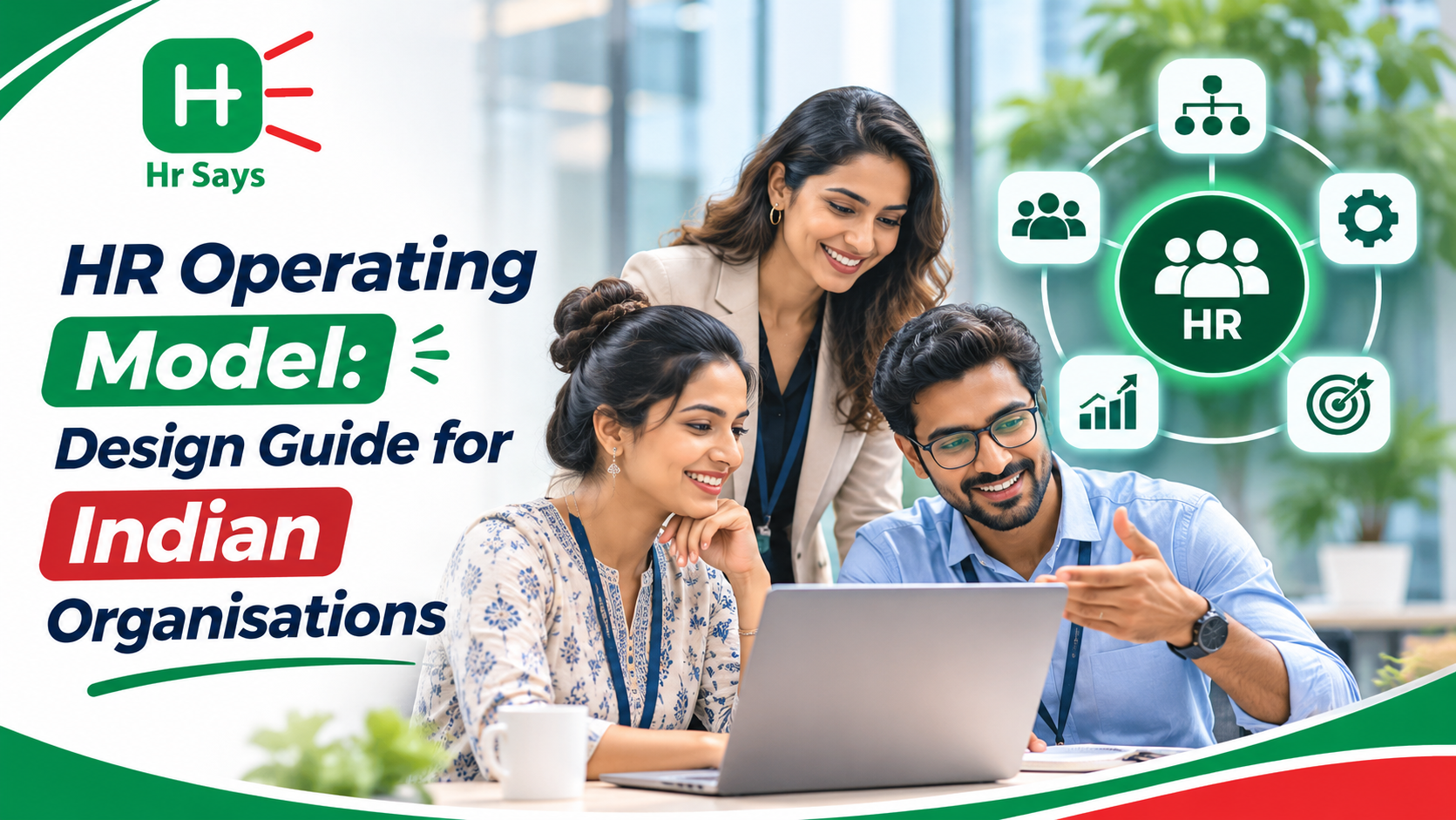
 Designing an effective HR operating model aligns people strategy with business goals through deliberate structuring of roles, service delivery, governance, technology, and HR capability.





Introduction
The way human resources functions within an organisation has changed significantly over the past decade. HR is no longer a back-office administrative unit. It is a strategic driver that shapes how organisations attract talent, build capability, manage performance, and sustain culture. At the foundation of this shift lies a critical structural decision: the HR operating model.
For HR leaders, CHROs, founders, and business heads across India, designing the right HR operating model is one of the most consequential choices they will make. A well-designed model ensures that HR resources are deployed where they create the most value. A poorly designed one leads to duplication of work, slow decision-making, low employee satisfaction, and a disconnect between people strategy and business priorities.
This guide walks through the fundamentals, components, and practical steps involved in designing an effective HR operating model, with particular relevance to growing Indian organisations navigating rapid scale, compliance complexity, and workforce diversity.
Understanding What an HR Operating Model Actually Is
An HR operating model is the blueprint that defines how the HR function is organised, how it delivers services, how it makes decisions, and how it supports the broader business. It answers three essential questions: who does what in HR, how HR services are delivered to employees and managers, and where HR decisions are made within the organisation.
A common misconception is that the HR operating model is simply an organisational chart showing who reports to whom. It is far more than that. It encompasses the roles and responsibilities of HR professionals, the channels through which employees access HR support, the technology infrastructure that enables HR processes, the governance framework that guides HR decisions, and the metrics used to measure HR effectiveness.
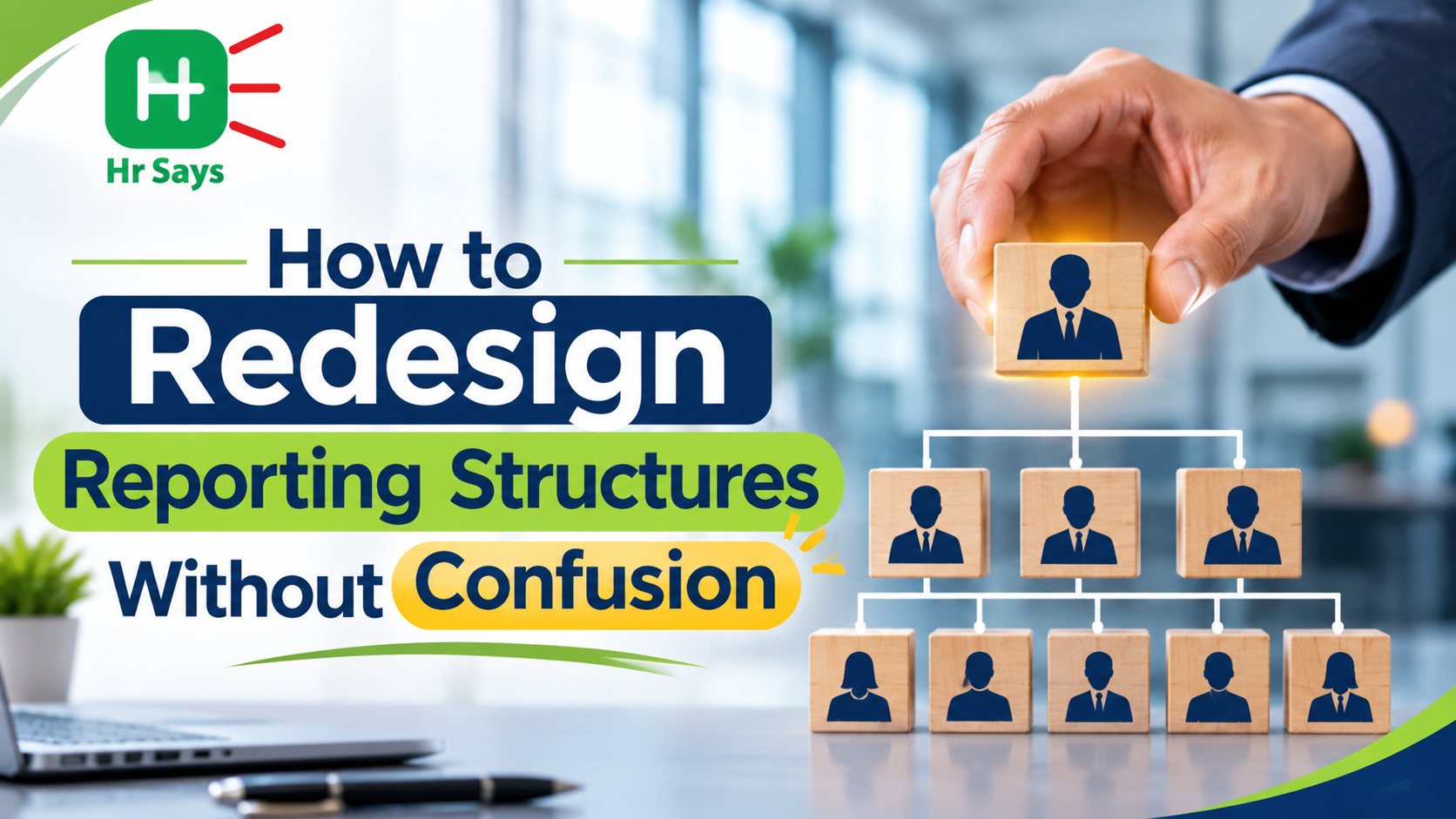
The most widely referenced HR operating model in modern organisations is the three-box model introduced by David Ulrich in the late 1990s. While this model has evolved considerably, its core logic remains influential:
- HR Business Partners (HRBPs) work closely with business units to align people strategy with business goals.
- Centres of Excellence (CoEs) develop specialised expertise in areas such as talent acquisition, learning, compensation, and organisational development.
- HR Shared Services handle transactional and administrative HR tasks efficiently and at scale.
Indian organisations, particularly those scaling rapidly in sectors such as technology, manufacturing, healthcare, retail, and financial services, often start with an informal or generalised HR structure and need to transition to a more deliberate and scalable operating model as they grow.
Key Drivers That Shape HR Operating Model Decisions
No single HR operating model works for every organisation. The right design depends on a range of internal and external factors that leaders must assess carefully before making structural decisions.
Organisation size and growth trajectory are among the most significant drivers. A startup with 50 employees needs a fundamentally different HR structure than a mid-size company with 2,000 employees or a large enterprise operating across multiple states. As organisations grow, the HR function must evolve from a generalist model to one that includes specialisation, shared services, and strategic partnership.
Business complexity is another major factor. Organisations operating across multiple geographies, business lines, or regulatory environments in India, particularly those managing workforces in both formal and informal sectors, require an HR model that can handle varied compliance needs, diverse employment types, and location-specific workforce challenges.
Technology readiness also shapes the model significantly. Organisations that have invested in strong HRMS or HCM platforms can automate a larger portion of transactional HR work, allowing HR professionals to focus on higher-value activities. In contrast, organisations still relying on manual or semi-automated processes will need to account for greater administrative HR capacity in their model design.
Strategic ambition matters equally. If the organisation plans to expand aggressively, acquire companies, or transform its culture, the HR operating model must be built with that ambition in mind rather than designed around the present state alone.
The Core Components of an Effective HR Operating Model
Designing an HR operating model requires deliberate attention to several interconnected components. Each component must be aligned with the others for the model to function cohesively.
HR Structure and Role DesignThe structure determines how HR professionals are grouped and how their responsibilities are divided. This includes decisions about whether HR will follow a centralised, decentralised, or hybrid structure; whether HRBPs will be embedded within business units or sit in a central HR team; and how specialised functions such as talent acquisition, learning and development, and compensation will be organised.
For Indian organisations, a hybrid structure often works well. It combines a central HR team that owns policies, compliance, and specialised expertise with HRBPs who are closely aligned to business units and understand their specific people challenges.
HR Service Delivery ModelThis component defines how HR support reaches employees and managers. It typically involves multiple channels working together:
- Self-service portals and mobile apps through which employees can access payslips, apply for leave, update personal information, and raise queries.
- HR shared services teams that handle standard requests, onboarding administration, documentation, and payroll queries.
- HR Business Partners who handle complex, strategic, or sensitive people matters.
- CoE specialists who are engaged for specific projects such as leadership development programmes, compensation benchmarking, or organisational restructuring.
The goal of a well-designed service delivery model is to route each type of HR interaction to the most appropriate and efficient channel, reducing unnecessary burden on senior HR professionals while ensuring employees receive timely and accurate support.
Governance and Decision RightsClear governance defines who has the authority to make which HR decisions and at what level of the organisation. Without this clarity, HR processes slow down, accountability becomes blurred, and inconsistency creeps into how policies are applied across different teams or locations.
Decision rights should be documented clearly for key HR processes such as hiring approvals, salary reviews, performance ratings, disciplinary actions, and policy exceptions. Indian organisations with multi-state operations or multi-business-unit structures particularly benefit from explicit governance frameworks that account for local statutory requirements while maintaining enterprise-wide consistency.
HR Technology and Data InfrastructureTechnology is now inseparable from HR operating model design. The choice of HR technology, the integrations between different systems, and the quality of HR data available to leaders directly affect how well the model can function.
Effective HR operating models in India are increasingly built around integrated HCM platforms that manage the complete employee lifecycle from recruitment to separation. These platforms also provide real-time workforce analytics that enable HR leaders to make evidence-based decisions on hiring, attrition, engagement, and performance.
HR Capability and Talent within the HR TeamAn often-overlooked component is the capability of the HR team itself. The operating model defines the structure, but the people who work within it determine whether it delivers value. Organisations must assess what skills exist within their HR teams today and what capabilities need to be built or hired for as the model evolves.
Strategic HR work requires HR professionals who understand business finance, change management, organisational psychology, and data analytics, not just traditional HR administration. Building this capability is an ongoing priority, not a one-time initiative.
A Practical Step-by-Step Approach to Designing the Model
Designing an HR operating model is not a one-day exercise. It requires structured thinking, stakeholder engagement, and iterative refinement. The following steps provide a practical framework for HR leaders approaching this work.
The first step is to conduct an honest assessment of the current HR function. This means understanding how HR time is currently spent, what services are being delivered well and what is falling short, where there are gaps in HR capability, and what business leaders think of HR today. Data from employee surveys, HR service delivery metrics, and business leader interviews can all inform this baseline assessment.
The second step is to align with business strategy. HR leaders must engage deeply with the CEO, CFO, and other senior business leaders to understand the organisation's strategic priorities for the next three to five years. The HR operating model must be designed to support those priorities, not to serve historical patterns.
The third step is to design the future state model. Based on the assessment and strategic alignment, HR leaders can begin to design the structure, service delivery channels, governance framework, technology requirements, and capability roadmap that will define the future model. It is useful to develop two or three design options and evaluate each against criteria such as cost, speed to implement, strategic alignment, and employee experience impact.
The fourth step is to build a transition roadmap. Moving from the current model to the future model requires careful change management. HR leaders must identify what changes will happen in which sequence, how they will communicate the changes to employees and managers, and how they will measure progress along the way.
The fifth step is to implement, measure, and refine. The model should be treated as a living framework rather than a fixed structure. As the organisation grows and its needs evolve, the HR operating model must be revisited and adjusted accordingly.
Common Mistakes Indian Organisations Make in HR Model Design
Several patterns of error appear frequently when organisations design their HR operating models without sufficient rigour.
Copying a model from a larger or different type of organisation without adapting it to local context is one of the most common mistakes. What works for a large multinational technology company will not automatically work for a mid-size Indian manufacturing firm or a fast-growing Indian healthcare network.
Underestimating the importance of change management is another frequent challenge. Restructuring HR can feel threatening to HR professionals whose roles are changing. Without clear communication, transparent rationale, and meaningful engagement, HR transformation initiatives often face internal resistance that slows or derails implementation.
Failing to invest in HR technology is a third mistake. Some organisations design sophisticated operating models on paper but do not allocate the technology budget needed to make them functional. In the absence of adequate technology, the model collapses back into manual, inefficient processes.
Finally, neglecting the compliance dimension is a critical oversight in the Indian context. With labour law reforms under the four Labour Codes, state-specific regulations, and increasing EPFO and ESIC enforcement, HR operating models in India must have dedicated compliance infrastructure built in rather than treated as an afterthought.
The Role of HR Operating Models in Shaping Workplace Culture
An effective HR operating model does more than improve efficiency. It signals to employees how much the organisation values its people. When HR is well-structured, responsive, and strategically credible, employees and managers experience HR as a genuine partner in their professional success. This directly influences engagement, retention, and the overall quality of the workplace culture.
For Indian organisations where workforce diversity, multigenerational teams, and rapid organisational change are defining characteristics, an intentional HR operating model is not optional. It is the structural foundation on which a people-first culture is built.
HRSays serves as a platform for HR leaders, CHROs, founders, and workplace professionals across India to explore exactly these kinds of conversations. The insights, experiences, and perspectives shared through HRSays help organisations make more informed decisions about their people strategy and HR structure.
Frequently Asked Questions
Q1: What is the difference between an HR operating model and an HR strategy?
An HR strategy defines what HR wants to achieve and how it will contribute to organisational goals. An HR operating model defines how the HR function is structured and how it delivers its services to make that strategy a reality. Strategy answers the "what" and "why," while the operating model answers the "how" and "who."
Q2: Which HR operating model is most suitable for Indian startups and growing companies?
For early-stage Indian startups, a lean generalist model often works best. As the organisation grows beyond 200 to 300 employees, introducing HR business partners aligned to business units, a small shared services team for transactional work, and specialist expertise in talent and learning becomes increasingly important.
Q3: How long does it take to design and implement an HR operating model?
The design phase typically takes two to four months depending on the size and complexity of the organisation. Implementation can take anywhere from six months to two years, depending on the scale of structural change, technology investment required, and the organisation's overall readiness for change.
Q4: How do the four Labour Codes affect HR operating model design in India?
The consolidation of central labour laws into four Labour Codes covering wages, industrial relations, social security, and occupational safety requires HR operating models in India to have clear compliance ownership. Organisations must designate specific HR roles or compliance teams responsible for tracking implementation timelines, state notifications, and ensuring internal policies align with the new statutory framework.
Q5: What metrics should HR leaders use to evaluate whether their operating model is working?
Key metrics include HR-to-employee ratio, HR cost as a percentage of total payroll, time-to-fill for open positions, employee satisfaction with HR services, manager satisfaction with HRBP support, and HR process cycle times. Together, these indicators reveal whether the model is efficient, effective, and valued by the people it serves.
Resources
- Society for Human Resource Management (SHRM): Global HR research, tools, and competency frameworks for HR professionals.
- National HRD Network (NHRDN): India's premier HR professional association with resources on HR practices and workforce development.
- Ministry of Labour and Employment, Government of India: Official source for Labour Code updates, notifications, and compliance guidance relevant to Indian organisations.
- Josh Bersin Academy: Research and insights on HR operating models, HR transformation, and people analytics from one of the leading global HR research organisations.
- NASSCOM HR Councils and Reports: Sector-specific HR insights for technology and services companies operating in the Indian market.
Interlinking Keywords
HR business partner model, HR shared services India, centre of excellence HR, workforce planning strategy, HR transformation roadmap, HR technology platforms, Labour Code compliance India, people strategy framework, organisational design HR, HR metrics and analytics
Last Reviewed By
Dr. Manthan Tripathi and Hr Says Advisory Panel on 24 November 2026.
Disclaimer
The content published on HRSays is intended for informational and educational purposes only. It does not constitute legal, compliance, or professional HR advisory. Readers are advised to consult qualified HR professionals, labour law experts, or legal counsel before making structural or strategic decisions related to their HR function. HRSays does not accept liability for decisions made based solely on the information provided in this article.