 Friday, September 18, 2026
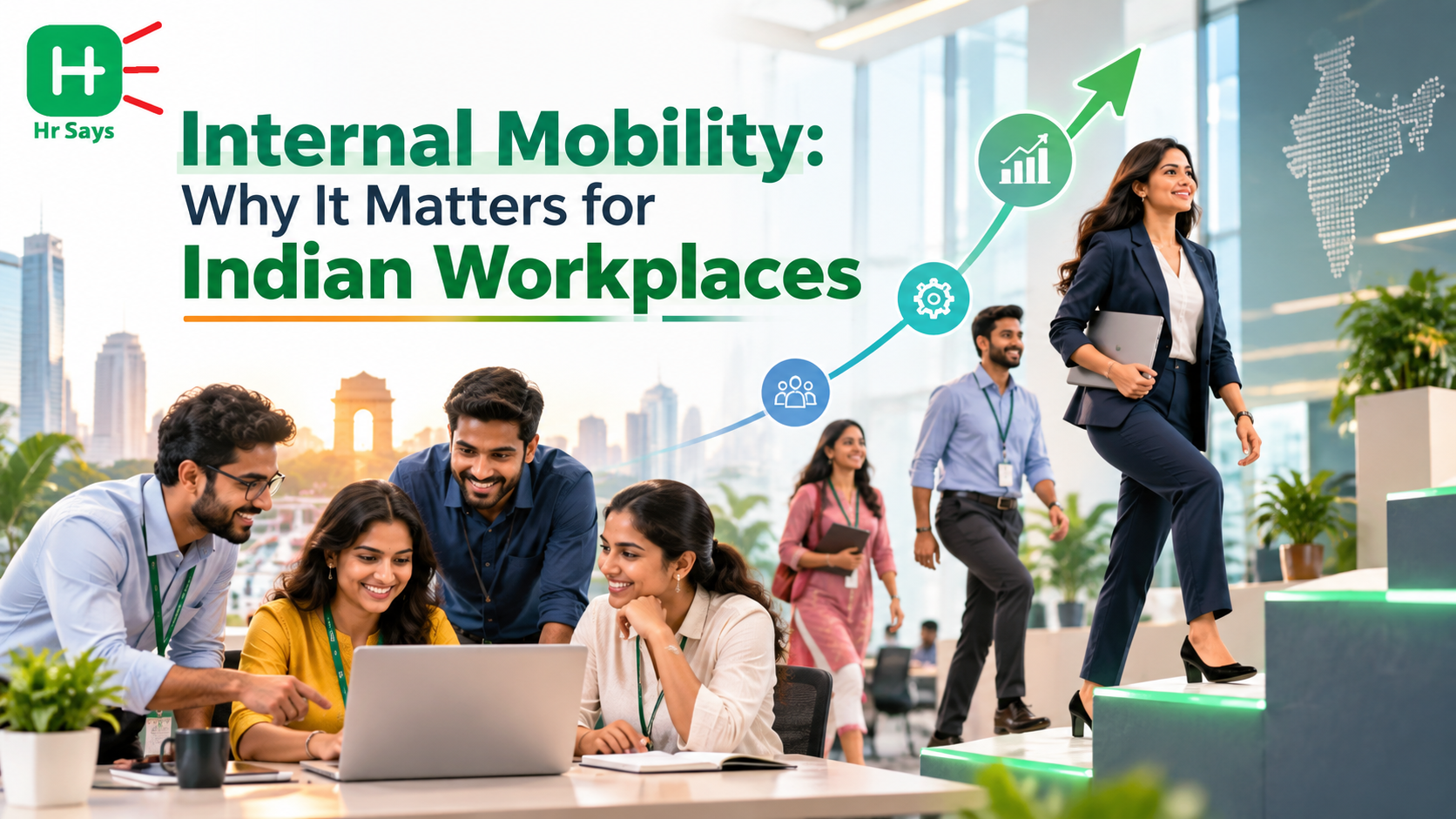
 Internal mobility empowers Indian organizations to retain talent, reduce attrition, and build leadership pipelines by enabling strategic employee movement across roles and functions from within.





Introduction
The Indian workforce is going through a profound transformation. With talent shortages climbing across sectors, attrition rates testing even the most resilient HR teams, and employee expectations shifting significantly after the pandemic, organizations are being pushed to rethink how they manage, develop, and retain their people. One of the most powerful and underutilized strategies emerging from this pressure is internal mobility.
Internal mobility refers to the movement of employees within an organization, whether through lateral transfers, promotions, project rotations, or role changes across functions and business units. Rather than always looking outside to fill capability gaps, organizations practicing strong internal mobility develop the talent they already have and give employees meaningful opportunities to grow without leaving the company.
For Indian organizations spanning information technology, manufacturing, banking, retail, and startups, internal mobility is no longer a good-to-have HR practice. It is quickly becoming a competitive necessity.
Understanding Internal Mobility and What It Truly Means
Internal mobility is often confused with simple promotions or periodic role changes. The concept goes much deeper. It encompasses a culture and system where employees are actively encouraged, supported, and enabled to explore new opportunities within the same organization throughout their career journey.
There are several distinct forms of internal mobility that HR professionals and business leaders should understand:
- Vertical mobility: Movement upward in the organizational hierarchy through promotions and increased responsibility
- Lateral mobility: Movement across departments, functions, or geographies at the same level
- Project-based mobility: Participation in cross-functional projects, task forces, or special assignments
- Skill-based mobility: Transitioning into new roles based on newly acquired or transferable skills
A robust internal mobility framework combines all of these dimensions and is supported by visible career pathways, accessible job postings, manager encouragement, and learning infrastructure. Without these enabling conditions, internal mobility remains an aspiration rather than a functioning practice.
Why Indian Organizations Are Prioritizing Internal Mobility Now
Several forces are converging in the Indian business landscape to make internal mobility more urgent than ever before.
First, the talent war is intensifying. According to industry reports, India continues to face significant skill shortages in areas such as data analytics, digital transformation, cloud technology, and leadership roles. Hiring externally for every critical opening is expensive, time-consuming, and increasingly difficult. Organizations that can develop internal talent pipelines hold a structural advantage.
Second, attrition remains a persistent challenge. The Great Resignation that swept global workplaces between 2021 and 2023 left a lasting mark on Indian companies, particularly in the information technology and business process management sectors. Employees who feel stuck, undervalued, or without a visible path forward are far more likely to explore external options. Internal mobility directly addresses this by creating a sense of growth and possibility within the organization.
Third, the expectations of the Indian professional workforce are evolving rapidly. Millennials and Generation Z employees, who now constitute a growing majority of the workforce in Indian cities, want continuous learning, variety in their roles, and a clear sense of progression. They are less attached to rigid job titles and more interested in building broad skill portfolios. Internal mobility aligns perfectly with this expectation.
Fourth, the cost of external hiring is significant. Studies in talent management consistently show that the cost of replacing an employee can range from one to three times the individual's annual salary when recruitment fees, onboarding costs, lost productivity, and cultural integration challenges are factored in. Organizations that fill roles internally save substantially and benefit from employees who already understand the culture, systems, and stakeholders.
The Business Case for Internal Mobility in Indian Companies
The benefits of internal mobility extend well beyond employee satisfaction. The organizational return on investment is measurable and significant.
When employees see that their colleagues move into new roles, lead different teams, or transition into adjacent functions, they receive a direct signal that the organization is invested in their long-term development. This visibility drives engagement. Engaged employees perform better, collaborate more effectively, and contribute more meaningfully to organizational goals.
Internal mobility also strengthens leadership pipelines. One of the most common challenges facing mid-sized and large Indian corporations is the absence of a ready pipeline of leaders for senior and critical roles. By deliberately moving high-potential employees through diverse experiences, organizations build leaders who have broader organizational awareness, stronger cross-functional relationships, and deeper institutional knowledge. This kind of leadership depth cannot be replicated by external hiring alone.
Knowledge retention is another critical benefit that Indian organizations often underestimate. When experienced employees leave, they take with them years of institutional knowledge, client relationships, and process expertise. Internal mobility keeps that knowledge within the organization while simultaneously enriching the employee's career story.
For companies operating across India's diverse Tier 1 and Tier 2 geographies, internal mobility also enables better workforce distribution. Moving capable employees to emerging markets, regional offices, or new business units is often more effective and efficient than building entirely new teams from scratch.
Key Barriers Preventing Effective Internal Mobility in India
Despite its clear advantages, many Indian organizations struggle to operationalize internal mobility effectively. Understanding the barriers is as important as understanding the benefits.
One of the most significant obstacles is managerial resistance. When a high-performing employee expresses interest in moving to another team or function, their current manager often views it as a personal loss rather than an organizational gain. This hoarding mentality discourages employees from pursuing internal opportunities and creates invisible walls within the organization.
Another barrier is the lack of transparency around internal job openings. In many companies, internal roles are either not publicly posted or are filled through informal networks before other employees even become aware of them. This inequity particularly disadvantages employees who are less networked within the organization.
Poor skill visibility is also a challenge. Without a reliable system for capturing and tracking employee skills, experiences, certifications, and aspirations, HR leaders and hiring managers are unable to match internal talent to open opportunities effectively. Many organizations in India are still working with fragmented or outdated talent data.
Cultural norms around job roles also create resistance. In traditional organizational environments, crossing functional boundaries is seen as unusual or risky. Employees may worry that a lateral move will slow down their career progression or signal instability to future employers. HR leaders need to actively reframe internal mobility as a career accelerator rather than a detour.
How HR Leaders Can Build a Strong Internal Mobility Culture
Building a genuine internal mobility culture requires intentional action at every level of the organization, from board-level commitment to team-level conversations between managers and their direct reports.
The first step is creating visibility. Every organization should maintain an internal job board where open positions are posted for a defined window before external sourcing begins. This signals to employees that the organization values their growth and gives them a fair opportunity to apply.
The second step is investing in skills mapping. HR teams should implement talent management platforms that capture not just current job roles but also skills, certifications, project experiences, and stated career interests. This data becomes the foundation for effective internal matching. Several Indian organizations are now adopting AI-powered talent intelligence platforms to enable this.
The third step is building manager capability. Internal mobility will not thrive in an environment where managers feel threatened by the movement of their team members. Organizations need to recalibrate how manager performance is measured. A manager who develops and releases talent to other parts of the business should be recognized and rewarded, not penalized.
The fourth step is connecting learning to movement. Internal mobility and learning and development cannot operate as separate functions. Employees who aspire to move into a new domain need access to targeted reskilling programs, mentorship opportunities, and stretch assignments that prepare them for the transition. Platforms such as HRSays offer HR professionals access to the kind of knowledge, frameworks, and peer insights that can support this strategic alignment between learning and career movement.
The fifth step is measuring and reporting on internal mobility outcomes. Organizations should track metrics such as the percentage of open roles filled internally, time-to-fill for internal versus external hiring, retention rates of employees who made internal moves, and employee satisfaction scores related to career development. These numbers make the business case visible to leadership and help HR teams refine their approach.
The Role of Technology in Enabling Internal Mobility
Technology is playing an increasingly central role in making internal mobility scalable across complex organizations. In India, where large conglomerates and technology companies often employ tens of thousands of people across multiple locations and business units, manual processes for internal matching are simply not effective.
Modern HR technology platforms now offer features specifically designed for internal mobility, including AI-powered skill inference, career path visualization, mentorship matching, and real-time internal job recommendations based on an employee's existing skills and career interests. These tools reduce the friction associated with internal movement and make the process more equitable by reducing reliance on informal networks.
Indian organizations are increasingly adopting these platforms as part of broader digital transformation efforts in HR. As more companies invest in integrated human capital management systems, the infrastructure for effective internal mobility is becoming more accessible even for mid-sized companies.
Conclusion
Internal mobility represents one of the most powerful levers available to Indian HR leaders today. In a landscape defined by talent scarcity, rising attrition, and evolving employee expectations, the ability to identify, develop, and move talent effectively within the organization is a genuine competitive advantage. It is not simply an employee benefit. It is a strategic capability that shapes organizational resilience, leadership depth, and long-term growth.
For HR professionals, business leaders, and founders across India, the question is no longer whether internal mobility matters. The question is whether the organization has the culture, systems, and leadership commitment to make it work. Building that foundation today will determine which organizations attract, develop, and retain the talent they need to lead tomorrow.
Frequently Asked Questions
Q1: What is internal mobility in the context of HR?
Internal mobility refers to the movement of employees within an organization across roles, departments, functions, or geographies. It includes promotions, lateral transfers, project rotations, and skill-based transitions, all aimed at developing talent and filling capability gaps from within.
Q2: Why is internal mobility important for Indian companies specifically?
Indian companies face intensifying talent shortages, high attrition, and a workforce that increasingly values continuous growth. Internal mobility helps organizations retain experienced employees, reduce external hiring costs, and build stronger leadership pipelines suited to India's diverse and fast-growing business environment.
Q3: How can HR teams encourage employees to pursue internal opportunities?
HR teams can encourage internal movement by maintaining a transparent internal job board, actively communicating available roles, offering reskilling programs, rewarding managers who develop and release talent, and building a culture where lateral moves are seen as career growth rather than stagnation.
Q4: What role does technology play in enabling internal mobility?
HR technology platforms help organizations map employee skills, track career interests, match internal talent to open roles using AI, and measure mobility outcomes. These tools make internal mobility scalable and more equitable, particularly in large organizations with geographically distributed workforces.
Q5: How can organizations measure the success of internal mobility programs?
Key metrics include the percentage of roles filled internally, time-to-fill comparisons between internal and external hiring, retention rates of employees who moved internally, and employee satisfaction scores related to career development. Tracking these metrics helps HR teams demonstrate business impact and continuously improve the program.
Resources
- LinkedIn Global Talent Trends Report: Annual research on workforce trends including internal mobility, employee expectations, and talent management strategies across global and Indian markets
- Society for Human Resource Management (SHRM): Comprehensive frameworks, toolkits, and research on internal talent mobility, career development, and workforce planning for HR professionals
- People Matters: India-focused HR and workplace publication covering internal mobility practices, case studies, and talent management trends relevant to Indian organizations
- World Economic Forum Future of Jobs Report: Global research on skills shifts, workforce transformation, and the strategic importance of internal talent development for organizational resilience
- National Human Resource Development Network (NHRDN): India's premier HR professional body offering research, events, and knowledge resources relevant to internal mobility and people practices
Interlinking Keywords
Internal mobility strategy, employee career development, talent management India, internal hiring process, HR workforce planning, employee retention strategies, reskilling and upskilling, leadership pipeline development, HR technology platforms India, employee engagement and growth
Last Reviewed By
Dr. Manthan Tripathi and Hr Says Advisory Panel on 17 September, 2026
Disclaimer
The content published on HRSays is intended for informational and professional development purposes only. It does not constitute legal, compliance, or organizational consulting advice. HR strategies and workforce practices vary significantly across industries, organizations, and geographies. Readers are encouraged to consult qualified HR professionals, legal advisors, or certified consultants before implementing any people management policies or programs within their organizations. HRSays does not accept responsibility for decisions made based solely on the content of this article.