Saturday, October 24, 2026
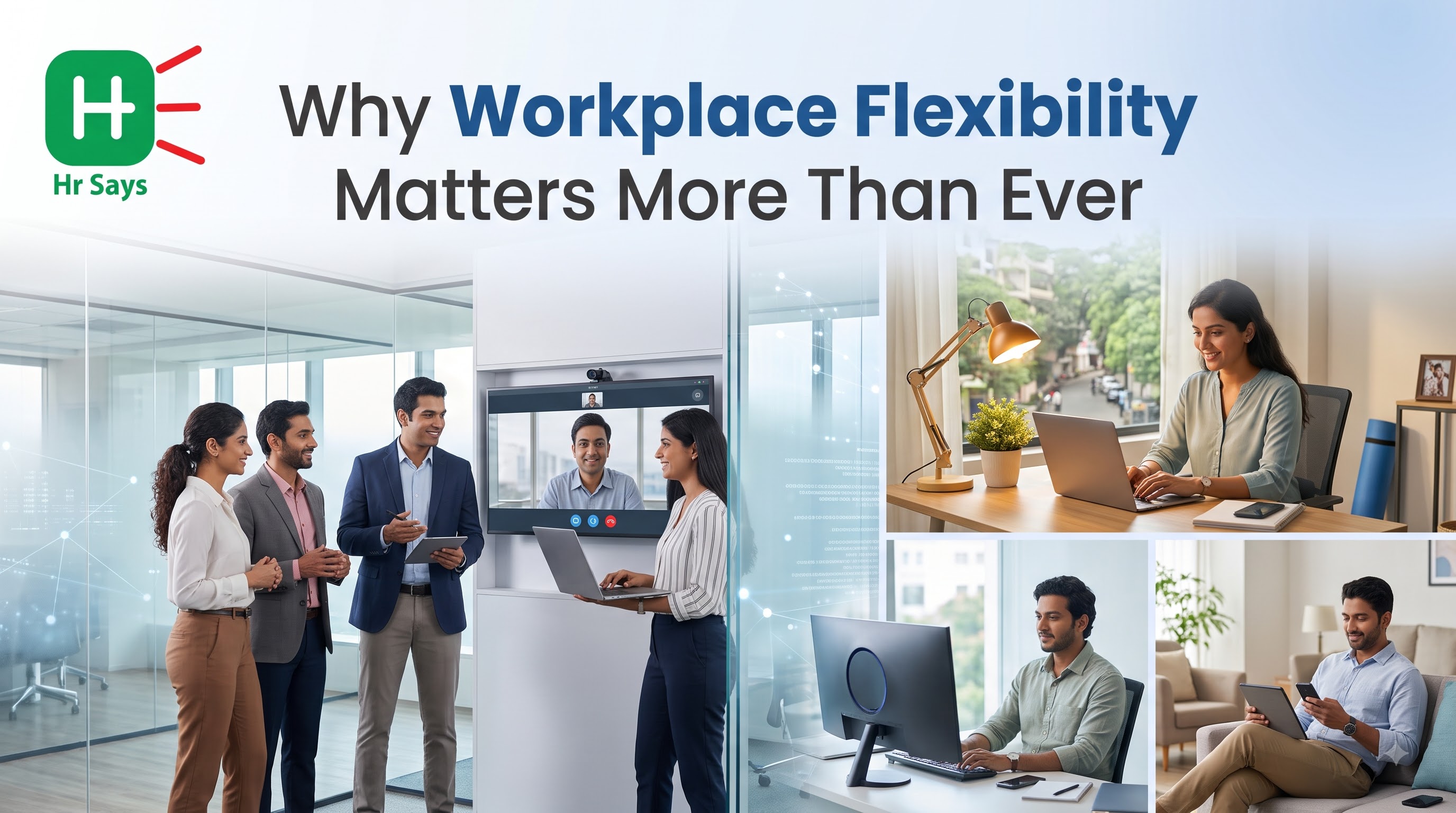
 Workplace flexibility has shifted from a benefit to a business necessity, helping Indian organizations retain talent, boost productivity, and build stronger employer brands in a changed work era.





Introduction
The way work gets done has changed permanently. Across Indian cities and industries, HR leaders, founders, and business owners are grappling with a workforce that has fundamentally different expectations than it did five years ago. Employees are no longer just asking for competitive salaries. They are asking for autonomy, trust, and the freedom to manage their professional and personal lives on their own terms.
Workplace flexibility has moved from being a fringe benefit to a core business strategy. Organizations that dismiss it as a passing trend are already seeing the consequences in higher attrition, lower engagement, and growing difficulty in attracting skilled talent. Those that embrace it thoughtfully are building more resilient, productive, and loyal teams.
This article explores what workplace flexibility truly means in the Indian context, why it has become so critical, and how HR professionals and business leaders can approach it with both clarity and conviction.
Understanding Workplace Flexibility in the Indian Context
Workplace flexibility refers to the degree of freedom employees and employers have in deciding how, when, and where work is completed. It is not a single policy or a one-size-fits-all solution. It is a philosophy that places trust at the center of the employer-employee relationship.
In India, the conversation around flexible work gained significant momentum during the COVID-19 pandemic, when millions of professionals shifted to remote work overnight. What began as a crisis response revealed something important: work could be done effectively outside the traditional office setup, and in many cases, productivity improved.
However, flexibility in the Indian workplace goes beyond remote work. It includes:
- Flexible working hours that allow employees to align their schedules with peak productivity windows
- Hybrid work models that combine in-office collaboration with remote independence
- Compressed workweeks where employees complete their hours across fewer days
- Autonomy over project selection and task prioritization
- Results-oriented performance management rather than hours-based evaluation
For Indian organizations operating across Tier 1 cities like Mumbai, Bengaluru, and Delhi, as well as growing business hubs in Tier 2 cities like Pune, Hyderabad, and Jaipur, flexibility has become a key differentiator in employer branding and talent acquisition.
Why the Demand for Flexibility Is Growing in India
Several interconnected forces are driving this shift, and HR professionals who understand these forces are better equipped to design policies that genuinely work.
The Rise of the Millennial and Gen Z WorkforceIndia has one of the youngest workforces in the world. A significant portion of the active workforce today consists of millennials and Gen Z professionals who have grown up with digital tools, remote connectivity, and a strong sense of personal agency. For this generation, flexibility is not a luxury. It is an expectation. Organizations that fail to offer it find themselves at a competitive disadvantage when recruiting from this talent pool.
Longer Commutes and Urban PressureIndian metropolitan cities are notorious for long commute times. Professionals in cities like Mumbai and Bengaluru often spend two to four hours daily commuting. This time cost directly impacts mental health, physical wellbeing, and overall job satisfaction. Offering flexibility around working hours or remote work arrangements eliminates or significantly reduces this burden, which employees deeply value.
The Evolving Role of Women in the WorkforceIndia has been working to increase female workforce participation. Workplace flexibility plays a direct role in enabling more women to remain in or return to the workforce, particularly after significant life events such as marriage or childbirth. Organizations that build genuinely flexible policies are also building more diverse and inclusive teams.
Post-Pandemic Expectations Have Reset the BaselineThe pandemic did not just introduce remote work. It redefined what employees consider normal. Professionals who successfully managed complex projects, led teams, and met business targets from home are unlikely to accept a rigid return to the pre-pandemic status quo without compelling reasons. Indian organizations that mandate inflexible office attendance without addressing this expectation shift are experiencing higher voluntary attrition.
The Real Business Benefits of Workplace Flexibility
Beyond employee satisfaction, workplace flexibility delivers measurable business outcomes. HR leaders who want to make a strong internal case for flexible policies need to understand and communicate these benefits clearly.
Stronger Employee Retention and Lower Attrition CostsReplacing an employee is expensive. Recruitment costs, onboarding time, knowledge transfer, and productivity loss during transition add up significantly. Organizations that offer flexibility report stronger employee loyalty and lower voluntary attrition. When employees feel trusted and supported in managing their work and personal lives, they are less likely to look elsewhere.
Higher Productivity and EngagementA common concern among managers is that flexible work will lead to reduced accountability. The evidence points in the opposite direction. Employees who have greater control over how they work tend to be more focused, more creative, and more motivated. They are working in environments that suit their personal productivity patterns, which leads to better output. Engagement scores in organizations with strong flexibility policies consistently outperform those in rigid, hours-focused environments.
Access to a Wider Talent PoolFlexibility removes geographic limitations on hiring. An organization based in Mumbai can now recruit the best talent from Jaipur, Kochi, or Bhubaneswar without requiring relocation. This opens up the talent pipeline considerably and allows companies to build diverse, geographically distributed teams. For startups and growing businesses in India, this is a significant competitive advantage.
Better Mental Health and Reduced AbsenteeismBurnout is a growing problem in the Indian corporate sector. Rigid work structures, long hours, and lack of autonomy contribute to stress, anxiety, and eventual disengagement. Flexible work arrangements give employees the space to manage their energy, take breaks when needed, and attend to personal responsibilities without guilt. This leads to measurably better mental health outcomes and lower rates of absenteeism.
Employer Brand StrengthIn an era where employer reputation is shaped significantly by employee reviews and social conversations, being known as a flexible, employee-centric organization is a powerful brand asset. HR leaders and CHROs are increasingly recognizing that flexibility is not just a people practice. It is a competitive positioning tool that affects recruitment, retention, and organizational reputation.
Common Concerns and How to Address Them
Workplace flexibility is not without its challenges, and it would be misleading to present it as a simple solution. HR professionals need to anticipate legitimate concerns and build frameworks that address them.
One of the most common concerns is around accountability and performance visibility. The answer lies in shifting from activity-based management to outcomes-based management. When teams are evaluated on the quality and impact of their work rather than the hours logged, accountability becomes clearer and more meaningful.
Another concern involves team cohesion and collaboration. Flexibility does not mean permanent isolation. Thoughtful hybrid models can designate certain days or hours for in-person collaboration while preserving individual autonomy for focused work.
Managers also worry about fairness, particularly in roles where flexibility is not equally accessible. Organizations need to be transparent about which roles can accommodate flexibility and why, and should work creatively to offer alternative benefits to teams in client-facing or operations-heavy functions.
Finally, compliance with Indian labour laws remains an important consideration. The Code on Wages, 2019, and evolving state-level labour codes are reshaping how working hours and conditions are governed. HR teams must ensure that flexibility policies are designed with legal compliance in mind, particularly regarding working hours, overtime, and employee classifications.
How HR Leaders Can Build a Meaningful Flexibility Framework
Building a genuine flexibility culture requires more than announcing a work-from-home policy. It requires intentional design, leadership buy-in, and consistent reinforcement.
HR professionals should begin by understanding the specific needs of their workforce through structured listening exercises, pulse surveys, and open conversations. Different employee segments, whether early-career professionals, mid-level managers, or senior leaders, may have very different flexibility needs.
From there, organizations should define clear principles: what flexibility means within their context, what outcomes are expected, and how performance will be measured. Policies should be documented, communicated consistently, and reviewed regularly to ensure they remain relevant.
Training managers is equally critical. Middle managers are often the most significant obstacle to flexibility in practice, even when policy exists at the organizational level. Building manager capability around remote leadership, trust-based management, and outcomes orientation is a non-negotiable investment.
Platforms like HRSays offer HR leaders access to practical insights, thought leadership, and peer conversations that help them design and refine people practices, including flexibility frameworks, with greater confidence and relevance to the Indian workplace.
Conclusion
Workplace flexibility is no longer a forward-looking aspiration. It is a present-day business necessity. For Indian HR leaders, CHROs, founders, and business owners, the question is no longer whether to offer flexibility but how to build it with intention, fairness, and strategic clarity.
Organizations that get this right will be better positioned to attract and retain top talent, build stronger employer brands, improve employee wellbeing, and sustain long-term productivity. Those that resist the shift risk being left behind in a talent market that has permanently evolved.
The future of work in India will be shaped by leaders who understand that flexibility is not a concession to employees. It is a smart investment in organizational performance.
Frequently Asked Questions
Q1: What is workplace flexibility and why does it matter for Indian companies?
Workplace flexibility refers to giving employees autonomy over how, when, and where they work. For Indian companies, it matters because it directly impacts talent retention, productivity, employee wellbeing, and the ability to compete for skilled professionals in a rapidly evolving job market.
Q2: Does workplace flexibility reduce productivity?
Evidence consistently shows the opposite. Employees who have greater control over their work environment and schedule tend to be more focused and motivated. Outcomes-based management frameworks, rather than hours-based tracking, help organizations maintain accountability while enabling flexibility.
Q3: How can small and mid-sized Indian businesses implement flexible work policies?
Small and mid-sized businesses can start by identifying which roles are suited for flexibility, defining clear performance outcomes, and piloting hybrid or flexible hour arrangements with structured check-ins. The key is to build trust gradually while maintaining communication and accountability.
Q4: Is workplace flexibility legally compliant under Indian labour laws?
Yes, flexibility policies can be designed to comply with Indian labour laws, including the Code on Wages, 2019, and applicable state labour codes. HR teams should ensure policies address working hours, overtime provisions, and employee classifications in line with current regulations.
Q5: What role does workplace flexibility play in improving employee mental health?
Flexibility reduces commute stress, allows employees to manage personal responsibilities without conflict, and gives them greater control over their workday. These factors collectively contribute to lower stress levels, reduced burnout, and better overall mental wellbeing among employees.
Resources
- Ministry of Labour and Employment, Government of India: Official source for labour codes, compliance frameworks, and workforce policy updates relevant to Indian employers
- Society for Human Resource Management (SHRM): Global and India-specific research on workplace flexibility, employee engagement, and HR best practices
- NITI Aayog: Policy research and strategic insights on workforce trends, female labour force participation, and future of work in India
- LinkedIn Workforce Insights India: Data and trend reports on hiring, employee expectations, and workplace flexibility preferences among Indian professionals
Interlinking Keywords
workplace flexibility policy, hybrid work model India, employee retention strategies, work-life balance at work, HR trends India 2026, flexible work hours, employee engagement, remote work India, employer branding HR, outcomes-based management
Last Reviewed By:
Hr Says Advisory Panel on 28 August, 2026
Disclaimer:
The information provided in this article is intended for general informational and educational purposes only. It does not constitute legal, compliance, or professional HR advice. Organizations should consult qualified HR and legal professionals before implementing any workplace flexibility policies, particularly with regard to compliance with applicable Indian labour laws and regulations. HRSays does not guarantee specific outcomes from the adoption of any practices described in this article.