 Thursday, October 01, 2026
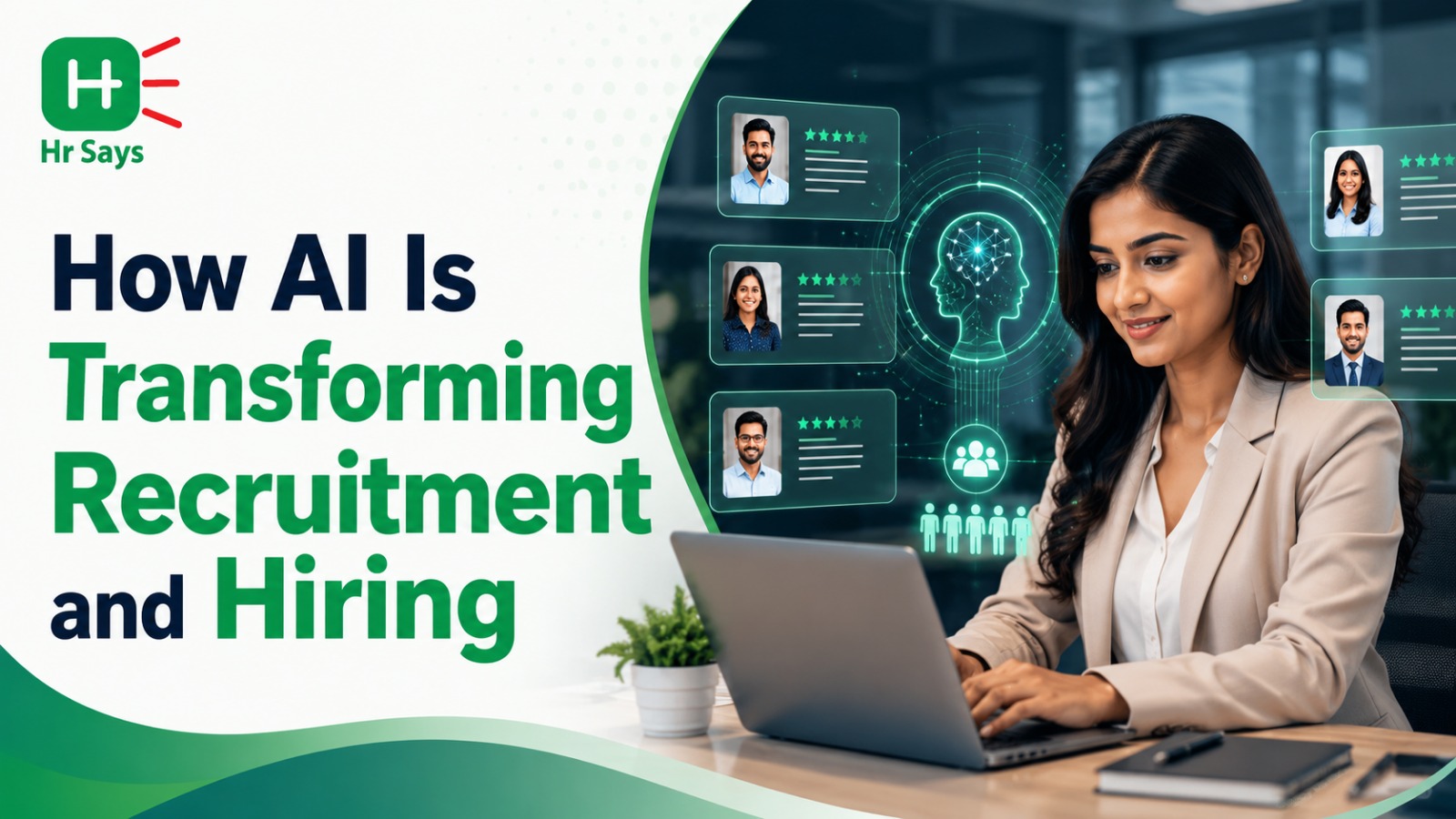
 Modern AI recruiting systems are reshaping sourcing, screening, and hiring workflows through smarter automation and data-driven insights. From AI candidate sourcing to recruiter collaboration tools, AI is transforming recruitment into a faster, more adaptive, and strategically driven process.




Hiring has changed more in the last few years than many organizations expected. Recruiters are no longer only reviewing resumes manually or relying on instinct during hiring decisions. The rise of AI in recruitment has introduced a new way of identifying talent, managing applications, and improving hiring efficiency. At the same time, companies are realizing that traditional hiring methods struggle to keep up with remote work, global talent pools, and increasing application volumes. Understanding how AI works in recruitment is becoming less about following trends and more about adapting to how modern hiring now functions.
Why Traditional Hiring Models Started Breaking Under Modern Hiring Demands
Recruitment became increasingly difficult long before AI tools entered the conversation. Organizations were already dealing with overloaded hiring teams, inconsistent evaluations, and long hiring cycles. The growth of online job platforms created another issue: recruiters suddenly had access to more candidates, but less time to properly evaluate them.
This is where AI recruiting started gaining attention. AI was not initially introduced to replace recruiters. It was introduced because the recruitment process itself was becoming difficult to scale manually. A single corporate role can now receive hundreds or even thousands of applications within days. Human recruiters often cannot maintain consistency at that volume.
In real-world hiring scenarios, this creates hidden problems. Strong candidates may get overlooked simply because recruiters are exhausted or rushing through applications. Hiring teams also tend to repeat unconscious patterns when evaluating people under pressure. AI systems were developed partly to reduce this inconsistency and improve hiring speed without sacrificing quality.
Another reason traditional hiring struggled is that candidate behavior changed. Modern applicants expect faster responses, personalized communication, and smoother application experiences. Delayed communication often causes companies to lose qualified talent to competitors. This pushed businesses toward AI recruitment technologies that automate repetitive communication while allowing recruiters to focus on strategy and relationship-building.
The shift became especially noticeable in remote hiring environments, where recruiters no longer rely on physical interactions to evaluate applicants. AI tools began filling gaps by analyzing skills, communication patterns, experience relevance, and application behavior more efficiently than manual processes alone.
How AI Candidate Sourcing Is Reshaping Talent Discovery
One of the biggest transformations in modern hiring comes from ai candidate sourcing. Traditional sourcing depended heavily on recruiters manually searching job boards, LinkedIn profiles, or internal databases. This process consumed enormous amounts of time and often favored candidates who were already highly visible online.
AI sourcing systems behave differently. Instead of only matching keywords, they analyze patterns across experience, skill clusters, industry movement, certifications, project history, and even career trajectory. This allows recruiters to identify candidates who may not appear obvious through manual searches.
For example, a recruiter hiring for a cybersecurity role may traditionally search only for exact job titles. AI systems can instead identify transferable skills from adjacent industries or technical backgrounds. This expands the talent pool significantly and reduces hiring limitations.
The practical impact becomes even more important during skill shortages. Many organizations struggle to hire in areas like healthcare technology, AI engineering, cloud infrastructure, and digital marketing. AI sourcing tools help recruiters discover candidates who might otherwise remain hidden because they use different terminology or come from unconventional career paths.
Another major advantage is speed. AI sourcing systems can analyze thousands of profiles in minutes while continuously updating recommendations based on recruiter behavior. Over time, the system learns what types of candidates move successfully through hiring pipelines.
However, this also introduces challenges. AI systems depend heavily on historical data. If previous hiring patterns contained bias or lacked diversity, the system may unintentionally repeat those patterns. This is why responsible use of AI in recruitment requires continuous human oversight and thoughtful evaluation criteria.
The strongest organizations do not rely on AI blindly. Instead, they combine AI efficiency with recruiter judgment, allowing technology to enhance discovery while humans evaluate nuance, culture alignment, and long-term potential.
The Growing Role of AI Resume Screening in Recruitment Efficiency
One of the most visible applications of AI is AI resume screening. Recruiters often spend hours reviewing resumes for qualifications, relevance, and experience alignment. This repetitive process creates fatigue, especially during high-volume hiring periods.
AI screening systems help by automatically identifying resumes that match predefined requirements. But modern systems go far beyond keyword matching. They now analyze contextual relevance, skill progression, industry consistency, certifications, and even communication clarity.
This changes recruitment behavior significantly. Recruiters can focus less on administrative filtering and more on evaluating candidate quality. In practice, this shortens hiring cycles and improves response times.
The impact becomes especially valuable in global recruitment. Large companies hiring across multiple regions receive applications from candidates with different educational systems, job titles, and resume formats. AI systems help normalize these variations and improve comparison accuracy.
Still, resume screening remains one of the most debated areas of AI and recruiting. Many candidates worry that automated systems reject qualified applicants unfairly. In some cases, those concerns are valid. AI systems can miss unconventional talent if screening parameters are too rigid.
Organizations that succeed with AI screening usually follow a balanced approach:
- They use AI to prioritize, not completely eliminate candidates
The most effective hiring teams allow AI systems to rank applications while recruiters still review borderline or unusual profiles manually. This prevents strong but unconventional candidates from being filtered out too early. - They continuously update hiring criteria based on real hiring outcomes
AI systems improve only when fed accurate feedback. Recruiters who regularly evaluate hiring success help AI tools become more accurate over time rather than simply repeating old patterns. - They avoid over-optimizing for exact keyword matches
Many skills evolve across industries. Recruiters using AI effectively focus on capability patterns instead of rigid terminology, allowing broader talent discovery.
How AI Is Changing Recruiter Behavior Rather Than Replacing Recruiters
A common misconception about AI hiring is that AI will fully replace recruiters. In reality, the technology is changing recruiter responsibilities more than eliminating them.
Recruiters are increasingly becoming hiring strategists rather than administrative coordinators. AI handles repetitive tasks like scheduling, sourcing, initial screening, and candidate communication. This allows recruiters to spend more time understanding business goals, evaluating soft skills, and improving candidate experience.
The shift also changes how recruiters interact with candidates. Modern applicants expect faster updates and more personalized communication. AI chat systems help maintain engagement throughout the hiring process without requiring recruiters to manually respond to every inquiry.
This is where tools like chatgpt for recruiting are becoming useful. Recruiters now use AI-powered writing systems to create job descriptions, summarize candidate profiles, generate interview questions, and improve communication consistency.
However, human judgment still matters heavily. AI cannot fully assess emotional intelligence, adaptability, leadership potential, or interpersonal chemistry. These factors often determine long-term hiring success.
The future of recruitment is likely to involve collaboration between recruiters and AI systems rather than competition between them.
Why AI Recruitment Technologies Create Both Opportunities and Risks
The rapid growth of AI recruitment technologies creates enormous opportunities, but it also introduces important ethical and operational concerns.
One major advantage is scalability. Organizations can process larger hiring volumes without dramatically increasing recruiter headcount. AI also improves hiring consistency by reducing random evaluation differences between recruiters.
But risks emerge when companies treat AI as completely objective. AI systems learn from historical patterns, which means they can unintentionally reinforce existing hiring inequalities if data quality is poor.
Another challenge involves transparency. Candidates increasingly want to know how hiring decisions are made. Companies using AI systems must balance efficiency with fairness and explainability.
There is also the issue of over-automation. Some organizations implement too many automated steps, creating hiring experiences that feel cold or impersonal. This can damage employer branding and reduce candidate trust.
The most successful companies treat AI as a support system rather than a replacement for human interaction. They use automation strategically while preserving meaningful recruiter engagement during critical stages of hiring.
How Organizations Can Use AI for Hiring Without Losing Human Connection
The strongest hiring strategies combine technology with emotional intelligence. Companies using ai for hiring effectively usually focus on balance rather than full automation.
They use AI to improve efficiency while keeping human interaction present during interviews, final evaluations, and relationship-building moments. This balance matters because candidates still evaluate companies emotionally, not just procedurally.
Organizations should also train recruiters to work alongside AI tools rather than fear them. Recruiters who understand AI systems become more effective because they can interpret recommendations critically rather than passively accepting outputs.
Another important practice involves transparency. Candidates generally respond better when companies openly explain how AI supports hiring decisions.
As using AI for recruitment becomes more common globally, companies that combine efficiency with trust are likely to stand out most strongly in competitive hiring markets.
Conclusion
The rise of AI in recruitment reflects a larger shift in how organizations approach talent discovery, hiring efficiency, and candidate experience. AI is not simply speeding up recruitment. It is changing how recruiters identify talent, evaluate skills, and manage hiring workflows.
The organizations benefiting most from AI are not those replacing humans entirely. They are the ones combining AI-driven efficiency with thoughtful human judgment. As hiring continues evolving, adaptability will become one of the most important recruitment skills for both companies and recruiters.
Frequently Asked Questions (FAQs)
1. How is AI improving recruitment decisions today?Modern AI in recruitment systems improve hiring decisions by analyzing skills, experience patterns, and candidate behavior more consistently than manual processes alone. These systems also help recruiters identify long-term hiring potential through smarter data analysis and adaptive hiring workflows, making recruitment more efficient and scalable.
2. What makes AI candidate sourcing different from traditional sourcing?AI candidate sourcing goes beyond keyword searches by identifying transferable skills, career growth patterns, and hidden talent pools. Unlike traditional sourcing methods, it uses intelligent matching systems and predictive hiring insights to improve talent discovery and reduce sourcing time.
3. Can AI reduce bias in hiring processes?When used responsibly, AI and recruiting systems can reduce repetitive human bias by standardizing parts of candidate evaluation. However, AI depends heavily on training data, which means ethical AI practices and continuous monitoring are important for maintaining fair and balanced recruitment systems.
4. How does AI resume screening actually work?AI resume screening systems analyze resumes using contextual skill matching, experience relevance, and job-fit scoring rather than relying only on exact keywords. These tools help recruiters manage large application volumes while improving hiring efficiency and workflow accuracy.
5. Why are recruiters using ChatGPT and AI writing tools?Tools like chatgpt for recruiting help recruiters create clearer job descriptions, candidate communication templates, and interview questions faster. This improves communication consistency while allowing recruiters to focus more on relationship-building and hiring strategy.
6. What are the biggest challenges of using ai for recruitment?One major challenge in using AI for recruitment is maintaining balance between automation and human judgment. Over-automation can make hiring feel impersonal, while poor-quality data can affect hiring accuracy. Successful organizations combine AI support with recruiter oversight and transparent hiring practices.
7. Will AI replace human recruiters completely?No, AI for recruiters is more likely to change recruiter responsibilities rather than replace them entirely. AI handles repetitive administrative work, while recruiters focus on emotional intelligence, candidate experience, negotiation, and long-term hiring decisions that still require human understanding.
8. How does ai powered recruiting improve candidate experience?AI-powered recruiting improves candidate experience by speeding up communication, reducing response delays, and simplifying hiring workflows. Automated scheduling, intelligent chat systems, and personalized updates help candidates feel more informed throughout the recruitment process.
9. What industries benefit most from AI-based recruiting?Industries with large hiring volumes or skill shortages benefit significantly from AI-based recruiting. Technology, healthcare, finance, and remote-first industries often use AI hiring systems to manage global applications, improve sourcing speed, and identify specialized talent more effectively.
10. Why are AI recruitment technologies becoming essential for modern HR teams?Modern AI recruitment technologies help HR teams adapt to changing hiring demands, remote work trends, and increasing application volumes. They improve efficiency, strengthen recruitment analytics, and support smarter workforce planning while allowing recruiters to make more strategic hiring decisions.