 Thursday, October 01, 2026
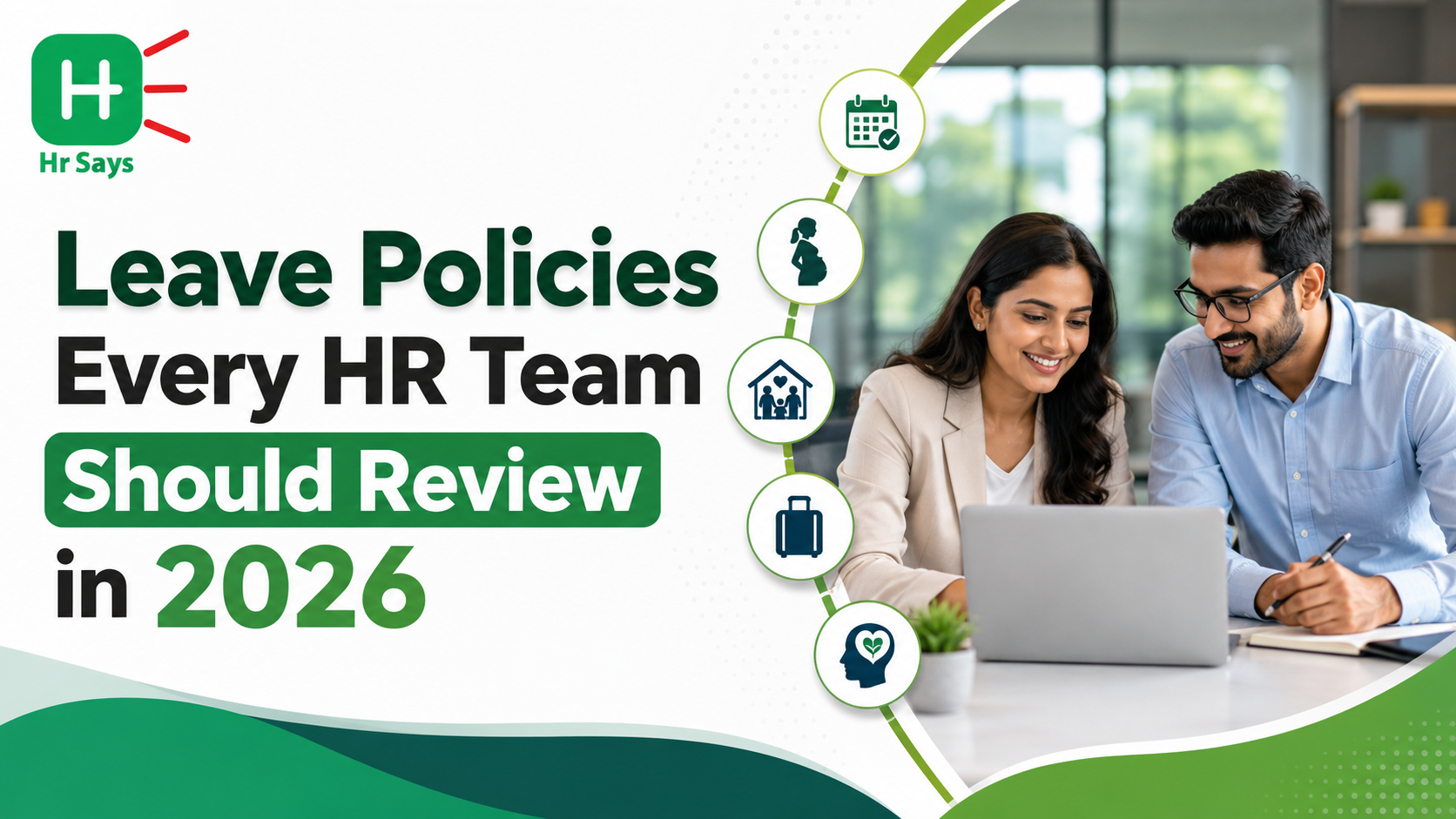
 This article guides Indian HR professionals through a structured review of workplace leave policies, covering statutory requirements, emerging leave types, and the connection between policy design and organizational culture.





Introduction
Leave management sits at the intersection of legal compliance, employee trust, and organizational culture. For HR professionals across India, leave policies are often among the most frequently questioned, most inconsistently applied, and least regularly updated documents in the entire HR handbook. The challenge is rarely about whether a policy exists. Most organizations already have one written somewhere. The real challenge is whether that policy is still accurate, legally sound, clearly communicated, and practically useful for both managers and employees.
In the Indian context, leave management carries a particular layer of complexity. Organizations must navigate statutory requirements under central labor laws, state-specific amendments, sector-level regulations, and the growing expectations of a workforce that increasingly values flexibility, mental wellbeing, and transparency. A leave policy that was drafted five years ago may now be outdated in ways that quietly expose the organization to compliance risk or create friction in day-to-day people management.
This article is for HR heads, CHROs, founders, and people managers who want to take an honest look at their leave policies, understand what needs to be reviewed, and build a framework that is both legally compliant and genuinely employee-friendly.
Understanding What a Leave Policy Is Actually Supposed to Do
Before reviewing any specific leave type or clause, it helps to revisit the fundamental purpose of a leave policy. At its core, a leave policy does three things.
First, it defines what types of leave exist in the organization and who is eligible for each. Second, it sets out the process for requesting, approving, and recording leave so that decisions are consistent and documented. Third, it signals to employees what the organization values when it comes to rest, recovery, family, and personal needs.
When a leave policy is working well, neither employees nor managers need to guess. There is no ambiguity about how many days are available, when they can be availed, what documentation is needed, or what happens to unused leave at year-end. When a leave policy is not working well, HR teams find themselves fielding the same questions repeatedly, managers make inconsistent decisions, and employees feel that the system is unfair or unclear.
In India, the stakes of getting this wrong are not just reputational. The Factories Act, 1948, the Shops and Establishments Acts across different states, the Maternity Benefit Act, 1961, and the Employees State Insurance Act all impose specific statutory minimums and obligations. Non-compliance carries penalties, and in an era of growing awareness of employee rights, organizations can no longer afford to treat leave policy as a back-office administrative concern.
The Core Leave Types That Require Regular Review
Casual Leave and Sick LeaveCasual leave and sick leave are the most frequently used leave categories in any organization, and they are also the ones most commonly governed by state-specific Shops and Establishments Acts. The number of days mandated varies from state to state. An organization operating across Mumbai, Bengaluru, Hyderabad, and Delhi needs to ensure that its leave policy either meets or exceeds the minimum in each applicable state, and that this is clearly documented.
A common mistake is applying a single uniform policy across all locations without verifying whether it satisfies local statutory requirements. As organizations expand into Tier 2 cities and register under different state acts, HR teams must conduct a jurisdiction-level audit of their casual and sick leave provisions.
Beyond the numbers, the review should also look at how sick leave is being managed in practice. Are employees required to submit medical certificates for even one or two days of absence? Is that consistent with both the policy and the organization's stated culture? Overly restrictive sick leave documentation requirements can discourage employees from taking necessary rest and contribute to presenteeism, which costs organizations far more in lost productivity than the leave itself.
Earned Leave and Privilege LeaveEarned leave, also referred to as privilege leave in many organizations, is a leave type that accrues over time based on days worked. The rules governing accrual, carry-forward limits, and encashment are governed by labor law, but organizations have some degree of flexibility in setting their own policies above the statutory floor.
The review of earned leave policy should address several practical questions. How many days can be carried forward into the next year? Is there a cap on accumulation? What is the encashment policy, whether during service or at the time of separation? Are managers actively encouraging employees to use their earned leave, or is there an unspoken culture of leave hoarding?
In Indian workplaces, it is not uncommon to find employees who have accumulated large leave balances because they fear taking time off will be seen negatively. This is both a cultural problem and a policy problem. A well-designed earned leave policy will include provisions that encourage leave utilization and not just accumulation.
Maternity and Paternity LeaveThe Maternity Benefit (Amendment) Act, 2017 extended paid maternity leave to 26 weeks for women employees who have worked for at least 80 days in the preceding 12 months. For organizations with 50 or more employees, the Act also mandates creche facilities. These are not optional provisions.
However, maternity leave review should go beyond statutory compliance. HR teams should evaluate whether the policy creates a genuinely supportive experience for employees, whether managers are trained to handle maternity leave requests with sensitivity, and whether there is a clear return-to-work protocol that supports employees transitioning back after an extended absence.
Paternity leave remains entirely at the discretion of the employer under Indian law, as there is currently no central legislation mandating it for the private sector. However, the trend among progressive employers in India is shifting. An increasing number of organizations now offer between 5 and 15 days of paid paternity leave, and some extend comparable provisions to adoptive parents. HR teams should review whether their current paternity leave policy reflects where the organization genuinely stands on family-friendly work culture, and whether it is competitive within their industry.
Bereavement LeaveBereavement leave is one of the most emotionally sensitive areas of leave management, and it is also one of the most inconsistently handled. Many Indian organizations do not have a formal bereavement leave policy at all, leaving managers to make individual decisions that may or may not be consistent across the organization.
A clear bereavement policy should specify how many days are provided, which relationships are covered, whether the leave is paid or unpaid, and what the process is for requesting it. HR teams reviewing this policy should approach it with genuine empathy. Employees dealing with loss are not in a position to negotiate. Having a clear and compassionate policy removes the burden of ambiguity from both the employee and the manager.
Public Holidays and Optional HolidaysPublic holidays in India are a combination of national holidays, which apply across all states, and restricted or optional holidays, which vary by state and sometimes by religion or community. Organizations operating across multiple states need to maintain an updated holiday calendar for each location and ensure that their leave policy clearly explains the distinction between mandatory public holidays and optional holidays.
The review of public holidays should also account for any overlap with other leave types. If a sick day falls on a public holiday, is it counted against sick leave balance? What happens if an employee is required to work on a public holiday? These are operational questions that HR teams need to answer clearly in the policy rather than addressing on a case-by-case basis.
What HR Teams Often Overlook During Leave Policy Reviews
Beyond the standard leave types, there are several areas that frequently escape proper attention during policy reviews.
Mental health leave is one of the most significant emerging categories. Several progressive organizations in India have introduced separate provisions for mental health days or have broadened sick leave eligibility to explicitly include mental health conditions. With growing awareness of burnout and psychological wellbeing, HR teams should consider whether their current sick leave policy adequately covers mental health needs or whether a more explicit provision is needed.
Sabbatical and long-service leave is another area worth reviewing, particularly for organizations with significant tenures. These provisions, whether paid or unpaid, are increasingly used as retention tools for senior professionals. The policy should specify eligibility criteria, duration, approval process, and any conditions attached to return.
Leave during probation is a question that generates consistent confusion in many organizations. The policy should state clearly what types of leave, if any, are available to employees during their probationary period and how accrual works during this phase.
How to Structure a Leave Policy Review
A leave policy review is not a one-person task. It benefits from input across multiple functions. Here is a practical approach.
- Begin with a statutory audit. Compare current policy provisions against applicable central and state labor laws to identify any gaps or non-compliance.
- Collect manager feedback. Managers are the frontline administrators of leave policy. Their experience reveals where the policy is unclear, inconsistently applied, or impractical.
- Gather employee inputs. Whether through a survey or focus groups, employee perspective on leave policy highlights whether the stated policy matches the lived experience.
- Review leave data. Analyze leave patterns over the past one to two years to identify trends such as high unplanned absenteeism, low utilization of earned leave, or clusters of sick leave that may indicate deeper engagement or wellbeing concerns.
- Benchmark against industry peers. Understanding what comparable organizations in the same sector and geography are offering helps HR teams assess whether their provisions are competitive.
Once the review is complete, the updated policy should be clearly documented, communicated to all employees, and supported by manager training. A policy that has been revised but not communicated is no more effective than the outdated version it replaced.
The Connection Between Leave Policy and Workplace Culture
Leave policy is not just an administrative document. It is a cultural signal. The way an organization designs and administers its leave framework communicates something about how it views its people.
An organization that makes leave difficult to access, ambiguous in its terms, or culturally discouraged is signaling that productivity is valued more than the person behind it. An organization that designs leave policy with clarity, generosity, and genuine support for employee wellbeing is communicating something very different.
For HR professionals who care about building better workplaces, the leave policy review is an opportunity to align policy with values. Platforms like HRSays offer HR leaders a space to engage with exactly these kinds of conversations, drawing on the experiences of peers, the insights of thought leaders, and the evolving best practices that define modern people management in India.
Conclusion
Leave policies are rarely the source of dramatic HR failures. They are, however, frequently the source of quiet and cumulative problems. Inconsistent application, outdated provisions, unclear communication, and statutory gaps create friction that erodes employee trust and exposes organizations to risk. A structured and thorough leave policy review is one of the most practical investments an HR team can make. It requires no significant budget, but it demands genuine attention, cross-functional input, and a willingness to align what the policy says with what the organization actually wants to stand for. For HR professionals committed to building workplaces that are fair, compliant, and genuinely supportive of their people, the leave policy is not a compliance checkbox. It is a statement of intent.
Frequently Asked Questions
Q1: What are the mandatory leave types under Indian labor law?
Indian labor law mandates several leave types, though specific provisions vary by state and applicable legislation. Under the Factories Act and various Shops and Establishments Acts, employees are generally entitled to earned or privilege leave, casual leave, and sick leave. The Maternity Benefit Act mandates 26 weeks of paid maternity leave for eligible women employees. Public holidays are also governed by state-level rules. Organizations must review both central and state-level statutes applicable to their industry and location to ensure full compliance.
Q2: How often should an organization review its leave policy?
Leave policies should ideally be reviewed at least once a year. An annual review helps organizations stay aligned with any amendments to central or state labor laws, reflect changes in organizational culture and size, and address gaps identified through employee or manager feedback. Additionally, significant business events such as expansion into new states, mergers, or major workforce growth should trigger an immediate review to ensure the policy remains applicable and legally compliant.
Q3: Is paternity leave mandatory for private sector employers in India?
There is currently no central legislation in India that mandates paid paternity leave for private sector organizations. However, several state governments and public sector organizations have their own provisions. Private employers are not legally required to offer paternity leave, but many progressive organizations are choosing to do so voluntarily as part of their employee value proposition and commitment to gender-equitable workplace policies. HR teams should evaluate their position in line with industry benchmarks and organizational values.
Q4: Can employees carry forward unused earned leave indefinitely?
Most labor laws in India set a cap on how much earned leave can be carried forward from one year to the next, typically ranging from 30 to 45 days depending on the applicable legislation. Organizations may set their own carry-forward limits provided they meet statutory minimums. Unused leave beyond the permitted carry-forward limit may be encashed or lapsed depending on company policy. HR teams should clearly document the carry-forward and encashment rules in the leave policy to prevent confusion and grievances.
Q5: What should an HR team do when employees misuse sick leave?
Addressing sick leave misuse requires a balanced approach that protects the organization without penalizing genuinely unwell employees. HR teams should first ensure that the policy clearly defines the documentation requirements for sick leave and the consequences of misuse. Patterns of suspicious absence, such as frequent single-day sick leaves on Mondays or Fridays, should be addressed through a structured conversation rather than immediate disciplinary action. A well-designed attendance and leave management system that tracks patterns over time helps HR teams identify and address misuse in a fair and documented manner.
Resources
- Ministry of Labour and Employment, Government of India: Official source for central labor legislation, including the Factories Act and Maternity Benefit Act provisions relevant to leave policy.
- Employees State Insurance Corporation (ESIC): Guidelines on sickness benefits and leave entitlements for ESIC-covered employees across India.
- National Portal of India (india.gov.in): Consolidated reference for central and state-level statutory provisions related to employment and leave entitlements.
- Society for Human Resource Management (SHRM) India: Practitioner-focused research and frameworks on leave management, HR compliance, and people policy design.
- International Labour Organization (ILO): Global standards and research on working time, leave entitlements, and workforce wellbeing relevant to Indian HR contexts.
Interlinking Keywords
leave management, HR compliance India, employee leave policy, maternity leave policy, workplace wellbeing, HR policy review, earned leave rules, HR handbook India, people policy framework, statutory compliance HR
Last Reviewed By:
Hr Says Advisory Panel on 12 August, 2026
Disclaimer:
The information provided in this article is intended for general informational and educational purposes only. It does not constitute legal advice. Leave policy requirements in India vary by state, industry, and applicable legislation. Organizations are advised to consult qualified legal or HR compliance professionals before making changes to their leave policies or HR frameworks.