 Thursday, October 01, 2026
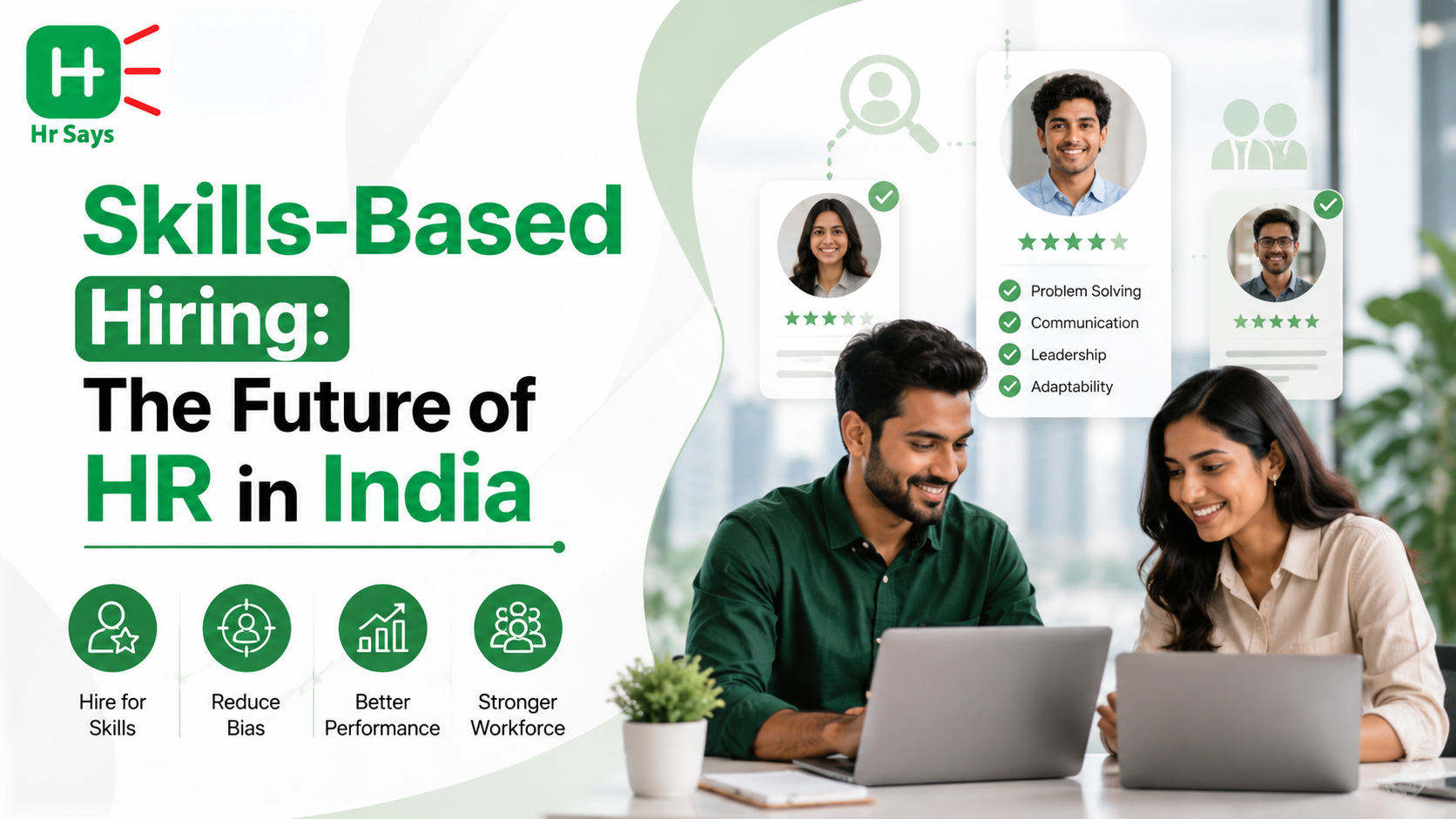
 Skills-based hiring is redefining recruitment in India by prioritizing demonstrated competencies over degrees, helping HR leaders build stronger, more inclusive, and retention-focused workforces.





Introduction
India is at a remarkable inflection point in its talent story. On one side, the country produces more than 1.5 million engineering graduates every year. On the other, employers across sectors consistently report that a significant portion of these graduates are not job-ready from day one. This is not a new conversation in Indian HR circles, but the urgency has never been sharper.
The answer that a growing number of forward-thinking organizations have arrived at is skills-based hiring. Rather than filtering candidates through the familiar lens of degrees, pedigree, and prestigious institution names, skills-based hiring asks a fundamentally different question: does this person have the capability to do the job well?
For HR professionals, business owners, CHROs, and founders navigating a competitive and fast-changing talent landscape, this shift is not merely a trend to observe. It is a strategic decision that will shape the quality, diversity, and longevity of their workforces for years to come. This article examines why skills-based hiring is gaining momentum in India, how it works in practice, and what HR leaders need to do to implement it effectively.
Understanding Skills-Based Hiring
At its core, skills-based hiring is a recruitment philosophy that places a candidate's demonstrated abilities above their academic qualifications. Instead of treating a university degree as the primary filter, organizations using this approach define the specific technical skills, behavioral traits, and cognitive abilities that a role demands, and then assess candidates directly against those criteria.
This does not mean degrees become irrelevant overnight. In many roles, formal education continues to carry significant value. What changes is the sequence of priorities. Competence comes first. Credentials follow, and only where genuinely necessary.
The shift is visible in how job descriptions are being written. Traditional postings used to begin with a requirement for a bachelor's degree in a specific discipline. Skills-based job advertisements, by contrast, describe what the person will need to do and what competencies will enable them to do it well. The distinction sounds simple, but it produces meaningfully different candidate pools.
In the Indian context, this matters enormously. India has a vast informal workforce with deep domain expertise in sectors such as construction, retail, logistics, hospitality, and artisanal manufacturing. Millions of workers have built valuable skills through experience and self-learning rather than through structured academic programs. Skills-based hiring creates a pathway for these individuals to enter or advance within organized employment, which benefits both the worker and the employer.
Why the Traditional Degree-First Model Is Losing Ground in India
The degree-first hiring model was built for a different era. When the pace of change in most industries was gradual and when the body of knowledge required to perform most jobs remained stable over decades, a university degree served as a reasonable proxy for readiness and capability. That world no longer exists.
Technology is transforming job profiles faster than educational institutions can redesign their curricula. The skills needed in artificial intelligence, data analytics, cloud computing, digital marketing, and supply chain management are evolving continuously. A degree earned four years ago may not reflect the competencies that an employer needs today. This reality has forced a rethink.
Several additional pressures are accelerating the shift in India specifically. The National Education Policy 2020 has begun encouraging vocational training, skill development, and multidisciplinary learning, signaling an institutional acknowledgment that the traditional degree pathway is insufficient on its own. The National Skill Development Corporation has certified millions of workers across hundreds of trades, creating a large and credentialed pool of skilled non-graduates who are ready for employment but often screened out by conventional hiring filters.
At the same time, India's startup ecosystem, which has grown into one of the largest in the world, has long operated on a competency-first ethos. Startups in Bengaluru, Hyderabad, Pune, and Delhi regularly hire on the basis of demonstrated skill, portfolio quality, and problem-solving ability. Their hiring practices are now influencing larger organizations that compete with them for the same talent.
There is also a workforce aspiration dimension. Younger Indian professionals are increasingly investing in online certifications, bootcamps, professional courses on platforms such as Coursera, Udemy, and LinkedIn Learning, and project-based learning outside formal institutions. They are building skills, and they expect employers to recognize those skills as legitimate qualifications for employment.
The Business Case: Why Skills-Based Hiring Delivers Better Outcomes
HR leaders who are building the internal case for this shift within their organizations will find strong evidence to support it. Global research points consistently in the same direction, and the implications translate well to the Indian employment context.
Research conducted in collaboration with Lightcast and analyzed across more than 20 million job postings found that employees hired on the basis of skills demonstrated tenure approximately 9 percent longer than their peers hired through traditional degree-first methods. For Indian companies where attrition is a persistent and costly challenge, particularly in sectors such as IT services, banking, retail, and business process outsourcing, that difference in retention is not a marginal gain. It represents real savings in recruitment, onboarding, and lost productivity costs.
On the question of performance, skills-based hires are promoted at rates comparable to traditionally hired employees. Research from the American Psychological Association has indicated that hiring based on skills is approximately five times more predictive of actual job performance than hiring based on educational background alone. This challenges the assumption, still common in many Indian organizations, that a degree from a recognized institution is the safest predictor of a candidate's potential.
Beyond individual performance metrics, skills-based hiring expands the talent pool significantly. When degree requirements are removed from job criteria that do not genuinely need them, organizations gain access to a broader and more diverse group of candidates. For Indian companies operating in talent-scarce markets, where the war for skilled professionals in technology, healthcare, and engineering is intense, this expansion is strategically valuable.
What Skills-Based Hiring Looks Like in Practice
Making the transition from degree-centric recruitment to skills-based hiring requires deliberate changes to processes, tools, and mindsets. The following are the practical building blocks that HR teams in India need to put in place.
Rewriting Job Descriptions Around CompetenciesThe first and most visible change is how roles are described. HR teams must work closely with hiring managers to identify the specific skills, behaviors, and knowledge areas that genuinely predict success in each role. Job descriptions should articulate what the person will be expected to do and what capabilities will help them do it well, rather than listing degree requirements as a shorthand for qualification.
Designing Better Assessment ProcessesWhen a degree is no longer the primary filter, assessment methods must become more robust. Indian HR teams are increasingly exploring structured competency-based interviews, work sample tests, case study exercises, and behavioral assessments. For technical roles, coding challenges, design briefs, or domain-specific simulations can provide direct evidence of a candidate's ability.
AI-powered hiring platforms are also gaining traction in India. Tools that assess candidates based on structured skill inputs, behavioral markers, and predictive algorithms are beginning to reduce reliance on the subjective judgment calls that often disadvantage non-traditional candidates.
Recognizing Alternative CredentialsMicrocredentials, industry certifications, and online course completions from verified platforms are gaining legitimacy as evidence of skill. HR teams that build processes to evaluate these credentials fairly will access talent that their competitors are overlooking. Institutions such as NASSCOM, the National Skill Development Corporation, and various sector skill councils in India have established frameworks that can serve as reference points for evaluating alternative qualifications.
Training Hiring ManagersSkills-based hiring does not work if hiring managers continue to rely on instinct and informal bias toward candidates from familiar institutions. Organizations need to invest in training their managers to assess competency-based evidence fairly, ask structured questions that surface relevant skills, and evaluate candidates against consistent and clearly defined criteria.
Challenges Indian HR Leaders Will Need to Navigate
The transition to skills-based hiring is not without its difficulties. Awareness of these challenges helps HR professionals plan more effectively.
One significant barrier is cultural. In many Indian organizations, particularly those with traditional leadership structures, a degree from a recognized institution still carries social weight. Challenging that norm requires not just process changes but genuine buy-in from senior leadership. HR professionals who can connect skills-based hiring to business outcomes, specifically to lower attrition, faster time to productivity, and access to wider talent pools, will have stronger conversations at the leadership table.
Another challenge is the absence of standardized competency frameworks across many industries in India. Without a clear shared language for what a particular skill looks like at different levels of proficiency, assessment becomes inconsistent. Building internal competency libraries, even simple ones, is an important early step.
There is also the matter of unconscious bias. Research consistently shows that evaluators who know a candidate attended a prestigious institution assess them more favorably, even when their actual performance on tasks is similar to that of candidates from less recognized backgrounds. Structured assessments, blind CV reviews, and diverse hiring panels are practical tools that Indian organizations can deploy to address this.
The Indian Opportunity: Building More Inclusive and Capable Workforces
Beyond the operational advantages, skills-based hiring carries a broader significance for India. The country has one of the youngest workforces in the world and a large population of individuals who have built meaningful capabilities through informal learning, vocational training, and work experience rather than formal higher education.
By removing unnecessary degree barriers from hiring decisions, Indian organizations can bring more of this talent into the formal economy. This is not just a business imperative. It is a social one. Inclusive hiring practices that recognize competence over credentials help reduce structural inequalities and open pathways for professionals from Tier 2 and Tier 3 cities, first-generation learners, and individuals from economically disadvantaged backgrounds who have invested in building skills but lack institutional pedigree.
Platforms such as HRSays, which exist to support HR professionals with practical workplace insights and community knowledge, have an important role to play in accelerating this conversation. When HR leaders share what is working, exchange frameworks, and build collective understanding of skills-based hiring practices, the entire profession moves forward together.
Conclusion
Skills-based hiring is not a rejection of education. It is a more honest and more effective way of answering the question that has always mattered most in recruitment: can this person do the job? As Indian organizations contend with rapid technological change, persistent talent shortages, and an increasingly diverse workforce, the answer to that question must be found through direct assessment of capability rather than through degree-based filtering alone.
The HR professionals who lead this shift within their organizations will build workforces that are more capable, more loyal, and more reflective of India's full human potential. The tools, frameworks, and evidence needed to make this transition are available. What is needed now is the conviction and the clarity to act.
Frequently Asked Questions
Q1: What is skills-based hiring and how is it different from traditional hiring?
Skills-based hiring evaluates candidates on the basis of their demonstrated competencies, such as technical abilities, problem-solving capacity, and behavioral traits, rather than relying primarily on college degrees or years of experience. Traditional hiring typically uses academic qualifications and institutional pedigree as the primary filters. The key difference is that skills-based hiring focuses on what a candidate can do, not simply on what certificates they hold.
Q2: Is skills-based hiring suitable for all types of roles in India?
Skills-based hiring is applicable across a wide range of roles, including those in technology, sales, operations, customer service, logistics, healthcare support, and creative functions. Certain highly regulated professions, such as medicine, law, and chartered accountancy, continue to require formal qualifications for licensing and compliance reasons. Outside of those regulated areas, most roles can benefit from introducing competency-based assessment alongside or in place of degree requirements.
Q3: How does skills-based hiring help with employee retention in Indian organizations?
When candidates are hired because their actual abilities match what a role demands, they are better positioned to perform well, find meaning in their work, and integrate effectively into the team culture. Research indicates that skills-based hires tend to stay with employers approximately 9 percent longer than those hired through traditional degree-first methods. For Indian companies dealing with high attrition, particularly in IT, retail, and BFSI sectors, this improvement in tenure translates into measurable cost savings and organizational stability.
Q4: What assessment methods work best for skills-based hiring in India?
Effective methods include structured competency-based interviews, work sample tests, domain-specific simulations, case study exercises, and behavioral assessments grounded in predictive science. For technical roles, coding assessments, design tasks, or scenario-based problem-solving exercises provide direct evidence of relevant ability. AI-powered hiring platforms that assess candidates based on skill inputs and behavioral markers are also gaining adoption among Indian HR teams.
Q5: How can HR leaders in India get leadership buy-in for skills-based hiring?
The most effective approach is to frame the conversation in business terms. HR leaders should present data on current attrition costs, time-to-productivity for new hires, and the proportion of roles where degree requirements may not genuinely predict job performance. Sharing case studies from Indian companies and global organizations that have improved retention and team performance through skills-based hiring helps make the argument concrete. Piloting the approach in one function or business unit before scaling it organization-wide also reduces perceived risk and builds organizational confidence.
Resources
- National Skill Development Corporation (NSDC): India's central body for skill certification and vocational training frameworks across sectors
- Ministry of Skill Development and Entrepreneurship, Government of India: Policy frameworks, skilling initiatives, and workforce development data for Indian employers
- World Economic Forum, Future of Jobs Report: Global research on emerging skill demands, workforce trends, and the shift toward competency-based hiring
- SHRM (Society for Human Resource Management): Research and practitioner guidance on skills-based hiring implementation for HR professionals
- NASSCOM: Industry frameworks, talent assessments, and technology workforce skill standards relevant to Indian IT and digital sectors
Interlinking Keywords
skills-based hiring India, competency-based recruitment, HR hiring trends 2025, talent acquisition strategy, employee retention India, skill assessment tools, future of work India, workforce development, HR technology India, alternative credentials hiring
Last Reviewed By:
Hr Says Advisory Panel on 10 August, 2026
Disclaimer:
The information provided in this article is intended for general informational and professional awareness purposes only. It does not constitute legal, regulatory, or specific HR compliance advice. HR professionals and organizations should consult qualified legal and HR advisors before making changes to their recruitment policies and practices.