 Thursday, October 01, 2026
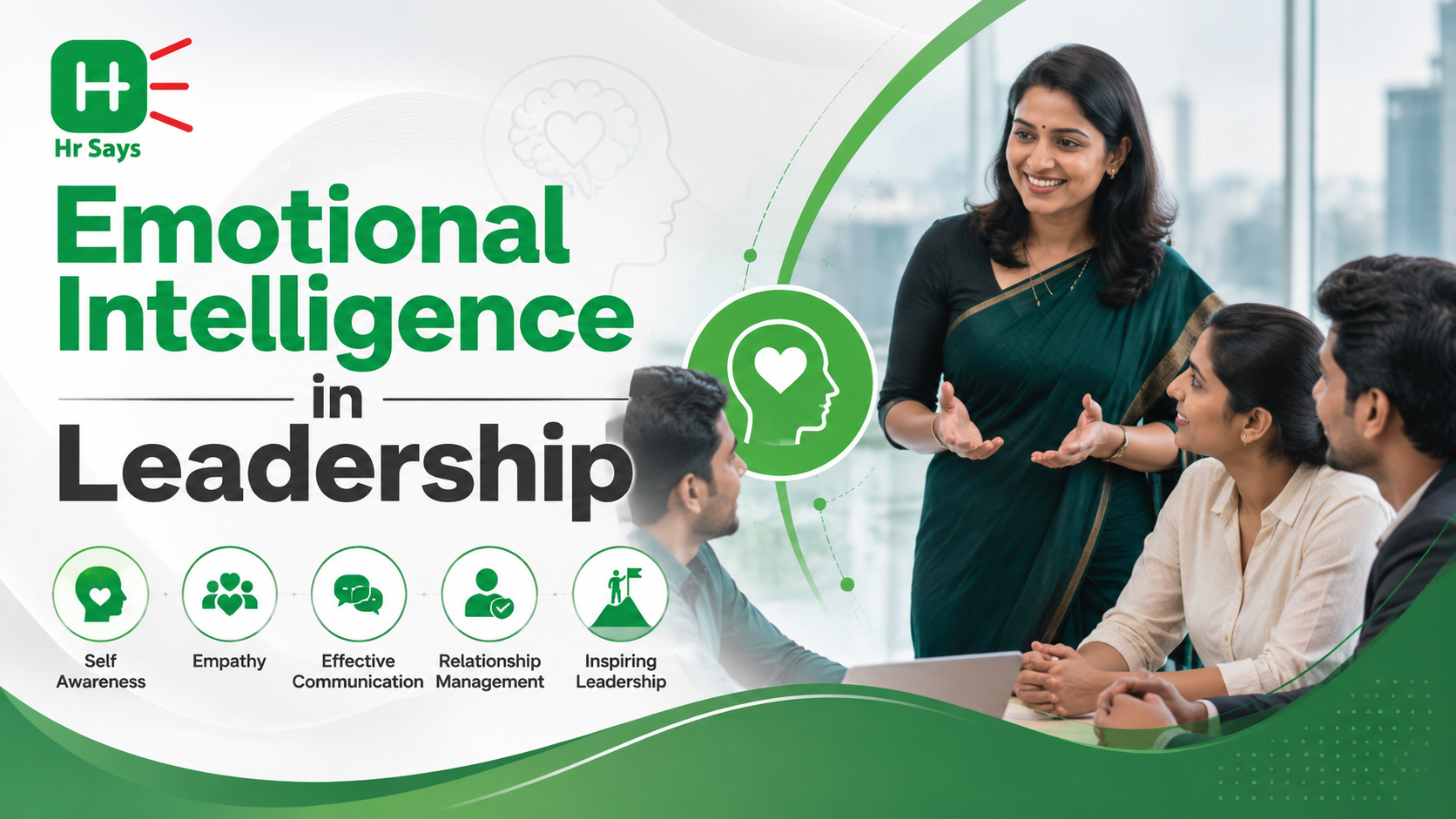
 Emotional intelligence in leadership drives team performance, employee engagement, and workplace culture. Developing self-awareness, empathy, and relationship management skills is essential for modern Indian leaders.





Introduction
Leadership has always been about more than just strategy, technical knowledge, or the ability to deliver results. The leaders who leave a lasting impact on their teams and organizations are the ones who understand people at a deeper level. They know when a team member is struggling, even without being told. They manage pressure without letting it spill onto others. They build trust not through authority but through genuine connection.
This capacity is known as emotional intelligence, and it is fast becoming one of the most defining qualities of effective leadership in the modern workplace. For HR professionals, CHROs, founders, and business leaders across India, understanding emotional intelligence is no longer a matter of optional professional development. It is a foundational requirement for building workplaces where people genuinely want to stay and contribute.
A growing body of research supports this view. Studies published in peer-reviewed journals confirm that emotionally intelligent leaders improve both individual and team performance, strengthen organizational commitment, and directly influence work climate in positive ways. In India's rapidly evolving business landscape, where organizations in cities like Bengaluru, Mumbai, Hyderabad, Pune, and Chennai are navigating high attrition, multi-generational workforces, and increasing expectations from employees, this capability cannot be overlooked.
Understanding Emotional Intelligence and Its Relevance to Leadership
Emotional intelligence, commonly referred to as EQ, is the ability to perceive, understand, manage, and influence emotions, both one's own and those of others. The concept was formally introduced by researchers John Mayer and Peter Salovey in 1990, and later made widely accessible through the work of psychologist Daniel Goleman, whose research established EQ as a critical predictor of leadership effectiveness.
Goleman's framework broke emotional intelligence into five core dimensions: self-awareness, self-regulation, motivation, empathy, and social skills. In the context of leadership, these are not abstract ideals. They translate into very specific, observable behaviors that shape how a leader communicates, handles conflict, builds relationships, and drives performance.
What makes this especially significant is the distinction between cognitive intelligence and emotional intelligence. A high IQ may help a leader analyze complex data or design a business strategy. But it is EQ that determines how effectively that leader communicates the strategy, brings people along with them, handles resistance, and sustains team morale through uncertainty.
Research by TalentSmart, a leading EQ assessment provider, found that emotional intelligence is the strongest predictor of workplace performance, more so than technical skills or cognitive ability alone. This finding has shifted how organizations across the world, including in India, are approaching leadership development and talent assessment.
The Four Pillars of Emotional Intelligence in Leadership
When we discuss emotional intelligence in a leadership context, it helps to understand the four core competencies that form its foundation. These pillars define what emotionally intelligent leadership looks like in practice.
Self-AwarenessSelf-awareness is the starting point of emotional intelligence. It is a leader's ability to recognize their own emotions, understand how those emotions affect their thinking and behavior, and have an honest assessment of their strengths and areas for growth.
Leaders who are self-aware do not allow emotions to dictate their decisions. They know when they are stressed, frustrated, or uncertain, and they take that knowledge into account rather than projecting it onto their teams. This quality is far less common than most people assume. Research by organizational psychologist Tasha Eurich found that while most professionals believe themselves to be self-aware, only a small fraction genuinely are.
For Indian business leaders managing large teams in high-growth environments, self-awareness becomes particularly valuable. The pressures of quarterly targets, investor expectations, and team management can easily cause leaders to lose perspective. A self-aware leader pauses, reflects, and responds rather than reacts.
Self-ManagementSelf-management refers to the ability to regulate one's emotions and behavior, particularly under stress. Leaders who excel in this area maintain composure during crises, adapt to change without becoming destabilized, and model the emotional steadiness they want to see in their teams.
In practical terms, self-management is visible in how a leader handles a failed product launch, an unexpected resignation, or a difficult board meeting. Rather than expressing frustration through blame or withdrawal, a self-managed leader focuses on solutions and maintains the confidence of those around them.
Social Awareness and EmpathySocial awareness is the ability to read the emotional climate of a room and understand the perspectives of others. Empathy is its most critical expression in leadership. Leaders who practice empathy do not simply acknowledge that team members have feelings. They actively seek to understand those feelings and factor them into how they lead.
Research published in global leadership literature consistently ranks empathy as the most impactful leadership skill. Leaders who demonstrate empathy perform significantly better in team coaching, employee engagement, and decision-making outcomes. In the Indian workplace, where teams often reflect enormous cultural, linguistic, and generational diversity, empathy is a practical tool for building cohesion and trust.
Relationship ManagementThe fourth pillar is relationship management, which encompasses a leader's ability to communicate effectively, resolve conflicts, inspire and influence others, and build strong professional bonds. This is where emotional intelligence becomes visible at the organizational level.
Leaders with strong relationship management skills create environments where conflict is addressed constructively rather than avoided, where feedback is delivered with respect, and where team members feel psychologically safe enough to speak honestly. These are the conditions that drive sustained high performance.
How Emotional Intelligence Shapes Leadership Effectiveness
The relationship between emotional intelligence and leadership effectiveness is well documented. Across sectors including healthcare, education, construction, manufacturing, and financial services, studies have shown that leaders with higher EQ consistently produce better business outcomes and stronger team results.
One of the most significant findings in this space is the connection between emotional intelligence and transformational leadership. Transformational leaders inspire teams to go beyond what is expected, not through authority alone, but through vision, trust, and genuine concern for people's growth. Research confirms that emotional intelligence is a strong predictor of transformational leadership behavior. Leaders who understand and manage emotions, both their own and their team's, are far more likely to motivate, inspire, and retain high-performing employees.
In the Indian corporate context, this has real consequences. With employee attrition remaining a significant challenge across industries, from information technology to banking to manufacturing, organizations are beginning to recognize that leadership quality is often the deciding factor in whether people stay or leave. A Gallup study found that a significant proportion of employees leave not their organizations but their managers. Emotionally intelligent leadership addresses this directly.
Furthermore, emotional intelligence has a measurable impact on conflict resolution. Teams led by emotionally intelligent leaders experience fewer destructive conflicts and are better equipped to work through disagreements constructively. Research shows that unresolved conflict leads to significant losses in productive time, team morale, and organizational resources.
Emotional Intelligence, Team Performance, and the Indian Workplace
The relevance of emotional intelligence extends beyond individual leadership style. It shapes the emotional culture of the entire team and organization.
Research in organizational psychology shows that a team leader's EQ directly influences the development of emotionally intelligent group norms. When a leader consistently models empathy, calm, and constructive communication, those behaviors become embedded in how the team operates. Over time, the team itself becomes more cohesive, more resilient, and more capable of managing internal stress without falling apart.
This dynamic is especially important in India's startup ecosystem and growing mid-market companies, where teams are often small, work under significant pressure, and depend heavily on a culture of collaboration. Founders and senior leaders in these organizations carry an outsized emotional influence on team culture. A founder who responds to failure with blame will create a team that is afraid to take risks. A founder who models accountability and composure will build a team that learns from failure and moves forward.
Several specific outcomes are worth noting for HR professionals who are evaluating the impact of EQ-driven leadership on their organizations:
- Higher levels of employee engagement and discretionary effort
- Stronger psychological safety within teams
- Lower attrition, particularly among high-performing employees
- Better collaboration across departments and functions
- More effective handling of change and organizational uncertainty
These are not intangible benefits. They translate directly into productivity, retention costs, innovation rates, and long-term organizational health.
Common Gaps in Emotional Intelligence Among Leaders
Despite its importance, emotional intelligence is often underdeveloped in leadership populations. Several patterns tend to emerge in organizations where EQ is lacking.
Leaders who struggle with self-awareness frequently misread how their behavior impacts others. They may believe they are being direct and clear when their teams experience them as harsh or dismissive. This disconnect creates a significant trust gap that is difficult to bridge without intentional development.
Leaders who lack self-management are prone to emotional volatility. Their teams walk on eggshells, uncertain of how the leader will respond to challenges. This environment suppresses open communication and discourages honest feedback, which are precisely the behaviors organizations need to function well.
Leaders who do not practice empathy often make decisions in isolation, without considering the human cost or the emotional reality of their teams. This leads to policies and expectations that feel disconnected from ground realities, which in turn breeds resentment and disengagement.
For HR leaders and CHROs, identifying these gaps through structured assessment, 360-degree feedback, and coaching interventions is one of the most high-impact investments they can make in their leadership pipeline.
Developing Emotional Intelligence in Leaders: A Practical Approach
The encouraging reality about emotional intelligence is that it can be developed. Unlike certain personality traits that are difficult to change, EQ is responsive to learning, feedback, and intentional practice.
Organizations investing in leadership development should consider the following practical approaches:
Structured Feedback and ReflectionRegular 360-degree assessments that capture input from peers, direct reports, and managers give leaders an accurate picture of how their emotional behaviors are perceived. Paired with coaching, this feedback creates a foundation for targeted development.
Coaching and MentoringOne-on-one coaching focused on emotional intelligence competencies helps leaders develop specific skills over time. A skilled coach can help a leader identify emotional triggers, practice new responses, and build more effective relational habits.
Mindfulness and Emotional Regulation PracticesEmerging research highlights the positive relationship between mindfulness practice and emotional intelligence development. Leaders who build habits of reflection and present-moment awareness tend to become more self-aware and better at regulating their emotional responses in high-pressure situations.
Learning Programs and WorkshopsStructured learning programs that combine theory, self-assessment, and applied practice help leaders understand the science behind emotional intelligence and develop concrete skills they can use immediately. Platforms such as HRSays offer access to insights, frameworks, and leadership thinking that support this kind of ongoing professional development for HR heads, founders, and people managers across India.
Creating Psychologically Safe Learning EnvironmentsOrganizations must create conditions where leaders feel safe to acknowledge their limitations and work on them without fear of judgment. When emotional intelligence development is embedded in organizational culture rather than treated as a remediation exercise, leaders are far more likely to engage with it authentically.
Emotional Intelligence in the Context of India's Evolving Workforce
India's workforce is at an inflection point. The country has one of the youngest working populations in the world, with a significant share of the workforce belonging to Generation Z and Millennials. These generations bring different expectations to the workplace. They prioritize psychological safety, meaningful work, transparent communication, and leaders who treat them as individuals rather than resources.
At the same time, Indian organizations are managing increasing complexity. Remote and hybrid work models, multi-location teams, rapid digital transformation, and heightened competition for talent are all creating new leadership challenges. In this environment, emotional intelligence is not a soft skill. It is a strategic capability.
HR leaders in India have a critical role to play in making this shift. By embedding EQ assessment into leadership hiring and promotion processes, by building EQ-focused development programs, and by creating recognition systems that reward emotionally intelligent leadership behaviors, HR professionals can drive a meaningful transformation in how leadership is understood and practiced across their organizations.
Conclusion
Emotional intelligence in leadership is one of the most important and underutilized levers for organizational performance. Leaders who understand themselves and others, who manage their emotions with intention, and who build genuine relationships with their teams do not just create better workplaces. They build organizations that are more productive, more resilient, and more capable of navigating the complexity that defines today's business environment.
For HR professionals, founders, and business leaders in India, the conversation around emotional intelligence is no longer peripheral. It sits at the center of how effective leadership is defined, developed, and measured. Building a leadership culture rooted in self-awareness, empathy, and authentic human connection is among the most meaningful investments any organization can make in its future.
Frequently Asked Questions
Q1: What is emotional intelligence in leadership?
Emotional intelligence in leadership refers to a leader's ability to recognize, understand, and manage their own emotions while also perceiving and influencing the emotions of their team members. It encompasses self-awareness, self-regulation, empathy, and social skills that directly affect leadership effectiveness and team outcomes.
Q2: Why is emotional intelligence important for leaders in India?
In India's diverse and multi-generational workforce, leaders who demonstrate emotional intelligence are better equipped to manage cultural differences, resolve conflicts, and build inclusive workplaces. As organizations across Tier 1 and Tier 2 cities grow rapidly, emotionally intelligent leadership is becoming a critical driver of employee retention and organizational performance.
Q3: Can emotional intelligence be developed or is it innate?
Emotional intelligence is not a fixed trait. Research consistently shows that EQ can be developed through deliberate practice, coaching, feedback, and structured learning. Leaders can improve their self-awareness, empathy, and relationship management skills through training programs, mentoring, and reflective practices over time.
Q4: What are the signs of low emotional intelligence in a leader?
Leaders with low emotional intelligence often struggle with impulsive reactions, poor conflict resolution, difficulty accepting feedback, and an inability to empathize with team members. These behaviors lead to reduced employee trust, higher attrition rates, and a decline in overall team morale and productivity.
Q5: How does emotional intelligence impact team performance?
Research shows that teams led by emotionally intelligent leaders demonstrate higher levels of trust, stronger collaboration, and better performance outcomes. When leaders manage their own emotions effectively and respond to their team's emotional needs, it creates a psychologically safe environment where people feel motivated to perform at their best.
Resources
- Daniel Goleman, Working with Emotional Intelligence (1998): Foundational research establishing EQ as a predictor of leadership and professional performance
- Mayer, J.D., Salovey, P., and Caruso, D.R., MSCEIT: Mayer-Salovey-Caruso Emotional Intelligence Test: The most widely used ability-based measure of emotional intelligence in organizational research
- Coronado-Maldonado and Benitez-Marquez, Emotional Intelligence, Leadership, and Work Teams: A Hybrid Literature Review, Heliyon (2023): Comprehensive peer-reviewed review of 104 studies linking EQ to leadership and team outcomes
- Harvard Business Review, Why Emotional Intelligence Matters More Than IQ in Leadership: Widely referenced publication on the leadership application of EQ in professional environments
- Gallup Workplace Research Reports: Longitudinal studies on employee engagement, manager effectiveness, and attrition across global organizations
Interlinking Keywords
emotional intelligence, transformational leadership, employee engagement, leadership development, workplace culture, HR leadership skills, self-awareness at work, people management, team performance, leadership coaching India
Last Reviewed By:
Hr Says Advisory Panel on 13 August, 2026
Disclaimer
The information presented in this article is intended for general knowledge and professional awareness purposes only. It does not constitute formal psychological, clinical, or organizational consulting advice. Readers are encouraged to seek guidance from qualified HR professionals, organizational psychologists, or certified leadership coaches before implementing any specific leadership development strategies within their organizations.