 Friday, November 13, 2026
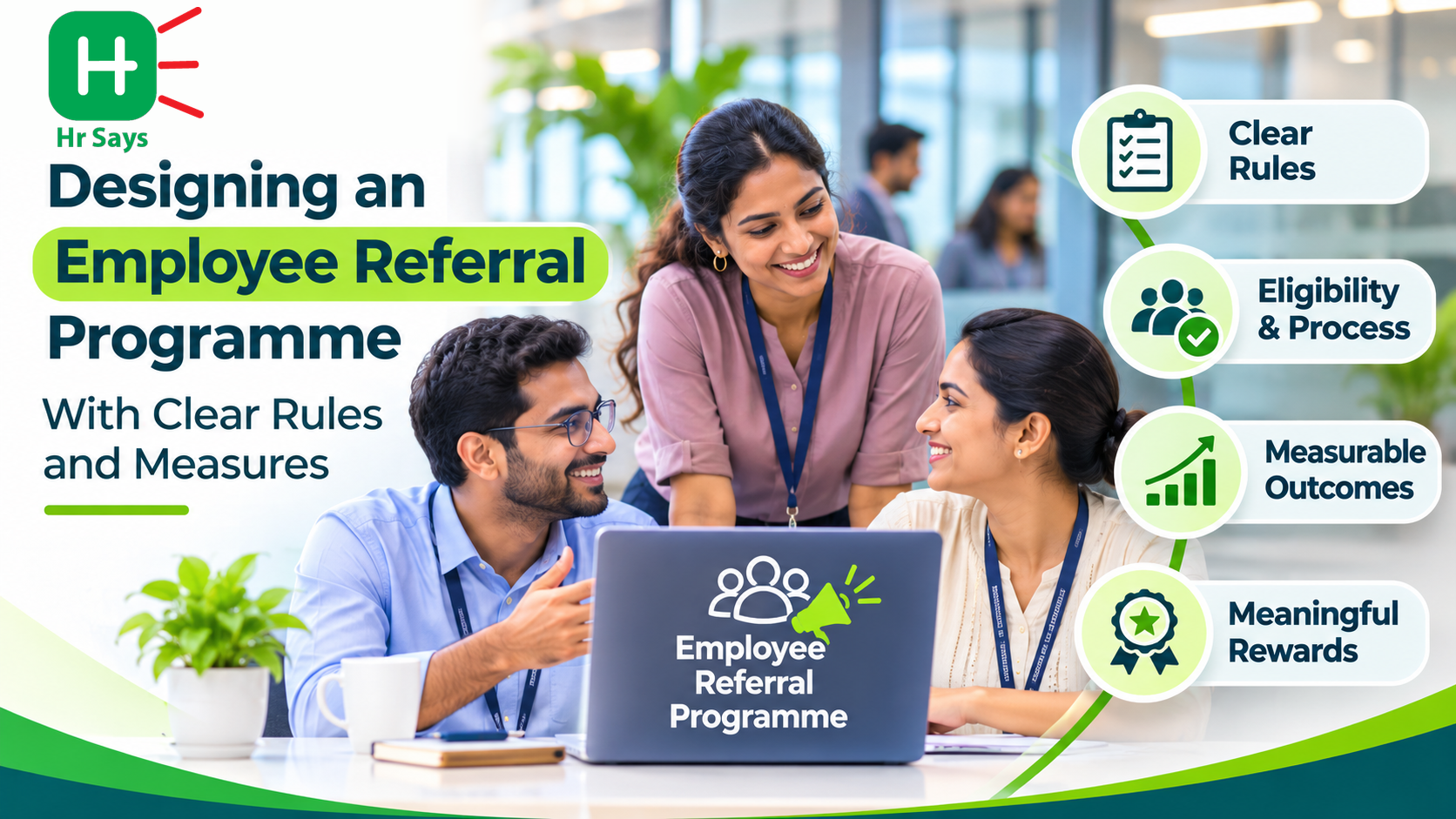
 This article explains an employee referral programme with clear rules and measures through a practical HRSays lens. It examines the main decisions, responsibilities, safeguards and review measures that can help readers assess the subject without relying on generic claims or one-size-fits-all solutions.





Designing an Employee Referral Programme With Clear Rules and Measures is best understood as a practical question about how information, people and responsibilities connect. Explains how referral programmes can be designed fairly without creating pressure or favouritism in hiring. For HR heads, CHROs, founders, recruiters, managers, employees and workplace decision-makers, the subject matters because decisions are rarely made in isolation: a useful outcome depends on clear roles, reliable information and follow-through.
This article approaches the subject from the HRSays perspective. The aim is to make the topic easier to evaluate without overstating what a process, service or tool can achieve. The most useful starting point is to identify the decision that needs to be made, the people affected by it and the evidence that should guide the next step.
An hr and workplace insights platform focused on useful people practices and better organisational decisions. For HR teams and managers, a useful framework must be fair to employees and workable for the organisation, with decisions that can be explained and reviewed.
Where the real-world complexity appears
The first consideration is eligible roles and referral criteria. Teams should be clear about what information is needed, who is responsible for collecting it and when it becomes usable. Where definitions vary between departments or individuals, the same situation can be interpreted differently. A shared description and a consistent record make it easier to understand what has happened and what remains outstanding.
Next, conflict and relationship disclosure should be considered alongside the needs of the people who use the process. A design that works only in an ideal scenario is difficult to sustain. Practical planning considers busy periods, incomplete information, changed circumstances and the need to escalate exceptions without losing the original record.
The information and decisions that matter
The following elements help turn the broad subject into observable practice:
- Eligible roles and referral criteria. Define the expected result and the evidence needed to confirm that the step has been completed.
- Conflict and relationship disclosure. Identify the person or team with authority to make the relevant decision and record any dependencies.
- Consistent assessment. Explain how information moves to the next user, and what should happen when the usual pathway cannot be followed.
- Tracking source quality and candidate experience. Decide how records will be reviewed, corrected through the authorised process and retained in line with applicable requirements.
Turning good intentions into a repeatable method
A practical sequence can be adapted to the scale and requirements of the organisation:
- Define the scope. Describe the situation covered by an employee referral programme with clear rules and measures, who uses the process and what outcome is expected. Keep the scope narrow enough to be tested in practice.
- Map roles and information. Set out where eligible roles and referral criteria and conflict and relationship disclosure enter the process, who verifies them and who receives the next action.
- Set safeguards and exception routes. Agree how consistent assessment is handled when information is incomplete, circumstances change or a specialist decision is needed.
- Review and refine. Use tracking source quality and candidate experience to identify recurring gaps, assign improvement actions and revisit the process after a defined period.
Common gaps to avoid
- Treating a checklist or software field as proof that the underlying work has been completed. The record should support, not replace, the appropriate professional or operational action.
- Leaving ownership unclear between teams. Each hand-off needs a named role, a completion signal and a route for unresolved exceptions.
- Collecting more information than the next decision requires, or sharing sensitive information more widely than the role needs.
- Launching a new process without training, review dates or a way for users to report where it fails during busy or unusual situations.
How to assess whether the approach is working
Review a small set of measures that reflect the purpose of the process. The measures should be interpreted with context rather than used as isolated performance targets.
- Completeness: whether required information is present and understandable.
- Timeliness: whether the next action happens within the locally agreed service window.
- Exception handling: how often work is returned, duplicated or escalated and whether the reason is recorded.
- User experience: whether the intended audience understands the process and knows where to seek help.
How HRSays connects with the subject
An hr and workplace insights platform focused on useful people practices and better organisational decisions. For HR teams and managers, a useful framework must be fair to employees and workable for the organisation, with decisions that can be explained and reviewed. The content approach should remain professional, practical, balanced, people-focused and human, with clear distinctions between general education and advice that requires a qualified professional or authorised decision-maker.
For related background and service context, readers can also Explore related HRSays workplace insights.
Things to Keep in Mind
- Keep the purpose of an employee referral programme with clear rules and measures clear and define what a successful outcome looks like.
- Use current professional, institutional or regulatory guidance for decisions that depend on local requirements.
- Assign responsibility for each hand-off and document how exceptions are resolved.
- Protect confidential or sensitive information and limit access to people who need it for their role.
- Review the process periodically and update supporting material through the approved editorial or governance route.
Frequently Asked Questions (FAQs)
What is an employee referral programme with clear rules and measures?
In this article, an employee referral programme with clear rules and measures refers to the specific process or subject described above. Its exact scope depends on the setting, the people involved and the standards that apply.
Why does an employee referral programme with clear rules and measures need a structured approach?
A structured approach makes responsibilities, information requirements and follow-up clearer. It also helps teams identify exceptions and review whether the intended outcome is being achieved.
What should an organisation or reader check first?
Start with the purpose, the relevant decision-maker, the information required and the next step after the initial action. Check current professional, regulatory or institutional guidance before applying the framework to a specific case.
Can a digital tool solve every problem in this area?
No. A digital tool can improve visibility and consistency, but it cannot replace professional judgement, appropriate governance, trained people or a well-designed process.
Wrapping It Up
Designing an Employee Referral Programme With Clear Rules and Measures is most useful when it is approached with clear information, defined responsibilities and realistic follow-through. The details will vary by setting, but the underlying discipline is consistent: understand the need, apply the relevant standards, communicate clearly and review what happens next. HRSays should keep its perspective focused on an HR and workplace insights platform focused on useful people practices and better organisational decisions.
Resources
Use the following authoritative starting points to verify current guidance and supporting information before publication:
- Ministry of Labour and Employment — https://labour.gov.in/
- Employees Provident Fund Organisation — https://www.epfindia.gov.in/
- Employees State Insurance Corporation — https://www.esic.gov.in/
Internal Interlinking Opportunities
Suggested anchor text: Explore related HRSays workplace insights
Target URL: https://hrsays.in/
Placement suggestion: use the link in the section that introduces the brand’s related service, platform or wider resource library. Replace this archive-level suggestion with a more specific existing page when one directly supports the paragraph.
Related internal-link keywords: an employee referral programme with clear rules and measures; hrsays insights; related service information
Editorial Review and Disclaimer
Last reviewed by: [Qualified reviewer / editorial owner] on [Date].
HR disclaimer: This article provides general workplace information and is not legal, tax or employment advice. Organisations should verify current obligations with qualified advisers and the relevant authorities.