 Sunday, September 20, 2026
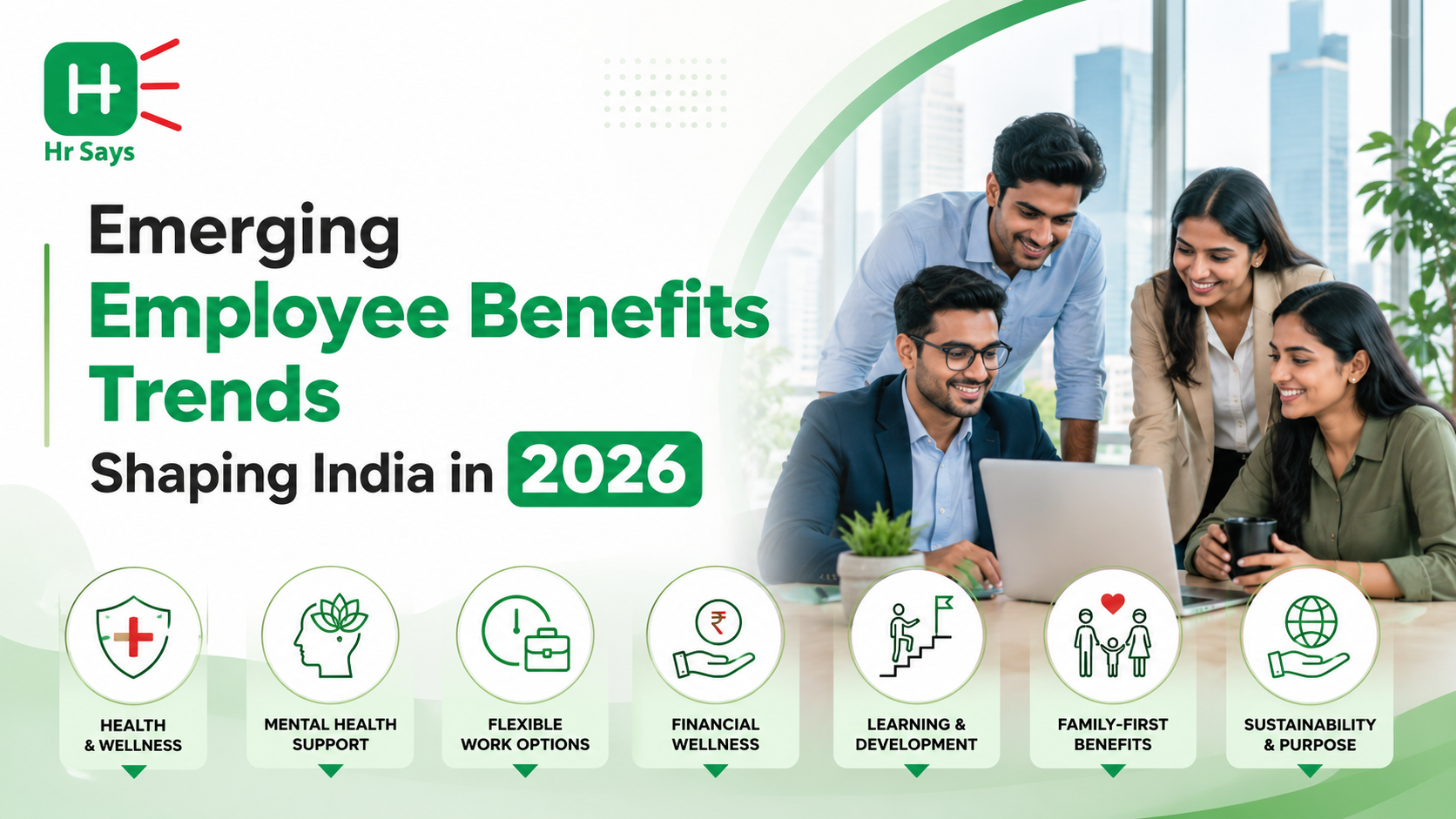
 Emerging employee benefits trends in India for 2026 highlight the shift from statutory compliance to personalized, holistic, and technology-driven benefits strategies that support talent retention and workplace wellbeing.





Introduction: Emerging Employee Benefits Trends Reshaping Indian Workplaces in 2026
The relationship between an employer and an employee in India has quietly but meaningfully shifted over the past few years. What was once a straightforward exchange of salary and statutory compliance is now a much more layered conversation about wellbeing, flexibility, growth, and genuine workplace care. For HR leaders, founders, and business owners navigating this shift, understanding the emerging employee benefits trends of 2026 is not a luxury. It is a strategic necessity.
Across tier-1 cities like Bengaluru, Mumbai, and Delhi, as well as rapidly growing tier-2 markets like Pune, Hyderabad, and Ahmedabad, organizations are finding that the standard benefits package is no longer enough to attract or retain quality talent. Flexible benefits, financial wellness programs, and employee wellbeing initiatives are among the fastest-growing workplace trends in 2026, and organizations with strong benefits programs consistently experience higher retention, stronger engagement, and improved employer branding.
This article breaks down the most significant emerging employee benefits trends in India for 2026, explains why they matter, and offers a practical perspective for HR professionals and workplace leaders looking to build more competitive, people-focused organizations.
Understanding the Shifting Benefits Landscape in India
India's workforce is younger, more informed, and more vocal about expectations than at any previous point in the country's employment history. The entry of Generation Z into full-time employment, combined with the maturing demands of millennials now occupying mid-to-senior roles, has fundamentally altered what employees expect from their employers beyond a salary slip.
Traditionally, Indian employers satisfied their obligations through statutory benefits: contributions to the Employees' Provident Fund (EPF), Employees' State Insurance (ESI), gratuity payments, and maternity benefits. These remain foundational and legally required. However, the benefits landscape has evolved considerably, with many employers, especially multinationals and technology firms, expanding their offerings to include health insurance for families, performance bonuses, flexible work arrangements, wellness programs, and stock options.
The critical change in 2026 is that these enhanced benefits are no longer the differentiators they once were. They are fast becoming the baseline. The organizations that are gaining a real competitive edge are those moving beyond enhanced health cover into genuinely personalized, holistic, and digitally delivered benefits ecosystems.
Employee benefits in India are shifting from compliance-focused programs to people-centric initiatives that prioritize wellbeing, flexibility, and inclusion. For HR professionals tracking this evolution, the message is clear: the future of benefits is not about doing more of the same. It is about doing things differently.
Key Emerging Employee Benefits Trends in India for 2026
Personalized and Flexible Benefits Are Replacing One-Size-Fits-All PackagesPerhaps no trend is more defining in 2026 than the move toward personalization. By 2026, many organizations are offering flexible benefits programs where employees can tailor their benefits package based on personal needs, choosing between options such as additional health coverage, parental benefits, learning allowances, or wellness subscriptions.
This model, sometimes referred to as a cafeteria-style benefits plan, recognizes a simple truth: a 26-year-old software developer in Hyderabad and a 42-year-old HR manager in Mumbai do not have the same priorities. One may value a learning stipend and mental health app access, while the other may prioritize family health cover and eldercare support. Data indicates that 78 percent of Indian employees want this flexibility, but only 34 percent of companies currently offer it, with technology companies and Global Capability Centers leading this trend with personalized benefit allowances.
For HR leaders, this gap represents both a challenge and an opportunity. Organizations that invest in benefits platforms enabling employee choice are positioning themselves as more empathetic and modern employers.
Mental Health Support Has Moved From Perk to PriorityFor several years, mental health was treated as a progressive addition to the corporate benefits portfolio. In 2026, that framing is no longer accurate or appropriate. Mental health is now a clear, structured journey in Indian companies, with stepped care approaches that begin with self-help resources, provide confidential 24x7 helplines, escalate to professional counselors and psychiatrists, and include crisis support.
The corporate wellness context in India has been shaped by a high-pressure work culture, long commute hours in major cities, the lingering psychological effects of the pandemic years, and the unique stressors faced by a large population navigating rapid economic change. Younger professionals especially will not join companies without mental health benefits, and wellness stipends for gym memberships, yoga, and fitness programs are increasingly common expectations rather than pleasant surprises.
Indian HR leaders must ensure that mental health benefits are not merely listed in a policy document. They must be accessible, stigma-free, and communicated actively. The Mental Healthcare Act of 2017 has laid a legislative foundation in India that progressive employers are beginning to use as both a compliance and cultural reference point.
Financial Wellness Programs Are Gaining Serious MomentumEconomic uncertainty, rising costs of living in Indian metros, the burden of EMIs and educational debt, and the challenge of saving for retirement while managing current expenses have combined to make financial stress one of the most significant but least addressed workplace issues in India today.
Economic uncertainty along with rising health and living costs have pushed financial wellness to the forefront, with employees increasingly connecting financial stress with mental health challenges and making financial wellbeing a critical pillar of workplace wellness.
Progressive Indian employers are responding with tools such as salary advance facilities, financial coaching sessions, tax-efficient salary structuring guidance, and partnerships with digital financial planning platforms. The power of benefits like National Pension System (NPS) co-contributions, which offer tax advantages under Section 80CCD(1B) of the Income Tax Act, is still underutilized as a communication and retention tool for many HR teams. Helping employees understand and maximize such instruments is itself a meaningful benefit.
AI and Technology Are Transforming Benefits AdministrationThe integration of artificial intelligence into HR functions has moved from conversation to operational reality in India's more mature organizations. Technology, especially AI, is playing a key role in streamlining benefits administration and enhancing employee experience, but it requires strong governance to support ethical and effective use.
In practical terms, this means HR teams are now deploying AI-powered platforms that automate enrollment reminders, recommend relevant benefits based on employee profiles, detect life events that trigger eligibility changes, and provide chatbot-based query resolution for employee benefits questions. For large Indian organizations with dispersed workforces across multiple states, technology is not optional; it is the only viable way to deliver benefits at scale with any degree of personalization.
Indian organizations are now treating employee engagement as more than just an HR initiative, and it is becoming a core part of compensation and benefits strategy, supported by digital employee experience platforms and structured employee wellness programs.
Caregiver and Family Support Benefits Are ExpandingIndia has a unique demographic and cultural reality: the joint family system is changing, nuclear families are navigating dual-income pressures, and a rapidly aging population means that many mid-career professionals are simultaneously responsible for young children and aging parents. This dual caregiving burden is significant and deeply underserved by traditional benefits packages.
Family and caregiver support is no longer optional; it is essential, with employers expanding childcare, eldercare, and family leave benefits to reduce stress and help employees balance work and life.
In the Indian context, this translates into expanded maternity and paternity leave beyond statutory minimums, creche reimbursements, eldercare helplines and concierge services, and adoption support. Parental leave benefits have become nearly universal among larger employers, with coverage increasingly extended to non-birthing parents and adoptive parents, and leave for foster parents is also gaining recognition. Indian organizations, particularly in the information technology, banking, and professional services sectors, are beginning to benchmark against these global frameworks.
ESOPs and Long-Term Wealth Creation Benefits Are EvolvingEmployee Stock Ownership Plans remain one of the most compelling and culturally resonant benefits in India's startup and technology ecosystem. The promise of wealth creation alongside organizational growth has strong appeal in a country where financial aspiration is deeply embedded in professional motivation.
ESOPs are popular in startups and tech firms, offering employees a stake in the company's growth and serving as a long-term retention and reward tool. As India's startup ecosystem matures and more companies approach IPO readiness, the ESOP conversation is becoming more sophisticated. Employees increasingly seek clarity on vesting schedules, tax treatment under the Income Tax Act, and liquidity options.
HR professionals who can communicate the real value of ESOPs clearly, and who work with finance teams to structure them fairly, will find them to be a powerful retention instrument for high-performing talent.
Learning and Development Benefits Are Now a Retention StrategyThe expectation that an employer will invest in an employee's professional growth is no longer limited to large corporations or the education sector in India. Employers widely use professional development budgets, certifications, and learning support to retain high-skill talent, particularly in technology and startup ecosystems.
In 2026, learning benefits are taking more structured and flexible forms: learning allowances that employees can use across approved platforms, sponsored certifications for in-demand skills, internal mobility frameworks supported by training investments, and partnerships with platforms such as Coursera, Udemy for Business, and LinkedIn Learning. For employees navigating an AI-influenced job market, upskilling support from an employer is not a goodwill gesture; it is a practical career asset they are actively seeking.
Hybrid Work Support Has Become a Benefits Category of Its OwnThe hybrid work model is now the standard operating mode for a significant portion of India's organized sector workforce. What has changed in 2026 is the recognition that hybrid work creates new benefit needs that traditional packages were never designed to address. Work-life balance has become a major expectation, especially with the rise of hybrid and flexible work arrangements, and organizations are placing greater focus on clearly defined working hours, leave policies, and wellness support.
Remote work stipends for internet connectivity, ergonomic home office setups, co-working space memberships in cities where employees do not commute to a central office, and digital access to all benefits irrespective of location are now expected as part of a competitive package. Organizations that have not audited their benefits for remote accessibility risk alienating a significant portion of their workforce.
Why These Trends Matter for Indian HR Leaders
The sum of these trends points to a single overarching reality: employees across India are evaluating employers on dimensions that go far beyond the CTC offer letter. Benefits have become a language through which organizations communicate their values, their understanding of employee lives, and their commitment to people beyond productivity.
For HR professionals and business leaders, the practical implication is that benefits strategy must now sit alongside talent strategy and business strategy in the same conversation. It cannot be a reactive, annual exercise driven entirely by compliance requirements and broker renewals.
Platforms like HRSays exist precisely to support this kind of purposeful, informed HR thinking by bringing together insights, trends, and expert perspectives that help workplace leaders make better decisions for their people.
Prevention and Proactive Approach to Benefits Planning
Building a strong benefits program in 2026 is not about adding every trending benefit at once. It is about making intentional choices grounded in data, listening to employees regularly, and creating a structure that can evolve over time. A few principles that help:
- Conduct annual or biannual employee benefits surveys to understand what is being used and what is genuinely valued.
- Review statutory compliance first, and then build voluntary benefits on top with intention.
- Prioritize communication alongside program design. A well-designed benefit that employees do not understand is an invisible benefit.
- Use benchmarking data to understand what peer organizations in the same industry and city are offering.
- Measure outcomes: track absenteeism, attrition rates, engagement scores, and benefits utilization as connected data points.
Conclusion
India's employee benefits landscape in 2026 is defined by a shift from obligation to opportunity. The employers who are winning the talent conversation are those who see benefits not as a cost to be managed but as an investment in the quality of their workplace. From personalized flexible plans and meaningful mental health support to AI-enabled benefits delivery and genuine caregiver assistance, the trends shaping this year reflect a workforce that expects to be seen, supported, and valued as a whole person rather than simply as a productive unit.
For HR professionals, founders, and business leaders, the call to action is both clear and timely. Understanding these trends is the first step. Acting on them, with clarity, consistency, and genuine people-focus, is what separates organizations that talk about great workplace culture from those that actually build it.
Frequently Asked Questions
Q1: What are the top employee benefits trends in India for 2026?
The top emerging employee benefits trends in India for 2026 include personalized and flexible benefits packages, mental health support as a standard offering, financial wellness programs, AI-powered benefits administration, family and caregiver support benefits, learning and development allowances, and hybrid work support stipends. Together, these reflect a shift toward holistic, people-centered workplace design.
Q2: Why are employee benefits important for Indian companies in 2026?
Employee benefits in India are now central to talent attraction, retention, and employer branding. With a competitive job market and evolving workforce expectations, companies that offer relevant, flexible, and holistic benefits consistently outperform those that rely on traditional or compliance-only packages. Research indicates that a significant proportion of employees across industries cite benefits quality as a decisive factor in accepting or staying in a job.
Q3: How are Indian startups approaching employee benefits differently from large enterprises?
Indian startups are leveraging ESOPs, flexible benefits platforms, mental health apps, and learning allowances to compete with larger employers. They tend to move faster on personalization and are generally more willing to experiment with cafeteria-style structures. Large enterprises are increasingly following suit as they recognize that uniform benefits packages are losing their effectiveness as retention tools, particularly with younger professionals.
Q4: What role does AI play in employee benefits management in India?
AI is increasingly used in India to automate benefits enrollment, personalize benefits recommendations, detect eligibility events, and analyze utilization patterns. For HR teams managing large or geographically dispersed workforces, AI-powered platforms reduce administrative burden significantly, while also enabling more targeted and employee-relevant communication about available benefits.
Q5: Are mental health benefits mandatory for employers in India?
Mental health benefits are not yet mandated as a statutory requirement across all categories of Indian employers, but the Mental Healthcare Act of 2017 reflects a clear legislative direction, and regulatory expectations are evolving. In practice, mental health support has become a near-essential offering for organizations competing for talent, especially in urban and technology-sector workplaces, and its absence is increasingly noted as a gap by prospective employees.
Resources
- Ministry of Labour and Employment, Government of India: Statutory benefits framework covering EPF, ESI, Gratuity Act, and Maternity Benefit Act regulations applicable to Indian employers.
- Society for Human Resource Management (SHRM): Annual Employee Benefits Survey providing global and benchmarking data on workplace benefits across industries and organization sizes.
- Employees' Provident Fund Organisation (EPFO), India: Official guidance on provident fund contribution norms, compliance requirements, and digital administration tools for Indian employers.
- National Mental Health Programme (NMHP), Ministry of Health and Family Welfare, Government of India: Policy framework and mental health awareness resources relevant to workplace wellness initiatives in India.
- Marsh McLennan Agency Employee Health and Benefits Trends Report 2026: Comprehensive global analysis of healthcare cost trends, benefits personalization, and AI adoption in employee benefits administration.
Interlinking Keywords:
employee benefits India, flexible benefits plans, HR trends 2026, mental health at workplace, financial wellness programs, employee retention strategies, ESOP in Indian startups, hybrid work policies, cafeteria benefits plan, workplace wellbeing India
Last Reviewed By:
Hr Says Advisory Panel on 3 August, 2026
Disclaimer:
The information provided in this article is intended for general informational and educational purposes only. It does not constitute legal, financial, or HR compliance advice. Employers and HR professionals should consult qualified legal and compliance advisors before implementing any changes to their employee benefits programs, particularly in relation to statutory obligations under Indian labour law. Regulatory requirements may vary by state, industry sector, and organization size