Sunday, September 20, 2026
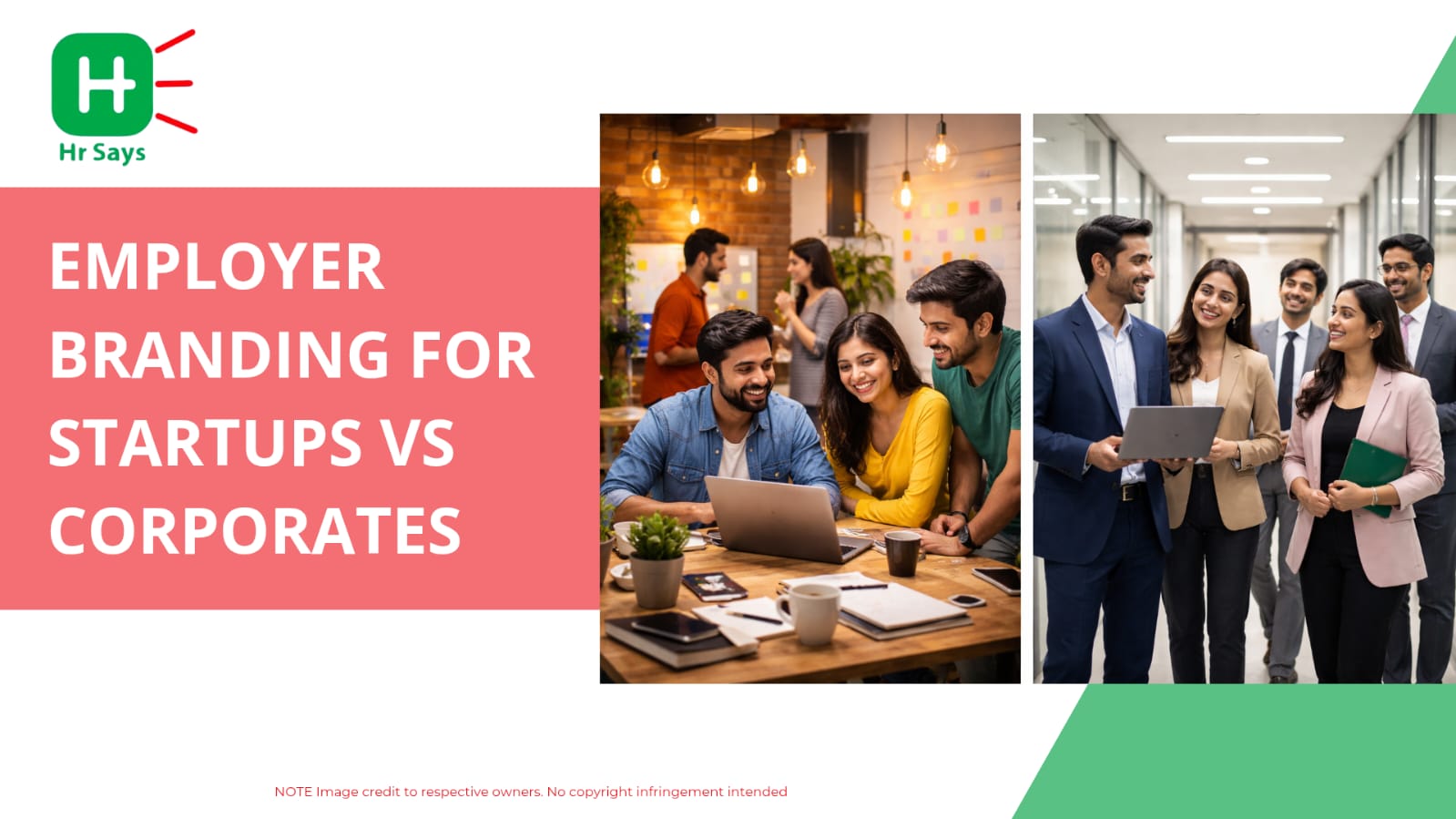
 Employer branding shapes how organizations attract and retain talent. Startups emphasize innovation and ownership, while corporates highlight stability and career growth. Understanding these differences helps organizations craft authentic employer brand strategies that resonate with modern job seekers.




The job market has changed without a commotion. The candidates now have a tendency of scrutinizing companies as much as companies scrutinize them. Employer branding has consequently been driven into the limelight of the recruitment strategies. Regardless of whether it is a small start up or a big business, the perception of a workplace determines the attraction and retention of talent and long term development.
Why Employer Branding Matters In A Competitive Talent Market
The current talent economy has made jobs not get accepted because they exist. They are measured on the basis of culture, purpose, flexibility and growth opportunities. The employer branding thus has emerged as a silent recruiter, which works even prior to an interview date being made.
For startups and corporates alike, the employer brand shapes how potential employees imagine their future inside the organization. It is often built through a combination of company values, online presence, employee advocacy, and workplace experience.
A strong employer brand is often associated with several advantages:
• Better quality job applicants
• Reduced hiring costs
• Higher employee engagement
• Stronger retention rates
Today, platforms like LinkedIn, Glassdoor, and company career pages act as informal research tools for candidates. Reviews, workplace stories, and leadership communication influence perceptions long before a job offer is made.
In many cases, employer branding also becomes a storytelling exercise. It is not only about stating values, but about demonstrating them through daily work culture. Transparent leadership communication, learning opportunities, and meaningful employee benefits contribute to a credible employer brand.
However, the approach to employer branding differs significantly between startups and established corporations.
Employer Branding In Startups
Startups operate in an environment that is dynamic, uncertain, and often resource constrained. Employer branding here is usually shaped by vision, innovation, and the promise of impact.
Instead of structured systems, startups often rely on the energy of their founders, the excitement of building something new, and the opportunity for employees to grow quickly.
Several characteristics are often highlighted in startup employer branding:
• Opportunities to take ownership of projects
• Flexible work culture and flatter hierarchies
• Rapid learning and skill development
• Exposure to decision making processes
Because budgets are usually limited, employer branding in startups is frequently built through authentic storytelling. Social media posts, founder messages, and employee experiences are often used to showcase the work environment.
Candidates who join startups are often motivated by growth potential and the chance to shape a company’s journey from its early stages.
Employer Branding In Corporates
Large corporations usually approach employer branding through structured strategies and long term planning. Dedicated HR and talent acquisition teams manage employer reputation across multiple platforms.
Corporate employer branding is often associated with stability, career progression, and organizational credibility.
Some commonly emphasized aspects include:
• Structured career growth paths
• Comprehensive employee benefits
• Global exposure and professional training
• Job security and established processes
Corporate organizations often invest heavily in employer branding campaigns, recruitment marketing, and workplace culture initiatives. Employer value propositions are carefully designed and communicated through digital channels, corporate websites, and recruitment events.
For many candidates, particularly those seeking long term stability, corporate employer branding creates a sense of reliability and professional development.
Finding The Right Balance
While startups emphasize agility and impact, corporates focus on stability and scale. Both approaches attract different types of talent.
Modern employer branding strategies are increasingly blending these strengths. Corporations are attempting to appear more innovative and flexible, while startups are gradually building structured work environments.
Ultimately, employer branding succeeds when the message aligns with the real employee experience. Authenticity tends to matter more than polished messaging.