 Saturday, October 24, 2026
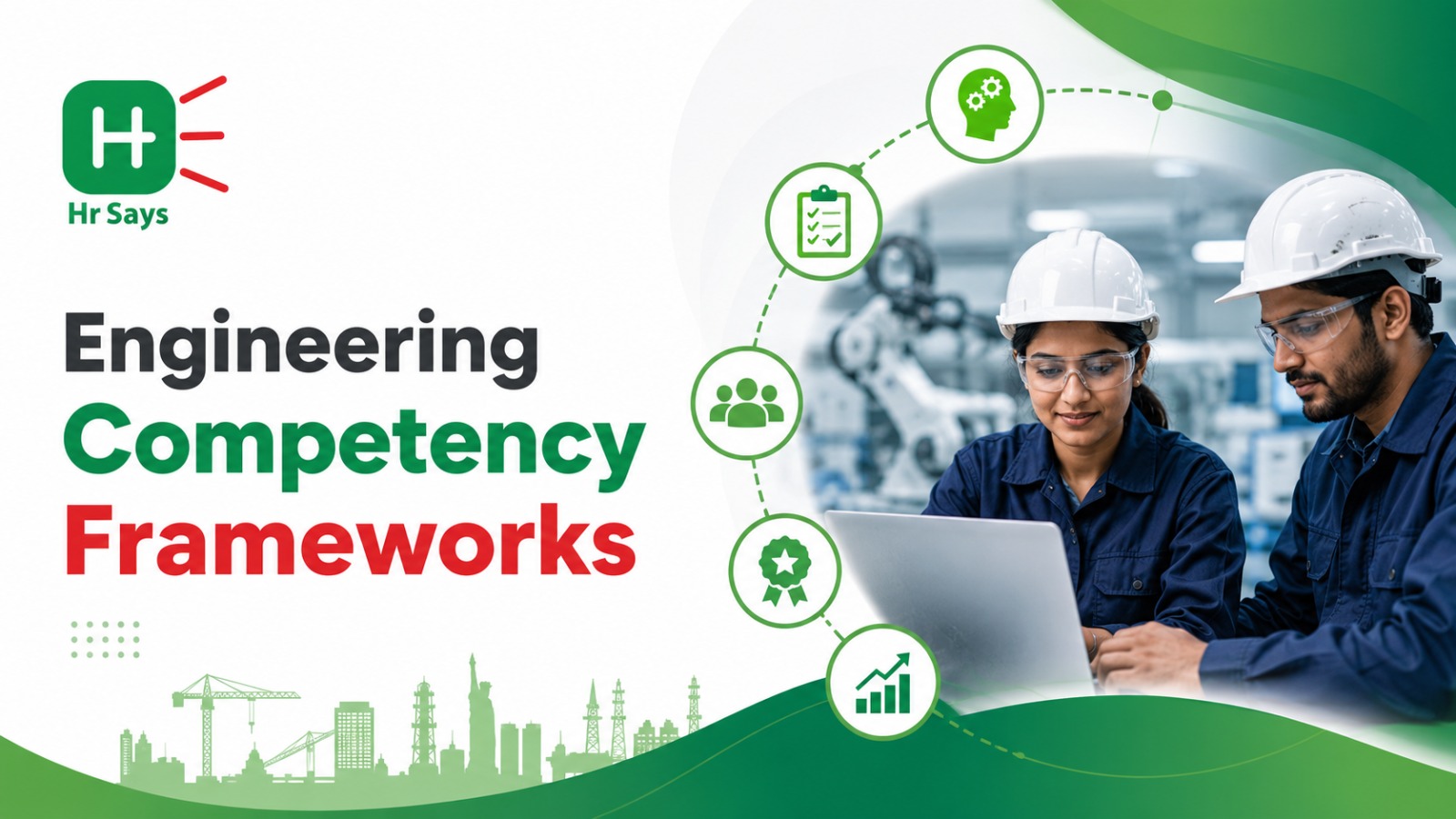
 A structured engineering competency framework clarifies career progression, strengthens hiring and promotion decisions, supports dual IC and management tracks, and aligns technical growth with measurable organizational impact.




An engineering competency framework bridges day-to-day technical execution with transparent, long-term career progression. Rather than acting as a rigid checklist or an exhaustive inventory of programming languages, an effective leveling matrix anchors on observable behaviors, expanding spheres of organizational influence, and measurable business impact.
Implementing a structured competency framework eliminates ambiguity around promotions, sets clear hiring baselines, and aligns individual contributor goals with broader organizational roadmaps.
1. Core Competency Pillars
High-performing engineering organizations typically evaluate professional growth across four foundational pillars:
- Craft & Technical Mastery: System architecture, domain design, code quality, testing standards, debugging efficiency, operational excellence, and technical risk management.
- Execution & Delivery: Accurate project scoping, work breakdown, estimation velocity, navigating technical ambiguity, and managing cross-functional dependencies.
- Leadership & Influence: Technical mentorship, code review rigor, cross-team alignment, technical sponsorship, hiring interview bars, and setting engineering best practices.
- Strategic & Business Impact: Product domain awareness, translating strategic business objectives into scalable technical architecture, and long-term technology roadmap contributions.
2. Structural Progression: Individual Contributor (IC) Ladder
Evaluating growth across the Individual Contributor track relies on expanding the engineer's scope of impact from individual tasks to company-wide technical strategy:
- L1: Associate Engineer (Scope: Self / Single Task): Writes modular, testable code for well-defined tasks while learning local service architectures. Delivers assigned user stories with guidance, raises blockers early in standups, and actively seeks constructive feedback during code reviews.
- L2: Mid-Level Engineer (Scope: Feature / Immediate Module): Independently designs, implements, and tests medium-complexity features while maintaining high test coverage and observability. Breaks down ambiguous user stories into technical tasks and provides actionable, thorough code review feedback to peers.
- L3: Senior Engineer (Scope: Team / Service Subsystem): Owns critical services, core system architecture, and technical debt remediation. Drives complex epics from design to deployment, balances speed with maintainability, leads system runbook creation, and mentors junior engineers.
- L4: Staff Engineer (Scope: Multi-Team / Domain): Resolves ambiguous cross-service architectural challenges and defines company-wide tech stack patterns. Unblocks multi-team delivery bottlenecks, leads multi-quarter technical initiatives, and partners directly with Product Directors to shape technical feasibility.
- L5: Principal Engineer (Scope: Entire Organization / Enterprise-Wide): Sets multi-year technical visions, anticipates critical system failure points, and guides architecture across entire business units. Shapes company-wide engineering culture, establishes executive-level hiring standards, and drives the organization's external technical brand.
3. Dual-Track Progression: IC vs. Engineering Management
To prevent forcing high-performing technical individual contributors into management tracks purely for compensation or title progression, modern engineering frameworks bifurcate the ladder at the Senior (L3) baseline:
Individual Contributor Track (IC)- Progression Ladder: Senior Engineer \rightarrow Staff Engineer \rightarrow Principal Engineer \rightarrow Distinguished Engineer.
- Core Focus: Deep architectural complexity, technical risk mitigation, cross-team technical alignment, system scalability, and technical strategy.
- Progression Ladder: Engineering Manager \rightarrow Senior Engineering Manager \rightarrow Director of Engineering \rightarrow VP of Engineering.
- Core Focus: People development, team retention, organizational design, cross-functional delivery coordination, strategic hiring, and departmental resource allocation.
4. High-Performance Action Plan: 4-Step Implementation Roadmap
To deploy a competency framework that drives equitable evaluations and transparent career paths, engineering leadership can execute a structured four-phase implementation roadmap:
- Establish 4 to 5 Core Competency Axes
Phase 1: Axis Definition
Define the core cultural and technical pillars (e.g., Craft, Delivery, Influence, Strategy) that reflect your organization's values rather than compiling dozens of overly granular technical skill lists. - Draft Observable Behaviors, Not Vague Adjectives
Phase 2: Behavioral Drafting
Write concrete behavioral benchmarks for every leveling cell. Replace subjective phrases like "Writes good code" with clear behavioral standards such as "Defines CI/CD quality gates, linting standards, and observability metrics across services." - Calibrate the Draft with Existing Team Profiles
Phase 3: Real-World Calibration
Test the drafted leveling rubric against 3 to 5 known engineers across different tiers to verify that criteria accurately reflect current high performers and reveal genuine growth gaps before company-wide publishing. - Embed into 1:1s, Hiring Rubrics, and Promotions
Phase 4: Operational Integration
Integrate the finalized competency matrix into quarterly performance reviews, bi-weekly 1:1 development discussions, structured interview scorecards, and formal promotion calibration cycles.
Actionable Strategy: Digital Governance & Engineering Talent Analytics
- Verify Technical Certifications via Universal Education Repositories: When assessing technical credentials, cloud architecture certifications, and specialized postgraduate degrees during hiring and leveling audits, verify qualifications through national education registries like the APAAR ID system within the Academic Bank of Credits (ABC) network.
- Standardize Performance Rubrics to Prevent Bias: Use objective, behavioral competency criteria during quarterly promotion cycles to ensure equitable salary band adjustments and mitigate systemic evaluation discrepancies across distributed engineering teams.
- Incorporate Continuous Learning Objectives: Connect competency level requirements directly to professional development budgets, encouraging engineers to pursue continuous certifications in distributed systems, cloud security, and software architecture.
Frequently Asked Questions (FAQs)
Q1. What is an engineering competency framework?An engineering competency framework is a structured leveling matrix that outlines the expected technical skills, delivery behaviors, leadership qualities, and business impact required at each stage of an engineering career.
Q2. Why should an organization avoid using a simple checklist for engineering levels?Checklists encourage transactional behaviors where engineers focus on ticking off isolated tasks rather than developing holistic technical judgment, architectural ownership, and systemic problem-solving capabilities.
Q3. At what stage should an engineer choose between the IC and Management ladders?The bifurcation typically occurs after reaching the Senior Engineer (L3) level. At this stage, engineers decide whether to deepen their technical and architectural mastery (Staff/Principal) or transition into people leadership and organizational management (Engineering Manager).
Q4. Can an engineer switch back from Management to the Individual Contributor track?Yes. Modern technology organizations support fluid movement between tracks. An Engineering Manager can transition back to a Staff or Senior Engineer role if their passion shifts back toward hands-on system design and code delivery without suffering career or compensation penalties.
Q5. How does a Staff Engineer differ from a Senior Engineer?While a Senior Engineer typically focuses on leading projects and maintaining architectures within a single team or service subsystem, a Staff Engineer operates across multiple teams, resolving complex cross-boundary technical problems and driving multi-quarter strategic initiatives.
Q6. How often should an engineering competency matrix be updated?A competency framework should be reviewed every 12 to 18 months to ensure it reflects modern development practices, organizational scaling needs, and shifts in technology stacks while maintaining core leveling stability.
Q7. How does a competency framework improve the hiring process?It provides interviewers with objective, structured scoring rubrics tied directly to specific role levels, ensuring consistent hiring standards and reducing subjective interviewer bias.
Q8. What is the role of "Observable Behaviors" in career progression?Observable behaviors provide clear, verifiable evidence of performance (such as leading post-mortems or authoring RFCs), making promotion evaluations evidence-based rather than reliant on personal perception or tenure.
Q9. How do competency frameworks assist in salary benchmarking?By grouping roles into clear, standardized leveling bands based on evaluated complexity and impact, organizations can align compensation bands accurately with competitive market data.
Q10. How should engineering managers introduce a new framework to their teams?Managers should present the framework collaboratively during dedicated workshops, emphasizing that it serves as a transparent growth roadmap and coaching tool rather than a punitive grading system, followed by individual mapping discussions in 1:1 sessions.
5. Conclusion: Building a Scalable Engineering Culture
Designing and deploying a robust engineering competency framework transforms career growth from an opaque guessing game into a predictable, transparent development journey. By defining clear behavioral expectations across Craft, Delivery, Influence, and Strategy, organizations empower engineers to take ownership of their professional development.
Whether advancing along the deep technical architecture track as a Staff and Principal Engineer or steering teams as an Engineering Manager, a well-calibrated framework ensures that skill growth, operational excellence, and business impact are recognized and rewarded consistently across the entire engineering ecosystem.