Thursday, October 01, 2026
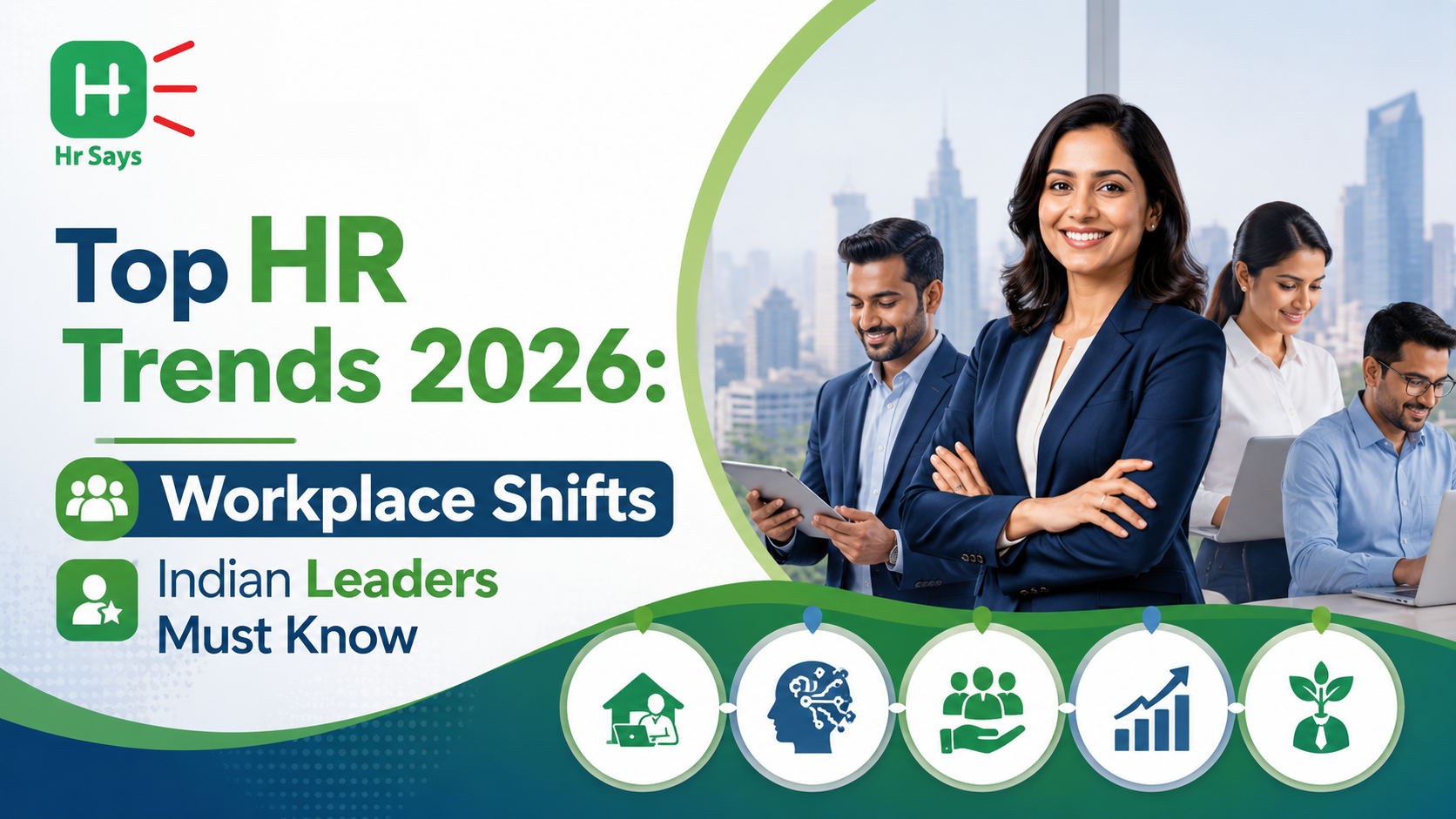
 India's HR landscape in 2026 is being reshaped by AI adoption, new data protection rules, skills-first hiring, and a growing focus on trust-led leadership and measurable workplace inclusion.




Top HR Trends Shaping Indian Workplaces in 2026
Introduction
Workplaces across India are being reshaped by forces that are moving faster than most HR calendars can keep pace with. Artificial intelligence is no longer a pilot project tucked away in the IT department. It is sitting inside recruitment software, performance dashboards, and payroll systems used by HR teams in Mumbai, Bengaluru, and growing Tier 2 hubs alike. At the same time, a new data protection law is changing how employee information must be handled, hiring patterns are shifting from volume to precision, and employees are quietly redefining what commitment looks like at work.
For HR leaders, founders, and people managers, understanding these shifts is no longer optional. The organizations that adapt early will build stronger trust with their workforce, reduce compliance risk, and make smarter decisions about where to invest in people. This article looks at the trends that matter most for Indian workplaces in 2026, along with practical steps HR teams can take to respond to each one.
AI Moves From Experimentation to Everyday HR Work
AI adoption in Indian HR functions has crossed the experimentation stage. Recent industry data shows that a large share of Indian organizations have already implemented AI in some capacity, with many more planning adoption within the year. The most common use cases remain resume screening and interview scheduling, but the technology is steadily expanding into payroll anomaly detection, onboarding coordination, and learning personalization.
This shift matters because it changes the nature of HR work itself. Instead of manually screening hundreds of resumes or chasing candidates for documents, HR teams are increasingly able to delegate coordination tasks to AI tools that verify documents, schedule interviews, and flag inconsistencies. The HR professional's role moves from administrative execution toward final decision-making and strategic oversight.
That said, the gap between AI adoption and AI maturity remains wide. Many companies use AI heavily for screening but apply it far less to performance management, internal mobility, or workforce planning, where the potential value may actually be higher. HR teams that audit their existing HRMS tools often discover built-in AI capabilities that are sitting unused.
Practical steps for HR teams:
- Audit existing HR technology stacks before purchasing new AI tools, since many platforms already include underused AI features
- Start with high-volume, low-risk tasks such as document verification or interview scheduling before expanding into sensitive areas like performance evaluation
- Maintain a clear human checkpoint for every AI-assisted decision that affects hiring, pay, or termination
Navigating the DPDP Rules and Employee Data Responsibility
India's data protection landscape changed significantly with the notification of the Digital Personal Data Protection Rules in November 2025. While the full compliance deadline falls in May 2027, 2026 is widely being treated as the critical build year for organizations to prepare their systems and processes.
For HR specifically, this matters because the function handles some of the most sensitive personal data in any organization, including payroll details, biometric attendance records, health information, and performance records. Routine HR processing for recruitment, onboarding, and payroll generally falls under a "legitimate use" exception, meaning explicit consent is not required for standard employment purposes. However, this exception does not extend to non-employment uses such as wellness program marketing or expanded monitoring beyond what is operationally necessary.
HR leaders who get ahead of this now will avoid scrambling later. This includes mapping where employee data is stored, reviewing vendor contracts with payroll and background verification partners, and preparing plain-language privacy notices that explain what data is collected and why.
Practical steps for HR teams:
- Conduct an inventory of all employee data collected across the HR lifecycle, from recruitment through exit
- Review contracts with third-party vendors handling payroll, background checks, or benefits administration
- Build internal awareness so HR staff understand which data uses require consent and which fall under legitimate employment use
Skills-First Hiring Replaces Degree-First Screening
The shelf life of technical skills has dropped sharply, and Indian employers are responding by shifting away from degree-based filtering toward skills verification. Recruiters are increasingly looking past generic qualifications in favor of verified micro-credentials and demonstrated capability.
This shift is not just about fairness, though it does widen the talent pool considerably. It also reflects a practical reality: organizations can no longer wait for traditional education cycles to produce the specific capabilities they need, particularly in areas like AI, data analytics, and cloud infrastructure. Around 80 percent of employers in India report difficulty finding the right candidates, with demand running highest in the technology, energy, and healthcare sectors.
Hiring intent in India has also ticked upward, but the nature of hiring is changing. A large share of open roles are replacements rather than net-new positions, and senior hiring now frequently exceeds 60 days from opening to close. This makes precision more valuable than speed alone.
Practical steps for HR teams:
- Build verification systems for skill credentials and micro-certifications rather than relying solely on degree checks
- Track quality-of-hire and time-to-fit metrics alongside traditional time-to-fill numbers
- Invest in structured internal mobility programs so existing employees with the right skills are considered before external hiring
Addressing Employee Anxiety Around AI With Trust-Led Leadership
As AI changes how work gets done, anxiety among employees is rising in parallel. Indian organizations are reporting a noticeable drop in employees willing to go beyond their formal job requirements, a trend that has continued building over the past few years. When employees feel uninformed during periods of change, discretionary effort tends to decline alongside trust.
This is not primarily a technology problem. It is a communication and leadership problem. The organizations managing this well are treating change communication as a continuous practice rather than a one-time announcement. Managers, more than formal policy documents, are becoming the primary source of stability for employees navigating uncertainty.
Wellbeing has followed a similar pattern, moving from policy documents into daily leadership behavior. Reasonable workloads, clear boundaries, and genuine conversations about burnout now matter more to employees than the existence of a wellness program on paper.
Practical steps for HR teams:
- Equip managers with simple frameworks for having honest conversations about AI-driven change, rather than leaving communication to formal memos alone
- Build wellbeing checkpoints directly into performance conversations instead of treating wellness as a separate, optional benefit
- Track sentiment and discretionary effort indicators alongside standard engagement metrics to catch early signs of disengagement
DEIB Shifts From Intent to Measurable Accountability
Diversity, equity, inclusion, and belonging initiatives in India are moving past symbolic gestures toward measurable outcomes. Recent hiring data shows diversity hiring grew meaningfully year on year, with women accounting for more than half of all diversity-focused recruitment and representation of persons with disabilities tripling over two years. IT and consulting firms continue to lead this shift, often supported by broader inclusion frameworks tied to ESG commitments.
What is changing is the expectation of proof. Employees and candidates increasingly look for transparent data on pay equity, representation in leadership, and inclusive decision-making processes, rather than charter documents alone. Many HR leaders now see inclusive leadership capability building as one of the most effective levers for advancing DEIB in practice.
Practical steps for HR teams:
- Publish internal data on representation and pay equity to build credibility rather than relying on stated intent
- Train managers specifically in inclusive leadership behaviors, not just general diversity awareness
- Tie DEIB progress to measurable hiring, promotion, and retention outcomes rather than participation counts alone
Workforce Planning Expands Beyond Tier 1 Cities
Compensation and hiring patterns in India are becoming distinctly regional rather than nationally uniform. Tier 2 cities are emerging as genuine innovation hubs, supported by improved infrastructure, normalized hybrid work, and a reverse migration of experienced professionals seeking lower costs without sacrificing career growth. Senior leadership salaries in select Tier 2 markets are becoming competitive with metro benchmarks, making them viable locations for leadership roles rather than just back-office functions.
This regional rebalancing requires HR teams to rethink compensation benchmarking, talent sourcing strategies, and even office design. A one-size-fits-all national pay band increasingly misses the nuance of where value is actually being created.
Practical steps for HR teams:
- Build region-specific compensation benchmarks rather than applying flat national pay bands
- Evaluate Tier 2 locations for leadership and specialist roles, not only for cost-driven support functions
- Support reverse migration trends by offering relocation flexibility and remote-first leadership structures
Breaking Down HR Silos for Cross-Functional Impact
Traditional HR structures organized around separate pillars for recruitment, learning, rewards, and performance are giving way to agile, cross-functional teams. Rather than handing work between isolated functions, HR professionals from different specialties are increasingly collaborating on shared business priorities like onboarding redesign or retention improvement.
This shift requires HR professionals to move from function-first thinking toward outcome-focused collaboration, supported by stronger data literacy. It also positions HR to use AI more meaningfully, since cross-functional teams are better equipped to interpret workforce data holistically rather than within narrow functional silos.
Practical steps for HR teams:
- Form small, cross-functional pods around specific business priorities rather than maintaining permanent functional silos
- Build shared data dashboards accessible across recruitment, learning, and performance teams
- Encourage HR professionals to develop consulting and systems-thinking skills alongside traditional functional expertise
Conclusion
The HR function in India is being asked to do more than manage processes. It is being asked to build trust during AI-driven change, protect employee data responsibly under new regulation, find the right talent in a tightening skills market, and create workplace cultures where people choose to contribute fully rather than simply comply. None of these shifts are optional add-ons to existing HR work. They are becoming the core of what effective HR leadership looks like in 2026.
Organizations that treat these trends as connected rather than separate initiatives, weaving AI governance, data responsibility, skills-first hiring, and trust-led leadership into a single coherent people strategy, will be the ones best positioned to retain talent and build resilient workplaces through the rest of this decade.
Frequently Asked Questions
Q1: What are the biggest HR trends shaping workplaces in India in 2026?
The biggest HR trends shaping Indian workplaces in 2026 include deeper AI integration across hiring and performance management, skills-first hiring practices, compliance with the new DPDP Rules, outcome-based flexible work models, and a stronger organizational focus on employee wellbeing and trust-led leadership.
Q2: How is AI changing HR functions in Indian companies?
AI is helping Indian HR teams automate resume screening, detect payroll anomalies, personalize learning paths, and improve workforce planning. However, most organizations are still in early stages of applying AI to functions beyond recruitment, and human oversight remains essential for fairness and trust.
Q3: What does the DPDP Act mean for HR departments in India?
The Digital Personal Data Protection Rules require organizations to handle employee data responsibly, including payroll, performance, and biometric records. While routine HR processing falls under a legitimate use exception, companies must still prepare privacy notices, secure data systems, and meet breach reporting obligations as compliance deadlines approach.
Q4: Why is skills-based hiring becoming more important in India?
Skills-based hiring is gaining ground because technical skills now have a shorter shelf life, and traditional degree-based filtering often excludes capable candidates. Employers are increasingly relying on verified skill credentials and micro-certifications to match talent to roles more accurately.
Q5: How can HR leaders address employee anxiety around AI adoption?
HR leaders can ease AI-related anxiety by communicating openly about how AI will be used, involving employees in reskilling plans, training managers to lead change conversations with empathy, and framing AI as a tool that supports employees rather than replaces them.