 Monday, September 14, 2026
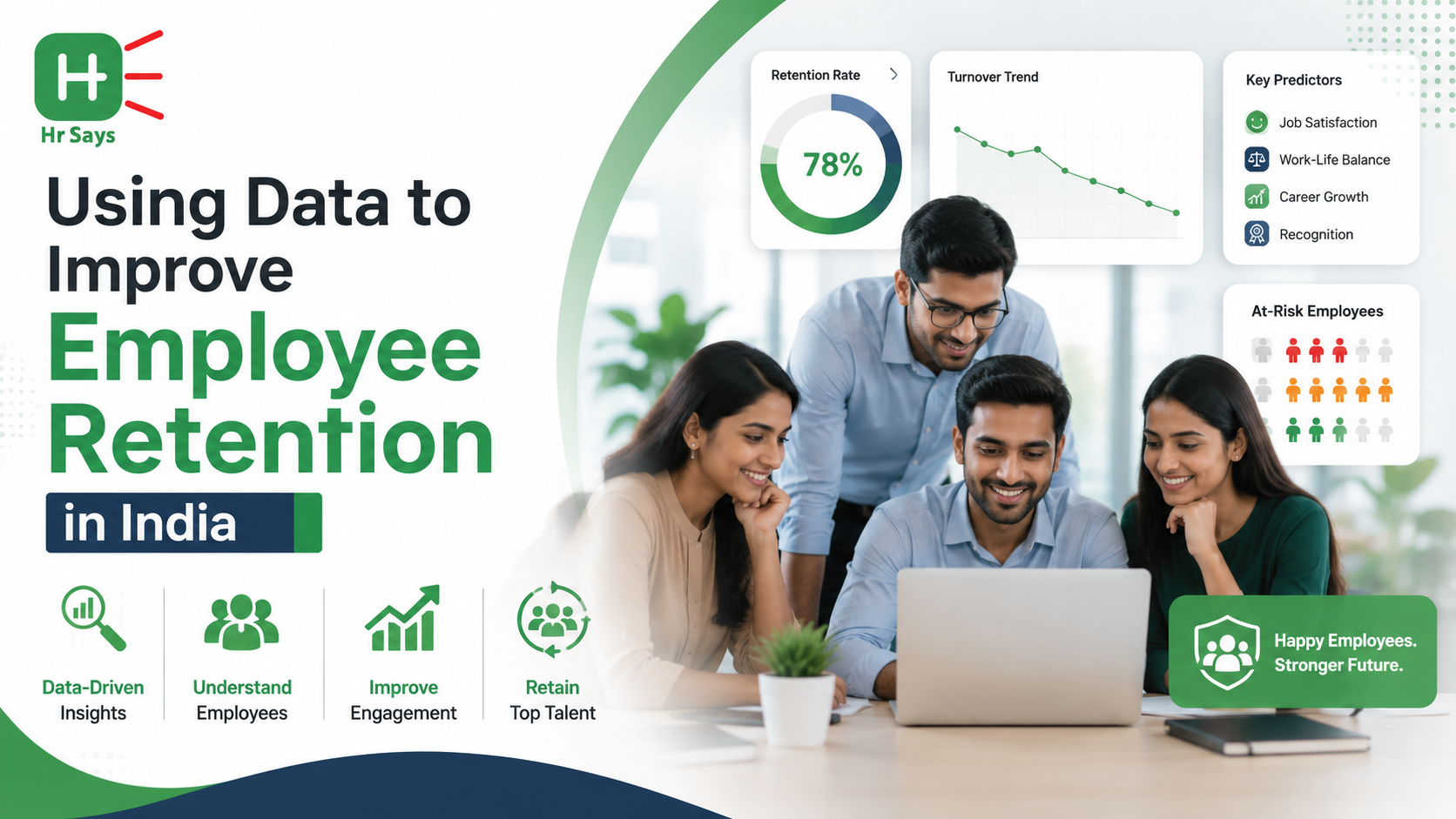
 Data-driven retention strategies help Indian HR leaders predict attrition, understand root causes, and take targeted action to keep top talent engaged and committed.





Introduction
Employee attrition is one of the most persistent and expensive challenges facing Indian organizations today. According to industry estimates, replacing a mid-level employee can cost anywhere between 50 percent and 200 percent of their annual salary, once recruitment, onboarding, and lost productivity are factored in. In high-growth sectors like information technology, e-commerce, banking, financial services, and insurance, turnover rates routinely exceed 20 percent annually, creating a relentless cycle of hiring that drains resources and disrupts team continuity.
For too long, retention decisions in Indian companies have been driven by instinct, informal feedback, and end-of-year exit interview summaries that arrive too late to make a difference. A departing employee is already gone, and the insights they leave behind rarely prevent the next resignation. What modern HR teams across India need is not just data, but the right kind of data used at the right time to predict, prevent, and address the root causes of attrition before they become irreversible.
This is precisely where people analytics transforms the game. Forward-thinking HR leaders, CHROs, and business owners are now building data-driven retention strategies that go beyond intuition and reactive responses. This article explores how Indian organizations can harness workforce data to understand why employees leave, identify those at risk of leaving, and create targeted interventions that meaningfully improve retention outcomes.
Understanding Employee Retention Analytics and Why It Matters for India
People analytics, or HR analytics, refers to the systematic collection, analysis, and application of employee data to support better workforce decisions. When applied specifically to retention, it helps organizations answer the questions that matter most: Which employees are most likely to leave in the next three to six months? Which departments have the highest attrition rates and why? Is compensation the primary driver, or are factors like career growth, manager relationships, and workload playing a bigger role?
For Indian organizations, these questions carry particular weight. India's labor market is one of the most dynamic in the world. The demand for skilled talent in technology, finance, healthcare, and manufacturing consistently outpaces supply. Young professionals, especially those in the 25 to 35 age group, are highly mobile and not hesitant to switch employers for marginally better opportunities. The IT sector alone sees annualized attrition rates that frequently cross 25 percent, according to data published by leading staffing firms.
In this environment, a reactive approach to retention is not sustainable. HR analytics gives Indian companies the ability to stop treating attrition as an inevitable cost of doing business and start managing it as a measurable, addressable challenge. The shift from reactive to predictive retention strategy is not just a technological upgrade. It is a fundamental change in how HR functions as a business partner.
Key Retention Metrics Every Indian HR Team Should Track
Before any meaningful analysis can begin, organizations need to identify which data points are most predictive of employee turnover. The following are the core metrics that HR teams across Indian industries should consistently monitor:
- Voluntary turnover rate by department and tenure: Tracking which teams or job levels experience the highest exit rates helps prioritize where interventions are needed most urgently.
- Absenteeism and leave patterns: Sudden spikes in unplanned leave or a pattern of frequent short absences can be early indicators of disengagement or burnout.
- Employee engagement scores: Survey data on belonging, growth opportunities, and manager effectiveness serves as a leading indicator of flight risk.
- Time-to-productivity for new hires: If new employees are leaving within six to twelve months of joining, it often signals onboarding gaps or expectation mismatches at the recruitment stage.
- Internal mobility rates: Low promotion or internal transfer rates may indicate that employees do not see a future for themselves within the organization, which directly drives attrition.
- Compensation benchmarking data: Regular comparison of internal salaries against market standards helps organizations identify pay gaps that push employees toward competitors.
These metrics, when combined and analyzed together rather than in silos, paint a far more accurate picture of retention risk than any single data point could on its own.
Building a Data-Driven Retention Strategy: From Insight to Action
Collecting data is only the first step. The real value lies in translating that data into targeted retention actions. Organizations that successfully use analytics for retention typically move through three distinct phases: identifying patterns, understanding root causes, and intervening proactively.
Identifying Turnover Patterns Across the WorkforceThe first step is to build a comprehensive view of where attrition is happening. Many Indian companies know their overall attrition number but do not break it down by department, job level, location, gender, or tenure band. When data is segmented this way, meaningful patterns emerge.
A technology services company in Bengaluru, for example, may discover that attrition is disproportionately concentrated among software engineers in their third or fourth year of employment, just before they would typically become eligible for senior roles. A manufacturing company in Pune may find that turnover is highest among shop floor workers in the 18 to 24 months of tenure range. These patterns are invisible without data, and without visibility, no targeted solution is possible.
Workforce dashboards and visualization tools help HR teams and business leaders see these patterns at a glance. Tools like Tableau, Microsoft Power BI, and even well-structured Excel dashboards can present attrition heat maps that show, visually, which parts of the organization are under the most retention pressure.
Understanding Root Causes Through Employee ListeningQuantitative data tells HR where the problem exists. Qualitative data tells them why. This is where structured employee listening becomes essential. Pulse surveys, annual engagement surveys, and well-designed exit interviews contribute qualitative insights that breathe meaning into numbers.
For Indian organizations, this requires particular sensitivity. Employees in many Indian workplaces may be reluctant to share honest feedback through open forums due to concerns about anonymity or career repercussions. Confidential, third-party-facilitated surveys or anonymous digital feedback tools are often more effective at capturing genuine sentiment.
Natural Language Processing (NLP) technology, now integrated into several modern HR platforms, can analyze open-ended survey responses at scale. If hundreds of employees mention phrases related to workload pressure, unclear promotion criteria, or lack of recognition, NLP tools can surface these themes systematically, helping HR leaders identify patterns in feedback that would be impossible to detect through manual reading.
Exit interview data is another underutilized resource in many Indian companies. When properly analyzed across a period of time, it reveals whether compensation, manager relationships, work-life balance, or career growth is the dominant driver of departure. Organizations that track exit interview themes over multiple quarters can detect emerging retention risks before they become systemic.
Predictive Analytics: Identifying At-Risk Employees EarlyThe most advanced application of data in employee retention involves predictive modeling. By feeding historical employee data, including tenure, engagement scores, performance ratings, promotion history, and absenteeism patterns, into machine learning models, HR teams can generate flight risk scores for individual employees.
These scores allow managers and HR business partners to have proactive, supportive conversations with employees who show early warning signs of disengagement, rather than waiting for a resignation letter. The conversation might be about career growth, a pending promotion decision, workload concerns, or team dynamics. The point is that the intervention happens before the employee has mentally left the organization.
For Indian startups and mid-sized companies that may not have the budget for enterprise-level predictive analytics platforms, a simpler version of this approach is still possible. A structured monthly review of engagement survey data, attendance records, and performance metrics, analyzed by a trained HR analyst, can surface early warning signals effectively without requiring sophisticated technology.
Common Retention Challenges Specific to the Indian Context
Indian HR professionals face a set of retention challenges that are distinct from those in other markets, and data strategy must account for these local realities.
The aspiration for higher education is one such factor. In India, a significant number of employees, particularly those in the 23 to 28 age group, leave organizations to pursue postgraduate degrees such as an MBA from a premier institute. Tracking education leave applications, conversations about study plans, and engagement scores in this demographic can help HR plan for these departures and create internal programs, such as tuition assistance or sponsored education, to reduce voluntary exits of this type.
Tier 2 and Tier 3 city talent dynamics are another important consideration. As Indian companies expand operations into cities like Indore, Coimbatore, Lucknow, and Nagpur, they find that local talent has different expectations and motivations compared to employees in metro cities. Family proximity, local community ties, and preference for stability often outweigh salary considerations for employees in these markets. Retention strategies built purely on compensation benchmarking miss these nuances.
Festive and seasonal attrition patterns are also more pronounced in India than in many other markets. A spike in resignations before major festivals or at the end of the financial year is a well-known phenomenon in Indian HR circles. Predictive models that incorporate calendar and tenure data can help organizations anticipate these peaks and schedule retention conversations accordingly.
The Human Factor: Why Data Alone Is Not Enough
While analytics provides the foundation for a smarter retention strategy, it cannot replace the human element of people management. Data can tell a manager that a particular employee has a high flight risk score. What data cannot do is have the right conversation with that employee, understand their personal circumstances, or demonstrate genuine organizational care.
In Indian workplaces, the relationship between an employee and their direct manager remains one of the strongest predictors of retention. Employees do not just leave organizations; they leave managers. Training managers to conduct regular one-on-one check-ins, provide timely and constructive feedback, and recognize contributions publicly can significantly reduce the risk of losing good people, even when data tools are not highly sophisticated.
HRSays, as a platform dedicated to practical workplace knowledge for Indian HR professionals, consistently highlights the importance of combining data intelligence with manager capability. Retention is ultimately a human outcome, and the role of data is to make the humans responsible for it more informed, more targeted, and more effective in their actions.
Practical Steps for Indian Organizations to Get Started
Organizations do not need to implement a full-scale analytics platform overnight to begin benefiting from a data-driven approach to retention. The following practical steps can be implemented progressively:
- Start with a baseline attrition dashboard that breaks turnover by department, tenure band, and job level. Even a monthly Excel report can provide significant insight if tracked consistently.
- Launch a quarterly pulse survey of 8 to 10 questions focused on engagement, growth, manager effectiveness, and organizational sentiment. Analyze the results by team and track changes over time.
- Standardize exit interview documentation and create a structured process for analyzing exit themes every quarter.
- Train HR business partners and managers to review retention metrics in monthly business reviews alongside operational and financial data.
- Invest in a cloud-based HRMS platform that integrates payroll, attendance, performance, and engagement data to enable cross-functional analysis as the organization matures.
The goal is not perfection but progress. Organizations that begin with structured data collection and disciplined analysis will be significantly better positioned than those that continue to manage attrition through intuition alone.
Conclusion
The era of managing employee retention through informal feedback, exit interviews, and corrective action after the fact is coming to an end for progressive Indian organizations. A data-driven retention strategy is no longer the exclusive domain of large multinational corporations with dedicated people analytics teams. With affordable HR technology platforms, structured listening programs, and a commitment to evidence-based decision-making, organizations of all sizes across India can significantly reduce regrettable attrition, protect institutional knowledge, and build workplaces where talented people choose to stay.
The most important shift is not technological. It is cultural. When HR leaders, business heads, and frontline managers begin to treat retention as a measurable business outcome driven by data rather than as an HR concern managed through reactive responses, the results follow. People analytics does not replace the human judgment and genuine care that retention requires. It makes both far more effective.
Frequently Asked Questions
Q1: What types of data are most useful for predicting employee turnover in Indian companies?
The most predictive data points include employee engagement survey scores, absenteeism patterns, tenure and promotion history, performance ratings, and compensation relative to market benchmarks. When analyzed together rather than in isolation, these data streams give HR teams a reliable early warning system for identifying employees at risk of leaving.
Q2: How can small and mid-sized Indian companies start using data for retention without a large budget?
Small and mid-sized organizations can begin with structured quarterly pulse surveys, standardized exit interview tracking, and a simple attrition dashboard in Excel or Google Sheets. As the organization grows, affordable cloud-based HRMS platforms offer integrated analytics capabilities that do not require significant upfront investment. Starting small and being consistent with data collection is more valuable than waiting for a sophisticated platform.
Q3: Is compensation the biggest driver of attrition in Indian workplaces?
Compensation is an important factor, but research consistently shows that it is rarely the sole driver of voluntary attrition. Career growth opportunities, manager relationships, work-life balance, organizational culture, and recognition play equally significant roles. Data analysis, particularly from employee engagement surveys and exit interviews, often reveals that employees leave managers more than organizations, and that career stagnation is a stronger predictor of exit than pay dissatisfaction alone.
Q4: What is predictive analytics in the context of HR retention, and how does it work?
Predictive analytics uses historical employee data, such as past engagement scores, attendance trends, performance ratings, and tenure information, to build models that estimate the likelihood of a particular employee leaving within a defined period. These models generate flight risk scores that help HR teams and managers prioritize retention conversations and targeted interventions with at-risk individuals before they decide to resign.
Q5: How should Indian organizations handle the confidentiality of employee data used in retention analytics?
Employee trust is foundational to any effective people analytics program. Organizations must ensure that individual-level data is used only for aggregated analysis and that employees are informed about what data is being collected and how it will be used. Pulse surveys and engagement tools should guarantee anonymity at the individual level. For organizations using third-party analytics partners, clear data processing agreements and compliance with applicable Indian data protection norms are essential.
Resources
- Society for Human Resource Management (SHRM): Research and frameworks on employee engagement, attrition measurement, and workforce analytics best practices for HR professionals.
- People Matters: India's leading HR media platform offering research reports, industry data, and thought leadership on workforce trends and retention in the Indian corporate context.
- Ministry of Labour and Employment, Government of India: Official data on workforce participation, employment trends, and labor market dynamics relevant to HR planning in India.
- LinkedIn Talent Solutions: Annual Workforce Reports providing data on hiring trends, employee expectations, and retention factors specific to the Indian talent market.
- National HRD Network (NHRDN): India's premier HR professional body offering research, certifications, and knowledge resources for HR leaders and practitioners.
Interlinking Keywords:
employee attrition analysis, HR analytics India, people analytics strategy, employee engagement surveys, workforce data tools, predictive HR analytics, pulse survey for retention, talent management India, exit interview insights, HRMS platforms India
Disclaimer:
The information provided in this article is intended for general informational and educational purposes for HR professionals, business leaders, and workplace practitioners. It does not constitute legal, financial, or professional HR consulting advice. Organizations are encouraged to consult qualified HR professionals, legal advisors, and certified consultants before implementing specific people analytics strategies or making workforce policy decisions. Statistics and market references cited are based on publicly available industry data and are subject to change. HRSays does not endorse any specific software platform, analytics tool, or third-party service provider.