Saturday, October 24, 2026
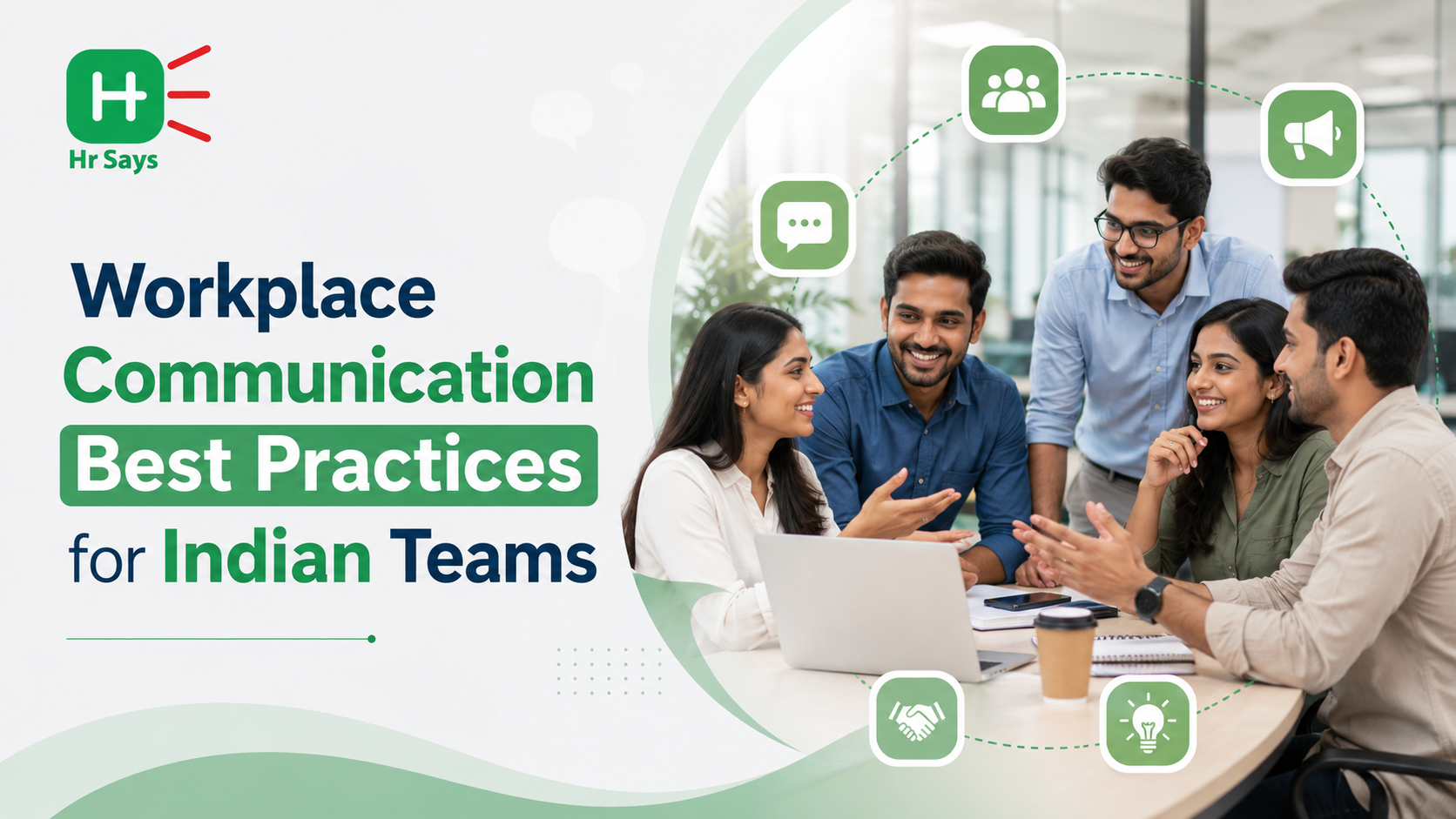
 This article explores workplace communication best practices for Indian organisations, covering common barriers, practical strategies for managers and HR teams, and methods to measure and sustain lasting communication improvements.





Introduction
Communication decides more about a workplace than most leaders realise. It shapes whether a project stays on schedule, whether a new employee feels welcome, and whether a disagreement turns into a resolved issue or a lingering resentment. For Indian organisations navigating hybrid teams, multilingual workforces, and generational differences within the same office floor, communication is not a soft skill anymore. It is an operational one.
Recent workplace data makes the stakes clear. Gallup's most recent estimates put the cost of disengagement in India at roughly 351 billion dollars a year in lost productivity, close to 9 percent of the country's GDP. Separately, research from Grammarly and Harris Poll found that poor communication costs businesses more than 12,500 dollars per employee annually, with communication effectiveness itself falling over the past year even as the productivity lost to miscommunication kept rising. These are not abstract figures. They point directly to what happens inside meetings, emails, and one-on-one conversations every single day.
This guide breaks down what effective workplace communication actually looks like in practice, the barriers that are common in Indian organisations, and the specific habits that HR leaders, managers, and employees can build to communicate with more clarity and less friction.
Understanding Workplace Communication
Workplace communication covers every exchange of information between people at work, whether spoken, written, or unspoken. It includes formal channels such as emails, performance reviews, and town halls, as well as informal ones such as a quick corridor conversation or a message on a team chat app. It also includes nonverbal signals like tone, posture, and facial expression, which often carry more weight than the words themselves.
In Indian workplaces specifically, communication carries an additional layer of complexity. Many organisations operate across multiple languages, regional offices, and generational groups, from employees who grew up with formal, hierarchy-conscious communication styles to younger employees who expect quick, informal, and transparent exchanges. A communication approach that works for a Bengaluru-based tech team may not translate well to a manufacturing unit in Pune or a regional sales office in Lucknow. Good communication practice, therefore, needs to be intentional rather than assumed.
It helps to think of workplace communication as sitting on two axes: the channel used, whether verbal, written, or nonverbal, and the direction it flows, whether top down, bottom up, or lateral between peers. Organisations that only invest in top-down communication, such as leadership emails and company announcements, often miss the lateral and upward channels where most day-to-day friction actually occurs.
Common Barriers to Effective Communication in Indian Workplaces
Before fixing communication, it helps to name what typically breaks it. A few barriers show up consistently across Indian organisations, regardless of sector or size.
Hierarchy related hesitation is one of the most persistent. In many Indian workplaces, junior employees are reluctant to question a senior's decision openly, even when they have relevant information or concerns. This is not a lack of capability. It often reflects cultural conditioning around respect for seniority, which, left unaddressed, can quietly suppress good ideas and early warnings about problems.
Language diversity adds another layer. A single organisation might have employees who are most comfortable in Hindi, English, Tamil, Bengali, or another regional language, and important nuance can be lost when everyone defaults to a single working language without checking for understanding.
Physical and structural barriers matter too. Separate cabins for leadership, unclear reporting lines, and offices spread across floors or cities can quietly reduce how often people communicate simply because of proximity. Emotional barriers, such as low trust between a manager and a team, or unresolved past conflict, also shape whether people choose to speak honestly or stay quiet.
Finally, hybrid and remote work arrangements have changed the default communication pattern for many Indian organisations. Interestingly, data on Indian employees suggests that hybrid arrangements often see stronger engagement outcomes than either fully remote or fully in office setups, which suggests that a mix of in person and digital communication, done deliberately, may work particularly well for Indian teams.
Recognising the Signs of Poor Communication
Communication problems rarely announce themselves directly. They tend to show up as symptoms elsewhere in the organisation. Recurrent missed deadlines despite clear individual effort is often a sign that expectations were never communicated with enough precision. Frequent rework, where the same task is redone multiple times, usually points to unclear briefs rather than lack of skill.
High meeting fatigue combined with low decision making speed is another common signal. Teams end up in back to back meetings, yet decisions still stall, which often means the meetings lack a clear agenda, the right people in the room, or a defined owner for the next step. Rising attrition in a specific team, even when compensation is competitive, frequently traces back to a manager who communicates inconsistently, gives vague feedback, or avoids difficult conversations altogether.
HR teams that track exit interview themes often find "lack of clarity" and "feeling unheard" appearing more often than compensation as reasons for leaving. This aligns with broader engagement data, which shows only about a quarter of employees globally report feeling fully engaged and appreciated at work, a gap that structured communication can meaningfully narrow.
Building Better Communication: Practical Approaches
Improving communication works best when it is treated as a system rather than a single training session. A few approaches tend to make the most difference.
Clarity before speed matters more than most people assume. Before sending a message or opening a meeting, it helps to define the actual purpose: is this to inform, to seek input, or to get a decision? Messages that combine all three without distinction usually confuse the recipient about what action is expected of them.
Choosing the right channel is equally important. Not every update needs a meeting, and not every sensitive conversation belongs in a chat message. A quick status update can go out over email or a project tool, while a performance concern, a role change, or a conflict resolution conversation deserves a face-to-face or video conversation where tone and body language can be read accurately.
Active listening deserves specific attention because it is often assumed rather than practised. This means listening to understand rather than to respond, allowing pauses, and reflecting back what was heard before replying. Managers who build this habit tend to catch problems earlier, simply because employees feel safe raising them.
Regular structured touchpoints, such as short daily stand-ups for project teams and recurring one-on-ones between managers and direct reports, give people a predictable space to raise concerns instead of waiting for something to escalate. Feedback should also flow in both directions. Employees who are asked for feedback on how they are managed, and see that feedback acted upon even partially, tend to trust the process considerably more than those who never get asked.
Finally, written communication deserves the same care as verbal communication. Emails, chat messages, and briefs should be checked for clarity and tone before being sent, since sarcasm, urgency, or humour can be easily misread in text, especially across a diverse, multilingual workforce.
Communication Practices for Managers and HR Teams
Managers carry a disproportionate share of responsibility for how communication feels inside a team, since most employees experience the organisation through their direct manager rather than senior leadership. A few specific practices help managers communicate more effectively.
Setting expectations clearly at the start of any project, including what success looks like and how often updates are expected, prevents a large share of later confusion. Giving feedback close to the moment it is relevant, rather than saving it for a formal review months later, keeps it useful and specific. Praising achievements publicly while addressing concerns privately protects both morale and dignity, a principle that holds true across nearly every workplace culture.
For HR teams, the role is less about individual conversations and more about building the systems that make good communication the easy default. This includes designing manager training that specifically covers difficult conversations, feedback delivery, and active listening, rather than treating communication as something managers should already know instinctively. It also includes reviewing internal communication channels periodically. If employees are relying on informal WhatsApp groups for information that should be coming through official channels, that is usually a sign the formal channel is too slow or too unclear.
Platforms like HRSays exist precisely to give HR professionals a place to compare notes on these systemic fixes, from communication audits to manager enablement programmes, and to see how other organisations across India are approaching the same underlying challenges.
Measuring and Sustaining Communication Improvements
Communication initiatives often fade after an initial push unless they are measured. Simple pulse surveys asking employees how clearly they understand their goals, or how comfortable they feel raising concerns with their manager, give HR a baseline to track over time. Comprehensive annual surveys still have a place, but the trend among internal communication teams globally is shifting toward more frequent, smaller pulse checks that catch problems while they are still small.
Tracking practical indicators such as meeting time versus decisions made, response times on internal queries, and manager one-on-one completion rates can also reveal whether communication practices are actually being followed, rather than just written into a policy document. None of this needs to be complicated. Even a quarterly review of these few indicators, discussed openly with team leads, tends to keep communication improvements from quietly slipping.
Conclusion
Workplace communication is rarely fixed by a single training session or a new messaging tool. It improves when organisations treat it as an ongoing practice, built through clear expectations, the right channel for the right message, consistent listening, and leaders who model the behaviour they want to see. For Indian organisations managing hybrid teams, multiple languages, and varied communication comfort levels across generations, this deliberate approach matters even more. The data is consistent on one point: organisations that invest in clear, two-way communication see it reflected in lower attrition, faster decisions, and a workforce that feels genuinely heard.
Frequently Asked Questions
Q1: What is the biggest barrier to workplace communication in India?
Hierarchy related hesitation to speak up to seniors is one of the most common barriers, along with language diversity across teams and communication gaps created by hybrid work arrangements.
Q2: How can HR improve communication between managers and employees?
HR can introduce structured one-on-one meetings, train managers on feedback delivery and active listening, and set clear communication guidelines that reduce ambiguity and encourage two-way dialogue.
Q3: What communication skills should companies train employees on first?
Active listening, clear written communication, and constructive feedback tend to have the biggest impact on daily collaboration and are usually the best starting point for training.
Q4: Does remote and hybrid work make communication harder in India?
It can if teams rely only on chat-based updates, but data on Indian employees suggests hybrid arrangements often see stronger engagement outcomes than fully remote or fully office-based setups when structured check-ins are in place.
Q5: How often should teams have communication-focused meetings?
Most organisations benefit from a weekly team update, at least one recurring one-on-one per employee every two weeks, and short daily check-ins for project teams where coordination needs are high.
Resources
- Gallup State of the Global Workplace Report: Global and India-specific data on employee engagement and the cost of disengagement
- Grammarly and Harris Poll Business Communication Report: Research on the financial impact of poor workplace communication
- National Human Rights and Labour Bodies (ILO Reports on India): Data on workforce trends and the changing nature of work in India
- Society for Human Resource Management (SHRM) India Resources: Guidance on manager training and workplace communication practices
- HRSays: Ongoing HR insights, workplace culture perspectives, and practical people management resources for Indian organisations
Interlinking Keywords
workplace communication best practices, employee engagement India, manager feedback training, hybrid work communication, HR communication strategy, active listening at work, one-on-one meetings, employee retention strategies
Disclaimer:
This article is intended for general informational and educational purposes only. It does not constitute professional HR, legal, or organisational consulting advice. Organisations should evaluate their specific workplace context and consult qualified HR or legal professionals before implementing any policy or communication framework based on this content.