 Saturday, October 24, 2026
 Complex fractures and non-unions require coordinated mechanical and biological strategies. Modern fixation, bone grafting, infection control, and induced-membrane techniques improve stability, vascularity, bone regeneration, and successful fracture healing.




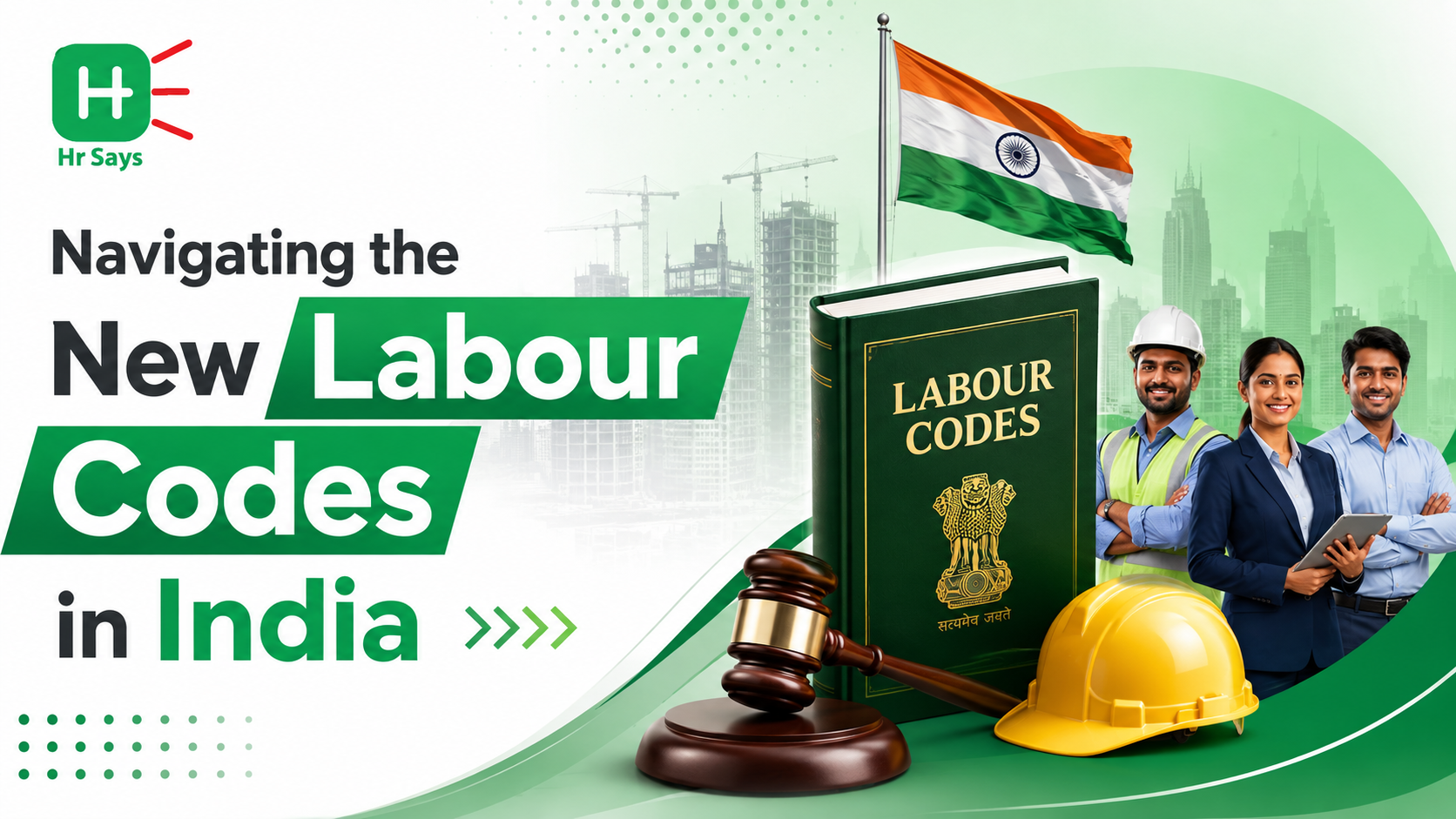
The regulatory framework governing human resources, industrial relations, social security, and wage structures in India is undergoing its most comprehensive structural overhaul. Consolidating 29 central labor statutes into 4 unified New Labour Codes—the Code on Wages (2019), the Industrial Relations Code (2020), the Code on Social Security (2020), and the Occupational Safety, Health and Working Conditions (OSH) Code (2020)—replaces a century of fragmented legislation with a synchronized national framework.
As state governments notify their regional rules to operationalize the central codes, corporate legal counsels, HR executives, and chief financial officers face an immediate operational imperative.
Transitioning to this regulatory architecture requires restructuring compensation models, revising working-hour thresholds, modernizing time-tracking systems, and redrafting employment agreements to prevent statutory penalties and unfunded back-pay liabilities.
1. The Quad-Code Architectural Framework
The consolidated legal structure is organized into four core pillars, each regulating a defined operational domain of the employment relationship:
- 1. The Code on Wages, 2019:
- Consolidates the Payment of Wages Act (1936), Minimum Wages Act (1948), Payment of Bonus Act (1965), and Equal Remuneration Act (1976).
- Establishes a universal definition of "Wages," mandates a 50% cap on flexible allowances, sets statutory national floor wages, and mandates full-and-final settlement timelines.
- 2. The Code on Social Security, 2020:
- Integrates 9 statutes, including the Employees' Provident Funds and Miscellaneous Provisions Act (EPFA), Employees' State Insurance Act (ESIA), and Payment of Gratuity Act.
- Extends formal social security safety nets to gig and platform workers, formalizes fixed-term employment gratuity parity, and expands ESIC medical coverage nationwide.
- 3. The Occupational Safety, Health and Working Conditions (OSH) Code, 2020:
- Amalgamates 13 acts governing factories, contract labor, dock workers, and commercial establishments.
- Standardizes 48-hour weekly ceilings, enables flexible shift configurations (including 4-day workweek models), enforces gender-neutral night shifts with safety safeguards, and mandates annual health checks.
- 4. The Industrial Relations (IR) Code, 2020:
- Merges the Trade Unions Act (1926), Industrial Employment (Standing Orders) Act (1946), and Industrial Disputes Act (1947).
- Elevates the threshold for mandatory standing orders and government retrenchment permission from 100 to 300 workers, establishes structured grievance redressal committees, and mandates 14-day strike notice periods.
2. Core Operational Shifts: Impact on Payroll, Shifts, and Governance
A. The Standardized Wage Definition & Payroll Restructuring (The 50% Cap Rule)- The Legacy Model: Historically, corporate compensation packages minimized Basic Pay (often 20% to 35% of Gross CTC) while inflating non-statutory allowances (House Rent Allowance, Special Allowance, Conveyance, Medical Re-imbursement) to limit recurring corporate liabilities toward the Employees' Provident Fund (EPF) and long-term gratuity.
- The New Formula: Under Section 2(y) of the Code on Wages, "Wages" encompasses Basic Pay, Dearness Allowance (DA), and Retaining Allowance.
- The Specified Exclusions Cap: Specified components—including statutory bonus, HRA, employer PF/pension contributions, conveyance/travel allowances, and commission—are excluded from the core wage definition. However, if the sum total of these excluded allowances exceeds 50% of the employee's total gross remuneration, the excess amount is automatically deemed "Wages" and added back to the calculation base.
- Financial Repercussions:
- Employer Cost to Company (CTC): Monthly employer contributions toward EPF (12% of wages) and actuarial provisioning for gratuity (4.81% of basic salary) will increase significantly.
- Employee Net Take-Home Pay: Increased employee-side statutory EPF deductions will slightly reduce immediate monthly cash-in-hand, redirecting funds into compounding, interest-bearing retirement corpora.
- Statutory Acceleration: Under the Code on Wages, when an employee resigns, is terminated, retrenched, or dismissed, the employer is legally obligated to execute the full and final settlement of all wages and accrued dues within 2 working days (48 hours) of separation.
- Operational Necessity: Replaces legacy 30-to-45-day payroll settlement cycles, necessitating fully automated, integrated HRMS and finance approval workflows to clear leave encashment, expense reimbursements, and statutory gratuity instantly.
- Shift Flexibility (The 4-Day Workweek Option): The OSH Code preserves the statutory 48-hour weekly working ceiling while permitting compressed working schedules (e.g., four 12-hour daily shifts or five 9.6-hour shifts), provided daily operational limits comply with employee consent and health standards.
- Strict 15-Minute Overtime Threshold: Any continuous work exceeding 15 minutes past a regular scheduled shift triggers a mandatory 30-minute overtime entry, compensated at double the standard hourly wage rate.
- Accelerated Earned Leave Eligibility: The service qualification window required to unlock statutory paid earned leave is lowered from the legacy 240 days down to 180 days of continuous service, with a standardized carry-forward ceiling capped at 30 days per calendar year.
- Fixed-Term Employment (FTE) Gratuity Parity: Removes the traditional 5-year continuous service requirement under the Payment of Gratuity Act. Fixed-term contract professionals are entitled to pro-rata gratuity after completing just 1 continuous year (12 months) of service at the rate of 15 days of wages per completed year.
- Gig and Platform Worker Welfare Funds: Establishes a formal Social Security Fund for gig and platform delivery workers funded through a mandatory contribution of 1% to 2% of annual turnover (capped at 5% of total payments made to workers) levied on digital platform aggregators.
3. Structural Comparison: Legacy Labour Laws vs. The 4 New Labour Codes
- Wage Component Structuring:
- Legacy Framework: Allowances could freely comprise 65% to 80% of total Gross CTC.
- New Labour Codes: Mandatory 50% cap; Basic Pay + DA must equal or exceed half of total gross pay.
- Enterprise Impact: Elevated baseline for EPF, ESIC, and gratuity calculations; reduces immediate take-home pay.
- Fixed-Term Gratuity Eligibility:
- Legacy Framework: Strictly mandated 5 consecutive years of continuous employment.
- New Labour Codes: Pro-rata gratuity unlocked after 1 single year of active service.
- Enterprise Impact: Requires higher annual financial balance-sheet provisioning for contract-heavy workforces.
- Full & Final Settlement Timeline:
- Legacy Framework: Unstandardized; customarily disbursed across 30 to 60 days post-exit.
- New Labour Codes: Legally mandated within 2 working days (48 hours) of employee separation.
- Enterprise Impact: Requires real-time automated asset clearance, leave encashment, and billing ledgers.
- Industrial Standing Orders Threshold:
- Legacy Framework: Triggered upon reaching 100 on-roll industrial workers.
- New Labour Codes: Threshold elevated exclusively to establishments employing 300+ workers.
- Enterprise Impact: Grants mid-sized operations hiring, layoff, and retrenchment flexibility without prior state approval.
- Overtime Computation Rule:
- Legacy Framework: Fractions of an hour below 30 minutes were frequently unrecorded or rounded down.
- New Labour Codes: Any work extending beyond 15 minutes counts as 30 minutes of double-rate overtime.
- Enterprise Impact: Demands accurate biometric and digital punch-clock logging.
- Women Working Night Shifts (7 PM to 6 AM):
- Legacy Framework: Prohibited across multiple factory sectors unless granted specific regional exemptions.
- New Labour Codes: Legally permitted across all industries with employee consent, secure transport, and safety protocols.
- Enterprise Impact: Expands operational shifts for manufacturing, logistics, and technology centers.
4. Strategic 4-Pillar Compliance Checklist for Employers
To maintain statutory compliance and avoid operational disruptions, HR directors, payroll teams, and finance leaders should execute this structured transition plan:
- Pillar 1: Execute a Comprehensive Payroll Simulation: Run financial simulations across the entire employee master database to model the 50% basic wage cap rule. Realign salary structures to balance employer EPF/gratuity allocations against gross CTC margins.
- Pillar 2: Standardize Employment Contracts & Issue Appointment Letters: The OSH and IR Codes mandate issuing formal, written appointment letters to all workers. Update appointment letter templates to incorporate explicit clauses on fixed-term gratuity parity, working hours, and non-solicitation parameters.
- Pillar 3: Upgrade Time-Tracking and Attendance Software: Calibrate biometric time-clocks, digital swipe systems, and remote working software to track work intervals down to 15-minute increments, automating double-pay overtime ledgers.
- Pillar 4: Automate Exit Clearance and F&F Settlement Systems: Re-engineer offboarding workflows so departmental approvals (IT asset handover, finance clearances, leave audit) execute synchronously within 48 hours to comply with statutory payment timelines.
10 Frequently Asked Questions (FAQs)
Q1. Will an employee's gross salary decrease under the new 50% wage rule?No. An employee's gross Cost to Company (CTC) remains unchanged. However, the internal distribution shifts: because basic pay must equal at least 50% of the gross package, statutory deductions for Provident Fund (PF) and taxes increase, slightly reducing immediate monthly take-home cash while boosting long-term retirement savings.
Q2. How does the 48-hour exit settlement rule apply to employee resignations?Under the Code on Wages, an employer must clear all final dues—including unpaid wages, earned leave encashment, and statutory gratuity—within 2 working days of the employee's last working day, irrespective of whether the separation was initiated by resignation or termination.
Q3. Does the 1-year gratuity eligibility rule apply to permanent full-time employees?No. Permanent full-time employees must continue to complete 5 consecutive years of continuous service with an employer to become eligible for standard gratuity payouts. The relaxed 1-year threshold applies strictly to Fixed-Term Employment (FTE) contract professionals.
Q4. Can an employer mandate a 12-hour shift for a 4-day workweek without employee consent?No. While the OSH Code permits an enterprise to structure a 4-day workweek (48 hours total per week at 12 hours per day), implementing non-standard shift arrangements requires formal notification, operational transparency, and mutual consent aligned with workplace safety protocols.
Q5. What is the statutory threshold for requiring formal Standing Orders under the IR Code?The threshold has been elevated from 100 workers to 300 workers. Industrial establishments employing fewer than 300 workers are no longer legally required to draft, certify, and adopt rigid government-approved standing orders for disciplinary actions, layoffs, and retrenchments.
Q6. Are independent consultants and gig workers legally categorized as permanent employees?No. The Code on Social Security creates a distinct legal classification for "Gig Workers" and "Platform Workers". While they do not receive full on-roll employee status, they are granted statutory access to life, disability, health, and old-age welfare benefits funded by aggregator platform levies.
Q7. What are the penalties for non-compliance with the Code on Wages?The Code on Wages introduces progressive penalties. Initial violations regarding underpayment or improper wage calculation attract financial fines up to INR 50,000. Repeat offenses within a 5-year period carry penalties up to INR 1,00,000 and potential imprisonment up to 3 months.
Q8. How do the new codes streamline the historical inspection and compliance burden?The framework replaces legacy physical inspector visits with a "Facilitator" model supported by a centralized, web-based inspection scheme. Random computerized selection of inspection targets and digital unified annual returns eliminate arbitrary administrative audits.
Q9. What conditions must be satisfied before workers can legally initiate a strike under the IR Code?Workers across all industrial establishments must provide a 14-day mandatory written strike notice (valid up to 60 days). Strikes are strictly prohibited during the pendency of conciliation proceedings before a conciliation officer and for 7 days after the conclusion of such proceedings.
Q10. How do state-level draft rules interact with the Central Labour Codes?Under the Constitution of India, labor is a Concurrent List subject. While the central government enacts the statutory acts and central model rules, individual state governments draft and notify their respective state-specific rules. Multistate enterprises must ensure their local HR practices align with state-specific variations in compounding fees, spread-over limits, and welfare fund contributions.