 Saturday, October 24, 2026
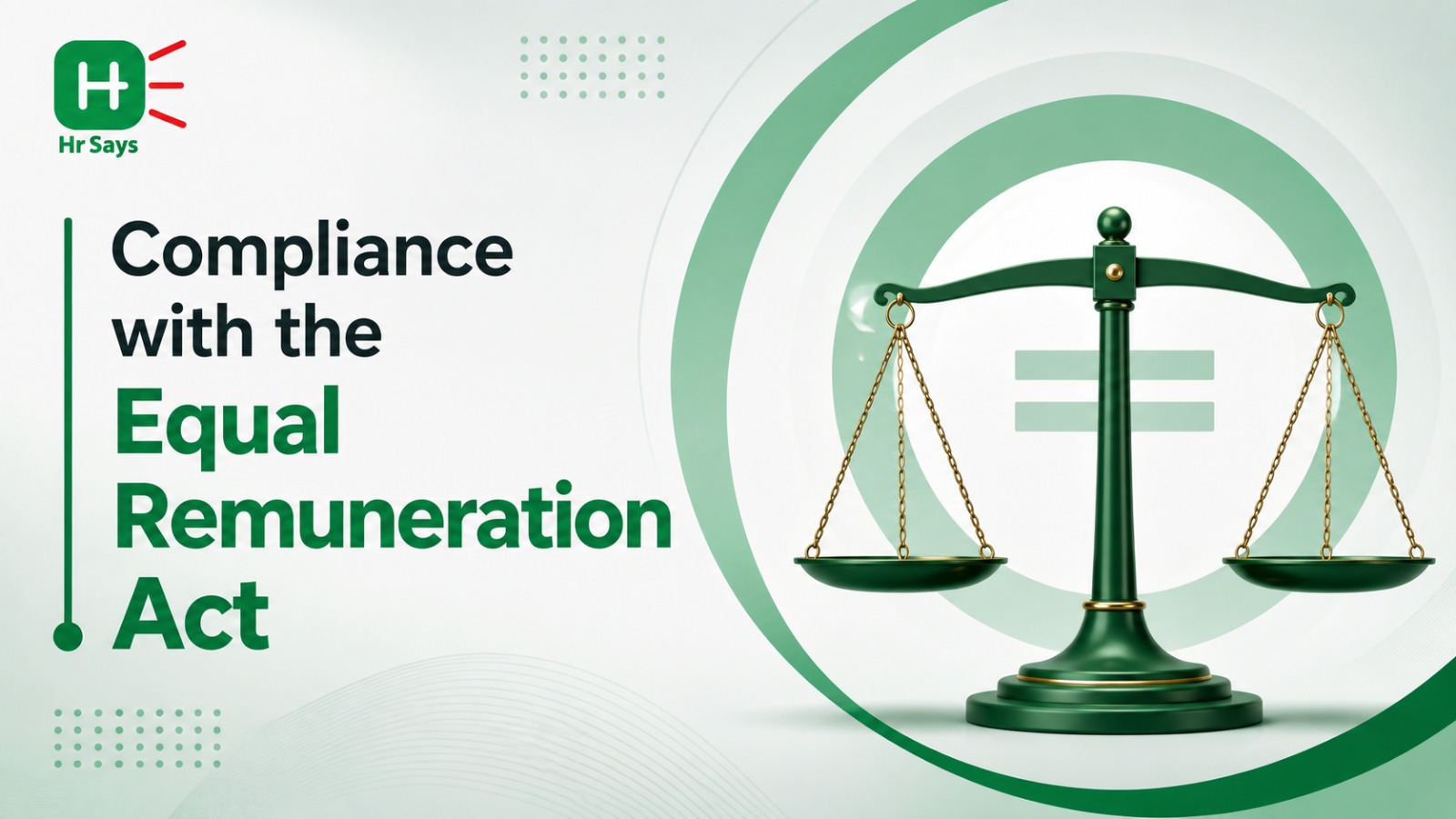
 India’s pay-equity framework requires employers to prevent gender-based wage discrimination through objective job evaluation, transparent compensation structures, regular pay-gap audits, and documented corrective measures aligned with the Code on Wages.




Workplace equity and compensation governance have transitioned from human resource talking points into core statutory compliance mandates. Historically enacted under the Equal Remuneration Act, 1976 (ERA)—and now structurally reinforced under the Code on Wages, 2019—Indian labor jurisprudence strictly prohibits gender-based wage discrimination for the same work or work of a similar nature.
For modern enterprises, corporate legal counsels, and total rewards directors, maintaining compliance requires moving past superficial salary benchmarking. Gender pay disparities rarely stem from explicit, deliberate bias on monthly payroll sheets. Instead, they manifest subtly across initial hiring negotiations, discretionary bonus distributions, maternity-related career interruptions, and opaque promotion ladders.
Failing to conduct periodic Equal Remuneration Act gender pay gap audit reviews exposes organizations to statutory penalties, employee litigation, union disputes, and severe brand damage in an increasingly ESG-conscious market.
1. Statutory Mandates: From ERA 1976 to the Code on Wages
Corporate compensation architectures in India are governed by clear constitutional and statutory equality mandates:
- Constitutional Anchor (Article 39(d)): Directs the State to secure equal pay for equal work for all individuals, regardless of gender.
- Equal Remuneration Act, 1976 (Sections 4 & 5): Establishes an absolute duty for employers to pay equal remuneration (base salary plus all cash and in-kind emoluments) to male and female workers performing identical or similar duties. It explicitly bars employers from reducing a higher-paid cohort's wages to equalize pay; disparities must be resolved by raising the lower-paid worker's compensation. Furthermore, discrimination against women during recruitment, promotions, training, or transfers is prohibited.
- The Code on Wages, 2019 (Chapter II, Section 3): Preserves and broadens the ERA provisions, extending non-discrimination protections to all genders across both organized and unorganized enterprise establishments, including fixed-term and platform-engaged professionals.
- Mandatory Statutory Registers (Form D): Section 8 of the ERA and corresponding wage rules require employers to maintain up-to-date documentation (Form D registers) reflecting workforce numbers, classifications, remuneration rates, and component structures disaggregated by gender.
2. Defining "Same Work or Work of a Similar Nature"
A central compliance defense often raised by enterprises is that male and female employees hold different job titles. However, labor authorities and courts apply the "substance over form" test.
Under Section 2(h) of the Act, work is classified as similar if it meets four objective criteria:
- Skill & Competency: The level of technical expertise, education, experience, and training required to perform the core functions of the role.
- Mental & Physical Effort: The physical exertion, cognitive problem-solving, and continuous concentration required by the duties.
- Operational Responsibility: The degree of accountability for budgets, project deliverables, equipment safety, or team management.
- Working Conditions: The physical environment, hazards, stress factors, and shift timings under which the job is executed.
Example: Giving a male employee the title of "Senior Operations Specialist" and a female employee the title of "Administrative Operations Associate" while both execute identical supply chain logistics and reporting duties constitutes an illegal structural wage violation under the Act.
3. Structural Comparison: Unadjusted vs. Adjusted Pay Gap Metrics
When conducting an Equal Remuneration Act gender pay gap audit, compensation teams must distinguish between two statistical measurements:
- Unadjusted (Raw) Gender Pay Gap: Compares the median and mean earnings of all men versus all women across the entire organization, irrespective of job titles, seniority, or function. This metric reflects organizational diversity, representation in high-paying leadership ranks, and occupational segregation.
- Adjusted (Like-for-Like) Pay Gap: Evaluates compensation differences between individuals performing the exact same or substantially similar work, controlling for legitimate, non-discriminatory variables such as years of experience, performance ratings, education, and geographic location. This metric directly assesses legal compliance under the Equal Remuneration Act.
4. High-Performance Action Plan: The 4-Phase Pay Equity Audit
To establish an audit-ready compensation model that mitigates legal exposure and drives pay transparency, enterprise leadership can implement a four-phase operational workflow:
- Standardize Job Architectures & Map Comparable Work
Phase 1: Role Normalization
Extract total compensation data across base wages, performance bonuses, allowances, and equity grants. Group all roles into objective leveling bands based on evaluated skill, effort, responsibility, and working conditions rather than historical job titles. - Execute Controlled Regression & Identify Disparities
Phase 2: Statistical Modeling
Run multi-variable regression models to isolate gender as an independent variable while controlling for tenure, performance ratings, specialized certifications, and location. Flag any statistically significant pay gap exceeding 1%–2% in comparable roles. - Close Identified Pay Gaps via Upward Wage Adjustments
Phase 3: Financial Remediation
In accordance with Section 4 of the ERA, resolve unjustified disparities by increasing the remuneration of lower-paid female employees to match their male counterparts. Never attempt to achieve parity by reducing compensation for higher-paid cohorts. - Eliminate Salary History Inquiries & Standardize Pay Bands
Phase 4: Policy Institutionalization
Ban past-salary questions during recruiting to prevent compounding historical pay discrepancies. Publish transparent salary ranges for internal job postings and conduct recurring annual equal pay audits.
Actionable Strategy: Digital Governance & Statutory Alignment
- Maintain Digital Audit Registers: Ensure human resource information systems (HRIS) automatically compile digital Form D compliance registers, tracking hiring ratios, promotions, and median pay across gender cohorts for labor inspection readiness.
- Verify Professional Credentials via Central Academic Repositories: When assessing skill-based compensation differentials, verify candidate educational degrees and technical certifications through national digital repositories—such as the APAAR ID system within the Academic Bank of Credits (ABC) network—to establish objective, verifiable merit baselines.
- Establish Transparent Performance Calibration: Replace unstructured discretionary bonus decisions with rubric-based performance appraisals to eliminate subjective manager bias from variable pay allocations.
Frequently Asked Questions (FAQs)
Q1. What is the Equal Remuneration Act, 1976?The Equal Remuneration Act, 1976 is an Indian central labor law that mandates equal pay for equal work between men and women and prohibits discrimination in hiring, promotions, training, and workplace transfers.
Q2. How is the Act integrated into the new labor codes?The Equal Remuneration Act has been formally subsumed under Chapter II of the Code on Wages, 2019, preserving equal pay protections while broadening non-discrimination coverage across all genders and worker categories.
Q3. Can an employer reduce male salaries to match lower female salaries to comply with the law?No. Section 4(2) of the Equal Remuneration Act explicitly prohibits employers from reducing the rate of remuneration of any worker to achieve wage parity. Discrepancies must be corrected by raising the pay of the lower-earning group.
Q4. Are performance-based salary differences legal under the Act?Yes. The law allows wage variations based on objective, non-gender factors such as documented performance ratings, specialized technical skills, total experience, seniority, and geographic cost of living.
Q5. What are the penalties for non-compliance under the Equal Remuneration Act?Under Section 10 of the ERA, paying unequal remuneration or discriminating in hiring can attract financial fines and imprisonment ranging from 3 months to 1 year for first offenses, with repeat offenses carrying imprisonment of up to 2 years. Under the Code on Wages, repeat contraventions carry fines up to ₹1 Lakh and imprisonment up to 3 months.
Q6. Does the Act cover discretionary annual bonuses and perks?Yes. The statutory definition of "remuneration" includes basic wages, allowances, performance bonuses, and all benefits paid in cash or kind.
Q7. How often should an enterprise conduct an Equal Remuneration Act gender pay gap audit?Enterprises should conduct a comprehensive equal pay audit at least once every 12 months, ideally before annual appraisal and merit-increase cycles, to correct imbalances before new pay rates take effect.
Q8. Why is asking for a candidate's previous salary risky for pay equity?Relying on a candidate’s prior salary history perpetuates historical wage disparities from past employers. Setting compensation based on objective internal pay bands for the role ensures fair market-rate compensation regardless of prior earnings.
Q9. What constitutes Form D compliance?Form D is a statutory register that employers must maintain under Rule 6 of the Equal Remuneration Rules, 1976, documenting employee counts, job categories, wage rates, and gender breakdowns.
Q10. Can contract and gig workers claim protections under equal pay laws?Yes. Protections against gender-based wage discrimination extend across employment types, and the unified Code on Wages specifically includes contract staff and platform workers within its broader compliance scope.