 Wednesday, November 18, 2026
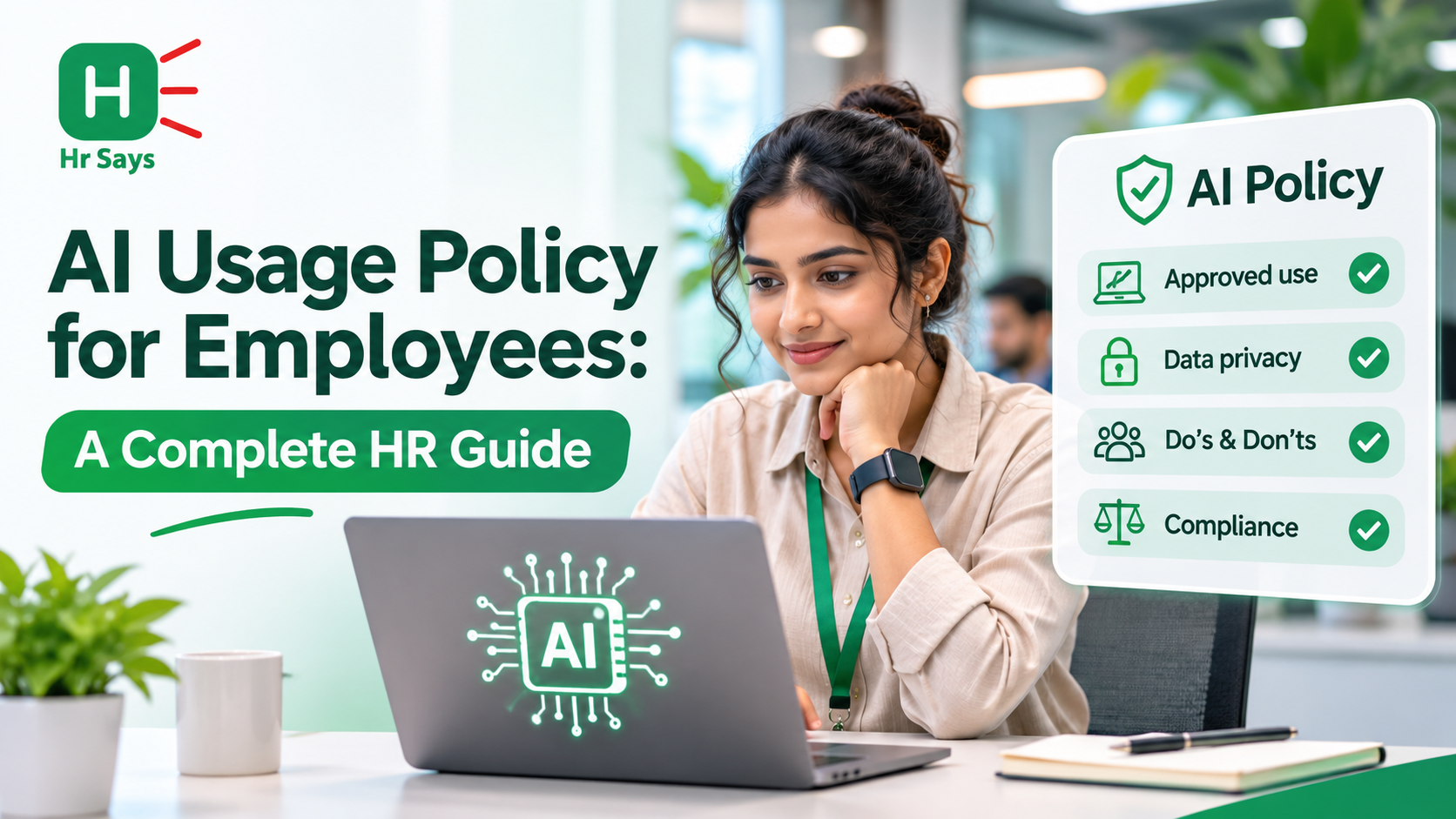
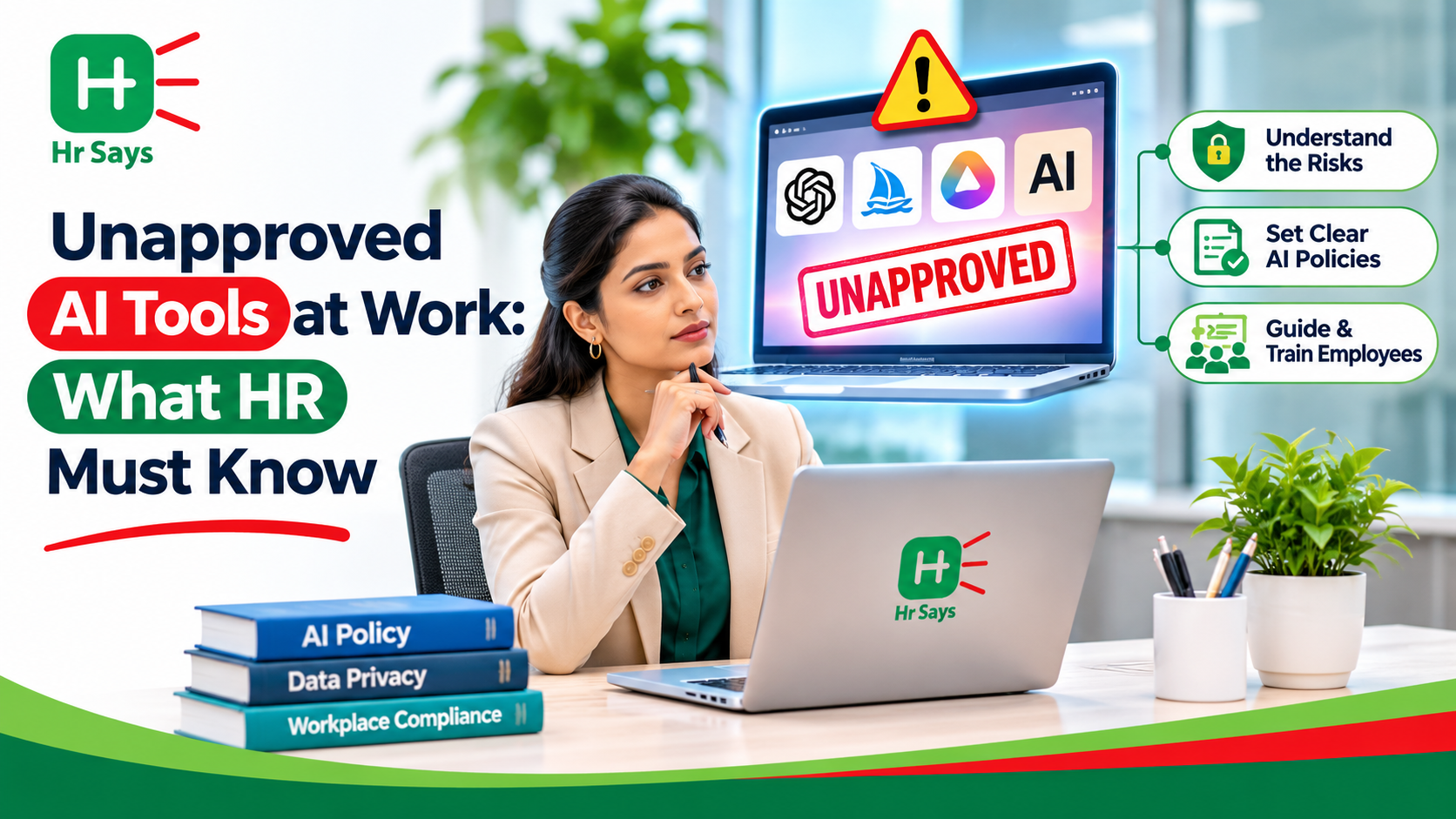
 Building an AI usage policy helps Indian organizations adopt artificial intelligence responsibly, protect employee and client data, and meet compliance obligations while fostering a culture of ethical, accountable technology use at work.





Introduction
Artificial intelligence has moved from being a technology concept discussed in boardrooms to a daily tool used by employees across departments. Whether it is a sales professional using a generative AI tool to draft client emails, a finance analyst relying on AI-powered dashboards for forecasting, or an HR executive using AI to screen resumes, the presence of artificial intelligence in the Indian workplace is no longer a future possibility. It is a present reality.
Yet most Indian organizations, from large enterprises in Bengaluru and Hyderabad to growing startups in Pune and Ahmedabad, have not yet formalized how their employees should use these tools. The absence of a clear AI usage policy creates serious risks: data privacy breaches, intellectual property violations, biased decision-making, compliance failures, and reputational damage.
For HR professionals and business leaders, building a structured AI usage policy is no longer optional. It is a foundational responsibility. This guide walks through what an AI usage policy is, why it matters for Indian workplaces, and how organizations can build one that is practical, enforceable, and future-ready.
Understanding What an AI Usage Policy Actually Means
An AI usage policy is a formal organizational document that defines how employees are permitted to use artificial intelligence tools and systems in the course of their professional work. It sets expectations, defines acceptable and unacceptable behaviors, outlines accountability mechanisms, and communicates the organization's overall stance toward AI adoption.
This policy is different from a general IT policy or a data privacy policy, although it intersects with both. While an IT policy governs device usage and network access, and a data privacy policy governs how personal data is handled, an AI usage policy specifically addresses the unique risks and responsibilities that come with using intelligent, generative, and predictive tools in professional settings.
A well-designed AI usage policy should answer three core questions for every employee:
- What AI tools are they permitted to use, and under what conditions?
- What data or information must never be entered into an AI system?
- Who is accountable when an AI-generated output causes a problem?
Without clarity on these three questions, even a well-meaning employee can inadvertently expose the organization to legal, ethical, or operational risk.
Why Indian Organizations Need an AI Policy Right Now
India is experiencing rapid AI adoption across sectors. The Indian government's National Strategy for Artificial Intelligence, published by NITI Aayog, positions India as a potential AI leader in healthcare, agriculture, education, and smart cities. At the same time, the Digital Personal Data Protection Act, 2023 (DPDPA) has introduced a legal framework that directly affects how organizations process personal data, including data that may be input into AI tools.
For Indian HR teams, this legislative shift creates a direct compliance obligation. If an employee enters personally identifiable information about a job applicant into a generative AI tool hosted by a third-party provider, the organization may be processing personal data outside the boundaries of its stated privacy practices. Under the DPDPA, this can expose the company to regulatory scrutiny.
Beyond legal risk, there is a cultural dimension that Indian organizations must consider. In many Indian workplaces, particularly in Tier 2 and Tier 3 cities, awareness of AI limitations is uneven across the workforce. Junior employees may trust AI-generated content without verification. Senior leaders may underestimate how much proprietary information is being shared with external AI platforms. A policy bridges this awareness gap.
Core Components of an Effective AI Usage Policy
Building an AI usage policy is not about copying a template from a Western multinational and applying it to an Indian context. It requires deliberate design that reflects the organization's size, industry, risk appetite, and workforce profile. That said, every effective AI usage policy should include the following core components.
Scope and applicability must be defined clearly. The policy should specify which employees, contractors, freelancers, and third-party vendors it applies to. It should also define which categories of AI tools fall under its coverage, including generative AI platforms, AI-powered communication tools, predictive analytics software, and automated decision-making systems used in HR, finance, or operations.
Approved and restricted tools should be listed with reasoning. Rather than issuing a blanket restriction that frustrates employees, HR leaders should work with IT and legal teams to categorize tools into those that are approved for use, those that require prior approval, and those that are explicitly prohibited. For example, using an approved internal AI writing assistant for drafting internal reports may be fully permitted, while entering client contracts into a public generative AI tool should be restricted.
Data handling rules are arguably the most critical section of any AI usage policy. Employees must be informed that certain categories of information must never be entered into any AI tool, regardless of how trusted or popular that tool is. These categories typically include:
- Personal data of employees, customers, or candidates
- Proprietary business strategies or unreleased financial data
- Confidential client information or trade secrets
- Source code or software under active development
- Legally privileged documents or ongoing litigation materials
Output verification requirements address a risk that is specific to AI tools. AI systems, including the most advanced large language models, can produce inaccurate, biased, or misleading outputs. The policy must clearly state that no AI-generated output should be published, submitted, or acted upon without human review and verification. This is particularly important in legal, medical, financial, and HR-related communications.
Accountability and reporting mechanisms should define what happens when an employee violates the policy, as well as what process should be followed when an AI-related incident occurs, such as a data leak caused by inputting sensitive information into an external tool. Clear escalation paths and a named point of contact for AI-related concerns build trust and encourage timely reporting.
Steps to Build and Roll Out the Policy in Your Organization
Building an AI usage policy is a cross-functional effort. HR cannot do it alone. The process works best when it involves IT, legal, compliance, senior leadership, and representatives from key business functions who already use AI tools in their daily work.
The process typically follows a structured sequence. First, the organization must conduct an internal AI audit to understand which AI tools are currently in use across teams, whether formally sanctioned or not. This audit often reveals what is commonly called "shadow AI," where employees are already using external AI tools without any organizational awareness or approval.
Second, the legal and compliance team must review the regulatory landscape, specifically the Digital Personal Data Protection Act, 2023, any sector-specific regulations such as SEBI guidelines for financial firms or IRDAI requirements for insurance organizations, and contractual obligations with clients that may prohibit certain types of AI-assisted work.
Third, HR should draft the policy in plain language. Overly legalistic policies are rarely read or remembered. The goal is for every employee, from a first-year analyst to a department head, to understand what the policy requires of them. Where technical terms are unavoidable, brief explanations should be included.
Fourth, the policy should go through a structured review and approval process, receive formal sign-off from the leadership team, and be published through official internal channels. It should not be buried in an employee handbook where it will never be found.
Fifth, and critically, training must accompany the policy launch. A document without training is a compliance formality, not a cultural shift. Organizations should conduct role-specific sessions that show employees what responsible AI use looks like in their specific job function. This is where HRSays-style learning platforms and content ecosystems add genuine value, by making policy education engaging, accessible, and contextually relevant.
Keeping the Policy Current in a Rapidly Changing AI Landscape
One of the unique challenges of an AI usage policy compared to other workplace policies is that the technology it governs evolves at a pace that most policy frameworks are not designed to handle. A policy written in January may be significantly outdated by October of the same year as new tools, capabilities, and risks emerge.
Indian organizations should build in a formal policy review cadence of at least twice a year. The review should consider new tools that have entered the market, any changes in Indian data protection regulations or sector-specific compliance requirements, feedback from employees about practical challenges in following the policy, and any incidents or near-misses that exposed gaps in the existing framework.
The review process should be owned jointly by HR, IT, and legal, with final approval from senior leadership. This shared ownership signals to the organization that responsible AI use is a collective commitment, not a checkbox activity.
Ethical AI Use and the Role of HR in Shaping Organizational Culture
A policy document defines the floor of acceptable behavior. It is the HR leader's role to raise the ceiling by embedding a culture of responsible AI use throughout the organization. This means recognizing and rewarding employees who use AI thoughtfully and transparently, creating safe channels for employees to raise concerns about AI-generated bias or errors, and modeling ethical AI behavior at the leadership level.
For Indian organizations that are increasingly competing for global talent and international clients, demonstrating a mature approach to AI governance is also a competitive advantage. Candidates evaluate employers not just on compensation and culture, but on how forward-thinking and principled their technology practices are. A well-communicated AI usage policy sends a strong signal about the kind of organization a company aspires to be.
Conclusion
Artificial intelligence is reshaping how work gets done across Indian organizations, and that transformation is accelerating. For HR professionals, building an AI usage policy is not about slowing down innovation. It is about ensuring that innovation happens responsibly, with clarity, accountability, and respect for the people and data involved.
A strong AI usage policy protects the organization, empowers employees, and builds the kind of trust that makes meaningful AI adoption possible. Indian companies that invest in getting this right today will be significantly better positioned for the AI-driven workplace of tomorrow.
Frequently Asked Questions
Q1: What is an AI usage policy for employees?
An AI usage policy is a formal document that defines how employees may use artificial intelligence tools in their professional work. It covers approved tools, data handling rules, output verification requirements, and accountability mechanisms.
Q2: Is an AI usage policy legally required in India?
There is no single law that specifically mandates an AI usage policy, but the Digital Personal Data Protection Act, 2023 creates compliance obligations that make such a policy strongly advisable for any organization using AI tools that process personal data.
Q3: How often should an organization update its AI usage policy?
Given how rapidly AI technology evolves, organizations should review and update their AI usage policy at least twice a year. Any significant regulatory changes or new tool adoptions should trigger an immediate review.
Q4: Who should be responsible for enforcing the AI usage policy?
Enforcement is typically a shared responsibility across HR, IT, and legal teams. HR owns the people-side of the policy, including training and accountability processes. IT manages tool access and monitoring. Legal ensures ongoing regulatory compliance.
Q5: What types of information should employees never enter into an AI tool?
Employees should avoid entering personally identifiable information, client confidential data, proprietary business strategies, source code under development, unreleased financial data, and legally privileged documents into any AI tool, particularly public or third-party platforms.
Resources
- NITI Aayog National Strategy for Artificial Intelligence: India's official national AI strategy outlining principles and frameworks for responsible AI adoption across sectors.
- Ministry of Electronics and Information Technology (MeitY): Official government body governing digital policies including data protection and AI regulations in India.
- Digital Personal Data Protection Act, 2023: The primary Indian legislation governing personal data processing, which directly affects how organizations handle data in AI systems.
- Society for Human Resource Management (SHRM): Global HR body offering research, toolkits, and guidance on AI governance and workplace policy development.
- World Economic Forum AI Governance Resources: International research and frameworks on responsible AI use in organizations, applicable to HR and business leaders.
Interlinking Keywords
AI workplace policy India, responsible AI at work, HR technology policy, employee AI guidelines, generative AI rules for employees, digital personal data protection act HR, shadow AI in organizations, AI compliance for Indian companies, HR policy for AI tools, workplace AI governance
Last Reviewed By
Dr. Manthan Tripathi and Hr Says Advisory Panel on 16 November 2026.
Disclaimer
The information presented in this article is intended for general informational and educational purposes only. It does not constitute legal, compliance, or regulatory advice. Organizations are encouraged to consult qualified legal and HR professionals before drafting or implementing an AI usage policy, particularly in light of applicable Indian laws and sector-specific regulations.