 Sunday, November 15, 2026
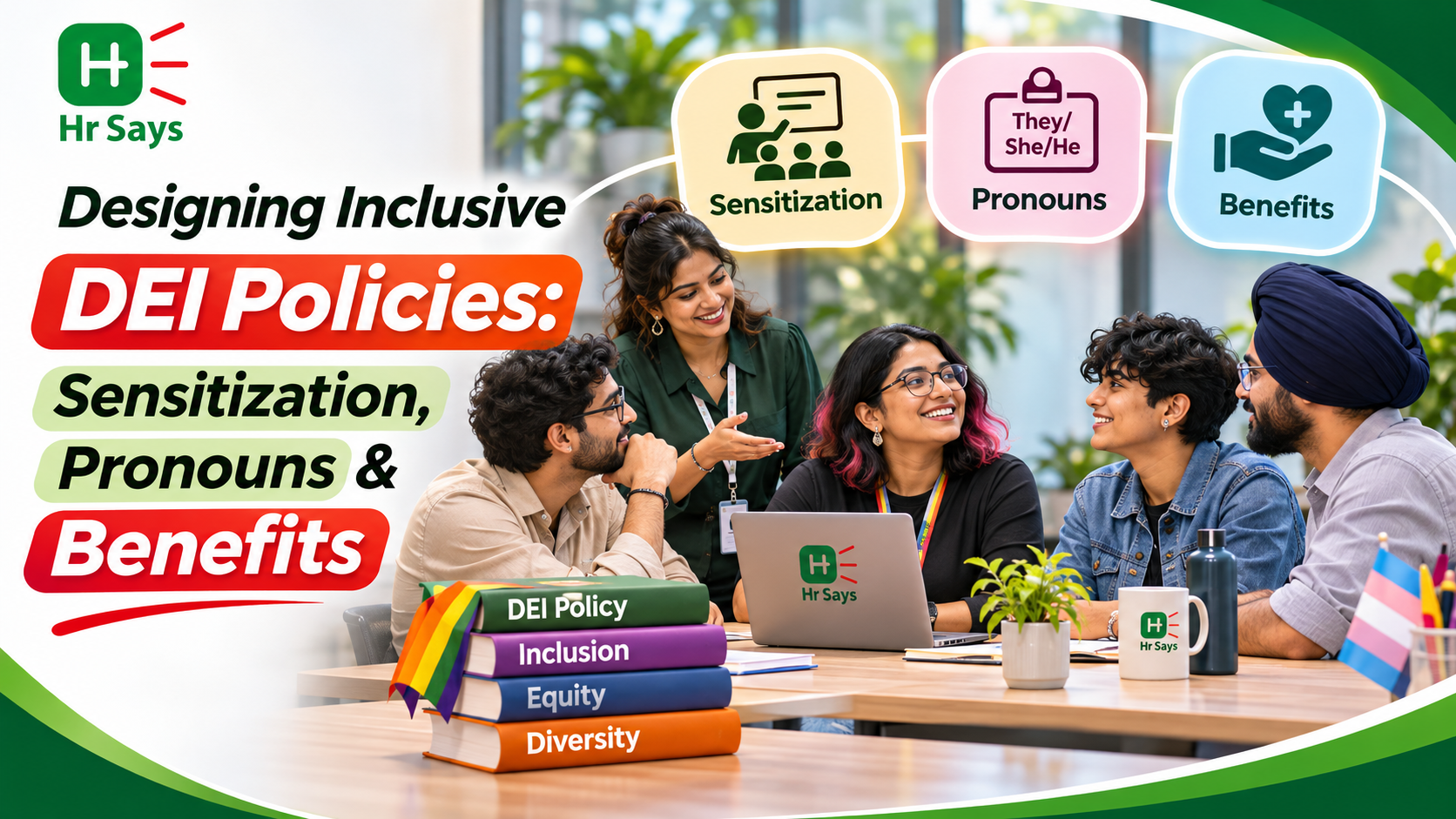
 Inclusive DEI policies promote a workplace where everyone feels respected, valued, and supported. Sensitization, inclusive language, and equal benefits help build a diverse and welcoming environment.





Executive Overview: From Performative Diversity to Structural Inclusion
Historically, corporate Diversity, Equity, and Inclusion (DEI) initiatives operated primarily as ceremonial gestures: annual pride logos, isolated unconscious bias webinars, and performative recruitment slogans. While these activities signaled intent, they frequently left the foundational operating systems of the enterprise untouched. Employees from underrepresented gender identities, sexual orientations, and marginalized socio-demographic backgrounds continued to navigate legacy corporate systems built around heteronormative, cisgender, and exclusionary assumptions.
When corporate infrastructure fails to reflect diversity in its core policies, organizations encounter severe cultural and economic friction:
- The Psychological Safety Deficit: Forcing employees to conceal authentic aspects of their identity—whether through binary-only HR systems, unaddressed micro-aggressions, or rigid dress codes—drains cognitive energy and fosters professional alienation.
- Attrition of Top Underrepresented Talent: Progressive talent pools actively audit an enterprise's genuine inclusivity before joining. The presence of non-inclusive medical plans, rigid parental policies, and performative lip service accelerates voluntary turnover among high-potential professionals.
- Legal and Regulatory Vulnerability: Modern regulatory frameworks—including workplace non-discrimination mandates, transgender rights protections, and statutory parity directives—increasingly penalize organizations that fail to institutionalize protective policies, gender-neutral provisions, and robust anti-harassment mechanisms.
Operationalizing genuine inclusion requires dismantling systemic barriers across institutional operations. A modern corporate DEI policy integrates three foundational pillars:
- Deploying continuous, experiential sensitization frameworks that dismantle micro-aggressions and equip leadership with measurable inclusive management behaviors.
- Architecting clear, dignified pronoun and self-identification protocols across enterprise software, documentation, and interpersonal communications.
- Re-engineering health and welfare plans into comprehensive, gender-neutral medical benefits that cover gender-affirming healthcare, inclusive parental leave, and non-traditional dependent definitions.
1. Enterprise Sensitization Frameworks: Behavioral Transformation and Bias Mitigation
Sensitization training cannot function as a one-time compliance video that employees complete passively. Effective sensitization is an ongoing, immersive developmental framework that connects interpersonal behavior to business performance and workplace psychological safety.
Principles of High-Impact Sensitization- De-weaponizing Conversations: Training must avoid shame-based pedagogy. Instead of labeling participants as inherently biased, sessions should ground discussions in cognitive neuroscience, explaining how the human brain relies on heuristic shortcuts that manifest as unintentional workplace micro-aggressions.
- Scenario-Based Behavioral Simulation: Shifting focus from abstract sociological definitions to concrete workplace interactions: navigating gender transitions in client-facing teams, addressing deadnaming during executive meetings, and establishing equitable meeting hygiene where marginalized voices are not interrupted.
- Leadership Accountability Cascades: Senior leadership must participate visibly and be evaluated on inclusion metrics. Executive performance goals must incorporate retention and promotion parity for underrepresented cohorts within their divisions.
Workplace micro-aggressions—subtle, indirect, or unintentional expressions of prejudice—compound over time to create a hostile micro-climate:
- The "Active Bystander" Protocol: Training employees to intervene constructively using the "Four D's" model: Direct intervention, Distraction, Delegation to authority, or Delayed check-ins with affected individuals.
- Psychological Safety in Reporting: Establishing anonymous, non-punitive grievance channels where recurring behavioral concerns can be evaluated by trained ombudspersons before escalating into statutory harassment violations.
- Continuous Micro-Learning: Replacing annual multi-hour lectures with monthly, contextual five-minute digital modules covering neurodiversity, cultural intelligence, inclusive language, and anti-retaliation principles.
2. Pronoun Protocols and Identity Expression: Digital Systems and Workplaces
Personal pronouns are foundational to human dignity and self-determination. Organizations must eliminate administrative friction by allowing employees to designate how they are addressed, recognized, and recorded across corporate life.
Enterprise Digital Infrastructure and System ArchitectureLegacy Enterprise Resource Planning (ERP) and Human Resource Information Systems (HRIS) often force users into binary gender selections that match legal government documents:
- Decoupling Legal Identity from Preferred Identity: Corporate digital platforms must separate Legal Name and Sex (retained strictly for confidential payroll, tax, and social security compliance) from Preferred/Chosen Name, Gender Identity, and Pronouns (displayed across public directories, email clients, communication software, and ID badges).
- Self-Service Pronoun Customization: Enabling voluntary pronoun fields across company directories, video conferencing tools, and enterprise collaboration suites. Acceptable designations include she/her, he/him, they/them, neo-pronouns, or explicit designations such as "Please use my name only."
- Elimination of Mandatory Disclosure: While inclusive usage is supported, mandating that every employee state their pronouns can inadvertently force individuals who are exploring their identity or are not safely out to publicly disclose or misgender themselves. Pronoun sharing must remain encouraged and normalized, but strictly voluntary.
- Gender-Neutral Facilities: Providing all-gender single-occupancy restrooms, showers, and wellness spaces alongside multi-stall binary facilities, ensuring private, safe accommodations for all employees without requiring invasive medical justifications.
- The Self-Determination Standard: Enforcing an explicit operational policy stating that employees have the absolute right to use whichever gender-segregated facility aligns with their lived gender identity, backed by zero-tolerance disciplinary protections against harassment or gatekeeping.
3. Gender-Neutral Medical Benefits: Comprehensive Health Equity
The traditional corporate benefits model was designed around a nuclear, heteronormative family structure: cisgender husband, cisgender wife, and biological children. This legacy structure leaves significant gaps in health coverage for LGBTQ+ individuals and non-traditional families.
Restructuring Healthcare PlansModern, equitable corporate benefits packages re-engineer health coverage across three core domains:
- 1. Comprehensive Gender-Affirming Healthcare:
- Explicitly removing blanket "cosmetic" and "experimental" coverage exclusions for gender dysphoria treatments.
- Covering hormone replacement therapy (HRT), gender-affirming psychological counseling, speech therapy, facial feminization/masculinization procedures, chest surgery, and genital reconstruction surgeries under standard group health insurance policies.
- Structuring dedicated clinical travel and lodging stipends for employees residing in geographic areas with restricted access to specialized gender-affirming medical professionals.
- 2. Equalized, Gender-Neutral Parental and Caregiver Leave:
- Eliminating gendered terms like "maternity" and "paternity" leave in favor of Primary Caregiver and Secondary Caregiver leave, or offering uniform Parental Leave regardless of gender.
- Equalizing leave durations for biological childbirth, non-gestational parentage, surrogacy, foster care placement, and legal adoption, ensuring that all parents receive equal time to bond with new dependents.
- 3. Expanded Dependent Definitions and Assisted Reproductive Technologies:
- Redefining eligible dependents to include same-sex domestic partners, civil union spouses, and non-marital cohabitating partners without requiring proof of legal marriage.
- Covering advanced assisted reproductive technologies—including in vitro fertilization (IVF), intrauterine insemination (IUI), egg and sperm freezing, and gestational surrogacy medical reimbursements—accessible to all employees regardless of marital status or sexual orientation.
4. Structural Comparison: Performative vs. Operationalized DEI Architectures
Evaluating organizational approaches across core operational dimensions illustrates how deliberate structural design transforms corporate culture from performative gestures into lasting systemic inclusion:
Sensitization and Education- Performative Model: Mandatory, annual 60-minute passive compliance video lectures focusing strictly on legal liability avoidance; zero continuous dialogue or behavioral evaluation.
- Operationalized Model: Ongoing, experiential micro-learning integrated with psychological safety principles, active bystander protocols, and executive compensation-linked inclusion KPIs.
- Organizational Outcome: Performative efforts induce cynical employee fatigue; operationalized models generate measurable behavioral shifts and cross-functional psychological safety.
- Performative Model: Encourages pride pins or social media email badges, but leaves internal HRIS and IT databases locked in rigid binary configurations tied strictly to birth certificates.
- Operationalized Model: Fully decoupled legal and chosen names in enterprise software; flexible self-service pronoun directories; all-gender facilities accessible by self-determination.
- Organizational Outcome: Eliminates daily friction and deadnaming, signaling institutional respect for employee identity.
- Performative Model: Standard commercial group insurance that explicitly excludes gender affirmation, defines family strictly by legal marriage, and restricts parental leave by biological sex.
- Operationalized Model: Fully inclusive health policies covering gender-affirming medical care, equalized primary/secondary parental leave, and comprehensive fertility coverage for non-traditional families.
- Organizational Outcome: Significantly reduces healthcare-related anxiety, eliminates out-of-pocket medical penalties for LGBTQ+ staff, and cements competitive talent retention.
5. Governance, Escalation, and Accountability Frameworks
A DEI policy without clear accountability, enforcement, and governance is merely an aspirational statement. Sustainable inclusion requires explicit institutional governance:
- The DEI Steering Committee: Establishing an interdisciplinary governance council comprising human resources, legal counsel, operations leads, and active Employee Resource Group (ERG) co-chairs to review quarterly inclusion metrics and benefit utilization.
- Anti-Retaliation Protections: Explicitly defining deliberate, chronic misgendering, deadnaming, or invasive questioning about medical transitions as forms of actionable harassment under the corporate code of conduct, subject to standard progressive discipline up to and including termination.
- Continuous Feedback Loops: Conducting quarterly, confidential inclusion climate surveys that measure belonging, psychological safety, and leadership trust across disaggregated identity cohorts, surfacing emerging cultural friction before it drives attrition.
6. Phased Implementation Protocol: The 4-Phase Corporate Rollout Roadmap
Transitioning an enterprise from outdated administrative frameworks into an inclusive, operationally resilient organization requires a structured four-phase operational strategy:
- Phase 1: Diagnostic Audit and Policy Baseline (Months 1 to 2):
- Audit all internal employee handbooks, job descriptions, and benefit contracts to identify gendered language and systemic coverage exclusions.
- Review HRIS, ERP, and internal software systems to assess technical readiness for chosen name and pronoun customization.
- Establish baseline sentiment data through an anonymous, comprehensive workplace inclusion audit.
- Phase 2: Benefits Re-Engineering and System Architecture (Months 3 to 4):
- Negotiate policy riders with insurance carriers to remove exclusions for gender affirmation procedures and expand dependent definitions to include domestic partners.
- Reconfigure enterprise directories, email platforms, and badge printing software to separate legal identities from preferred workplace names and pronouns.
- Re-designate appropriate single-occupancy facilities across all office sites as all-gender restrooms.
- Phase 3: Leadership Engagement and Experiential Training (Months 5 to 6):
- Launch intensive, scenario-based sensitization workshops for people managers and executive leadership, focusing on inclusive management and conflict resolution.
- Publish the corporate Pronoun and Self-Identification Guide, providing practical communication templates and FAQs for internal teams.
- Equalize parental leave policies across all global and regional subsidiaries.
- Phase 4: Institutionalization and Continuous Quality Assurance (Months 7 to 12):
- Integrate micro-learning sensitization modules into the standardized new-hire onboarding experience.
- Convene bi-annual benefits review sessions with insurer partners to audit claim approval rates for gender-affirming procedures.
- Execute annual enterprise inclusion sentiment audits, tracking improvements in retention, engagement, and promotional parity among diverse cohorts.
10 Frequently Asked Questions (FAQs)
Q1. What is the fundamental difference between an employee's legal name and preferred name in HR systems?An employee's legal name is the name recognized on official government documentation (such as passports, tax IDs, and bank accounts), which must be retained in secure, confidential HR systems for payroll, taxation, and statutory benefits compliance. A preferred or chosen name is the name the employee uses in everyday professional life. Modern HR systems decouple these fields, displaying the chosen name across public directories, email clients, organizational charts, and company badges while keeping the legal name restricted to confidential finance and compliance files.
Q2. How can an organization handle an employee who refuses to use a colleague's correct pronouns?Organizations must distinguish between genuine, accidental slips and persistent, deliberate misgendering:
- Accidental mistakes should be corrected quickly, politely, and without performative drama.
- Deliberate, repeated refusal to respect an employee's documented name or pronouns constitutes targeted disrespect and harassment under modern workplace codes of conduct.
- Such behavior should be addressed through progressive disciplinary frameworks: beginning with a formal behavioral warning and escalating to performance intervention or termination if the misconduct persists.
Empirical actuarial data demonstrates that adding gender-affirming healthcare to group medical policies results in negligible premium increases (typically under 0.1% to 0.2% of total plan costs):
- Gender-affirming surgeries and specialized procedures represent a low-volume, high-impact clinical utilization rate across an employee base.
- The marginal insurance cost is overwhelmingly offset by measurable reductions in employee mental health claims, lowered absenteeism, and significantly reduced recruitment replacement costs.
Using "maternity" and "paternity" reinforces rigid, binary gender roles that presume only women provide primary infant care and only biological mothers experience child placement:
- These gendered terms exclude adoptive parents, same-sex couples, single parents, and trans or non-binary employees.
- Transitioning to Primary Caregiver and Secondary Caregiver leave—or offering equalized, gender-neutral parental leave—ensures equitable bonding time for all families regardless of gender identity or path to parenthood.
Yes. Providing gender-neutral single-occupancy facilities alongside traditional male and female multi-stall restrooms complies with standard municipal building codes and occupational health regulations:
- All-gender individual facilities provide accessible, safe environments for non-binary employees, transgender individuals, parents assisting young children, and people with disabilities who require assistance from caregivers of a different gender.
No. Pronoun sharing should be normalized and supported, but strictly voluntary:
- While voluntary sharing creates a welcoming culture and eliminates assumptions, mandating pronoun declarations can inadvertently force individuals who are questioning their gender identity, or who are not safely out in their personal lives, to either publicly out themselves or state pronouns that do not reflect their true identity.
In jurisdictions without legal marriage equality, progressive organizations amend their corporate group insurance policies to recognize Domestic Partnerships or Co-habitating Partners:
- Employees qualify their partners for health coverage by submitting alternative verification, such as a joint lease, shared bank account, or a signed affidavit of domestic partnership, eliminating the legal marriage prerequisite.
Common micro-aggressions include:
- Asking invasive personal questions about an individual's medical history, surgical status, or legal name history ("deadname").
- Making comments like "I would never have guessed you were trans" or "You look just like a real woman/man."
- Persistently avoiding using a person's pronouns by clumsily referring to them only by their job title or omitting them from team introductions.
Inclusion metrics are measured through tangible business outcomes:
- Voluntary retention rates among underrepresented talent compared to historical baselines.
- Reductions in employee relations grievances, formal discrimination complaints, and legal settlement costs.
- Improvements in organizational recruitment yield, candidate acceptance rates, and external employer brand reputation rankings.
- Qualitative sentiment improvements on annual internal psychological safety and belonging surveys.
Take three prioritized, operational actions:
- Audit HR Systems for Chosen Name Separation: Update company directory, email, and internal communication software so employees can update their displayed name and pronouns without needing updated government legal documents.
- Review Group Health Insurance Exclusions: Request an immediate policy review with your insurance broker or carrier to identify and remove blanket coverage exclusions for gender confirmation therapies and mental health support.
- Draft a Clear Pronoun and Gender Expression Guide: Publish an educational, non-punitive practical guide for all employees that explains why pronouns matter, provides email signature templates, and outlines respectful communication standards.