Thursday, October 01, 2026
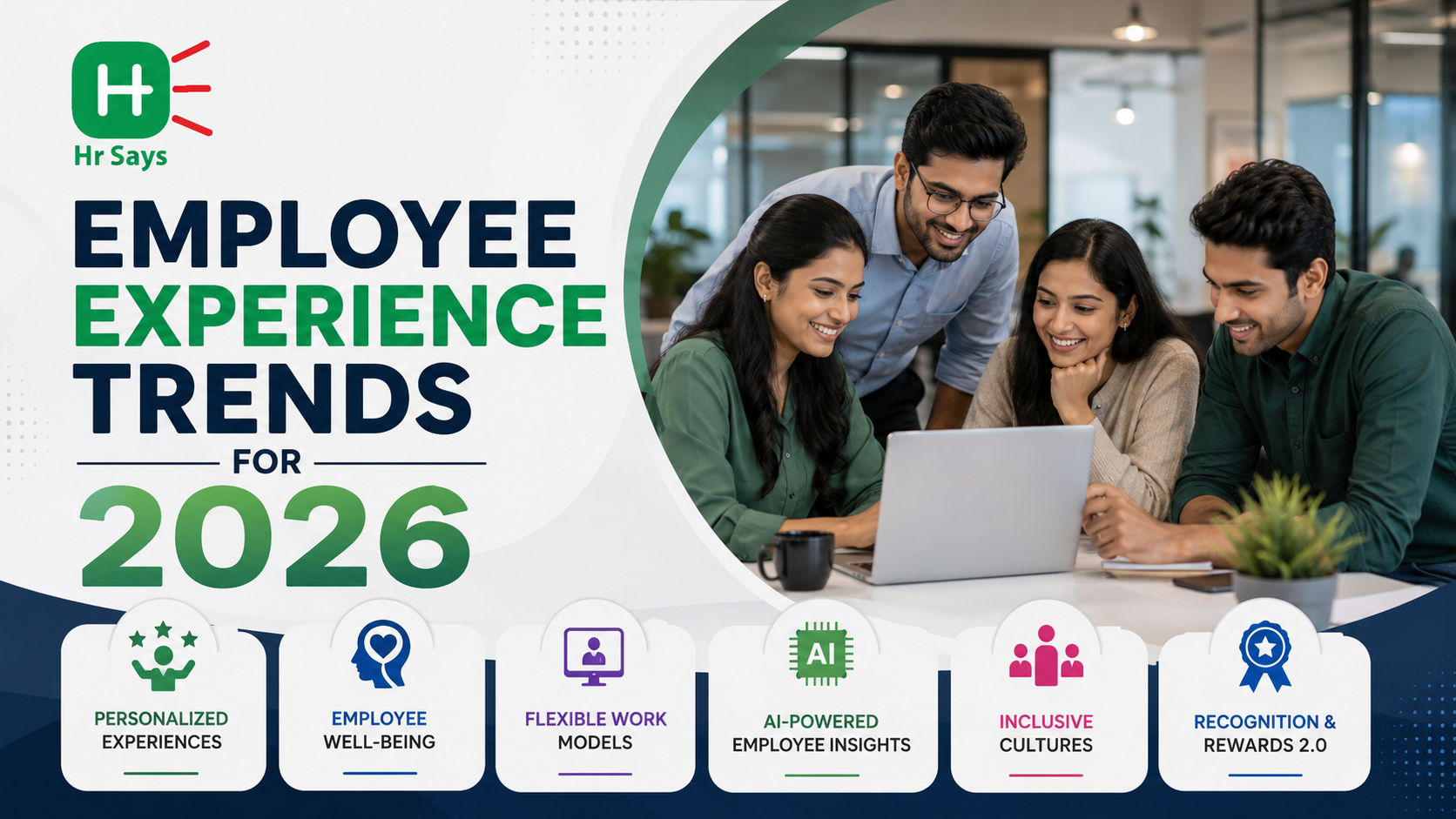
 Employee experience trends for 2026 emphasize workplace personalization, AI-powered support, flexible work models, employee wellbeing, and continuous learning. Organizations that invest in workforce engagement, talent development, and human-centered workplace strategies will be better equipped to thrive in an evolving future of work.




Employee experience is no longer a human resources initiative. It has become a business strategy. As organizations move toward 2026, the companies attracting top talent are not necessarily those offering the highest salaries. They are the ones creating environments where people can perform well, grow continuously, and feel connected to meaningful work.
The challenge is that employee expectations are changing faster than many organizations can adapt. Technology, generational shifts, remote work evolution, and economic uncertainty are reshaping how employees define a great workplace. Understanding these trends early allows business leaders, entrepreneurs, managers, and professionals to make better decisions before talent, productivity, and engagement problems emerge.
The Shift from Employee Satisfaction to Employee Experience
For many years, organizations measured workplace success through employee satisfaction surveys. While useful, satisfaction only tells part of the story. Employee experience focuses on the entire journey, from recruitment and onboarding to growth, performance, wellbeing, and long-term career development.
This shift happened because organizations realized that people can be satisfied yet still disengaged. An employee may enjoy their colleagues and salary while feeling disconnected from opportunities, leadership, or purpose. In such situations, productivity often stagnates and turnover risk increases.
In 2026, organizations are expected to focus less on isolated workplace perks and more on designing complete employee journeys. This means understanding how people interact with technology, managers, communication systems, learning platforms, and organizational culture throughout their employment lifecycle.
The strongest organizations are beginning to treat employees similarly to customers. They map employee experiences, identify friction points, and continuously improve processes based on feedback. This approach creates workplaces where employees spend less time navigating obstacles and more time contributing meaningful work.
For business owners, this trend matters because experience directly affects retention, innovation, and employer reputation. Organizations that ignore experience design may struggle to attract skilled professionals in increasingly competitive labor markets.
AI Becomes an Employee Experience Partner, Not Just a Productivity Tool
Artificial intelligence is rapidly changing workplace operations, but its greatest impact may be on employee experience rather than automation alone.
Many people initially viewed AI as a replacement technology. In reality, the most successful organizations are using AI to remove repetitive tasks and improve employee effectiveness. Instead of replacing workers, AI increasingly functions as a workplace assistant.
Employees are spending less time searching for information, creating routine reports, scheduling meetings, or handling administrative processes. AI tools can support these activities, allowing workers to focus on strategic thinking, creativity, and problem-solving.
Several practical changes are emerging:
- Personalized learning recommendations are becoming more common across organizations. Rather than assigning the same training program to everyone, AI can identify skill gaps and recommend relevant learning paths based on role requirements, career goals, and performance patterns.
- Workplace support is becoming more immediate and accessible. Employees no longer need to wait for responses to simple questions. AI-powered assistants can provide policy information, onboarding guidance, and operational support around the clock.
- Managers gain better visibility into employee challenges. Instead of relying solely on annual surveys, AI can identify trends in engagement, workload distribution, and communication patterns, helping leaders address issues earlier.
The organizations that benefit most will be those that use AI to improve human experiences rather than simply reducing costs.
Personalized Work Experiences Become the New Standard
One of the most significant employee experience trends for 2026 is personalization.
For decades, workplace policies were designed around standardization. Everyone followed similar schedules, learning paths, benefits structures, and communication methods. Modern workforces increasingly expect flexibility and customization.
Different employees have different needs. A recent graduate entering the workforce may prioritize learning opportunities. A mid-career professional may focus on advancement and work-life balance. A senior specialist may value autonomy and meaningful projects.
Organizations are responding by creating more personalized experiences.
Personalization extends beyond flexible schedules. It includes customized career development programs, tailored wellbeing initiatives, individualized learning journeys, and flexible benefits packages.
This trend is particularly important because workforce demographics are becoming increasingly diverse. Multiple generations now work together, often with significantly different expectations about communication, career growth, and workplace culture.
Organizations that provide personalized experiences create stronger emotional connections with employees. These connections improve retention because employees feel understood rather than managed through generic systems.
The challenge lies in balancing personalization with fairness. Successful companies will use technology and data to offer flexibility while maintaining consistency in opportunity and performance expectations.
Flexible Work Evolves Beyond Remote and Hybrid Models
The conversation around flexible work has matured significantly.
Initially, flexibility was largely defined by location. Employees either worked remotely, in hybrid arrangements, or entirely from offices. By 2026, flexibility is becoming much broader.
The most progressive organizations recognize that flexibility includes when people work, how they work, and how performance is measured.
Instead of focusing on hours spent at a desk, leaders increasingly evaluate outcomes and results. This shift creates greater autonomy while encouraging accountability.
Several patterns are emerging:
- Employees want greater control over work schedules. Many professionals prefer arranging work around periods of peak productivity rather than adhering to rigid schedules.
- Organizations are experimenting with asynchronous collaboration. Teams spread across regions can work effectively without requiring constant real-time interaction.
- Workplace flexibility increasingly includes career flexibility. Employees seek opportunities to participate in cross-functional projects, internal mobility programs, and temporary assignments that expand skills and experience.
The future of flexibility is less about location and more about trust. Organizations that build cultures based on accountability rather than surveillance often achieve stronger engagement and performance outcomes.
Wellbeing Expands Beyond Mental Health Programs
Employee wellbeing remains a major priority, but the definition continues to evolve.
Initially, workplace wellbeing initiatives focused primarily on physical health and wellness benefits. Later, mental health became a major focus area. By 2026, organizations are adopting a more holistic approach.
Modern wellbeing includes financial wellbeing, career wellbeing, social wellbeing, and digital wellbeing alongside physical and mental health.
Employees increasingly report stress from information overload, constant connectivity, and uncertainty about future career paths. Traditional wellness programs alone cannot address these challenges.
Organizations are responding by creating environments that reduce unnecessary workplace friction.
Examples include improving meeting practices, simplifying communication systems, reducing administrative burdens, and providing clearer career pathways.
Digital wellbeing is becoming especially important. Employees spend significant portions of their day interacting with digital tools, notifications, and communication platforms. Organizations are beginning to recognize that technology should support productivity rather than create constant distraction.
Companies investing in comprehensive wellbeing strategies often experience lower turnover, stronger engagement, and improved productivity. The reason is simple: employees perform better when they have the resources and environment needed to sustain energy and focus.
Continuous Learning Becomes Essential for Career Security
The pace of workplace change continues to accelerate.
Skills that are highly valuable today may become less relevant within a few years. At the same time, entirely new roles are emerging across industries.
As a result, employee experience increasingly includes continuous learning and career development.
Employees are no longer asking whether learning opportunities exist. They are asking whether organizations can help them remain relevant in a changing economy.
Organizations that provide structured development opportunities gain significant advantages.
Learning is evolving in several ways:
- Microlearning is replacing lengthy training sessions. Employees prefer shorter, practical learning experiences that fit naturally into daily workflows.
- Skill-based development is becoming more important than role-based development. Rather than preparing employees for specific positions, organizations are helping them build adaptable capabilities.
- Internal talent marketplaces are expanding. Employees can access projects, assignments, and opportunities that help them develop new skills without changing employers.
This trend matters because career growth strongly influences engagement and retention. Employees who see clear development pathways are more likely to remain committed to their organizations.
Leadership Experience Becomes a Competitive Advantage
Many employee experience initiatives succeed or fail because of leadership behavior.
Employees interact with organizational culture primarily through managers. A company may invest heavily in technology, benefits, and workplace programs, but poor leadership can undermine those efforts.
In 2026, leadership effectiveness is becoming one of the most important elements of employee experience.
Employees increasingly expect leaders to provide clarity, transparency, coaching, and support rather than simply supervision.
Modern leaders must balance performance expectations with empathy. They must manage distributed teams, support career development, and navigate rapid workplace change.
Organizations are investing more heavily in leadership development because they recognize its direct impact on retention and engagement.
The most effective leaders create environments where employees feel psychologically safe, valued, and capable of contributing ideas. Such environments encourage innovation while strengthening trust across teams.
As workplaces become more complex, leadership quality will increasingly differentiate high-performing organizations from struggling ones.
The Future Employee Experience Is Built on Adaptability
Employee experience in 2026 will not be defined by a single trend or technology. Instead, it will be shaped by an organization's ability to adapt continuously to changing employee expectations and workplace realities.
The most successful organizations will combine personalization, flexibility, wellbeing, learning, AI support, and effective leadership into a cohesive experience. They will focus on removing friction, enabling growth, and helping employees perform at their best.
For business owners, entrepreneurs, and organizational leaders, the message is clear: employee experience is no longer a secondary consideration. It is becoming a central factor in attracting talent, driving performance, and maintaining long-term competitiveness.
Conclusion
Employee experience trends for 2026 reflect a broader shift toward human-centered workplaces. Organizations that embrace personalization, continuous learning, AI-assisted work, holistic wellbeing, and adaptable leadership will be better positioned to attract and retain top talent. The future belongs to companies that view employee experience not as a program, but as a strategic advantage.
FAQ (Frequently Asked Questions)
1. Why is employee experience becoming a business priority in 2026?Employee experience is directly connected to productivity, retention, and organizational performance. As workplace expectations evolve, companies are focusing on creating better workplace culture and stronger employee engagement rather than relying solely on compensation. Organizations that prioritize employee experience often see improved collaboration, innovation, and long-term workforce stability.
2. How will AI influence employee experience in the future workplace?AI is expected to reduce repetitive work and provide more personalized support throughout the employee journey. Instead of replacing people, it is increasingly helping organizations improve digital workplace experience and support continuous learning through tailored recommendations, faster access to information, and more efficient workflows.
3. What role does workplace flexibility play in employee satisfaction?Workplace flexibility has evolved beyond remote work. Employees increasingly value autonomy over how, when, and where they work. This contributes to stronger employee wellbeing and improved work-life balance, helping organizations create environments that support both performance and personal responsibilities.
4. Why are personalized employee experiences gaining importance?Modern workforces are diverse, with employees having different career goals, learning preferences, and lifestyle needs. Personalization helps organizations improve talent retention and strengthen employee engagement by providing experiences that feel relevant to individual employees rather than applying the same approach to everyone.
5. How does employee wellbeing affect business performance?Employee wellbeing influences focus, productivity, creativity, and collaboration. Organizations that invest in holistic wellbeing often experience lower turnover and stronger performance. Beyond physical health, areas such as mental wellbeing and employee experience strategy play a significant role in maintaining a productive workforce.
6. Why is continuous learning considered essential for employees in 2026?Rapid technological and market changes are constantly reshaping job requirements. Employees who participate in continuous learning are better equipped to adapt to evolving roles and workplace demands. Organizations that encourage skills development also benefit from a workforce that remains competitive and future-ready.
7. How does leadership impact employee experience?Leadership influences how employees experience company culture on a daily basis. Effective leaders provide clarity, support growth, and encourage open communication. Strong leadership improves employee engagement and contributes to a healthier workplace culture, making employees feel valued and supported.
8. What challenges do organizations face when improving employee experience?One of the biggest challenges is balancing personalization with consistency. Organizations must support individual needs while maintaining fairness across teams. Managing hybrid work environments and ensuring a positive digital workplace experience are also common challenges as work models continue to evolve.
9. How can small businesses improve employee experience without large budgets?Small businesses can focus on communication, flexibility, recognition, and development opportunities. Employees often value meaningful feedback and growth as much as financial incentives. Investing in employee wellbeing and creating a positive employee experience strategy can have a significant impact without requiring major resources.
10. What employee experience trends are likely to shape the future of work beyond 2026?Future workplace trends will likely focus on AI-enabled support, personalized career paths, skills-based development, and stronger wellbeing initiatives. Organizations that embrace future of work principles and prioritize continuous learning will be better positioned to attract talent and adapt to changing workforce expectations.