Saturday, October 24, 2026
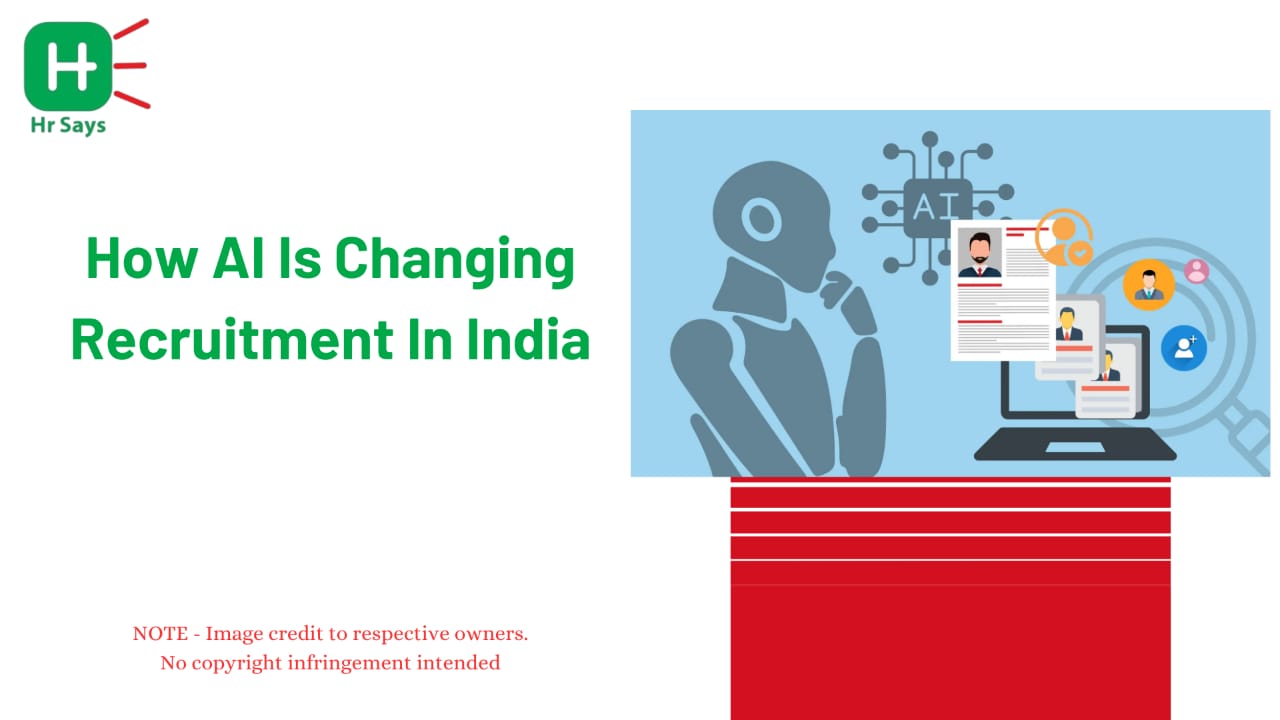
 Artificial Intelligence is reshaping recruitment in India by automating screening, improving candidate communication, and offering predictive insights. The future of hiring lies in blending machine efficiency with human judgment for faster, fairer, and more accurate outcomes.




Have you ever questioned yourself about how companies in India are getting the right people in the shortest time ever? Technology is now redefining the rules of how recruitment should be made possible. Artificial Intelligence (AI) is no longer a dream. It is also influencing the hiring process decision destination, and the consequence is already evident in industries.
The Shift Towards AI in Hiring
The people in India had always known that recruitment was a time-consuming procedure that involved resumes, interviews, and paperwork. The recruitment tools are being automated at the moment to help streamline these activities with the help of artificial intelligence. Applications are being scanned using algorithms, and candidates are being shortlisted and cultural fit inferred. This lowers biases, time, and the professionals working in HR are able to concentrate on intense interactions.
AI in recruitment is not based on human replacement. It is about creating balance. Performing jobs previously done in weeks can be done in hours. This transformation is occurring with regard to the way companies value talent acquisition.
Key Areas Where AI Is Transforming Recruitment
The influence of AI can be seen in several stages of hiring. Each step is becoming smarter, faster, and more precise.
Resume Screening
Manual resume sorting is being replaced with AI-powered screening tools. These systems filter candidates based on keywords, skills, and experience. This makes the process objective and efficient.
Chatbots and Candidate Interaction
AI chatbots are now guiding applicants through the hiring journey. Queries are answered instantly, updates are shared in real time, and communication gaps are reduced. The experience feels smoother for job seekers.
Predictive Analytics
Data-driven insights are shaping hiring strategies. Predictive analytics help recruiters identify candidates who are more likely to succeed in specific roles. Retention rates improve when the right match is found early.
Skill Assessments
AI-based assessment platforms are conducting online tests and simulations. These tools check not just technical skills but also problem-solving and behavioral traits. Employers gain a clearer picture before the interview stage.
Benefits for Employers and Candidates
The adoption of AI in recruitment brings benefits for both sides.
● Employers save time and resources
● Bias in hiring decisions is reduced
● Candidates receive faster responses
● The overall hiring experience improves
However, the process is not without challenges. Over-reliance on automation can sometimes overlook human judgment. Balancing technology with empathy remains critical.
The Future of Recruitment in India
The use of AI in recruitment is expected to grow. Companies in India are moving towards hybrid hiring models, where human expertise works alongside machine intelligence. As more organizations embrace digital HR solutions, the demand for advanced recruitment technology will rise.
The future points towards personalization. Candidates may soon see job recommendations tailored to their skills and interests, while employers could benefit from sharper insights into workforce needs. The recruitment landscape is evolving, and AI is driving this change at a steady pace.
Conclusion
Recruitment in India is undergoing a silent revolution. AI is bringing speed, accuracy, and fairness into the hiring process. Yet, the human element remains central. The future of hiring will
not be about machines replacing recruiters, but about collaboration where technology assists people in making better decisions.