Sunday, September 20, 2026
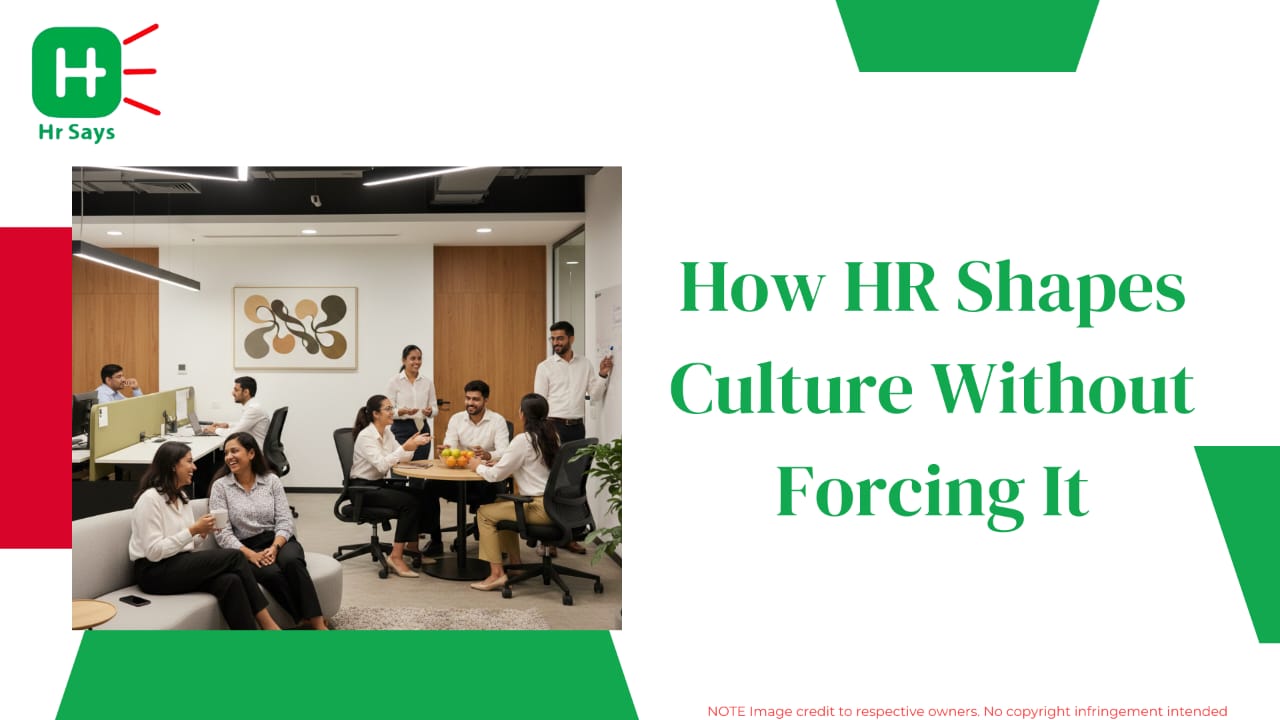
 Organizational culture is shaped subtly through hiring, policies, leadership behavior, and
everyday interactions. This piece explores how HR influences culture through observation,
consistency, and human centered systems rather than control or enforcement.
Organizational culture is shaped subtly through hiring, policies, leadership behavior, and
everyday interactions. This piece explores how HR influences culture through observation,
consistency, and human centered systems rather than control or enforcement.




Meetings and policy documents hardly ever construct culture. This is created in a subtle way, in simple decisions and common experiences. Most organizations put the HR at the center of this process and not as a controller but as a wise guide.
Culture Is Observed Before It Is Designed
It is necessary to know culture before it can be influenced. Patterns are already inherent in most places of work even before values are documented. The ways of feedback provision, the treatment of errors and the success are identified all convey more than words.
HR is usually placed in such a way that it is observing these trends at an early stage. Signals are gathered onboarding conversations, exit interview, performance review and informal check in. In the long run, a definite picture is developed. Culture is not declared. It is perceived, and then bent into the purpose.
Hiring As A Cultural Signal
Values Are Communicated Through Choices
Every hiring decision sends a message. When certain traits are consistently rewarded, they begin to define what belongs. HR shapes culture here by aligning recruitment with behavioral values rather than surface level fit.
It is often ensured that interview processes reflect what the organization truly values. Collaboration, accountability, learning, or adaptability are assessed through structured questions and real scenarios. Culture is reinforced quietly, one hire at a time.
Onboarding Sets The Tone
The first few weeks shape perception. If clarity, empathy, and structure are experienced early, they tend to stay. HR teams are often responsible for designing onboarding that feels human, not mechanical. Expectations are explained, support systems are introduced, and trust is allowed to grow naturally.
Policies That Enable, Not Control
Policies are often seen as restrictive. Yet when written thoughtfully, they act as safety nets rather than rules of fear. Flexible work policies, inclusive leave structures, and transparent grievance systems create psychological safety without being announced as culture building tools.
HR influences culture by asking one quiet question before drafting any policy. Will this help people do their best work.
Leadership Behavior Is Amplified
Managers Are Culture Carriers
What leaders tolerate becomes culture. HR rarely forces leaders to behave differently, but systems are designed to encourage reflection. Leadership training, feedback loops, and performance frameworks are used to reinforce desired behaviors.
When empathy, fairness, and consistency are measured and discussed, they begin to matter. Culture shifts through reinforcement, not instruction.
Everyday Moments Matter Most
Culture is shaped in small moments that are often overlooked.
● How feedback is framed during reviews
● How burnout is addressed or ignored
● How recognition is shared publicly
● How conflict is handled quietly
HR influences these moments by setting processes that reward thoughtfulness and accountability. Over time, behavior changes are noticed, not demanded.
Conclusion
HR does not create culture by force. It is shaped through listening, consistency, and trust. When people feel supported rather than managed, culture evolves naturally. The strongest cultures are rarely loud. They are felt.