Saturday, October 24, 2026
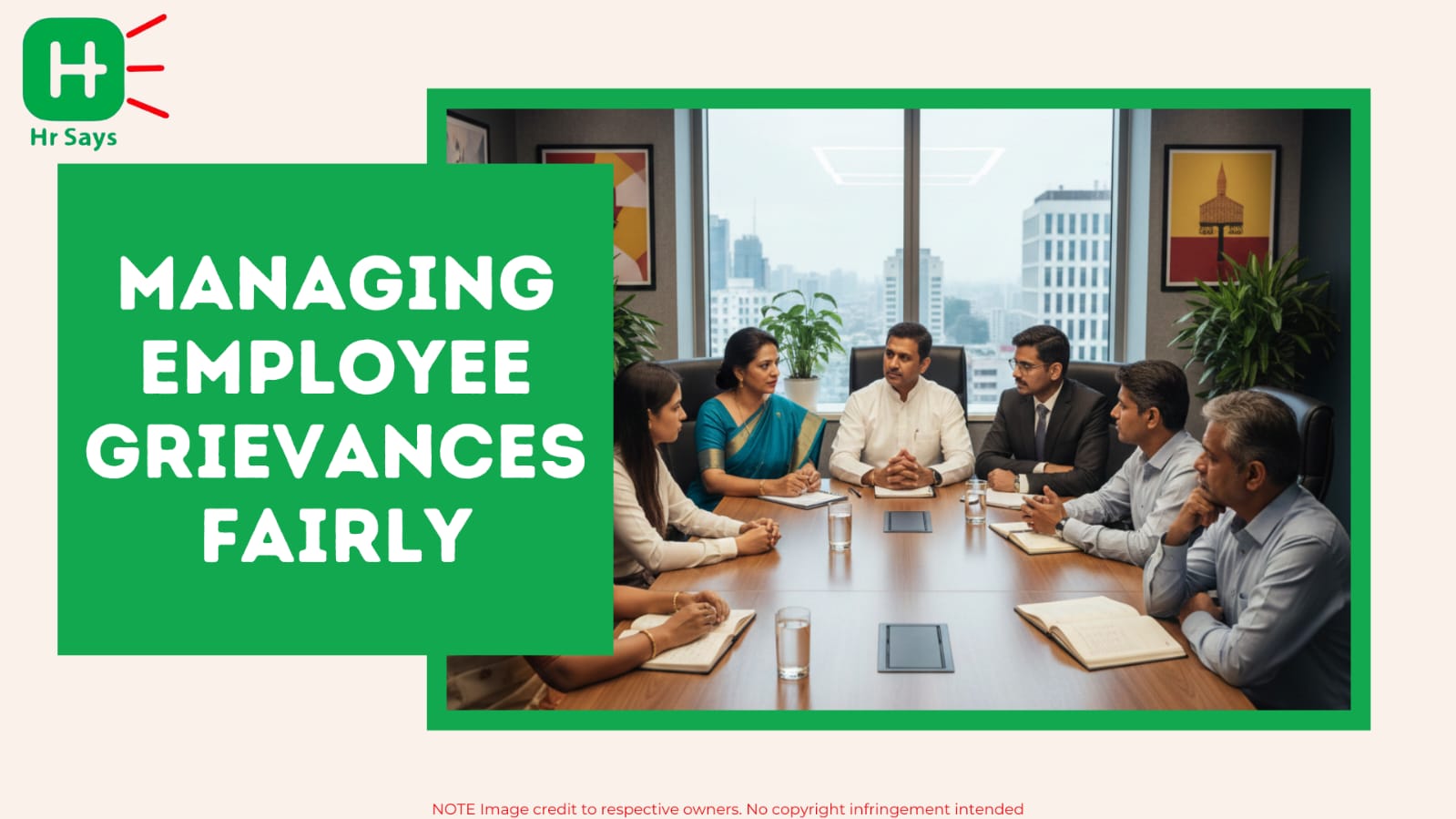
 Fair grievance management protects trust, culture, and compliance. When employee concerns
are heard objectively, addressed timely, and resolved transparently, workplaces become safer,
more stable, and more sustainable for both employees and organisations.
Fair grievance management protects trust, culture, and compliance. When employee concerns
are heard objectively, addressed timely, and resolved transparently, workplaces become safer,
more stable, and more sustainable for both employees and organisations.




Place of work is constructed on individuals and when people co-exist in working, friction is constructed silently. Discontents are hardly ever brought up in comfort. They rise up when something is unpersonsified. The manner in which such situations are managed tends to determine trust, morale and long term culture.
Understanding What Employee Grievances Really Mean
Complaints are considered to be inconveniences. In reality, they are signals. An apprehension that is expressed by an employee tends to portray lack of expectation, unfairness or lack of effective communication. Minor problems when sublimated or withheld are left to solidify into resentment.
The majority of the grievances raised by employees concern such categories as the imbalance in the workload allocation, improper behaviour at the workplace, compensation issues, job description, or inequity. It does not matter whether the grievance appears minor or not, but rather whether it appears to be serious to the employee.
Why Fair Grievance Handling Matters at Work
A fair grievance process is not just a compliance requirement. It quietly shapes employer branding, retention, and psychological safety. When fairness is visible, employees feel protected even when outcomes do not fully favour them.
Poor handling often results in disengagement, increased attrition, and reputational damage. On the other hand, consistent and transparent grievance management builds credibility across teams.
Key benefits include:
● Improved employee trust and engagement
● Reduced workplace conflicts and escalation
● Stronger compliance with labour laws and HR policies
● Healthier organisational culture Principles
That Guide Fair Grievance Management
Fairness is not created by policies alone. It is created through behaviour, timing, and tone. Certain principles are expected to be followed quietly but firmly.
Neutrality and Objectivity
Personal bias must be removed from the process. All grievances should be assessed based on facts, not personalities or power dynamics.
Timely Acknowledgement
Delays communicate indifference. Even if resolution takes time, acknowledgement should be immediate.
Confidentiality
Privacy is expected, not optional. When confidentiality is broken, trust is permanently damaged.
Consistency Across Employees
Similar issues should be treated in similar ways, regardless of role or tenure. Inconsistency is often perceived as favouritism.
Steps to Handle Employee Grievances Fairly
A structured approach helps prevent emotional reactions from driving decisions. While processes may differ, certain steps remain essential.
● The grievance should be formally received and documented
● The employee should be heard without interruption or judgement
● Facts should be verified through neutral inquiry
● Relevant policies and labour guidelines should be referenced
● A reasoned decision should be communicated clearly
● Follow up should be ensured after resolution
At every stage, communication should remain calm, respectful, and professional.
Common Mistakes That Undermine Fairness
Even well intentioned organisations often weaken their grievance handling without realising it.
● Concerns being minimised as overreactions
● Informal promises replacing documented action
● Managers becoming defensive instead of curious
● Outcomes being shared without explanation
When these patterns repeat, grievance systems lose credibility.
Building a Culture Where Grievances Are Handled Well
Fair grievance handling is sustained through training, not fear. Managers must be equipped with conflict resolution skills, active listening techniques, and awareness of unconscious bias. Employees should be educated on grievance redressal mechanisms and encouraged to speak early.
When grievances are handled well, silence is replaced with dialogue. That shift quietly strengthens organisations.