Saturday, October 24, 2026
 Performance reviews often promise clarity but deliver mixed experiences. This blog explores the
gap between structured performance management processes and real workplace experiences,
highlighting why human-centered, continuous feedback matters more than formal evaluations.
Performance reviews often promise clarity but deliver mixed experiences. This blog explores the
gap between structured performance management processes and real workplace experiences,
highlighting why human-centered, continuous feedback matters more than formal evaluations.




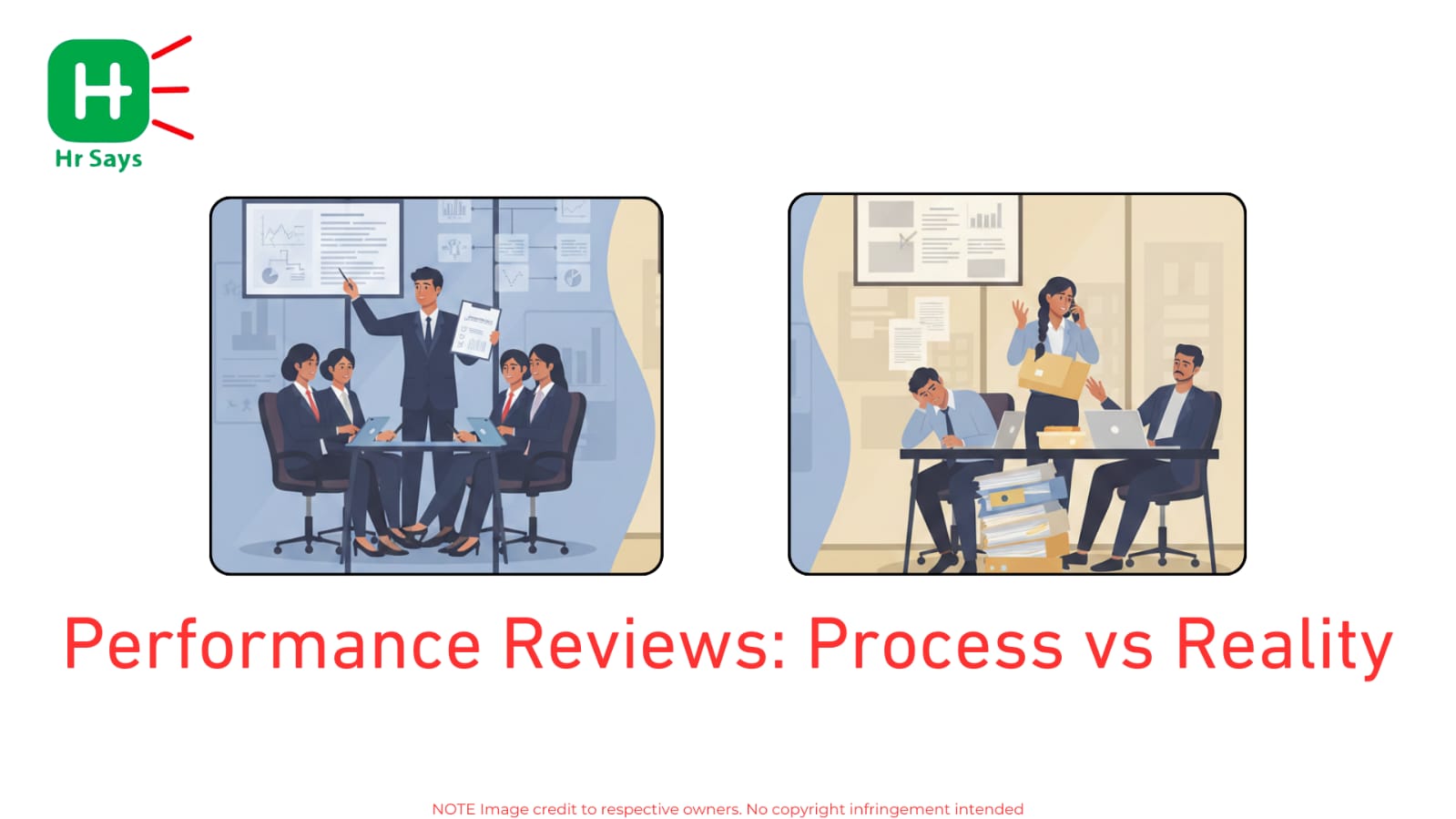
The performance reviews are placed as a point of clarity. It is assured of growth, feedback is anticipated, and it is assumed that there should be alignment. However, a silence, which employees and the managers can typically feel between the described process and live reality, is present.
The Process As It Is Designed
Performance management seems fair and organized on paper. Clear goals are set. Metrics are defined. It will conduct review cycles long before. The objectivity is supposed to be administered.
Usually, the process includes:
● Setting of goals in accordance with business objectives.
● Frequent check-ins and checking progress.
● Performance appraisals every year or quarter.
● Compensation/promotion-related rating systems.
The intended use of the framework is in employee development and planning of workforce. As the concept of continuous performance management has gained popularity, there has been the emergence of employee feedback mechanisms and use of the okr-founded employee reviews that have even more perfected the process.
Everything appears balanced. Everything appears measurable.
Where Reality Begins To Shift
In reality, performance reviews are rarely experienced as neutral events. Anxiety is often felt weeks before the meeting. Feedback is sometimes heard for the first time during the review itself.
Several gaps tend to surface:
● Feedback is remembered selectively
● Recent work is weighted more heavily than consistent effort
● Context is lost due to time pressure
● Conversations are rushed or overly formal
What was meant to be developmental is often perceived as evaluative. Trust can be quietly strained. Motivation can dip, even when ratings are fair.
The Manager’s Silent Constraints
Managers are expected to be objective, empathetic, and decisive. At the same time, they operate within limits that are rarely acknowledged.
Ratings may be influenced by budget caps. Promotion slots may already be decided. Time to prepare thoughtful feedback is often scarce. These constraints shape the conversation, even when intentions are good.
As a result, performance review meetings can feel scripted. Honest dialogue is replaced by safe language. Difficult feedback is softened or delayed.
The Employee Experience That Lingers
For employees, performance reviews are not isolated events. They are remembered long after the meeting ends.
What tends to stay is not the rating, but:
● Whether efforts were truly seen
● Whether feedback felt specific and fair
● Whether growth paths were discussed realistically
When feedback feels disconnected from daily work, disengagement is quietly triggered. This is where performance appraisal systems fail to deliver their true value.
Bridging Process And Reality
The gap between process and reality is not closed by adding more forms or tools. It is narrowed through consistency and intent. Small shifts make a difference:
● Feedback is shared throughout the year
● Expectations are revisited, not assumed
● Conversations are framed as two-way discussions
● Development is discussed beyond ratings
When performance reviews are treated as ongoing conversations rather than annual events, alignment is naturally improved.
Conclusion
Performance reviews will always carry weight. They shape careers, confidence, and culture. When the process is humanized and reality is acknowledged, reviews become less about judgment and more about shared progress.