 Saturday, October 24, 2026
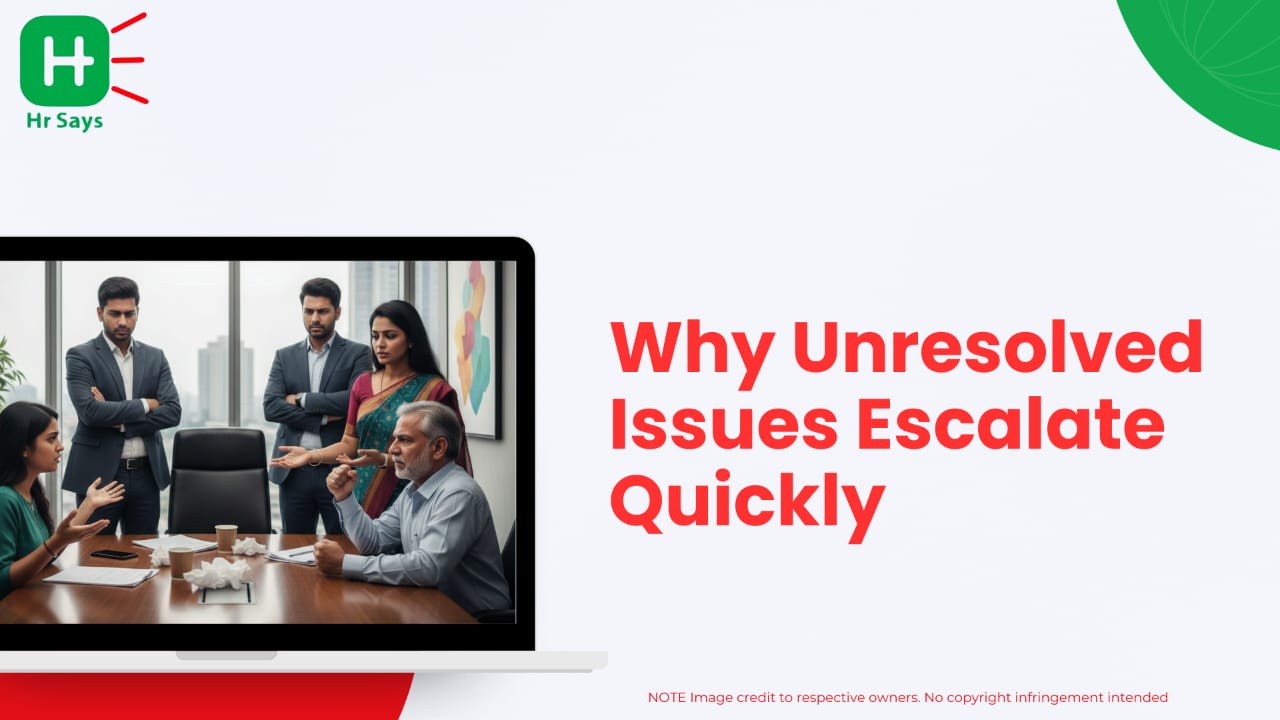
 Unresolved issues escalate due to emotional accumulation, silence, and delayed
communication. This blog explains how avoidance, timing, and suppressed conflict contribute to
escalation, and why early, clear resolution helps maintain emotional balance
Unresolved issues escalate due to emotional accumulation, silence, and delayed
communication. This blog explains how avoidance, timing, and suppressed conflict contribute to
escalation, and why early, clear resolution helps maintain emotional balance




The little things do not seem threatening initially. They remain silent in discussions, relationships, work places and even in the mind. The thing that is usually left unrecognized is the rate at which these unresolved matters grow exponentially. Frustration, denial and postponement gradually transform problems which are manageable into points of emotional pressure.
How Silence Creates Hidden Pressure
When a problem is not addressed it does not vanish. Instead, it is stored. With time, assumptions have been made, meanings given and emotional interpretations erected but vaguely. This is one of the points of escalation.
It is how the human brain wants to find closure. In the absence of clarity, narration is made to create a story. These narratives are negative, self protective and emotional. What began as a trivial misunderstanding in itself becomes experienced, bit by bit, as disrespect, neglect or betrayal.
Common effects of prolonged silence include:
● Increased emotional sensitivity
● Reduced trust in communication
● Heightened reactivity during future conversations
Emotional Accumulation And Trigger Points
Unresolved issues tend to stack. Each new frustration is added to the previous one, even if they are unrelated. When a trigger finally appears, the reaction often feels disproportionate. The response is not to the present moment alone, but to everything that was never addressed.
This pattern is frequently seen in relationships and workplaces. A minor comment can suddenly spark conflict because it touches accumulated emotional residue. Escalation then feels sudden, but it has been quietly building for a long time.
Trending psychology research often refers to this as emotional backlog or suppressed conflict, both of which are known to increase stress responses.
Avoidance Feels Safer Than Resolution
Avoidance is often chosen because it feels calm in the short term. Difficult conversations are postponed to protect peace, relationships, or productivity. However, what is avoided emotionally is rarely resolved mentally.
Over time, avoidance trains the mind to associate communication with danger. When the issue eventually surfaces, it is expressed with frustration rather than clarity. At that point, escalation becomes more likely than resolution.
Avoidance is commonly reinforced by:
● Fear of confrontation
● Past negative communication experiences
● Desire to maintain surface harmony
Why Timing Makes Things Worse
Issues addressed too late are often addressed poorly. Emotional intensity rises with time, while patience reduces. When resolution is attempted after long delay, listening becomes harder and defensiveness becomes automatic.
At this stage, conversations shift from problem solving to self protection. Language becomes sharper. Intentions are misunderstood. Escalation is then experienced as inevitable rather than avoidable.
Early communication allows issues to remain factual rather than emotional. Delayed communication turns facts into feelings.
How Escalation Can Be Slowed Down
Escalation is not caused by conflict itself, but by unresolved conflict. Addressing issues early, calmly, and clearly reduces emotional build up.
Helpful practices include:
● Naming discomfort early without blame
● Clarifying intent instead of assuming meaning
● Separating present issues from past experiences
● Allowing pauses before reactions are expressed
These approaches are often recommended in conflict resolution and emotional intelligence frameworks for sustainable communication.
Conclusion
Unresolved issues escalate quickly because time amplifies emotion. What is avoided quietly grows loudly. Resolution is not about winning or fixing everything, but about preventing emotional accumulation before it becomes unmanageable.